Category Archives: Memoir

Janell Byrne: 30 Years with MDE


You’d think that after 30 years choreographing perhaps 150 dances, Janell Byrne, director of the Mercer Dance Ensemble at Mercer County Community College, would present some of her former work at her 30th anniversary concert. But no, Byrne likes to look ahead. The themes may be similar to the past, but – as she says – she has different dancers, and it’s more fun to create new work on the current dancers than to struggle to fit them into old work.

“Over the last three or four years, more students are asking to be a part of it, and a lot of them are men. So I am using partnering and different relationships, not necessarily the relationship between men and women, but between differences in body types.”

“MDE – Legacy” will be presented Saturday, May 29 at 8 p.m. and Sunday, May 30 at 2 p.m. at the Kelsey Theatre on Mercer’s West Windsor campus, 1200 Old Trenton Road. Tickets for MDE are $14 for adults, $12 for seniors, and $10 for students, available at http://www.kelseytheatre.net, at the box office, or at 609-570-3333.

Byrne will also perform in a faculty studio showing at Princeton Ballet School on Sunday, May 23, at 6 p.m., at 301 North Harrison Street. On the program are works by Mary Barton, Jennifer Gladney, and Alma Concepcion. Susan Tenney will present “Je me souvien” (as seen at Rider) and Byrne will present “Elle(s)” (see below). Seating is limited (609-921-7758).

In spite of making everything new this year, Byrne admits that some themes may look familiar. A piece that uses prop ladders references an early work, “Chutes and Ladders.” “And I tend to have a piece that the novice dancer can fit well into.”

Many of the MDE dancers are professional and semi-professional dancers from the community, but some come from Mercer’s dance program, which offers jazz, ballet, and modern dance on all levels. Students can major in dance and earn associate’s degree (to transfer as juniors to a four-year college) or an AFA degree in the performing arts in which they combine conservatory training in theatre, dance and music with education in the liberal arts and sciences.

A series of three tangos share the earthy quality of that dance, but are very different. A dance for seven people is set to a Steve Roach “Sacred Space” score, originally written for the nonsectarian Mark Rothko chapel. ”There is so much in the simplicity and power of his paintings, that it inspired me to hear the music,” she says.

“Quartet for Four Women” is set to solo piano music with dancers coming and going. “We want to suggest that the dancing continues beyond the limits of the stage,” Byrne says.

Byrne, a native of California, is a former student of Stanley Holden and Margaret Hills in Los Angeles. A graduate of the Juilliard School, she studied with Alfredo Corvino. In addition to Mercer, Byrne has taught at Princeton University, The College of New Jersey, Princeton Ballet School, Lawrenceville School, and the Anthony Rabara Pilates Studio.

The varied program includes group pieces featuring Latin and Malaysian sounds, a high energy number inspired by aerobic dance, and another in which five performers dance to classical guitar music. Also contributing work are Jennifer Gladney, a 2003 alumna who has performed with MDE for 10 years, and Han Koon Ooi, a 2009 alumnus who has performed for five years.

The anniversary concert is also unusual because Byrne is, after a long hiatus, going to perform. “Elle(s)”, a trio by Byrne for herself and guest artists Cheryl Whitney Marcaud and Diane Kuhl, seen in March at Rider’s Yvonne Theatre, is a delight.

Choreographing doesn’t get easier, Byrne says. “You would think I would have a bag of magic tricks, but I don’t.”

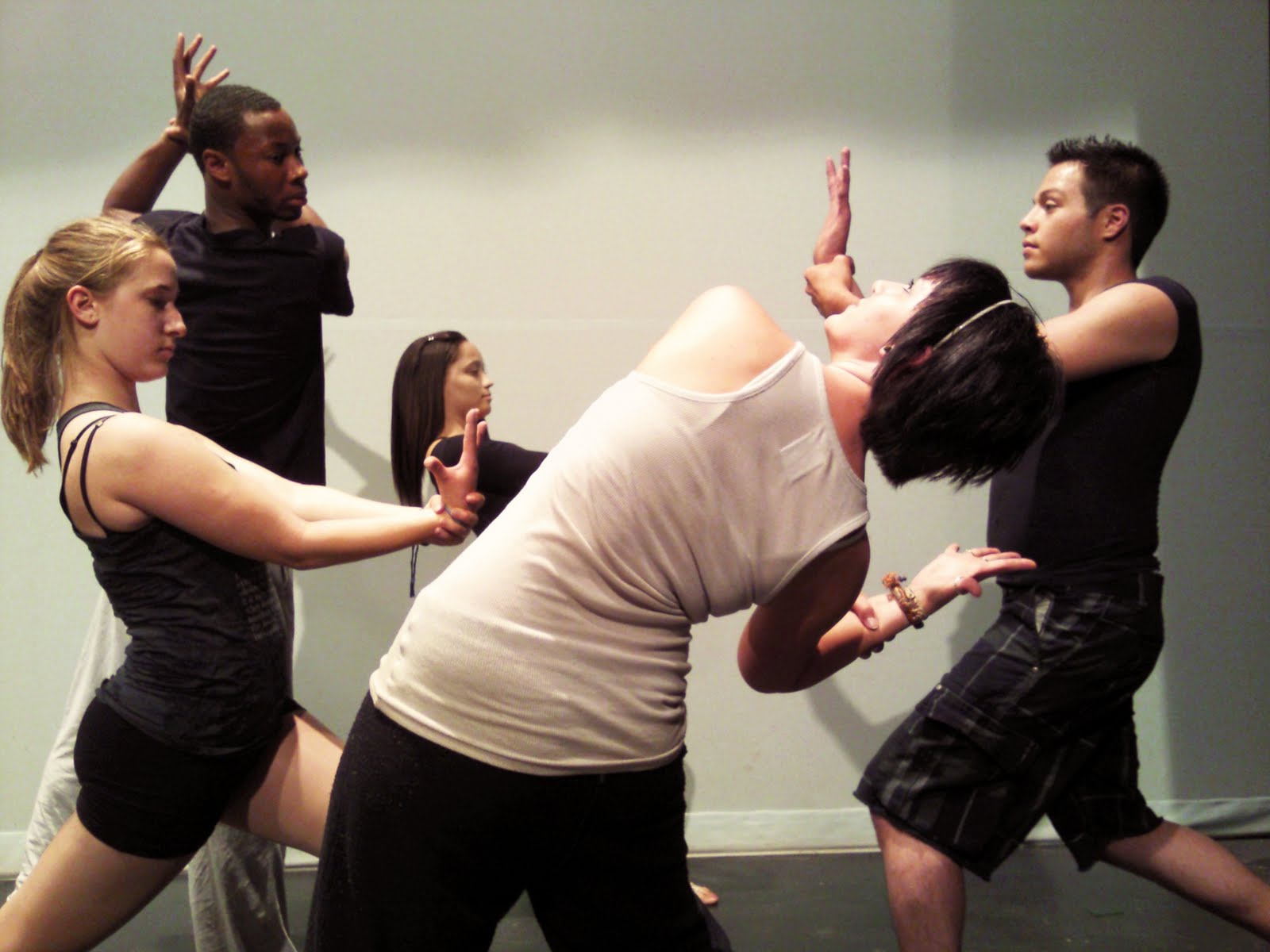
Photo: MDE dancers Hanna Bruskin, DeHaven Rogers, Yvonne Clark, Brianne Scott, and Ian Conley.

U.S. 1 Newspaper’s 25th: Part I

Starting this week, this month, this year, U.S. 1 Newspaper celebrates its silver anniversary. Amazing, isn’t it, that Princeton’s maverick business/entertainment newspaper could capture the hearts and minds of loyal readers and keep going for 25 years!

I begin to recognize the reasons why as I read “Personality not included: Why Companies Lose Their Authenticity – and How Great Brands Get it Back,” by Rohit Bhargava, a marketing guru with the iconic firm of Ogilvy. I met him at the e-Patient Connections conference in Philadelphia last Monday.

When I read a business book (and I’ll bet you’re the same way), I try to test out the wisdom by applying it to the businesses I know. So in honor of U.S. 1’s silver year I propose to dissect Bhargava’s theories, one by one, and see how they compare with my perception of U.S. 1’s business model. Maybe you’ll want to do the same and apply them to the business where you work.

Caveat: Notice that I said my perception of what U.S. 1 Newspaper is about. I am not the founder, nor related to the founder, Richard K. Rein. Rein is famous for his single-minded vision and after 23 years (I first wrote for him in 1986) I can sometimes guess what he’ll say but by no means all the time. To get his opinion, you’ll have to read his column and/or the Between the Lines column this week. He’ll probably interview himself; he does every year.

Bhargava says that kind of definable personality is the key to creating an inspiring brand: “Personality is not just about what you stand for, but how you choose to communicate it. …Personality is the reason consumers love one product more than another. ….Personality can help you go from good to great.”

How to define personality? That’ll be in Part II. It’s enough, now, to plan to pop a cork and celebrate.

The $2 Billion Mouse


I’ve always had a soft spot in my heart for Medarex (just bought by Bristol-Myers Squibb for nearly double the stock price) because Medarex has a transgenic mouse that can produce therapeutic antibodies that mirror a human’s antibodies. .

Mice are my favorite critters anyway, because I literally grew up in the Frank H.J. Figge mouse lab. The lab had 5,000 mice, who owed their existence to my father’s cancer research efforts, and my late mother, Rosalie Yerkes Figge, ran the breeding colony. My sister and I helped out in the family business with such age-appropriate tasks as filing records and filling glass bowls with cedar shavings (at five years old), transferring mice by their tails to clean bowls (age seven), and separating and marking the adolescent mice (age 10).

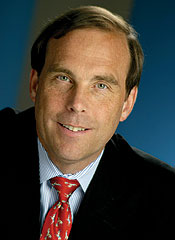
So when Donald Drakeman (left) started Medarex as a monoclonal antibody company in 1987 and 10 years later bought Genpharm with its transgenic HuMAb mouse, developed by Nils Lonberg, I was personally and professionally intrigued. Given the cost and time needed to administer clinical trials to humans, the Medarex mouse can help bring important drugs to market quickly and cheaply. I thought Drakeman was pretty smart to wend his way through some nasty patent disputes and emerge, owning the mouse.

Drakeman and his wife, Lisa Drakeman, have been on the cover of U.S. 1 at least three times, starting in 1987 when it was a pop-and-mom shop with offices at 20 Nassau Street. She came to Medarex as SVP of business development and moved on to be CEO of Genmab. He is no longer with Medarex but she is still at Genmab, based in Denmark but with an office here in Princeton.

Yesterday Bristol-Myers Squibb bought Medarex for what amounts to $2.1 billion, and this morning the stock of both companies shot up, with Medarex nearly doubling to $15 plus.

What does this do for GenMab? Nothing, GenMab claims. Medarex has sold most of its GenMab stock, earned in return for granting 16 prepaid licenses to use the special mouse for drug development. Medarex still owns 5 percent of GenMab, says GenMab’s PR person, Lucy McNiece. Of the 16 licenses, 13 have been used.

And now, of course, I kick myself for not having bought Medarex stock. Before I left my job at U.S. 1 in 2008, it would have been a conflict of interest for me to own it and also report on it. After that, naysaying from a stock broker (who shall remain nameless) deterred me.

But as my doc brother in law says, the Retro Spectroscope is never wrong. And congratulations to the prescient Medarex stockholders, the Drakeman family, and New Jersey’s biotech community. A rising tide raises all boats.

Family Values


My father, Frank H. J. Figge, was a cancer research scientist, and he used to tell me that “Nothing is ever completely true or completely false.” A useful mantra for a reporter. When he died, I was a 34-year-old stay-at-home mom with three children and an intense desire to tap his creative legacy. I learned by doing, as a stringer for a daily paper, and then specialized in dance.

After 10 years of freelancing as a dance writer, I got my dream job, working for Rich Rein at U.S. 1 Newspaper, Princeton’s business and entertainment journal, then a monthly, now weekly (www.princetoninfo.com). Covering business or technology, I discovered, was like covering dance. You present a personality, and you translate the technical terms into words that a layperson can understand. Whether writing about a choreographer, an entrepreneur, or a scientist — they are all “people” stories.

Two decades later I’m freelancing for U.S. 1, on a less stringent schedule. Freed from editing responsiblities, I am “out and about,” meeting business people and attending concerts. Virtually every day, someone I meet or something in the news reminds me of a person I’ve interviewed or an article I wrote, two or 20 years ago. I resisted blogging (what? put stuff up on the web that no one else has edited? do wordsmithing for free? make my reporter’s life public?) Why not just keep a journal?

Because journaling is private, and I’ve been putting words out for public consumption for so many years that it feels right to keep doing it. Perhaps my perspective will be useful — and provoke you to add yours. The comments page is open, and you don’t have to “join” or “sign up” though any identification you might provide would be most welcome. What did your father or mother tell you that affects how you do your work today?