Monthly Archives: November 2009

Twitter’s Jack Dorsey: Who You Know Still Counts

Posted by PicasaThe digital divide was wide tonight, at a 3 to 5 p.m. NJSBDC networking event at the College of New Jersey, followed by a talk by Jack Dorsey, creator, co-founder, and chairman of Twitter and considered an influential Internet pioneer (pictured, top).

Most folks at the networking either don’t Tweet or are just trying to figure it out. My card stack includes one lender, two executive coaches, two web developers, an attorney, three automotive guys, a logistics company, an interior decorator, and an education franchiser. Of that crowd only event planner Michael D. Young professed to be comfortable with Twitter, and the college students who sat behind me professed to be totally uninterested in Tweeting.

But Kendall Hall was packed, and Dorsey told a compelling story about being given two weeks and one other programmer to build the first model of an update system that works on cell phones. It debuted at the SXSW music festival in Austin in March, 2007. “It was the right place at the right time. And it was the first year at SXSW for the Wall Street Journal and the New York Times. But we failed, technically. “

System failures continued, sometimes for hours, even a whole day. They finally figured out that — though a communications firm — they weren’t communicating well. “We were not talking to each other and our investors, not practicing transparency.” The fixes included:

Lots more communication (blogging, twittering) without worrying about overload (“you filter out what you don’t need.”)

Building instruments to find out how people are using Twitter

Admitting mistakes.

Working in public and sharing the work with anyone interested. For instance, Twitter users invented the use of the @symbol, replies, retweets, hashtags, and even the word ‘tweet’ to stand for ‘updates.” “If we had not said we don’t know what it is good for, we would not be a success today. Tweet by tweet they defined what it meant to them.”

Dorsey says he is still tinkering with the business model, and no, he hasn’t made any money yet. (I asked why teens text rather than Twitter and he didn’t really have a good answer, except that it’s up to each individual and group to decide what is useful.)

When he watched President Obama address Congress he noticed the legislators were looking at their cell phones. Then his own phone buzzed. It was his Congresswoman, twittering her take on the speech. “I’ve never felt closer to my government,” he said.

The hardest part of starting a business? Starting. “It’s important to start as quickly as possible, to get it out on paper and allow others to play with it. If it is a ridiculous idea, it can be closed, and you move on.”

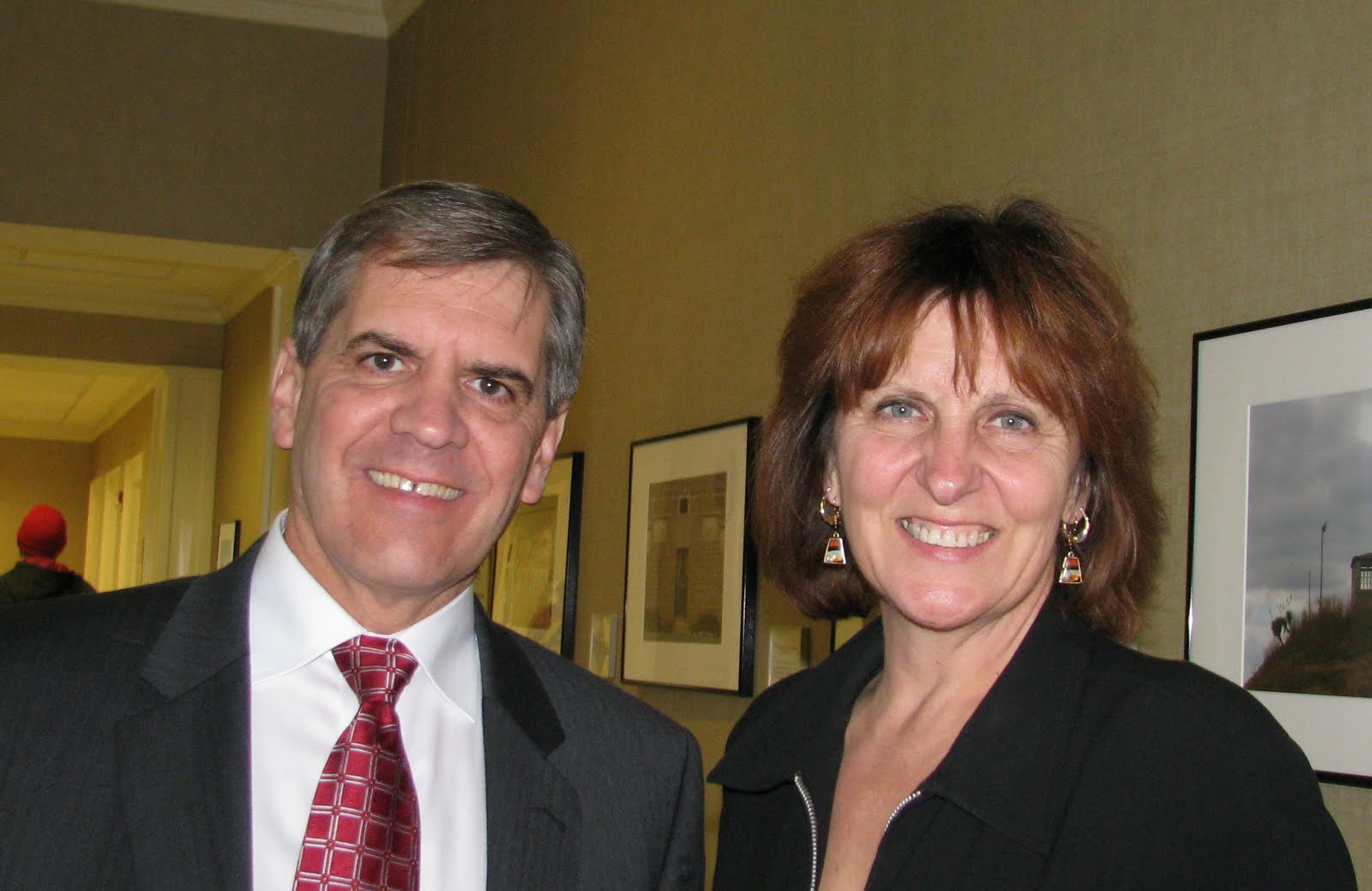
Dorsey had lots of good insights on “real-time communication” but the back story of how TCNJ snagged such a hot speaker has nothing whatsoever to do with social media. How did Dorsey get to TCNJ? He had grown up with the son of TCNJ’s new business dean, William W. Keep (pictured on left with SBDC’s Lorraine Allen).


It always is and ever will be, “Who You Know Counts Most,” world without end amen.

U.S. 1’s 25th Part II: Accidental Spokespeople

Your company has what Rhohit Bhargava calls “accidental spokespeople,” the employees or customers who speak for your brand – often without you knowing it or approving it. Your challenge is to find ways to embrace those individuals.

That’s the gist of Chapter II of Bhargava’s “Personality Not Included.” I’m relating his points to U.S. 1 Newspaper’s silver anniversary, and you can apply the same tips to your own firm.

An example of an “accidental spokesperson” is Jared Fogle, who famously lost weight by eating Subway turkey sandwiches and became – despite lots of resistance from the company’s suits – an advertising icon.

An example of an intentional spokesperson is a company founder, whose personality imbues the company at carefully chosen opportunities. For instance, Wally Amos of Famous Amos cookies or Craig Newmark of Craigslist.

As a newspaper, U.S. 1 is fabulously positioned to showcase its accidental spokespeople, its writers and freelancers. For instance, sometimes staff editors Jamie Saxon and Scott Morgan will write personal columns. You can tell it’s a column, not an article, because it doesn’t have a regular head. Instead it has a “reverse head” (white on black) with the author’s name. You get the undiluted “voice” of Jamie (jazzy, hip, young) and Scott (to-the-point, wry, unabashedly honest). But that “voice” also shows through in the way they caption pictures, write headlines, and even the way they assign stories.

Freelancers get a similar opportunity to write in their own voice. Bart Jackson, Pat Tanner, Simon Saltzman, Elaine Strauss, Richard Skelly – regular readers don’t need the byline to know who’s writing.

This is, after all, a publication that puts a higher priority on words than on design. And the writing doesn’t have to conform to the daily newspaper style. If I think that Second Person Plural will draw the reader into a subject, I use it, just like I’m using it now. I’m talking directly…..to YOU. Is that part of the Barbara Fox voice? Maybe.

Advertisers are among the “intentional” spokespeople. They believe the product works so well for them that they put their money behind it.

U.S. 1 Newspaper’s chief intentional spokesperson is, of course, the founder, Richard K. Rein. Even though you never read a column of his, you can discern his voice, because he set the tone. No business too small or too big to write about. No cow too sacred to gore. No subject too “adult” to write about or photograph. (We’ve been banished from several school lobbies.)

I won’t try to explain Rein’s policies. He’s going to do that himself in the issue of November 11. He also invites the readers, and that means you, to the first of several anniversary celebration events, a rush hour reception on Tuesday, November 24, 5 to 8 p.m., at Tre Piani in Princeton Forrestal Village.

You the reader, after all, are among U.S. 1’s best “accidental spokespersons.” You’re the one who tells your job hunting friend to get the U.S. 1 Directory, or who uses the PrincetonInfo.com website to plan next weekend, or eagerly looks for news of companies that have just come to town. Bhargava says it’s one thing to identify the accidental spokespeople and quite another to figure out what to do with them. “As soon as you identify them, you need to be thinking about ways to embrace them.” Don’t ignore them, he warns. “Embracing them means giving them the content, attention, and access they need to tell a compelling story.”

If you recognize yourself as an accidental spokesperson for U.S. 1, write and say so! What did you like and not like for the past 25 years, and what would you like to see for the next 25? Toss me an e-mail or leave a comment here. You can stay anonymous!

U.S. 1 Newspaper’s 25th: Part I

Starting this week, this month, this year, U.S. 1 Newspaper celebrates its silver anniversary. Amazing, isn’t it, that Princeton’s maverick business/entertainment newspaper could capture the hearts and minds of loyal readers and keep going for 25 years!

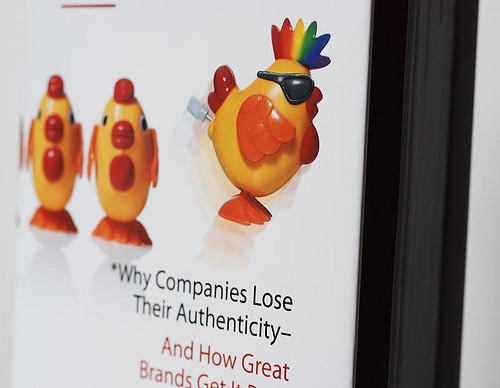
I begin to recognize the reasons why as I read “Personality not included: Why Companies Lose Their Authenticity – and How Great Brands Get it Back,” by Rohit Bhargava, a marketing guru with the iconic firm of Ogilvy. I met him at the e-Patient Connections conference in Philadelphia last Monday.

When I read a business book (and I’ll bet you’re the same way), I try to test out the wisdom by applying it to the businesses I know. So in honor of U.S. 1’s silver year I propose to dissect Bhargava’s theories, one by one, and see how they compare with my perception of U.S. 1’s business model. Maybe you’ll want to do the same and apply them to the business where you work.

Caveat: Notice that I said my perception of what U.S. 1 Newspaper is about. I am not the founder, nor related to the founder, Richard K. Rein. Rein is famous for his single-minded vision and after 23 years (I first wrote for him in 1986) I can sometimes guess what he’ll say but by no means all the time. To get his opinion, you’ll have to read his column and/or the Between the Lines column this week. He’ll probably interview himself; he does every year.

Bhargava says that kind of definable personality is the key to creating an inspiring brand: “Personality is not just about what you stand for, but how you choose to communicate it. …Personality is the reason consumers love one product more than another. ….Personality can help you go from good to great.”

How to define personality? That’ll be in Part II. It’s enough, now, to plan to pop a cork and celebrate.