Category Archives: Around Town

Personal posts — some social justice (Not in Our Town), some faith-related (Princeton United Methodist Church), some I-can’t-keep-from-writing-this

January 26: Locked Up, Locked Out, Locked Away

“Locked Up, Locked Out, Locked Away” will be the theme for the NJ Council of Churches annual Issues & Action event, set for Saturday, January 26, at Shiloh BaptistChurch in Trenton, NJfrom 8:30 a.m. – 1:00 p.m. For a more detailed press release, click here. 

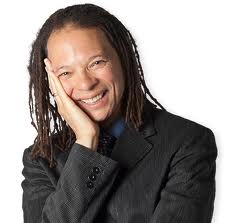
To address incarceration in New Jersey and the United States, the speakers will include Professor Mark Taylor of Princeton Theological Seminary, author of The Executed God; Professor George Hunsinger, also of Princeton Theological Seminary and founder of the National Religious Campaign Against Torture; Ms. Bonnie Kerness, Esq., coordinator of American Friends Service Committee’s Healing and Transformative Justice Project; and The Reverend Samuel K. Atchison, president of Trenton Ecumenical Area Ministry, a leader in addressing the issue of re-entry of prisoners into society.


The program will provide opportunities for participants to engage in dialogue and to discuss how they might be engaged in prison ministries. REGISTER: office@njcouncilofchurches.orgor

Architects: Think Ahead

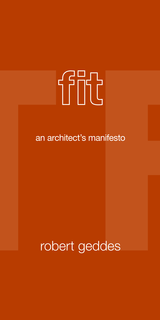
Architects are eminently practical. Most of them, anyway. Theirs is among the most useful of occupations. Writes Robert Geddes: “Architecture should embrace fitness — order and organization, growth and form. The ‘oath of architecture’ should be loud and clear: make it fit.”

Geddes, former dean of the Princeton University School of Architecture, has a new book Fit: an Architect’s Manifesto, published by Princeton University Press.  In Rich Rein’s column in the current issue of U.S. 1 Newspaper, Rein lists some of Geddes’ eminent projects and also notes that he is a leader of Princeton Future, “the farsighted group that calls attention to planning issues that otherwise only come into view when they reach the planning board for a yes or no vote.”

Geddes will speak and sign his book at Labyrinth Books, 122 Nassau Street, on Monday, December 10, at 6 p.m. 609-497-1600. That’s the same night that the Princeton Township Planning Board will continue its hearings on the controversial AvalonBay development of the former medical center building.

Geddes wrote that buildings should be “our shared, functional, and expressive places.” I can guess what he thinks of the AvalonBay plan.

Also in the news is how another prominent architect, J. Robert Hillier,  is recycling giant boulders to help shore up the New Jersey shore. While excavating for his age-restricted development on Bunn Drive, Bob Hillier’s contractors unearthed 400 tons of glacial rock. It is being put to great use to build jetties in Deal, Bay Head, and Mantoloking.

Finding the rock was a surprise. There isn’t a good way to predict whether you are digging into it. I discovered that when the well digger came to dig 300 feet down for my geothermal heating and cooling system.

But urban planning — town planning in a community of Princeton’s size — need not involve surprises. We need to take a leaf from the architects’ books and, not just “THINK” but “THINK AHEAD.”

Peter Brown: Fundraisers Learn from Ancient Rome

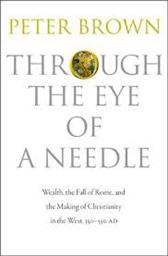
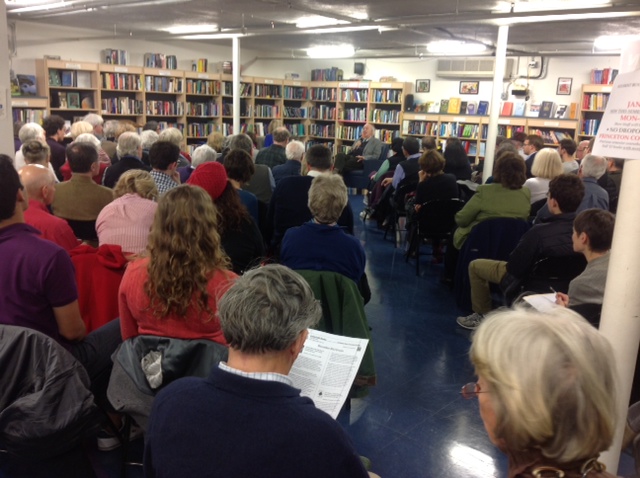
When it comes to fundraising, Christians in the 4th century may have something to teach the churches and charities of today. At least that’s one thing I got out of the conversation between Peter Brown and Elaine Pagels at Labyrinth Bookstore on Wednesday night. Brown and Pagels talked about his new very thick book Through the Eye of a Needle: Wealth, the Fall of Rome, and the Making of Christianity in the West, published by Princeton University Press. The room was packed with Brown’s many avid admirers, a group to which I now eagerly belong.

Brown is the acknowledged expert on late antiquity,  the period from the 2nd to the 8th centuries, when the Christian church was on the rise and the aristocracy of Rome was in decline.

Telling of how the church acquired its wealth, Brown said that — in contrast to secular Rome’s rich upper class, which felt an obligation to give gifts for the public good — the big givers of the Christian church were not necessarily the wealthy. “To hold together such a socially differentiated group of givers was one of the great achievements of the Christian churches of the time.,” writes Brown. “It was based on creative synergy between new wealth and a low profile religious group that had already been schooled to engage in collective ventures.”

The “low profile religious group” was, of course, the Hebrew people, who had been indoctrinated for centuries on how they should take care of widows and the poor. 

 “The unspoken heroes are the average Joes,” said Brown. Their names weren’t on monuments, like the rich Romans. They were on tombstones and in graffiti. They had a willingness to give big.”

Apparently some things in the church never change. If you know anything about big money fundraising, you have heard of the 80-20 rule, that 80 percent of the funds raised will be donated by 20 percent of the people involved. That’s why, when you start to raise big money, you go to the likely big donors first, to get a head start.

Guess what — this has been true for 17 centuries, says Brown.

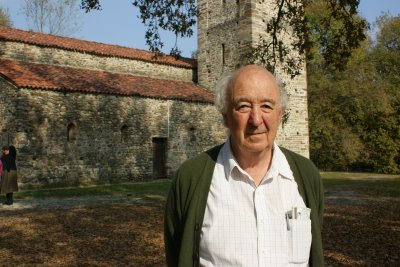
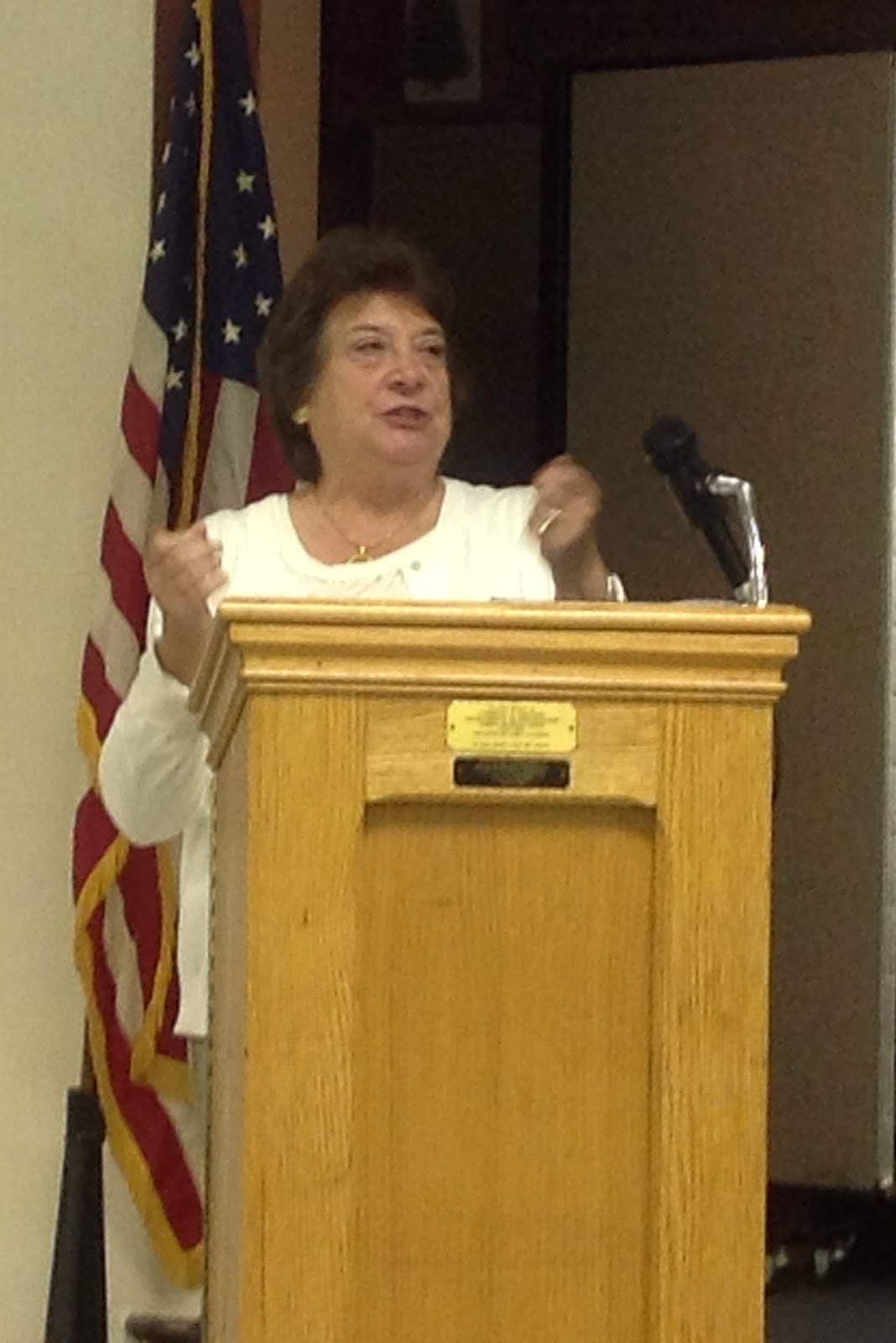
Thanks to Francisco Marshall’s blog for the terrific photograph of Peter Brown. 

P. 87. 

“Members of the rich often came to the church so as to find there a social urban lung. They valued in the churches a certain lowering of the sense of hierarchy and a slowing down of the pace of competition.”

 The sense that the glory of heaven stood behind their every gift enabled the Christian rich to contribute regularly and with that much less strain. By giving in the Christian churches they took part in a communal religious venture tinged with expectation of limitless rewards.

Peter Brown: The Church as “Social Urban Lung”

Peter Brown spoke at Labyrinth Bookstore

Diversity is much prized by some Christian congregations, but in recent history it hasn’t always been this way. Churches have been historically the most segregated, divisive groups in America. But in Rome in the period of late antiquity, in the period from the 2nd to the 8th centuries, says Peter Brown, the church promoted the value of diversity.

In a conversation between Brown and Elaine Pagels at Labyrinth Bookstore on Wednesday night. Brown and Pagels discussed Brown’s new Through the Eye of a Needle: Wealth, the Fall of Rome, and the Making of Christianity in the West, published by Princeton University Press. Brown cautioned against “pauperizing” the poor, thinking of poor people as … simply … poor.

Quickly scanning his book, I found Brown’s observation that, in the Hebrew tradition, the poor were not merely beggars: They came to the rich and religious leaders to seek justice and protection. Brown writes (page 77) that the early Christian church viewed the poor, not as ‘the others” but as “our brothers.” (Ironically that is even more true today now that folks who thought they could live in comfort now find themselves in foreclosures. In Princeton there are hidden pockets of need in the most affluent-seeming homes.)

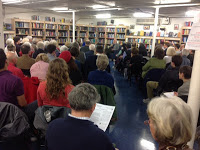
Brown writes (page 87) that wealthy people “valued in the churches a certain lowering of the sense of hierarchy and a slowing down of the pace of competition.” (Just two days before, this is what Roberto Schiraldi seemed to be calling for, when he led a Not in Our Town discussion on the values of “white privilege” at the Princeton Public Library.)

Continues Brown, “Members of the rich often came to the church so as to find there a social urban lung.” That term, social urban lung, describes a place like the Princeton Public Library, which harbored refugees from the power outtage, some poor, some wealthy, all equal as they needed warmth and plug-ins. It also describes the house of worship where people can drop their pretensions or inadequacies and “love their neighbor as themselves.’

It  has resonance to see what I see happening in my own church, where at the very hour Peter Brown was speaking, the Cornerstone Community Kitchen was serving dinner to a wide variety of people — some who needed the food, some who just wanted to mingle, some who just wanted to “give back” by helping. The good part is, you don’t need to know — and it isn’t obvious  — to which group a person belongs.

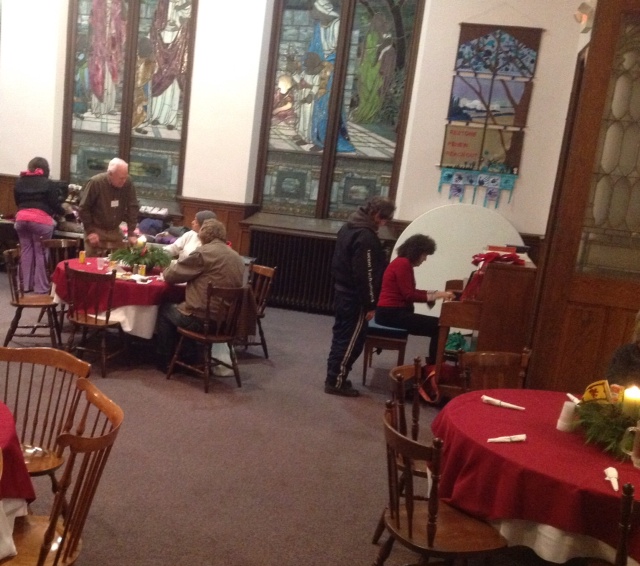
P.S. Come out some Wednesday for the free meal, served in partnership with the Trenton Area Soup Kitchen but definitely not in a soup kitchen atmosphere. You are served by volunteers at an elegantly dressed table (at right), and the meal includes fresh vegetables, salad, and dessert, and there’s even a piano player. It’s every Wednesday, 5 to 6:30, at the Methodist church at the corner of Nassau and Vandeventer, all welcome.

I love Brown’s term, “a social urban lung.”

Questioning the Values of the Establishment

Achieve Achieve Achieve? Maybe competing for good grades is not a good enough value, said New York Times columnist David Brooks, speaking to a Princeton University audience last week. He said he was disappointed that university students — whom he famously criticized a decade ago for being overly competitive — still place too much emphasis on achievement. “The language of achievement has overshadowed the language of virtue,” he said.

 
Many of the same views are held by Roberto Schiraldi, a counselor and therapist who formerly worked at Princeton University. He contrasts the values of elitism, power, wealth and control with the values of cooperation, sharing, support, and service. He questions what Princeton students and residents hold as core values and how these values relate to white privilege and race. 
 
Schiraldi and Barbara Fox will facilitate a discussion at the monthly session, co-sponsored by Not in Our Town, of Continuing Conversations on Race and White Privilege, on Monday, December 3, at 7:30 p.m. at the Princeton Public Library. All are welcome. 

Not Nutcracker: Thelonious Monk, Peter Martins

Point One: Yes, Virginia, you can see dance without the sugarplum fairy in December. Here’s a chance to see a free, on-the-edge dance-jazz-performance event. Thomas de Frantz, a professor at Duke University, focuses in his academic life on  how African Americans use their bodies to perform various identities: gender, regional location, sexual identities, race and class, among others


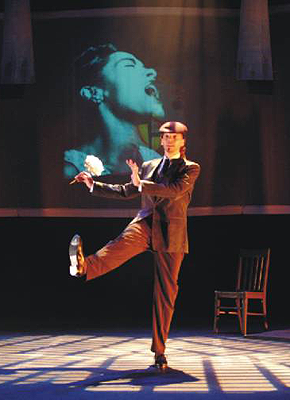
On Sunday, December 2, 7 p.m., in Princeton University’s Hagan Dance Studio, he will perform ‘Monk’s Mood: a Performance Meditation on the Life and Music of Theolonious Monk,’  “as a wordless, danced, biography of the late jazz musician and composer,” quoting the press release. “Presented with Eto Oro, this multimedia performance is created with Miditron and Isadora technology, and utilizes random images and songs to create a spontaneous improvisation, or live choreography at its very best.” 


Please note that the Hagan studio is usually light on production values. Just the basics. That’s a drawback that the new Lewis Center will fix.

For a short example, click here 

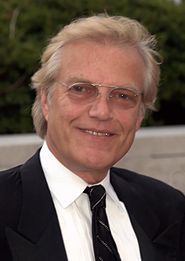
 Point Two: When watching Leslie Stahl’s profile of Peter Martins on Sunday, I was awash in nostalgia. Who else remembers Peter Martins of 25 years ago, tall-blonde-and-gorgeous, presiding royally at Scanticon (now the Forrestal Marriott). Scanticon — owned and founded by a Dane — had just opened, and the then Danish Prince of Ballet had just finished a guest Nutcracker gig with the young company Princeton Ballet. If I remember correctly, he partnered the young Heather Watts. Everyone, including me, was agog. 


Scanticon did itself proud with such luxurious goodies as salmon flown in that day from Copenhagen. Nice memories — and they still echo when I walk in the door of the still-cozy Forrestal Marriott. And here is an extra-yummy look at New York City Ballet, a master class.  

Belpw,  some other Not Nutcracker opportunities. This list was cadged from http://www.princetoninfo.com, the website for U.S. 1 Newspaper.Just go to the site and it will cough up all the dance events.


(11/30/2012 – Dance), Dance Plus FallMason Gross School of the Arts, Mastrobuono Theater, 85 George Street, New Brunswick, 732-932-7511
7:30 p.m., Works by Robert Battle, Julie Bour, Patrick Corbin, and faculty members. $25.,www.masongross.rutgers.edu

(12/01/2012 – Dance), FleetPrinceton University, McCarter Theater (Berlind), 609-258-1500
2 p.m. and 8 p.m., Guest and student choreography. $15., www.princeton.edu

(12/01/2012 – Dance), Dance Plus FallMason Gross School of the Arts, Mastrobuono Theater, 85 George Street, New Brunswick, 732-932-7511

7:30 p.m., Works by Robert Battle, Julie Bour, Patrick Corbin, and faculty members. $25.,www.masongross.rutgers.edu

Princeton’s Cornerstone Community Kitchen Offers WiFi

When Hurricane Sandy hit, virtually all of Princeton lost power and phone service. The next day, Princeton United Methodist Church – situated on a busy corner — opened its doors. That day, and all that week, Pastor Jana Purkis-Brash and Music Director Hyosang Park plugged in the coffee pot and posted a sign on the lawn. It read:  Come in! Get warm! Charge and use our WiFi!

On Wednesday two dozen passersby sought brief refuge from the cold, plus nearly 100 people spent the day — they charged their phones and logged onto PUMC’s Wifi. Those who were stranded made travel arrangements; others answered their office email or updated Facebook pages so their friends would know they were OK. Church members hosted in the Sanford Davis room. Then at 4 p.m. the Cornerstone Community Kitchen team converted it into a dining room. That’s because PUMC – in partnership with the Trenton Area Soup Kitchen — serves free meals to all on Wednesdays. This week PUMC’s Cornerstone Community Kitchen menu was roast pork and mashed potatoes, salad, and dessert for 73 hungry people.

On Thursday PUMC hosted 75 WiFi users – everyone from entrepreneurs who stayed all day to families with children who just dropped by. Some were referred by the Princeton Public Library, which was having trouble meeting the demand. Even PUMC’s WiFi had faltered because of too many users, so two more Wifi nodes were added.  On Thursday PUMC  served breakfast, lunch, and another Cornerstone Community Kitchen dinner – this time, spaghetti for 100 people. At that point few in Princeton had power, and it was getting quite cold. PUMC hosted again on Friday.
“You imagine that this is what a church should do, but you rarely ever see it done,” said Diana Rhodes, one of the grateful visitors. “What a wonderful service you have provided!”

Thursday at PUMC: Warmth, Wifi, Food

For our neighbors who are chilled and the power-less — Since Tuesday, Princeton United Methodist Church, corner of Nassau at the Garden Theatre — has been open for “charging,” for WIFI, and for coffee and snacks. Today (Thursday) we’re serving lunch and dinner, a spaghetti dinner, open to all. 

Yesterday, Wednesday, 200 people came in from the cold. Later in the day we lost the WIFI — it was overpowered by the demand — but we have it back now and are watching out so that doesn’t happen again. And Wednesday was our weekly Cornerstone Community Kitchen supper; we partner with the Trenton Area Soup Kitchen for the hot meal and add the fresh fruits and vegetables.

So….stop by today or tomorrow, so we can help you stay warm! 609-924-2613

Stoolmacher: Hunger’s Not a Game

This is an endorsement, nay, an earnest recommendation of Phyllis Stoolmacher as a speaker for any community group. She is the for-forever director of the Mercer Street Friends Food Bank, which distributes 50,000 pounds of food a week to some 60 organizations to help feed 25,000 people in Mercer County who don’t have access to enough healthy food.

Feeding the hungry — that doesn’t sound like a fun topic, one that you would like to contemplate over a meal. But at a breakfast at my church last Sunday she quoted poignant stats like a politician, dispensed the folk wisdom with the aplomb of a culinary Dr. Ruth, and inspired like a preacher.

To be sure, she was preaching to the choir. Some at the gathering had just taken the food stamp challenge, to live for a week on the meagre amount provided by what is now called the Supplemental Nutrition Assistance Program (SNAP). And the 25-year-old food bank partners with the Trenton Area Soup Kitchen which in turns partners with our church to deliver a weekly Wednesday meal at the Cornerstone Community Kitchen.

I learned new facts and confirmed what I already knew. Federal contribution of commodities has been cut by two thirds. A family of four can qualify for SNAP if the household income is less than $23,500, and this number does not account for the high cost of living in Mercer County. “It’s not a welfare program,” says Stoolmacher, “and we send our people out into the community with laptops to help people qualify.” Nutrition dollars come on a debit card so nobody can tell whether someone is swiping a credit card or the SNAP card. People stay on SNAP for an average of 9 months.

Restaurants can’t donate because of health issues. Supermarkets do donate, but not prepared food. The state provides funds to buy Jersey Fresh fruits and vegetables. Children who would otherwise go hungry on weekends get sent home with a backpack of easy-to-prepare microwavable meals. Simple recipes go into regular bags of groceries.

It’s best to give dollars rather than canned goods because the food bank can buy in bulk. “You would be surprised at what comes from food drives,” she said wryly, “how much cranberry sauce we get at Thanksgiving and how much matzoh we get in April. Who likes  matzoh? I want tuna fish! Give me tuna fish and I am a happy camper.”

What else can you/we do? Realize that someone you know may be “nutritionally challenged.” Encourage somebody who is looking for work, maybe they’ve run out of unemployment benefits, to sign up for the SNAP program. Or bring them to Cornerstone Community Kitchen on Wednesdays, from 5 to 6:30 p.m., at Princeton United Methodist Church, Nassau at Vandeventer.  Nobody knows the difference between the people who come for nutrition or those who come for conversation and companionship. There’s plenty of food on the plates, and there are flowers on the tables.
Some of that food found its way to Princeton via Stoolmacher. She won’t countenance empty or unhealthy calories — not soda, not Gatorade, not ramen noodles, not sweet cereal. Besides tuna fish, her most coveted item is shelf stable milk-in-a-box. “It tastes like real milk.”

Palmer Square: Not Without Pain

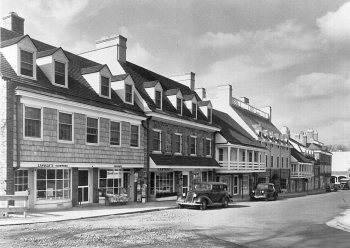
Palmer Square is celebrating its 75th, and here is the best of the articles that I’ve seen about it — not in the established weeklies, not in the paper I used to work for, but in the free paper delivered by mail, the Echo. (Photo of the square in 1937, just after it was built.)
Why do I say it’s the best? Because the reporter, Joe Emanski, put David Newton’s feet to the fire and brought up the tough issue about how Princeton’s African-American neighborhood was torn down to make room for what is now a beautiful town center. Emanski gave Newton a chance to express regret and yet affirm the result. As below.  
“Newton says in a way, it was brave to build something like Palmer Square in the middle of the Depression, because it might have been a failure. He doesn’t discount the resentment the displaced residents felt then, or that their descendents feel now, but said that Palmer and his colleagues were in a position where they had to make difficult decisions.
“With the benefit of full hindsight it’s easy to be critical, but we’re 75 years on, and I think the benefits to downtown are very positive. The end product was good; the cost it took on families and forced relocation, and plain old racism, was immense,” Newton said…..
“Princeton, along with bigger cities like Kansas City, prefigured the town center-style urban renewal we see today. Princeton also showed, to anyone who wanted to see, that urban renewal was going to require difficult choices, and that not everyone will benefit equally from the decisions that are made.”
Reporters need to ask the painful questions, so that the source has a chance to respond. I liked Newton’s response. 
Read the full article for great details, like the underground tunnel system where the Christmas tree lights get laid out. Also, find proof positive that you are right when you tell someone, no, this is not the original Nassau Inn. I’ve had knock-down-drag-out arguments about that with visitors who were certain sure that this building hosted the Continental Congress. But what is authentic, as Mimi O of Princeton Tour Company would be sure to say, is the Norman Rockwell in Princeton’s version of a rathskeller, the Tap Room
Full disclosure: I used to work for U.S. 1 which is now part of Community News Service, to which U.S. 1 now belongs.  As a representative of Not in Our Town Princeton, an organization that works against racial bias, I chafe at unmitigated adulation of the Palmer Square development. It’s OK to admire Palmer Square for the great place that it is, but at least let’s remember that this area had been the heart of the African-American neighborhood, and that removing those homes caused a lot of pain.  (The gentrification of this neighborhood is another painful topic, but for another time.)