Category Archives: Around Town

Personal posts — some social justice (Not in Our Town), some faith-related (Princeton United Methodist Church), some I-can’t-keep-from-writing-this

Janell and Jennifer: 30 years Later


For a choreographer, it’s all very well to work with good amateur dancers, but it’s really special to make work for an artist, who can take your movement and make it better than you’d thought it could be.

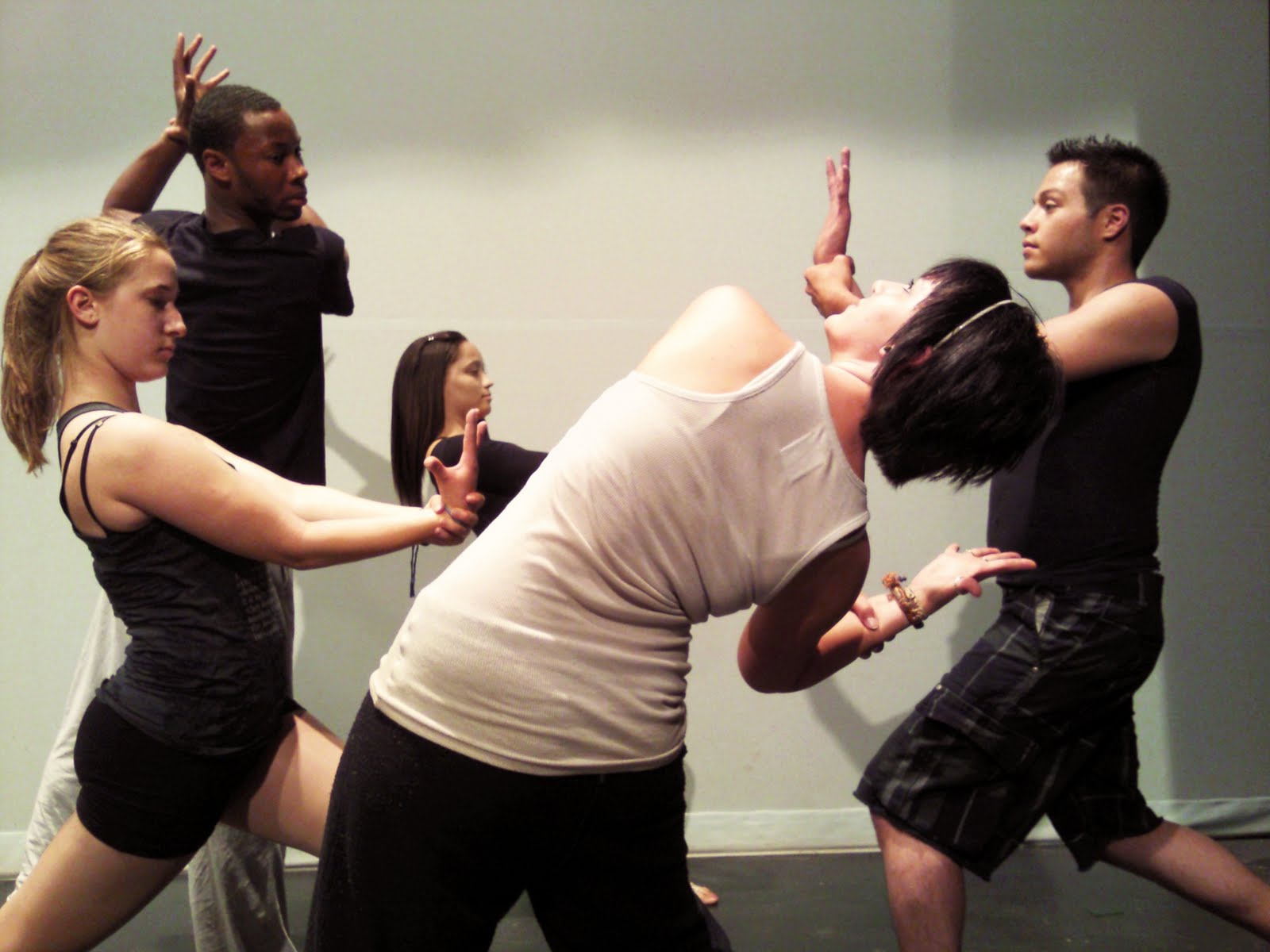
Janell Byrne, in her 30th anniversary concert for the Mercer Dance Ensemble (Kelsey Theatre, May 29), did that for Jennifer Gladney (shown right, photo by Pete Borg). A superb dancer, Gladney sometimes seemed more “Janell” than Janell. It’s been a gradual process, exciting to watch.

In Byrne’s “Confluence,” Gladney joined Andrea Leondi, Brianne Scott, and Kaitlyn Seitz – four sun goddesses in flowing gowns, with warm sidelighting (lights were by Sean Varga).

“Jig and Reel Stew” was Gladney’s home hoe-down turf. She and the above dancers, plus guest artist Karen Leslie Mascato, wore red and black in a lively evocation of different folk traditions, like syncopated slapping on the stage floor to reference the German Landler dances, where boys slap their thighs and feet. Then Gladney surprises with an off balance slow extension into a rond de jambe, a lyrical contrast to the down-home fun, and she makes the most of it.

Byrne challenged Gladney to go Spanish-sultry in “Tangos,” (her star turn was to music by Anja Lechner, but there was an Astor Piazzolla section as well). Gladney uses her shawl as weapon, as a semaphore, as a bullfighter’s cape. She was Byrne’s altar ego. She took the stage.

Byrne has a mystical streak, and her “Sacred Space,” to music by Morton Feldman had seven dancers (Danielle Atchison, Ian Conley, Charlene Jamison, Alexandra Pollard, Michael Quesada, Brianne Scott, and Scott Walters) treading with caution into devout, pilgrims, treading one organism. Evoking a mystical mood, it was my favorite piece on the program.

Gladney and Han Koon Ooi each contributed two works. Though they were good, I think it’s fair to say that they showed the contrast between a young choreographer and a mature one. Byrne simply knows how to do the most with less material and how to move dancers around the stage in out of the ordinary ways that are true to the dance’s message. That’s what the 30 years were about.

Against Racial Divisions: Three Tries This Week


Even in what is being hailed as the post civil rights era, racial divisions – particularly between blacks and whites – remain entrenched in American life. So says Thomas Sugrue, author of “Not Even Past,” an examination of the paradox of race in Barack Obama’s America.

Sugrue is the first of two who will discuss the topic this week. He will speak on Wednesday, June 9, at 7:30 p.m., at the Princeton Public Library. The event is free.

Racism in the 21st century is also the topic for Stephanie Jacobs who will speak at a Princeton United Methodist Church program on Sunday, June 13. Breakfast is served at 8 a.m. and the talk begins at 8:30 a.m. RSVP at 609-924-2613; a $5 donation for breakfast is requested. The church is located at Nassau & Vandeventer streets in downtown Princeton.

Sugrue is a leading historian of civil rights, race, and urban America, who teaches at the University of Pennsylvania. His books include “Sweet Land of Liberty: The Forgotten Struggle for Civil Rights in the North” and “The Origins of the Urban Crisis: Race and Inequality in Postwar Detroit.” His talk is part of the “Thinking Allowed” series at the library.

Jacobs is a relationship coach and consultant with more than 15 years experience as an educator, counselor and trainer. She is doctoral student in Drexel University’s Program in Couple and Family Therapy and also serves as an adjunct faculty at The College of New Jersey. Rooted as she is in the Christian faith, Jacobs is particularly interested in the issues relating to navigating diversity and racism in today’s world

A practical way to confront racial and economic forces that segregate communities is to attend the closing worship and prayer walk for the Justice Revival on Sunday, June 13, at 3 p.m. It begins and ends at Trinity Cathedral, 801 West State Street.

“We will leave the closing worship service and walk together through the neighborhood, meeting neighbors and joining with them in prayer and reflection at key locations,” say the organizers. “Our goal is to show that Suburban Mercer County cares about Urban Trenton and that we are committed to being neighbors to one another.” (www.revivejustice.org)

Full disclosure: I made a similar post on the blog for Not in Our Town, where I serve on the steering committee. I am a member of Princeton United Methodist Church.

Janell Byrne: 30 Years with MDE


You’d think that after 30 years choreographing perhaps 150 dances, Janell Byrne, director of the Mercer Dance Ensemble at Mercer County Community College, would present some of her former work at her 30th anniversary concert. But no, Byrne likes to look ahead. The themes may be similar to the past, but – as she says – she has different dancers, and it’s more fun to create new work on the current dancers than to struggle to fit them into old work.

“Over the last three or four years, more students are asking to be a part of it, and a lot of them are men. So I am using partnering and different relationships, not necessarily the relationship between men and women, but between differences in body types.”

“MDE – Legacy” will be presented Saturday, May 29 at 8 p.m. and Sunday, May 30 at 2 p.m. at the Kelsey Theatre on Mercer’s West Windsor campus, 1200 Old Trenton Road. Tickets for MDE are $14 for adults, $12 for seniors, and $10 for students, available at http://www.kelseytheatre.net, at the box office, or at 609-570-3333.

Byrne will also perform in a faculty studio showing at Princeton Ballet School on Sunday, May 23, at 6 p.m., at 301 North Harrison Street. On the program are works by Mary Barton, Jennifer Gladney, and Alma Concepcion. Susan Tenney will present “Je me souvien” (as seen at Rider) and Byrne will present “Elle(s)” (see below). Seating is limited (609-921-7758).

In spite of making everything new this year, Byrne admits that some themes may look familiar. A piece that uses prop ladders references an early work, “Chutes and Ladders.” “And I tend to have a piece that the novice dancer can fit well into.”

Many of the MDE dancers are professional and semi-professional dancers from the community, but some come from Mercer’s dance program, which offers jazz, ballet, and modern dance on all levels. Students can major in dance and earn associate’s degree (to transfer as juniors to a four-year college) or an AFA degree in the performing arts in which they combine conservatory training in theatre, dance and music with education in the liberal arts and sciences.

A series of three tangos share the earthy quality of that dance, but are very different. A dance for seven people is set to a Steve Roach “Sacred Space” score, originally written for the nonsectarian Mark Rothko chapel. ”There is so much in the simplicity and power of his paintings, that it inspired me to hear the music,” she says.

“Quartet for Four Women” is set to solo piano music with dancers coming and going. “We want to suggest that the dancing continues beyond the limits of the stage,” Byrne says.

Byrne, a native of California, is a former student of Stanley Holden and Margaret Hills in Los Angeles. A graduate of the Juilliard School, she studied with Alfredo Corvino. In addition to Mercer, Byrne has taught at Princeton University, The College of New Jersey, Princeton Ballet School, Lawrenceville School, and the Anthony Rabara Pilates Studio.

The varied program includes group pieces featuring Latin and Malaysian sounds, a high energy number inspired by aerobic dance, and another in which five performers dance to classical guitar music. Also contributing work are Jennifer Gladney, a 2003 alumna who has performed with MDE for 10 years, and Han Koon Ooi, a 2009 alumnus who has performed for five years.

The anniversary concert is also unusual because Byrne is, after a long hiatus, going to perform. “Elle(s)”, a trio by Byrne for herself and guest artists Cheryl Whitney Marcaud and Diane Kuhl, seen in March at Rider’s Yvonne Theatre, is a delight.

Choreographing doesn’t get easier, Byrne says. “You would think I would have a bag of magic tricks, but I don’t.”

Photo: MDE dancers Hanna Bruskin, DeHaven Rogers, Yvonne Clark, Brianne Scott, and Ian Conley.

U.S. 1 Newspaper’s 25th: Part I

Starting this week, this month, this year, U.S. 1 Newspaper celebrates its silver anniversary. Amazing, isn’t it, that Princeton’s maverick business/entertainment newspaper could capture the hearts and minds of loyal readers and keep going for 25 years!

I begin to recognize the reasons why as I read “Personality not included: Why Companies Lose Their Authenticity – and How Great Brands Get it Back,” by Rohit Bhargava, a marketing guru with the iconic firm of Ogilvy. I met him at the e-Patient Connections conference in Philadelphia last Monday.

When I read a business book (and I’ll bet you’re the same way), I try to test out the wisdom by applying it to the businesses I know. So in honor of U.S. 1’s silver year I propose to dissect Bhargava’s theories, one by one, and see how they compare with my perception of U.S. 1’s business model. Maybe you’ll want to do the same and apply them to the business where you work.

Caveat: Notice that I said my perception of what U.S. 1 Newspaper is about. I am not the founder, nor related to the founder, Richard K. Rein. Rein is famous for his single-minded vision and after 23 years (I first wrote for him in 1986) I can sometimes guess what he’ll say but by no means all the time. To get his opinion, you’ll have to read his column and/or the Between the Lines column this week. He’ll probably interview himself; he does every year.

Bhargava says that kind of definable personality is the key to creating an inspiring brand: “Personality is not just about what you stand for, but how you choose to communicate it. …Personality is the reason consumers love one product more than another. ….Personality can help you go from good to great.”

How to define personality? That’ll be in Part II. It’s enough, now, to plan to pop a cork and celebrate.

Suzanne Farrell: Stay Out of Your Comfort Zone

When you work on a new dance you are called upon to make a new world, to make something from nothing, said Suzanne Farrell, speaking after her ballet company performed works by George Balanchine at McCarter earlier this month. In the photo she is flanked, on the left, by New Yorker dance critic Joan Acocella and, on the right, by Simon Morrison, professor of music at Princeton. On the program were Balanchine works set to Mozart, Stravinsky, and Morton Gould. The latter, “Clarinade,” had been set on Farrell when she was just 18.

I’ve tried to transcribe Farrell’s post performance conversation here, or if you can’t see that, try this google doc, but this is not the final version. I’m hoping others — including Acocella, Farrell, or Morrison — can correct or add to this document.

A Princeton connection: Erin Mahoney, who trained at the Princeton Ballet School and with ARB, danced with Farrell’s company in 2004 and was reviewed by John Rockwell in “Clarinade” in 2004.

“I call Mr. B’s ballets ‘worlds.’ At first they feel foreign. You have never been there before,” said Farrell. “It takes a certain amount of inner resources not to fall back on what you have done before, not to paint the choreographer into a corner where you are comfortable. “

Sounds like risk management to me. Entire libraries have been written about that, and here a dancer is saying don’t manage risk. To be creative yourself, to put yourself at the service of a creative person’s ideas, don’t manage risk, take the dangerous chance.

That’s as scary an idea for a writer as it is for a dancer. (You mean I can’t just dish out a new version of Article Template B? I have to start fresh each time? Sounds like lots of work.)

Farrell made her challenge even more difficult: “Dancers need to rehearse different options of how it looks, different options to have in their arsenal of memory. They need to live in the moment, and if something unexpected happens, be ready to take the challenge.”

Live in the moment? That’s another truism that is easier said than done.

Both concepts — taking risks, living in the moment — are crucial to learning how to be creative. Both can be learned by dancing.

Posted by Picasa

The $2 Billion Mouse


I’ve always had a soft spot in my heart for Medarex (just bought by Bristol-Myers Squibb for nearly double the stock price) because Medarex has a transgenic mouse that can produce therapeutic antibodies that mirror a human’s antibodies. .

Mice are my favorite critters anyway, because I literally grew up in the Frank H.J. Figge mouse lab. The lab had 5,000 mice, who owed their existence to my father’s cancer research efforts, and my late mother, Rosalie Yerkes Figge, ran the breeding colony. My sister and I helped out in the family business with such age-appropriate tasks as filing records and filling glass bowls with cedar shavings (at five years old), transferring mice by their tails to clean bowls (age seven), and separating and marking the adolescent mice (age 10).

So when Donald Drakeman (left) started Medarex as a monoclonal antibody company in 1987 and 10 years later bought Genpharm with its transgenic HuMAb mouse, developed by Nils Lonberg, I was personally and professionally intrigued. Given the cost and time needed to administer clinical trials to humans, the Medarex mouse can help bring important drugs to market quickly and cheaply. I thought Drakeman was pretty smart to wend his way through some nasty patent disputes and emerge, owning the mouse.

Drakeman and his wife, Lisa Drakeman, have been on the cover of U.S. 1 at least three times, starting in 1987 when it was a pop-and-mom shop with offices at 20 Nassau Street. She came to Medarex as SVP of business development and moved on to be CEO of Genmab. He is no longer with Medarex but she is still at Genmab, based in Denmark but with an office here in Princeton.

Yesterday Bristol-Myers Squibb bought Medarex for what amounts to $2.1 billion, and this morning the stock of both companies shot up, with Medarex nearly doubling to $15 plus.

What does this do for GenMab? Nothing, GenMab claims. Medarex has sold most of its GenMab stock, earned in return for granting 16 prepaid licenses to use the special mouse for drug development. Medarex still owns 5 percent of GenMab, says GenMab’s PR person, Lucy McNiece. Of the 16 licenses, 13 have been used.

And now, of course, I kick myself for not having bought Medarex stock. Before I left my job at U.S. 1 in 2008, it would have been a conflict of interest for me to own it and also report on it. After that, naysaying from a stock broker (who shall remain nameless) deterred me.

But as my doc brother in law says, the Retro Spectroscope is never wrong. And congratulations to the prescient Medarex stockholders, the Drakeman family, and New Jersey’s biotech community. A rising tide raises all boats.

Not in Our Town


When we moved to Princeton in 1981, I was lucky enough to have cousins already living here. One was my first cousin on my father’s side. On my mother’s side is Ann Harris Yasuhara, and if you go by the rules, she is my first cousin once removed. We feel lucky to be so geographically close, and so as soon as I was able (when I no longer worked full time at U.S. 1) I began to meet with one of the organizations she supports, a faith congregation-based group called Not in Our Town. Click on the links to see the mission statement, and here is the list of what individuals and groups can do to fight racism.

Not in Our Town, along with Princeton Public Library, will present a workshop “Engaging in an Exploration of White Privilege” on Monday nights, starting April 13 at 7:30 p.m. Among the presenters is Ann Yasuhara, pictured, and she hopes to make this “an inviting, friendly, and engaging experience.” Perhaps you’ll join us . . .

David Abalos: Against Assimilation

If Hispanic immigrants don’t do the menial jobs, who will? That’s the un PC question I didn’t dare ask in public, when David Abalos, a visiting professor at Princeton University, addressed the Princeton chamber breakfast. He is an expert on multicultural gender scholarship and on Latinas and Latinos in the U.S from the perspective of a politics of transformation, and he spoke about Hispanic immigration and its effect in Princeton.
Each wave of newcomers to this country – from Africa, Ireland, Italy, Eastern Europe – has worked their way up the chain to get educated, accepted, and assimilated, explained Abalos today, at the Nassau Club.

He told his own story. His parents emigrated from Mexico to Detroit in the 1920s. During the Depression, the Mexicans were pressured to go home but his father cut hair and sold apples to survive. His mother opened a boarding house. He began working at age 8, and at age 12 had a daily job.

Each “tribe” who immigrates, he said – Mexicans, Irish, Jews, Italians – has been made invisible and used for cheap labor. Then the children try to “assimilate,” because children want security above all else, and they try to be like everybody else. Those who are “exceptional” are seen as more like the elite (like “us”), and they get the college scholarships. After World War II, the GI Bill was the immigrants’ entrance into the white society, which is the power society.

But Abalos opposes the concept of “assimilation.” A graduate of the University of Toronto, Abalos was a professor at Seton Hall. In the 1970s, when it was not popular, he advocated for Latino representation in students, faculty, and administration. Now he is active in the immigrant community in his home town, Hightstown, and he urges his Princeton students not to forget where they came from. “When we make it, we close the door. Assimilation is a deadly issue. Be in Princeton, but not of Princeton. If you become elitist you will abandon your own community. Don’t forget what your parents went through.”

Some snippets, some statistics:

Economic: Undocumented Hispanics in Princeton currently come from Guatemala, Mexico, and Ecuador. The Ecuadorians have paid as much as $14,000 to a “coyote,” a smuggler, borrowed against their homes, to cross the border. They earn about $10 an hour, so most work two jobs, don’t have driver’s licenses, and live in overcrowded situations. “They will work any kind of job in order to support their families back home.”

Race and class: Even within an ethnic group, prejudice is rampant. “If you are dark and have an Indian name, you are in trouble throughout Latin America.” Abalos said that, as a light-skinned person, he initially had trouble being accepted by darker-skinned immigrants.

Official policies: School principals in the U.S.A. are no longer allowed to ask about immigration status of students and families. In Princeton and surrounding areas police officers write traffic tickets without asking about immigration status. The University Medical Center of Princeton is doing a “superb job” in treating the immigrant population, and this is in the interests of community-wide health. “If immigrants go underground, they will not report communicable diseases.”

Taxes: According to Princeton University’s Doug Massey, 86 percent of immigrants pay taxes, though they will never see Social Security payments (though these payments are being held in escrow). According to Rick Ober, the AARP tax center on Clay Street brings in lots of undocumented immigrants who are paying taxes. “They are paying taxes, they support the businesses on Main Street, the owners of their apartments are paying taxes – they are contributing to this country with their cheap labor,” said Abalos.

Education vs Demographics: As the U.S. workforce changes, by 2020 we will not have the college educated people needed for the workforce. Why? “For years we were not allowed to go to school, because they wanted us to do the cheap labor,” says Abalos. “Now we start to pay the piper.”

The birth to death ratio for whites is one to one. One person dies, one baby is born. For African Americans it is 1 to 3. For Asians, 1 to 2, for Latinos, 1 to 8. Yet only 12 percent of Latinos have a BA, 1 percent have master’s degrees, 0.2 percent PhDs. It is projected that, by 2043, there will be 100 million Latinos in the United States.

A good example of how compassion and democracy did work is when, in 2006, Princeton University’s valedictorian was an undocumented immigrant.

On NAFTA. This came up in the question period. Abalos believes that Mexico got a worse deal than Canada. Corn is a sacred and basic food in the Mexican culture. When the U.S. “dumped” subsidized cheap corn into Mexico, a good number of the 30 million Mexicans involved in corn production lost their jobs. They moved north, and couldn’t get manufacturing jobs, so more of them came across the border, compounding the undocumented immigration problem.

Afterwards I consorted with Denise Vargas of Excel Graphics to ask my un-PC question, who will be the next cheap labor force? “It could be teenagers,” she said. “Kids need to learn what work is. I raked leaves and shoveled walks. They could be out there raking leaves and shoveling walks on our street, rather than everyone hiring lawn services.”

And as I was walking out of the Nassau Club, talking with Abalos, I asked him that burning question, “So if democracy and compassion work to educate the current immigrants, who will do the cheap jobs? What population will fill in?”

Just as I said “cheap jobs” we passed a Nassau Club employee polishing the window next to the door. Maybe he didn’t hear, but to me it was an awkward moment. We didn’t stop. And anyway, the employee was “invisible,” right? But he wasn’t quite invisible. He spoke to us, a minor comment, on the order of Have a Good Day. To his credit, Abalos said something in reply. I’m embarrassed to admit I was so intent on my question that I did not reply.

My own answer to that question involves a concept that I am told looks like socialism and would stymie the desire to improve one’s self. But I will say it anyway: Pay unpopular blue collar jobs more at the risk of paying white collar jobs less. Pay in inverse proportion to the nastiness of the job.


From an insider: the Obama campaign

“The genius of the Obama campaign was to create a blank screen onto which each of us could project ourselves. I am in a coalition with Colin Powell and I agree about almost nothing with Colin Powell.”

So said Melissa Harris-Lacewell, speaking to Princeton University students and community members at the Carl A. Fields Center on Friday, November 7, at noon. A graduate of Wake Forest with a PhD from Duke, she is the associate professor of politics and African American studies and has a blog, the Kitchen Table, (www.melissaharrislacewell.com). She has published one book, is working on another, and is a student at Union Theological Seminary. She spent election week going from one broadcast appointment to another. Here are some of her comments, some in quotes, some summarized.

What should we do now? “First, everybody take a nap. Then

1. “Go to http://www.change.com and apply to work in Obama’s administration. I want everyone to apply. I love that, two days after the election, you can sign up. (What will they do with your email addresses? Send you email!)

2. “Remember that $10 and $20 donations can change everything. In this election we learned that, as ordinary people, our money counts. Figure out where to send your money. I figured out I can afford $50 a month and I’m sending to Proposition 8.

3. “If you were part of a group, do not wait for marching orders from the top. Community based organizations have been here all along. Find a pre-existing organization and help.”

How Barack Obama began his first successful campaign: His Republican opponent was knocked out of the race by a divorce scandal and the Republicans put an easily beatable guy on their ticket. When Obama gave a great speech in 2004 at the convention, he had the time to go on tour with the DNC, raising money and helping others get elected. Without the scandal and the unelectable candidate, Obama would not be president elect.

“The reason why you don’t remember Denver is the reason why Sarah Palin was a brilliant choice for McCain. I’m I proud to say I was in Denver, way up top with the true believers. Normally when 80,000 people wave a flag they are waving it against me, against blacks, gays, and women. I was worried, because nobody was paying attention to the other speakers. Then he walked out, and 80,000 people went quiet. Until then, McCain had said “Hope” has no content. In this speech he gave the content. And McCain had to change the game immediately.

Barack got 95 percent of the black vote, which means that black Republicans came over, and so did the Wall Street guys. The Republican party should have picked Mike Huckabee, a white man from the south who is as good or better, talking about race, than Obama. You would not have had the sense that voting for Huckabee was a racist vote. He could have picked an actual VP with the capacity to govern. Obama would not have carried North Carolina.

Barack has to begin with a consensus issue – not health care and gays in the military, as Clinton started with, but with an issue like job creation, Because he is a city guy, he can assemble support for infrastructure.

Hilary will not be a Supreme Court Judge; she is about to have an incredibly distinguished career as the master of the Senate, the Teddy Kennedy of her era.

We (blacks) are not junior partners. We handed him North Carolina. We saved Pennsylvania and Ohio and more. Barack can’t treat us the way Bill Clinton did. And he won’t. He could have left us out of the 30 minute movie, but the last shot was of a 106 year old black woman who voted for him in Atlanta.

Managing expectations now? “You saw him shift from candidate to statesman. In New Hampshire he said YES we CAN. On election night he said, Yes …. we

Comment from Barbara: Watch for Melissa’s articles in the Nation, in Ebony, and other media outlets…I’m proud to have her as a neighbor.


BD Wong’s “Herringbone”

I saw “Herringbone” at McCarter on opening night, and it was one of those times when you’re glad you went before you read the reviews. Yes, part of it was very dark and horrifying, and in movies I’m such a wuss that I leave the theater for the scary parts, but with live theater I was indeed ready to suspend disbelief. If I had read the reviews, I might not have gone.

And as I reread LucyAnn Dunlap’s interview with Wong (U.S. 1, September 10) I realize that I never saw “M Butterfly,” the David Henry Hwang play and film in which Wong played a female Peking Opera singer.

My first encounter with men playing women on an Oriental stage was in the late 1970s, when the Grand Kabuki troupe played the Beacon Theater in New York. I was freelancing and living Philadelphia, and I managed to snag an interview with an eminent actor. I was starstruck.

I went back and brought two of my young children — they couldn’t have been older than six and nine — to a matinee. They were mesmerized.

I was amazed at how, even within the rigid form of Kabuki, the actor could embody the spirit of an elderly woman with pathos and humor at the same time. It’s this emotion-filled sleight of hand that drew me in, past the dark parts, to “Herringbone.” I can’t get back to McCarter (though the play continues through Oct 12) but maybe I can rent the movie.

BD Wong Makes His Entrance — 11 Times (U.S. !, September 10)

U.S. 1 ran the Simon Saltzman review on September 17.