Monthly Archives: August 2010

Add Science Sites to the College Tour


Summer and Easter vacations at our house always meant going to some scientific site, either Woods Hole, Massachusetts, where my father did research at the Marine Biological Laboratory, or an anatomists’ convention, or on some other trip, like our mid-40s visit and tour of what would become the Oak Ridge National Laboratory.

So I’m intrigued by the sight-seeing potential of a new Rutgers University Press book, Duane S. Nickell’s “Guidebook for the Scientific Traveler: Visiting Physics and Chemistry Sites Across America” ($19.95 and, full disclosure, I found it in the Princeton Public Library but also received a review copy). Take it on your next vacation — or college tour.

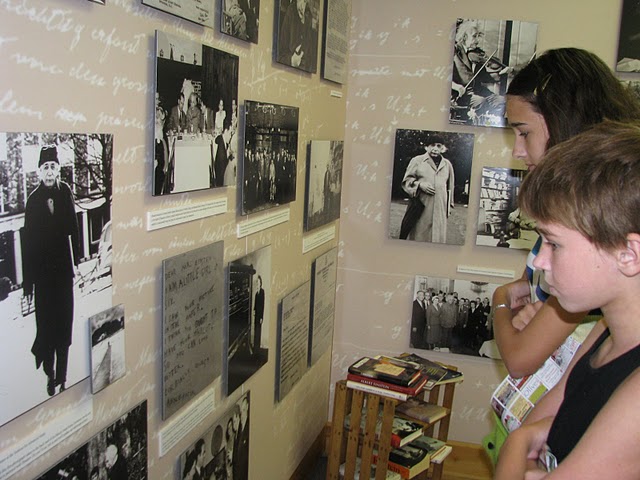
I checked out what Nickell said about Princeton. I’ve read, written about, and gone on many Princeton walking tours, but was delighted to find some new information on, for instance, the Joseph Henry House (the yellow house that belonged to the famous physicist is close to Nassau Street) and Henry’s artifacts in the Jadwin physics building display (including the first battery brought to America). Nickell points visitors to Landau’s mini-museum on Einstein (to which I brought my granddaughters, pictured) and to the scientific luminaries in Princeton cemetery, as well as to the more obvious choices.

In the “people” chapter on physicists Nickell devotes several pages each to Henry and Einstein and also includes Richard Feynman (who studied here) and J. Robert Oppenheimer (former head of the Institute for Advanced Study and famously targeted by McCarthy).

It’s organized in narrative style but has a good index. After chapters on physicists (Ben Franklin, Count Rumford, Henry, Robert Millikan, Robert Goddard, Arthur Compton, Enrico Fermi, Oppenheimer, and Feynman) and chemists (Joseph Priestley, George Washington Carver, Irving Langmuir, and Linus Pauling), he brings the reader to universities that emphasize science (UC Berkeley, CalTech, Chicago, Columbia, Harvard, MIT, Yale, and Princeton). Then he covers the National Laboratories and touches on particle accelerators, nuclear weapons, energy, and chemistry in industry, finishing up with the best science museums, including two in Philadelphia, the Franklin Institute and a sleeper, the Chemical Heritage Foundation Museum at 315 Chestnut Street.

As good as it is, it is by no means complete. Nickell lists four sites in New Jersey (Institute for Advanced Study, the Einstein House, the Joseph Henry House, and Princeton University, all in Princeton.) Perhaps because he focused on universities and national laboratories, he didn’t include Thomas Edison’s former laboratory, the National Historical Park in West Orange. And though Nickell devotes several pages to the larger-than-life sculpture of Einstein, by Robert Berks, in Washington, D.C., he makes no reference to the Berks “head of Einstein” sculpture at EMC Square (Princeton Borough Hall). He probably did his Princeton research before that was installed. And the Liberty Science Center didn’t make the cut. Maybe in the next edition.

Based in Indianapolis, Nickell teaches at the high school and college level. He wont the Presidential award for Excellence in Science and Mathematics Teaching, the nation’s highers honor for science and mathematics teachers. This is the second in a series that includes a guidebook to astronomy and space exploration sites.

As the author suggests, visiting the science meccas may “pique the curiosity of a young mind and open it to the possibility of a scientific career.” That didn’t work for me; maybe my seven-year-old mind was intimidated by trying to figure out the concept of nuclear energy at Oak Ridge. More likely it was because I didn’t have terrific classroom science teachers like Nickell.

Luck Trumps Skill


I grew up watching my dad take pictures. On vacation he’d “wear” his Leica for black & white, his Exacta for color slides, and in his camera bag he’d also have his Keystone or Bolex movie projector and his Polaroid instant camera. Among our family values: Never object to pulling off the road for a picture. Pose with a smile, not a smirk. Wear something red. Admire sunsets.

Back home my mother curated the slide collection, and curated was the word. They belonged to a camera club that set intriguing monthly topics: “birds,” “Wordsworth,” or “lavender,” and everyone delved into their extensive slide collections, each bringing 20 slides for a fun evening.

My sister is now curating those slides, more power to her, and we both continue the family tradition of snapping early and often. I don’t have a fancy SLR, and I’m not “technical,” but I have a pretty good eye.

So last summer, when we took our eldest granddaughter on a Tauck “Bridges” family tour to Italy, I planned to enter Tauck’s photo contest. In my father’s tradition, I took two cameras, a small point-and-shoot Fiji good for low light cathedrals, and a slightly more pretentious Canon, also point-and-shoot but with a fold-out viewfinder. (A shout-out to Lou and Brian Asack of New York Camera for helping me figure out what cameras I wanted and teaching me how to use them.)

I went through Rome and Florence trying to take a prize-winning shot with the fancier Canon, setting up the dramatic compositions, bracketing exposures. I thought I had some good ones. Then we got to Venice. On the last day, for our gondola ride, I stepped into the boat with my little Fiji on the wrist of one hand and held onto the boat with the other hand.

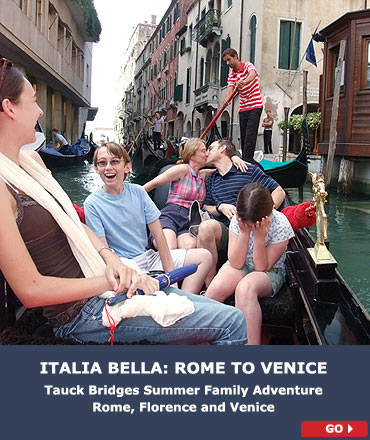
No sooner had I sat down than our friends sitting in the “lovers’ seat” started clowning around — smooching. Their son and my granddaughter thought it was hilarious.

Quickly and without thinking I snapped their photo, to give them as a souvenir.

That was my prize winning photo, because that was the moment that the couple’s seven year old daughter, overcome with embarrassment, buried her face in her hands. I didn’t know that when I took it. Only later did I realize I had a Contender for the Contest. Sure enough, it won first prize, a $2,000 certificate for our next Tauck trip.

The only downside to my delight was that the terrific photo resulted from pure dumb luck, not by skill or planning. (I like the uncropped version even better, available here.)

Now it’s one of four feature photos on the front page of www.Tauck.com and I’m planning to use up the certificate with our next trip when, once again, I’ll have two cameras, one for fancy, one for quick.

Real Life Lesson: Read What the Boss Writes


In this week’s issue of Princetoninfo.com (U.S. 1 Newspaper) the most engaging business-oriented piece is an essay, “Will the Real Scott Morgan Please Stand Up.”

There’s also an interesting article, by a relatively new freelancer (John F. Heenehan) on Chris Dries and his new company. Dries (a product of Duke and Princeton) belongs to the Greg Olsen/Sensors Unlimited clan and also sits on the board of Princeton Power Systems, founded by young Darren Hammel.

As it happens, in this week’s cover story, Hammel offers a Real Life Lesson: How to Be Wrong.

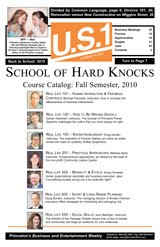
Eight other movers and shakers in the Princeton business community were asked for the equivalent of “What I Wished I’d Learned in College and How I’d Teach It Now.” Doug Kerwin of Fulcrum Gallery discussed the need to make careful projections. Melissa Gertz, a social activist who was severely injured in an auto accident, had detailed advice, including “find your niche” and “learn when to say no.” June Ballinger of Passage Theatre emphasized people skills and Bob Carr of Heartland Payments riffed on spirituality.

The most intriguing, to me, were the comments on company culture from my ex boss Rich Rein, who was describing himself when he wrote, The boss doesn’t have to put anything in writing. So when he or she does, pay careful attention. Read it all the way to the end. If it’s an E-mail consider printing it out, and underlining the important points.

I figured that out pretty early.

Apples, Not Danish

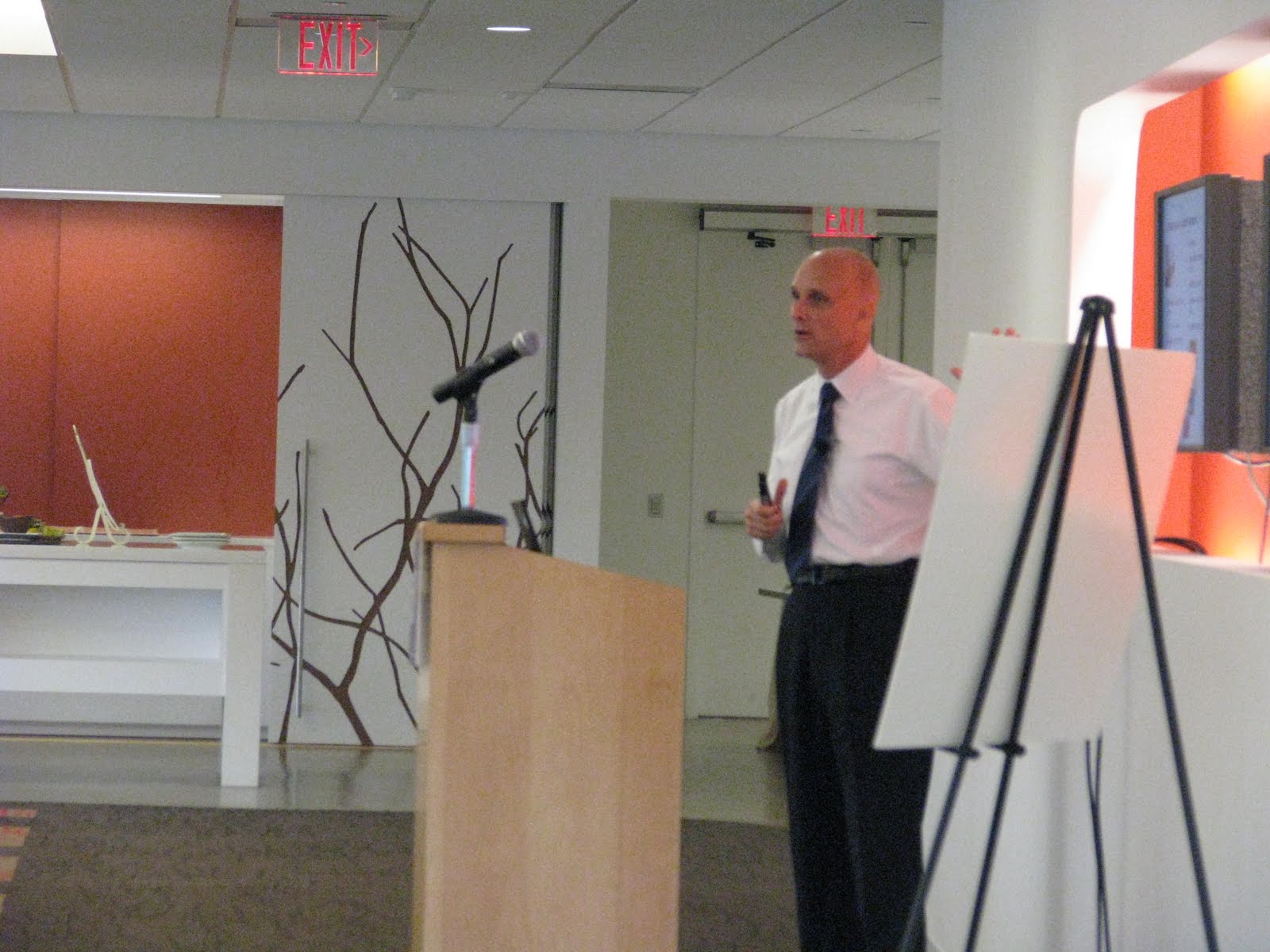
Per Falk looked the picture of health, as he hosted a Princeton chamber breakfast at his company’s training center on Campus Drive. Lean himself, he emphasized that no blame should be placed on those with diabetes, or those with a few extra pounds. But Novo Nordisk’s North American vice president for clinical development, medical, and regulatory affairs talked about why employers should worry about obesity and diabetes.

After a sumptuous breakfast (salmon, curried fruit, bacon and sausage, and fruit tarts – the best that Main Street Catering has to offer) it was hard to hear that…

• One in 10 healthcare dollars is spent on diabetes, and 18% of the employee population with chronic conditions like diabetes will consume 80% of health care costs.

• Medical expenses for obese employees are estimated to be 42 percent higher than for a person with a healthy weight.

• Overweight and obese people lose 39.2 million more workdays annually than their leaner colleagues.

Falk, a Swede who joined this Danish company in 2002, deconstructed some of the mysteries that surround this pharma with a long time Princeton presence, starting as Squibb/Novo on Alexander Road and expanding to the Carnegie Center, then to Forrestal Center). It has grown exponentially to 1,500 employees here, with 29,000 worldwide.

• Novo was founded in 1923 by a Danish Nobel laureate whose wife, herself an MD, had diabetes. “We know the name of our first patient, and the patient is the center of our decisions.” Insulin from a bovine pancreas was the first product.

• The pharma company is publicly traded (NVO on the NYSE), as is its sister firm (Novozymes, producing material for industry) but the majority owner is a foundation, so it can spend on research and “green” solutions that don’t produce quick profits.

To encourage healthy lifestyles, the carrot works better than the stick, Falk says. Top executives have to model the behavior, and it takes time. But medical costs fall by about $3.27 for every dollar spent on wellness programs and absenteeism costs fall by about $2.73 for every dollar spent.

Falk encouraged everyone to support the American Diabetes Association October 24 walk and cited these websites:

CDC LEAN Works, a free web-based resource that offers interactive tools and evidence-based resources to design effective worksite obesity prevention and control programs. It includes an obesity cost calculator to estimate how much obesity is costing your company and how much savings your company could achieve with different workplace interventions.

The National Business Group on Health Obesity Cost Calculator.

AHRQ: an evidence-based, easy-to-use diabetes cost calculator for employers.

The World Economic Forum website’s Wellness App lets companies determine how much they can save by investing in wellness programs.

ADA Diabetes Profile and Statistics Cost worksheet:

To these I would add Princeton’s own contribution to individual and corporate health, Viocare’s Princeton Living Well, described as “a multifaceted healthy lifestyle program designed to promote diabetes prevention, weight control, and general wellness throughout the entire Princeton community.”

In fact I nearly raised my hand and said so. Afterward, Carolyn McCann and I chided each other for our mutual silence. McCann used to work for Rick Weiss, who founded Viocare, and now she has moved to Princeton HealthCare System to be a community relations representative in the employee assistance program. We agree that Weiss has some good corporate wellness solutions, and that the community website could be a valuable employee health improvement tool for small to medium-sized companies in the Princeton business community. Yes, I’m a chauvinist, but look for yourself: Princeton Living Well.

Think free apples in the employee break room.

(For photos, click here. For the presentation slides, click here.)

Cultivating Twitter

Twitter’s benefits aren’t obvious unless you dig down. Twitter, indeed, is much like gardening, say Lisa Chamberlin and Kay Lehmann in eLearn Magazine.

They cite Joanna C. Dunlap and Patrick R. Lowenthal’s article, “Horton Hears a Tweet.”

College faculty use Twitter more than the general public; the ratio is three to one, according to one study.

Say Chamberlin/Lehmann: “A shovel and vegetable seeds are simple objects, but growing a vegetable garden is much more complex. As gardeners study horticultural techniques, read what the experts have to say, and chat with knowledgeable neighbors, they begin to enjoy the fruits of their labor. Those who don’t put in the energy waste time, get weeds, and have little to show for their effort. Instead of the no-to-low cost of the salad grown at home, the weekend gardener ends up paying a much higher cost to get the same beneficial nutrients at the store.”

I found these thoughts through a Tweet. But did I share them through Twitter? No. I’ll let you figure out why.

A Win/Win at the Straube Center


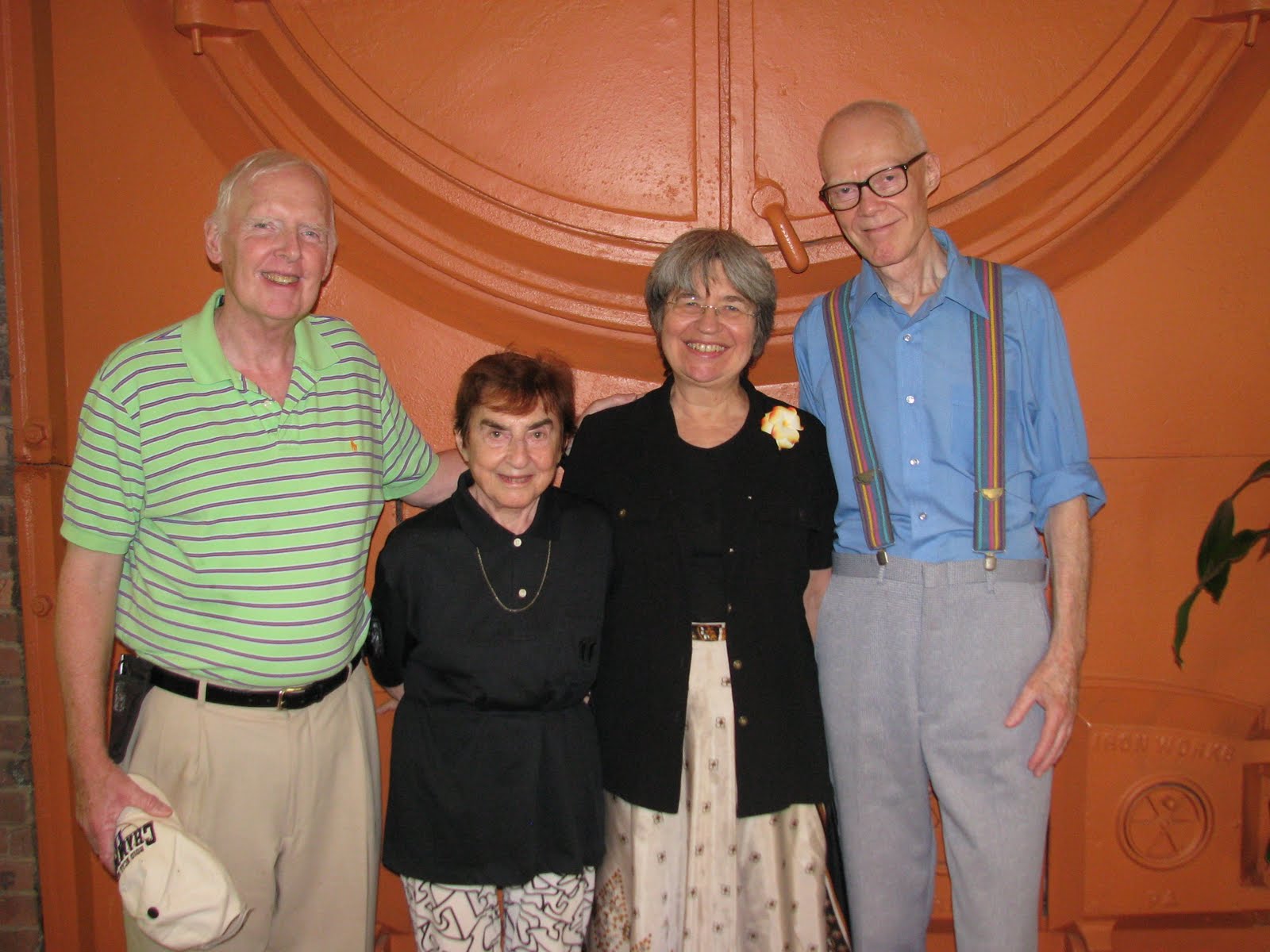
Win and Hildegard Straube are long-time friends of the Foxes — we even had a chance to visit them at their home in Honolulu — and we look forward to our annual lunch when the Straubes come to town for July and August. (The photo is taken in front of the boiler, part of the foundry built in 1900 that is one of the Straube Center buildings.) This year we had the added bonus of seeing an art show, curated by Alisandra Wederich. The show lasts through the weekend, and will be celebrated by a festival on Saturday (WAMPP (Wine – Art – Music -Poetry – Project) from 10 a.m. to 8 p.m.

There are some new additions to the sculpture garden, though we mostly looked at what’s inside.

I liked the conversing sunflowers by Liron Sissman and an aqua abstract by S.L. Baker. But the jaw dropping aspect of the exhibit is the quilt exhibition by Fiber Revolution Artist Network, a network of professional textile artists. Its current project, an unusual and charitable one, is to combine forces with quilter artists in Botswana for a joint exhibit. Here are some more photos.

All the pieces are priced at a well-worth-it $500, and what doesn’t get sold in a national tour will be permanently placed in a hospital in Botswana. Now that’s a (pardon the pun) win/win situation.

Thank Goodness It’s Thursday


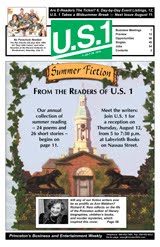
Choose from two parties tonight — the U.S. 1 writers party, honoring the authors of the Summer Fiction Issue, and the Princeton Chamber Business After Business networking session.

The U.S. 1 Newspaper party, free, is at Labyrinth Bookstore on Nassau Street. It starts at 5:30 and the chit chat and noshing make way for acknowledgements of each contributor at about 6:15 or 6:30.

The chamber event, $25 at the door for members, $40 for others, is at Phrog Personal Training Studio, 376 Wall Street in Research Park, and you’ll get some pretty serious food and drink and networking, 5 to 7-ish p.m.

If you miss both, there’s a new bar in town to try anytime.

The heat has broken, let the good times roll.

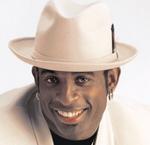
Well-Planned or Summoned? As Deion Says: Both

Should you plan your life out in your 20s, like Harvard Business School prof Clayton Christiansen advocates? Or let it happen according to circumstance? David Brooks, in today’s New York Times oped piece, presents the contrast:

The person leading the Well-Planned Life emphasizes individual agency, and asks, “What should I do?” The person leading the Summoned Life emphasizes the context, and asks, “What are my circumstances asking me to do?”

Instead, I think the best answer is, like Deion says, “Both.”

Reading Christiansen’s lecture reveals that, when he was a Rhodes scholar, he dedicated an hour every day to “reading, thinking, and praying about why God put me on this earth.” He says that a shocking number of HBS students have not contemplated their purpose in life.

People who are driven to excel have this unconscious propensity to underinvest in their families and overinvest in their careers—even though intimate and loving relationships with their families are the most powerful and enduring source of happiness.

Another Christiansen quote from this well-worth-reading essay:

If you want your kids to have strong self-esteem and confidence that they can solve hard problems, those qualities won’t magically materialize in high school. You have to design them into your family’s culture—and you have to think about this very early on. Like employees, children build self-esteem by doing things that are hard and learning what works.

Christiansen essentially teaches in parables: When people ask what I think they should do, I rarely answer their question directly. Instead, I run the question aloud through one of my models. I’ll describe how the process in the model worked its way through an industry quite different from their own. And then, more often than not, they’ll say, “OK, I get it.” And they’ll answer their own question more insightfully than I could have.

How to choose between the Well-Planned Life (which Brooks attributes to Christiansen) and the Summoned Life (a roll-with-the punches approach)? I would hope we can do both. Think ahead about moral, ethical, and religious guidelines. Then adapt and stay fast on your feet.

That “one hour a day” is the most difficult challenge. Does driving time count?