Monthly Archives: February 2014

African Women Extraordinaire: March 6

Princeton Theological Seminary stages a one-day symposium on March 6: about church, health, and women’s development. The full-day workshop is $50 and is being planned by Dr. Elsie A. Mckee. Princeton Seminary’s professor of Reformation Studies and History of Worship. She is also the International Liaison and President of Women, Cradle of Abudance, a North America-based organization that promotes the work and ministry of Femme Berceau de l’Abondance. She is also on the board of United Front Against Riverblindness and co-chair of the March 1 African Soiree.
One of the keynoters is AWE 2014 Mukuna Monique Misenga Mukuna is President of Femme Berceau de l’Abondance, an ecumenical Christian group of women gathered in response to the systemic poverty and violence against women and girls in the Democratic Republic of Congo. Mme. Monique is based in Kinshasa.

 
Also participating: The Rev. Muriel Burrows, pastor of Witherspoon Street Presbyterian Church.

Fathers of the Internet: March 12

Fathers of the Internet: March 12

Vincent Cerf and Robert Kahn speak at Princeton University on Wednesday, March 12, at 4:30 p.m. in the Friend Center. It’s free. Seating is first come.

Cerf’s most recent notable quote: Privacy may be an anomaly.

Felten: Dollars, Euros — and Bitcoin

feltenThere are 12.4 million Bitcoins in existence — but …

the Federal Reserve doesn’t know much about Bitcoin.

And one of Bitcoin’s major banks just did a face plant.

Yet  Ed Felten, former technology guru for the FTC, now returned to Princeton University to teach, says Bitcoin is one of his top predictions for what will work in the future. He was interviewed about this on C-Span, link here.

Felten speaks at the Princeton Regional Chamber lunch on Thursday, March 6, at 11:30 a.m. His topic: “Dollars, Euros — and Bitcoins: the Future of Digital Currency.”

African Adventure: March 1 UFAR Menu

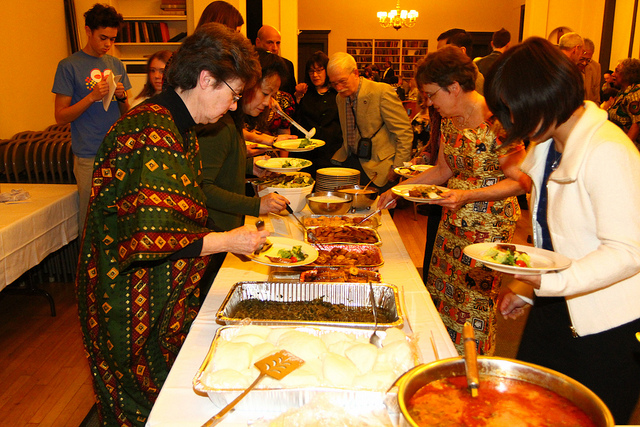
Too many cooks won’t spoil the broth on Saturday, March 1, at the African Soiree to benefit United Front Against Riverblindness. Along with listening to folktales, shopping in an African market, and bidding on auction items,  Soiree guests will enjoy a feast prepared by two dozen cooks and chefs from two restaurants: Makeda and Palace of Asia.

From the Democratic Republic of Congo:2014 soiree buffet 2013

  • Cassava/manioc
  • Bitekuteku
  • Pondue
  • Fufu
  • Goat a’la Congolaise
  • Chicken moamba
  • Banana snack
  • Makayabo/fish & collards,
  • Sliced mangoes and pineapple

From Ethiopa: injero, shero wat  and doro wat (chicken stew)

From South Africa: oxtail casserole and chicken birnanyi

From Sierra Leone, Bean patties and fritters ‘Oleleh and Akara Balls’

From India: Samosa, meatballs, and goat

And for less adventurous appetites: chicken fingers, Chinese fried rice, green salad, tetrazzini, and barbecue wings.

2014 soiree table 2013

The African Soiree is 5 to 8 p.m. at the Mackay Center of Princeton Theological Seminary. Tickets at $60 ($30 for kids and students) are still available by contacting event chair Susan Lidstone at UFAR@PrincetonUMC.org or 609-688-9979. Offstreet parking is free.

“We welcome the community to the fifth annual Soiree,” says UFAR founder Dr. Daniel Shungu. “As we enjoy the entertainment and the delicious African meal, we will enable UFAR to keep an entire village from going blind.” He will present a special award to the family of the late Peter Meggitt, a UFAR supporter who traveled to the Democratic Republic of Congo with a Princeton United Methodist Church mission team.

Photos by Robin Birkel

African Soiree Auction: “Ballerinas”

This painting by Rhinold Lamar Ponder is one of the items to be auctioned at the auction for the African Soiree, held at the Princeton Theological Seminary Mackay Center on Saturday, March 1, 5 to 8 p.m. It will benefit the United Front Against Riverblindness (www.riverblindness.org). For tickets,  UFAR@princetonumc.org or call 609-688-9979.

Michele Tuck-Ponder, a member of the mission team from Princeton United Methodist church, will call the live auction of items. In the auction are also a framed needlepoint picture yby Susan Lidstone, specially designed copper bracelet from Randi Forman of Nassau Street-based Forest Jewelers, a needlepoint picture, a quilt that Tuck-Ponder made from African fabric. Aruna Arya, owner of the Palmer Square-based fashion store Zastra , will donate one of her designs. Elsie McKee will contribute items made by a Congo-based charity, Woman, Cradle of Abundance. A professor at Princeton Theological Seminary and a member of Witherspoon Street Presbyterian Church, McKee is in charge of local arrangements and the African market.  

More than one-third of the 60 million people in the Democratic Republic of Congo are at risk for getting riverblindness. Caused by a parasite and transmitted by the black flies that live near the river, the disease takes two lives – the life of the adult who goes blind, and of the sighted child who must leave school to be the caretaker. The medicine is provided free by Merck & Co., but the distribution is a challenge. Using a community-directed approach that involves villagers who are appointed by their village chief, UFAR is able to treat more than two million persons each year. Annual treatment for each person in required for ten years to eliminate the disease.

UFAR is an African-inspired, Lawrenceville-based nonprofit charitable organization that aims, in partnership with other organizations, to eradicate onchocerciasis, a major public health problem in the Kasongo region of the DRC (riverblindness.org).

Explaining the Economy: Economic Summit

Christopher A Sims

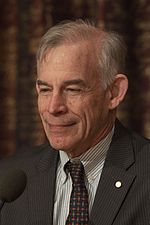
Nobel Prize winner in economics Christopher Sims will speak at Princeton Regional Chamber’s Economic Summit on Thursday, February 27, at 1 p.m. He shared the 2011 prize with Thomas J. Sargent for “empirical research on cause and effect in the macroeconomy.”   Chamber members can register for $75 for the afternoon, which also includes economic updates and panel discussions, plus munchies and music — all at MCCC’s  Conference Center.

Sims (and I am quoting from Wikipedia) confirmed the theories of monetarists like Milton Friedman that shifts in the money supply affect inflation. However, he also showed that causality went both ways. Variables like interest rates and inflation also led to changes in the money supply.[10

Each Moment New: Jane Buttars

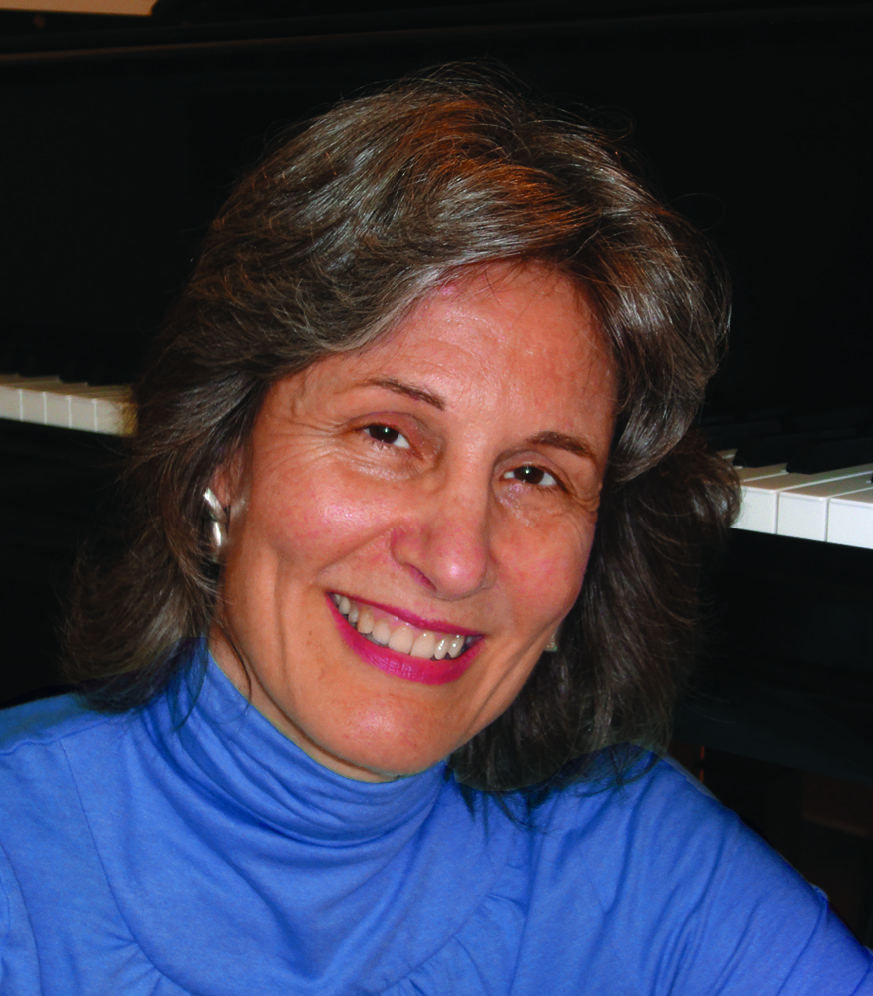
tympanumMost musicians bring life to a page of musical notes and try to make it sound fresh and in the moment. Pianist Jane Buttars and cellist David Darling improvise their music — moment by moment. In their first album together, Tympanum, the listener gets to sit in on their exciting moments of creation. Each piece is a journey, imagined and created step by exciting step. Do not expect to listen to their improvisations while you are doing something else. Their focus is so intense that it snatches you and demands your full attention.

Each of the 14 selections takes a different mood journey. Sometimes persistent but unexpected rhythms bubble up to the surface and fairly bid the listener to get out of a chair and MOVE for heaven’s sake. Or gentle swaying lifts your spirits, like a high swing, and then subsides into still calm.

They are not limited to major, minor or modal; they can play for two minutes in the key of silence.

How to compare it? Maybe to say, think of combining the energy of jazz improv plus the adventuresomeness of Poulenc, plus the whimsy of e.e. cummings, But keep in mind that this is a duo of classical musicians.

Grammy Award-winner David Darling formerly played with the Paul Winter Consort and co-founded Music for People, which aims to encourage trained musicians to find joy in improvisation and ordinary people to find music in themselves. (This is my translation of MfPs mission statement.)

JB on CD better Buttars is a classically trained performer and teacher,  a Fulbright Scholar, and a dance and Dalcroze student, with a Doctor of Musical Arts in piano and harpsichord performance.  (Full disclosure: she is my workout partner at the Rabara Pilates studio.) Based in Princeton, she directs Music From the Inside, a program of group improvisation classes and workshops for all levels, beginners to professionals, and she leads Music for People sessions.

I can envision several important uses for Tympanum, beyond listening for delight. These improvisations fairly beg to be danced to — by those who do “contact improv” or those who choreograph. They could work wonderfully as part of a worship service, to introduce or follow a psalm or meditation that fits the particular mood. Creative dance teachers and nursery school teachers– here is a gold mine.  Listen at CDBaby.

Mostly, though, I just want to sit in my rocking chair, look out the window and be taken on one journey of imagination after another, each moment new.

Quilting for UFAR

2014 michele Scott 2

This gorgeous quilt, sewn with African fabrics by Michele Tuck-Ponder (shown here with Scott Langdon), will be auctioned at the fifth annual UFAR African Soiree on Saturday, March 1, 5 to 8 p.m., at Princeton Theological Seminary’s Mackay Center.

To benefit the United Front Against Riverblindness, it will include a buffet of international and African food, folk tales told by actor Scott Langdon and UFAR founder Daniel Shungu, a showing of African fashions, and an African marketplace. Tickets are just $60 ($30 for students). Call 609-688-9979 or email UFAR@PrincetonUMC.org.

The king-sized quilt features Adinkra symbols native to western Africa.The symbols, hand stamped by the quilter during a visit to Africa, give a unique spin to the traditional log cabin block design. Many of the fabrics were purchased in Africa and supplemented by fabrics from the quilter’s own collection. The quilt is made in shades of purple, orange and green with tan and brown borders. Professionally quilted in a Greek Key design. The estimated retail value of the quilt is $750.00.

A former mayor of Princeton Township, Tuck-Ponder not only made the quilt, but will call the live auction, which will also include a specially designed copper bracelet from Randi Forman of Nassau Street-based Forest Jewelers, and a scarf designed by Aruna Arya, owner of the Palmer Square-based fashion store Zastra, and a painting by Rhinold Ponder.

A special award will be presented to the family of the late Peter Meggitt, a UFAR supporter and Princeton resident who traveled with the mission team.

More than one-third of the 60 million people in the Democratic Republic of Congo are at risk for getting riverblindness but UFAR is able to treat more than two million persons each year.

Race, Slavery, and the Troubled History of America’s Universities

Slavery shaped America’s old, elite colleges, says MIT historian Craig Steven Wilder in his book Ebony and Ivory. Wilder told NPR’s Robert Siegel, host of All Things Considered, this tidbit about Princeton: “John Witherspoon, the president of Princeton just before the Revolution, sent a missive to the West Indians promising that their sons were safer in New Jersey than they could ever be in England, where notorious and mean-spirited men preyed upon wealthy boys in the West Indies. But in New Jersey they would be protected and cared for, catered to and turned into responsible citizens.”

Here is the transcript, and here is the summary article, courtesy of Michele Tuck-Ponder. BF.


Tim Wise: Colorblindness is the Enemy

bfiggefox's avatarNot In Our Town Princeton

Tim Wise began his February 3 talk by crediting women and men of color for doing the hardest work. In particular, he honored the British Stuart Hall, known as the “godfather of multiculturalism,” who has just died.

“Having done this work for 25 years, I have learned a few lessons: The problem we confront is far far bigger than anything we imagined. After graduating from Tulane, I worked against David Duke’s campaign for governor. He lost, but not because of white people — 6 out of 10 whites voted for him. Black people saved us and said ‘you can thank us later.’ We asked ourselves, who is the enemy here? I knew that 6 out of 10 whites were not ‘that far gone’ (so what happened?)

David Duke scapegoated. He said that black and brown took slots for college and jobs — and then he said they don’t…

View original post 547 more words