All posts by bfiggefox

We All Need to Dance: Especially Children


“There seems to be a human need to dance – to dance for joy, for sadness, to petition the gods and then to thank them. Children feel this need to dance acutely; often its just the opportunity, the invitation, they lack,” says Jacques d’Amboise, founder of the National Dance Institute.

NDI’s branch, the Trenton Education Dance Institute, has been working with some pretty lucky schoolchildren in Trenton this year, and their culminating performance is at Patriots Theater, War Memorial, in Trenton in Thursday,May 20, at 7 p.m. The performance is free, so that all may come but donations are encouraged.

Another wonderful opportunity to see youth dance is on Saturday, May 22, when the dancers from a preprofessional performing youth company, Usaama, accompany Karen Love’s professional troupe, the Umoja Dance Company,at the African Soiree, at the Carl A. Fields Center, starting at 6 p.m. The evening offers authentic African food, music, and entertainment, all to benefit the United Front Against Riverblindness. Tickets are $50. Call 609-924-2613 or email office@princetonumc.org.

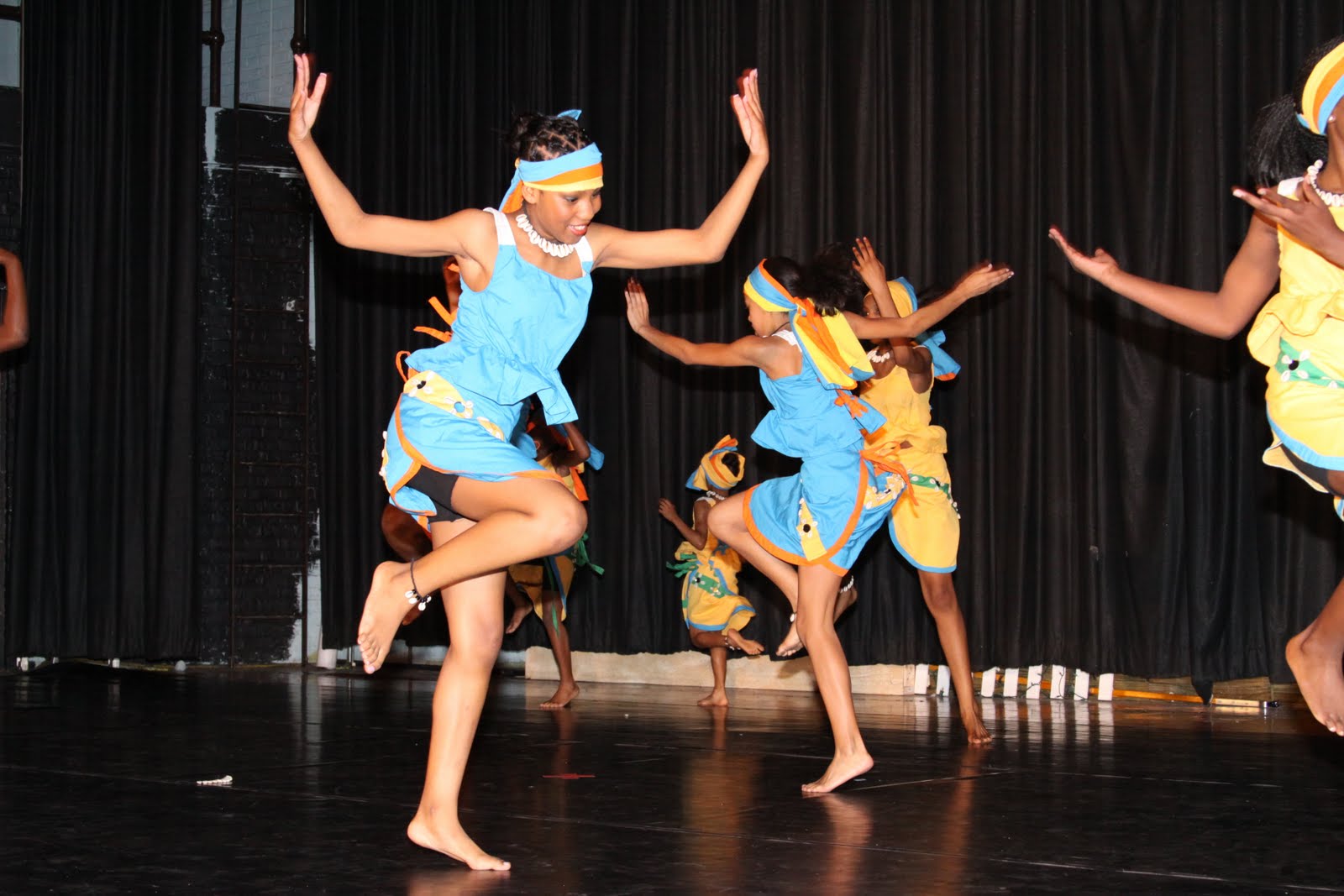
Usaama means “precious” in Swahili. Pictured above, Usaama strives to give today’s youth a sense of pride, culture, and knowledge through dance. Love’s professional troupe is named after the word “unity” in Swahili. The New Jersey-based multi-cultural company was founded in 1993 to educate, preserve, and present dance as a communal and spiritual expression of life. With a BFA from Montclair State University and an MFA from New York University, Karen Love has studied in Guinea with M’Bemba Bangoura and in Senegal, and the Gambia of West Africa with Chuck Davis. “My fusion of contemporary modern and West African dance reflects the evolution of movement and spirit becoming one,” says Love.

But for the African Soiree, all of the dances are from Guinea, West Africa.

• Opening Village Scene
• Sumunku: a dance for healing (Usaama)
• Sorsone: An initiation dance from the Baga people. It assures protection of the youth. (Usaama)
• Macru: A celebration dance performed by the women after they have successfully found their mate. (Umoja)
• Drum solos
• Soli : An initiation dance that celebrates all ages. It is an opportunity for everyone to show their best movement. (Usaama and Umoja).
• Bantaba: “Dancing ground” (Audience participation)

Let the dancing begin! And if you have never danced to the music of African drummers, perhaps you have never danced.


From Under the Mattress


Everybody knows there’s money in Princeton. Some of it, because of the stock market decline, is probably hidden under a financial mattress. Now a real bed of course, but some kind of safe banking hideout that offers next to no interest.

I’ve said it before and will say it again: some of that money could well be invested in new businesses in the Princeton area. Risky? Maybe no more risky than Wall Street and at least you would have the pleasure of helping out an entrepreneur, improving the area economy, and enjoy the possibility of getting a real return on your investment.

Note that I am not any kind of financial expert and am making no claims therefore subject to no regulation.

But other people are thinking along the same lines. Einstein’s Alley, the advocacy group in Central New Jersey, has begun to encourage those interested in becoming angel investors in the next great company.

An angel, according to a recent Wall Street Journal article, “is a wealthy individual willing to invest in a company at its earlier stages in exchange for an ownership stake, often in the form of preferred stock or convertible debt.”

How wealthy? I think the current rules are, but don’t quote me, this is just to give an idea – an prospective angel needs an income of $250,000 OR a net worth of $1 million including your house. The rules might change to an income of $450k or a net worth $2.3 million not including your house.

What good does an angel do? Says Katherine Kish, co-executive director of Einstein’s Alley: “Angels are a powerful resource for entrepreneurs providing nearly 20 times the capital to new companies in the aggregate than venture capital firms do.”

An Einstein’s Alley seminar on May 4 covered the ins and outs on angel investing. It was hosted by Richard Woodbridge (an Einstein Alley board member and Fox Rothschild attorney) and it featured Jeffrey Nicholas (a Fox Rothschild colleague and founder of Delaware Crossing Investor Group).

Now here’s where I’m supposed to be careful. According to the lawyers, I have to say this in exactly these words: “Those interested in finding out more about angel investing, email kkish@einsteinsalley.org or call 609-799-8898.” In other words, talk to Kish. But don’t put your mattress at the curb.

25th anniversary: RKR on TV


This post consists of six tweets, written while I watched my ex boss be interviewed by Anne Reeves for a Princeton Community TV show “Connect.”

Richard K. Rein (U.S. 1, @princetoninfo.com) on cable TV for 25th anniversary, am biased because I worked there…

but it’s good stuff, “Barbara Sigmund held everyone to a higher standard for development” this about 13 minutes in.

This show is hosted by Anne Reeves, a pal of the late Barbara Sigmund’s, and both Reeves and Rein are relaxed, chatty, informative.

Editing newspaper like running a chef-owned restaurant: says RKR

Editing a newspaper like producing a one-time show, sez RKR, you have to do it all over again the next week.

$64k question, would Richard K. Rein found a newspaper if he were starting in 2010? He answers 20 minutes into the show.

Answer: a qualified yes.

One more tweet: a link to RKR’s latest column

Hospital Visitors: Important Three Ways


What do you say to someone lying in a hospital bed? How long should your visit last? What’s the most helpful thing to do? Rev. Richard White, director of religious ministries at Princeton Healthcare System, will answer these questions and more on Wednesday, May 19, 7:30 to 9 p.m., at Princeton United Methodist Church, Nassau and Vandeventer.

Anyone may attend this free community seminar. RSVP if possible to 609-924-2613 or office@princetonumc.org.

Those tips are going to be for the friend or religious community member who will make a casual visit. But what about the family visitors? What can they do?

At the National Patient Safety Foundation meeting today, Dave DeBronkart, known in the social media world as “ePatientDave,” is tweeting some provocative ideas: Q: “So u have open visiting hrs?” A: “We avoid the word ‘visitor’. It’s family, *however you define that.*

And: “Families are told at admission: ‘We do bedside shift report – you’re welcome to be there.’ LOVE THIS. Second set of eyes.”

And a really fun comment: One hospital (Lehigh Valley Health Network?) has bedside “daily care plan” at shift change. Patients have learned to rat out the weekend staff if it doesn’t happen!”

DeBronkart is a strong supporter of epatient efforts to leverage the Internet to obtain better care.

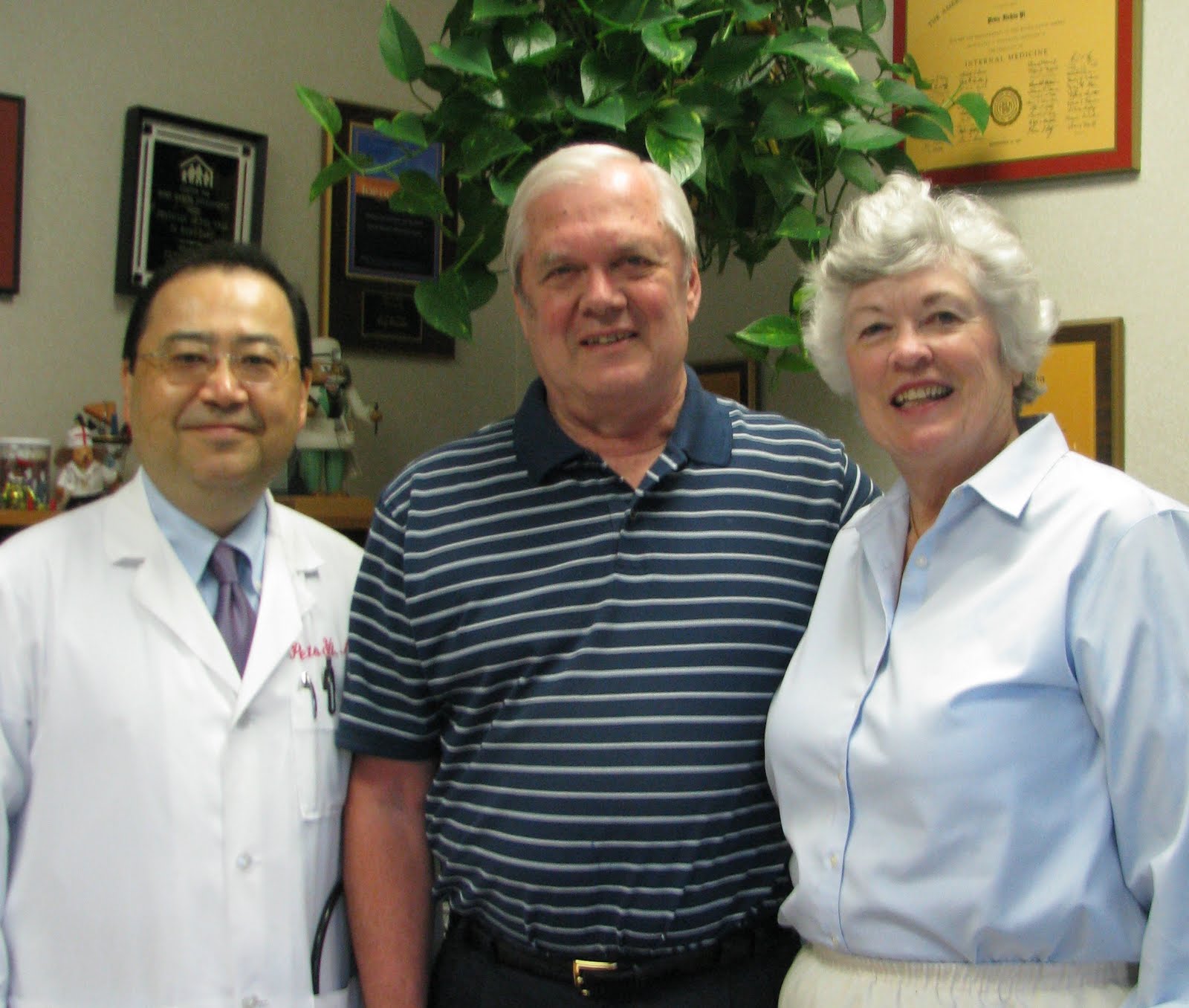
And Princeton-based Wayne Cooke, a colon cancer survivor, knows the difference that being an informed patient can make (shown with his oncologist, Dr. Peter Yi, and wife, Pat). In his article for U.S. 1 Newspaper , later published in his book “On the Far Side of the Curve” he offers “Lessons Learned.” Lesson 10 is “Know Your Stuff,” about the importance of looking on the Internet to be an informed patient.

Cooke and Dr Yi will appear on a panel for National Cancer Survivors’ Day at the University Medical Center of Princeton on Sunday, June 6, at 9 a.m. The full program runs 8 to 11:45 a.m. Register here.

Often the best help for the epatient is the friend or relative who looks up the information. (Is there a term for this? “ecaregiver?”) Ideally, the same person will stick around the hospital room for the shift change updates. In today’s hospitals, a second set of eyes — and sometimes hands, to prop a pillow, to fetch water — can be ever so important.

If they can pray for you, even better.

Marketing and the African American Experience

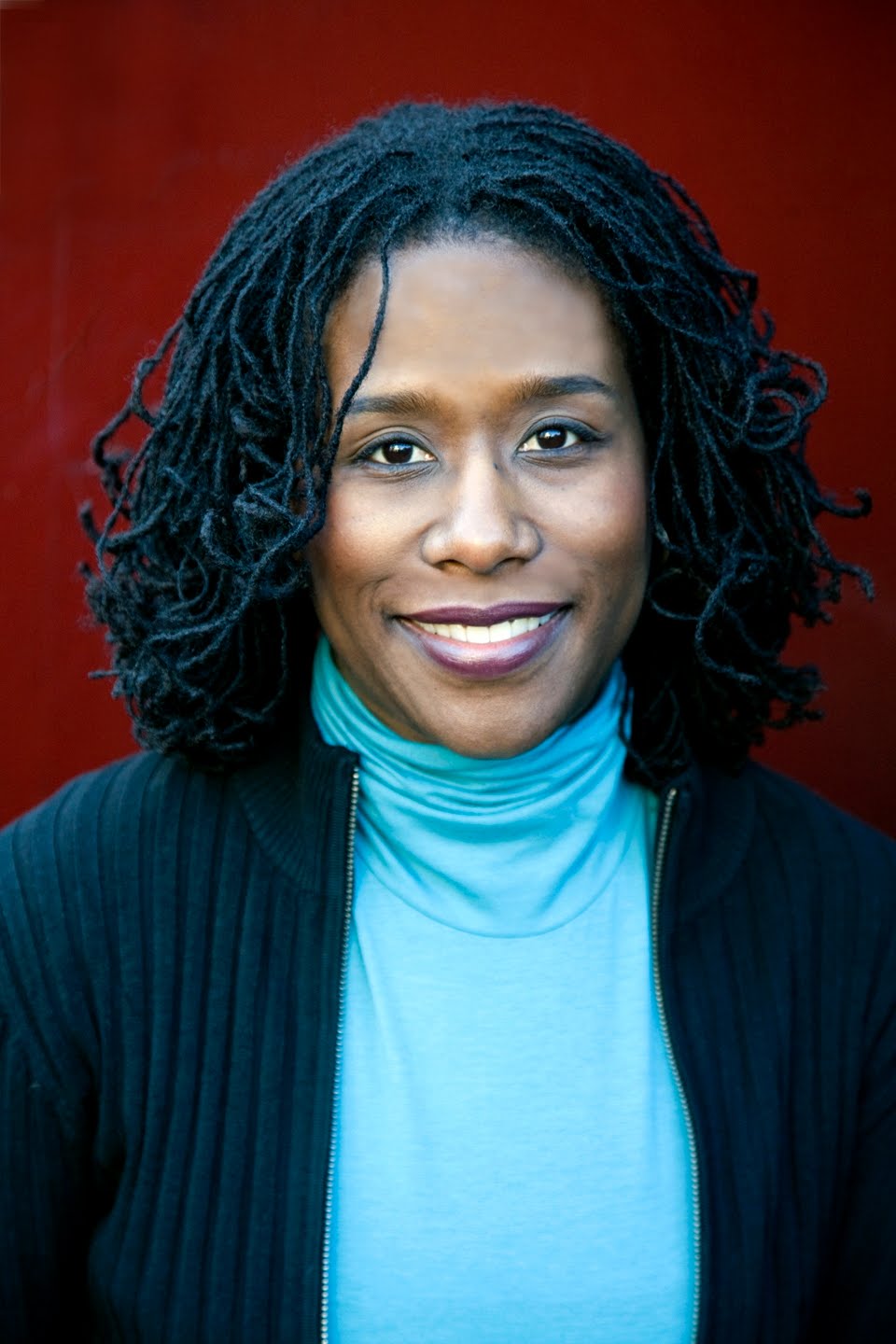
Jennifer Baszile, holding her packed audience at the Princeton Public Library, revealed her years of teaching at Ivy League schools – telling stories, drawing out audience members, getting laughs, tweaking her message. The author of “The Black Girl Next Door” was the featured speaker at the National African American Read-in last February. She speaks to the Princeton Regional Chamber on Wednesday, May 19, at 7:30 a.m., at the Nassau Club. Cost: $40 ($25 for members), http://www.princetonchamber.org

Baszile is a graduate of Columbia with a PhD from Princeton, and she was the first, and lone, African American woman teaching in the history department at Yale. After eight years, seeing a dearth of “real stories” about the supposedly (but not really) post racial society, she left to write her own coming of age account and is now a business consultant and entrepreneur.

For the chamber she draws on her entrepreneurial background to address “Five Fatal Online Marketing Myths that can Kill Profits and Sales in Any Business.” I’m figuring that she will infuse that topic with her down-to-earth family experiences. According to a U.S. 1 article, her maternal grandfather had owned businesses and real estate in segregated Detroit, and her father had fled from a rural town in Louisiana to be an entrepreneur, a metals distributor for the aerospace industry in Los Angeles.

Marketing is marketing, social media is social media, but Baszile has a rather extraordinary willingness to speak from her experience as an African American growing up in a mostly white suburb. I say extraordinary because the topic is generally not discussed. In the African American community, says Baszile, if you live through a difficult moment, you don’t talk about it. You just keep going.

“My parents had no idea what an integrated girlhood would look like, because they had segregated childhoods,” she said in a speech at Google in Manhattan. Her questions about why they were living there made the adults uncomfortable. “Though prejudice was supposed to be gone, we kept running up against hostility that no one wanted to admit.”

Said Baszile: “In suburbs around the country, kids did the difficult work of working out what integration was going to be in this country. My friends and I carried the weight of integration in this country in seemingly insignificant interactions – on the dance floor, at the makeup counter, and on the soccer field. It was kids who laid the stones on the path of the arc between Martin Luther King and President Obama.”

As for business: “As a child of an entrepreneur, it’s my life experience,” she said in the U.S. 1 story. “I have a lot of empathy for people figuring out how they are going to cover the payroll because that’s a conversation we had. I know that conversation and I know that challenge and that’s part of the reason I have a passion for marketing and working with business owners.”

Enjoy Life to Give Life


Often a gala invitation will specify “black tie admired” and offer sumptuous food, music, and dancing. This gala will have all that, except the admired dress will be African garb and you can wear whatever you want to wear. I’m planning to dance in bare feet.

This gala is an African Soiree, a community-wide event to benefit the United Front Against Riverblindness, on Saturday, May 22, at 6 p.m. at Princeton University’s Carl A. Fields Center on Olden Avenue at the corner of Prospect. Full disclosure — I’m on the planning committee. Music — we’ve got it. DJ Sikamba (Ernest Diatta) will play African music for dancing, and Afro DZ AK (jazz artist Pete Shungu) will entertain. The Umoja and Usaama Dance Company (above) will present three dances and a drum demonstration, followed by an opportunity for audience participation. Tickets are $50, $25 for students, and they are limited. Call Princeton United Methodist Church, 609-924-2613 to reserve.

That’s where bare feet come in, but if you can keep your shoes on if you want to. I just feel like I’m closer to the earth without them.

Some of the best cooks I know are preparing delectable African food, tons of it, all different kinds. We’ll be eating and feasting, eating and feasting and dancing. And all of this for a good cause, to stamp out riverblindness, a neglected tropical disease that starts with a rash and ends with sight loss. More than 23 million people in the Democratic Republic of Congo are at risk for it, and when the adult goes blind, a child must leave school. The logo for UFAR, above, shows a child leading an adult by a stick. A very sad situation, but a very good reason to party.

Vibrations at Prospect and Olden


I posted a version of this today on Win Straube’s Education Blog.

Distance learning philanthropist Gerhard Andlinger donated $100 million for the Center for Energy and the Environment at Princeton University. Princeton just announced that construction will begin in 2012. A quick look at his bio reveals that the Austrian-born teenager first came to this country as the winner of an essay contest, studied economics and (prophetically) Arabic at Princeton, earned a Harvard MBA, and had an obviously profitable career that included stints with ITT plus his own leveraged buyout firm.

Andlinger must believe in distance learning because he endowed a professorship in distance learning at Cornell’s medical school, officially known as the Joan and Sanford I. Weill Medical College of Cornell University.

Yet at Princeton he donated for bricks and mortar. When you think about it, that’s no conflict. Medicine lends itself to distance learning. Energy research does not. One of the buildings designed by Tod Williams for the Andlinger Center will be built on bedrock three stories below ground to reduce vibrations.

And now I know why the former Third World Center, former occupant of that site, was moved across the street to spanking new quarters, the Carl A. Fields Center (pictured) — to the advantage of two of my favorite organizations. Both Not in Our Town and the United Front Against Riverblindness have scheduled events in that gorgeous space in the next two weeks. Not in Our Town will have its Unity Awards ceremony next Sunday, and UFAR, with the support of Princeton United Methodist Church will stage a community wide African Soiree on Saturday, May 22, complete with authentic African food, music, and the Umoja and Usaama Dance Company. To have fun and support a good cause, reserve $50 tickets at 609-924-2613.

My house is just blocks away from the proposed construction site, where the vibrations from the excavations will rival those from the rock bands at the dining clubs, just yards away on Prospect Street. Their thump thump thump echoes in my house behind closed doors. But though I’m not looking forward to the excavation, I have to admit the Andlinger complex will be beautiful.

UFAR Connects with Anne Reeves

The scene is Princeton, April 1982. I had just moved here from Pittsburgh and was learning my way around town. Anne Reeves had recently founded the Arts Council of Princeton, and her latest project was a town gown celebration called Communiversity. I remember meeting her at the festival and being charmed by her personality and by how Communiversity offered a birds-eye view of all the organizations in town.
Every year at Communiversity, there would be Anne Reeves. Last year I spotted her at a table, wearing a zany hat. We never took the time to forge close ties, but we enjoy each others company and share the same values.

Communiversity and the Arts Council have, of course, grown like the proverbial Topsy, and are being run by the next generation, but Anne is still very much a presenece on the Princeton scene, as I discovered this year at Communiversity. I was walking with youth and adults from Princeton United Methodist Church to reenact “riverblindness” to publicize fund raising events for PUMC’s mission trip to the Democratic Republic of Congo. We were on Nassau Street headed toward the university gates when Reeves mike in hand, camera crew in tow, halted our sandwich board parade. Why are children leading adults she asked, and she proceeded to interview us for Connect (a link to that half-hour program on Communiversity here — we’re about five minutes into it).

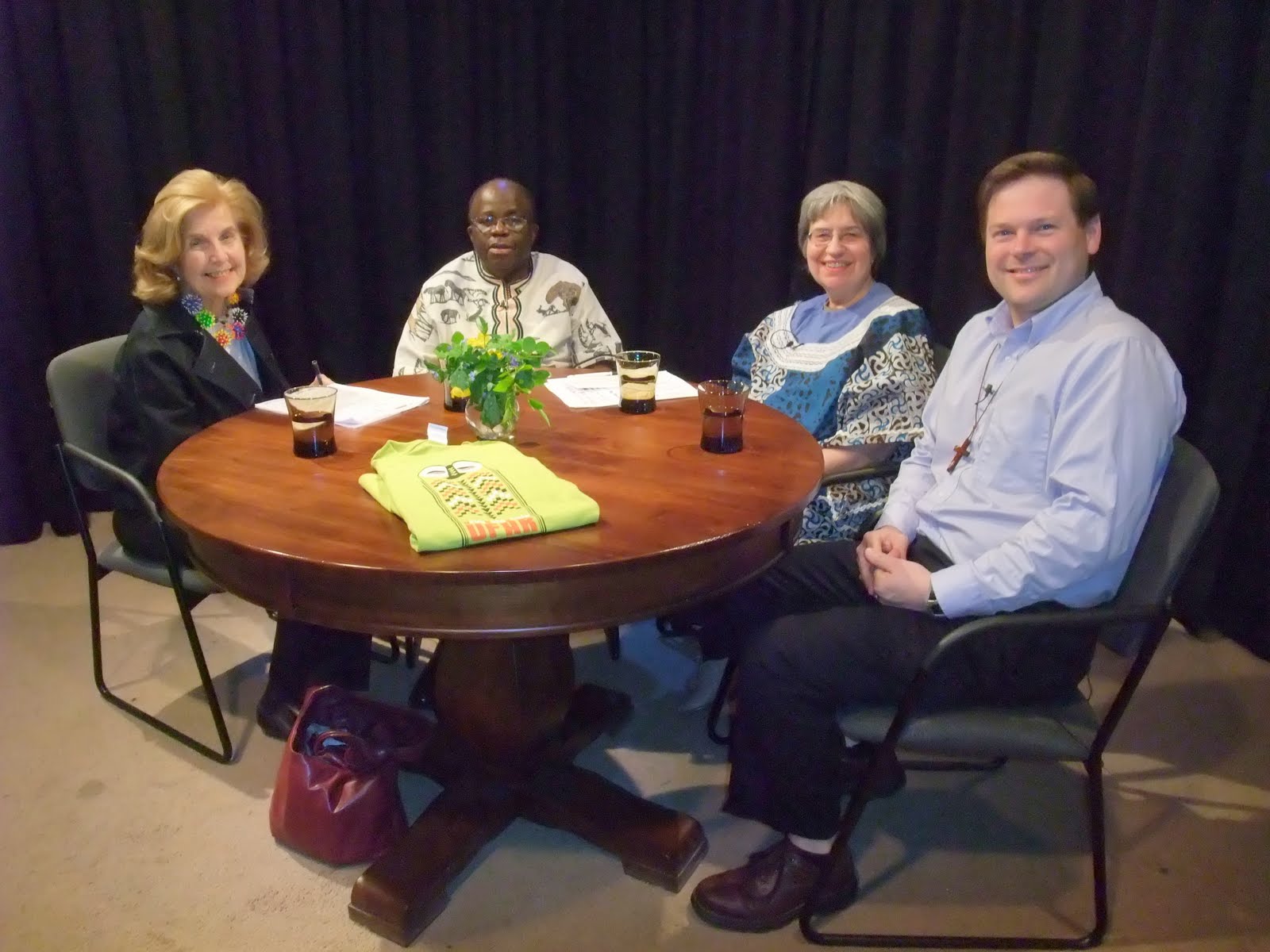
Next thing I knew Daniel Shungu (founder of the United Front for Riverblindness), Rev. Tom Lank (assistant pastor of PUMC) and I (as a church member working on the fundraising) were ensconced in Princeton’s cable television studio on Valley Road, with Anne interviewing us for her weekly program, “Connect.” In an earlier life I’ve appeared on these kinds of shows at both public and commercial stations, and I was really impressed with how smoothly this one ran. George McCullough, the station manager, was behind the camera that day, and volunteer Susan Mott did the editing, with a quick turnaround so that the program could preview the fundraising events this month.

Anne Reeves’s Connect program may be viewed in Princeton Township on Channel 30 and in Princeton Borough on Channel 45 at these times: Monday at 7 p.m., Tuesday at 8 p.m., Thursday at 10:30 a.m., and Sunday at 11 a.m. Though it refers to the May 15 date of the solo handbell concert and the May 22 African Soiree, the program “has legs” and could be repeated later. Here is a link to the riverblindness program.

After 29 years, the wheel has come full circle, as they say. It was great to “Connect” with one of Princeton’s jewels, Anne Reeves

Bursts? Or Keep on Keeping On?


It’s been a busy two days for two of the causes for which my retired self is working – riverblindness and racism. For riverblindness, I’m doing publicity (you knew that,) for the Princeton United Methodist Church’s mission trip to support the United Front of Riverblindness. For anti-racism, I’m the PUMC rep to Not in Our Town, the interracial, interfaith social action group in Princeton committed to speak truth about ‘everyday racism’ and other forms of discrimination.

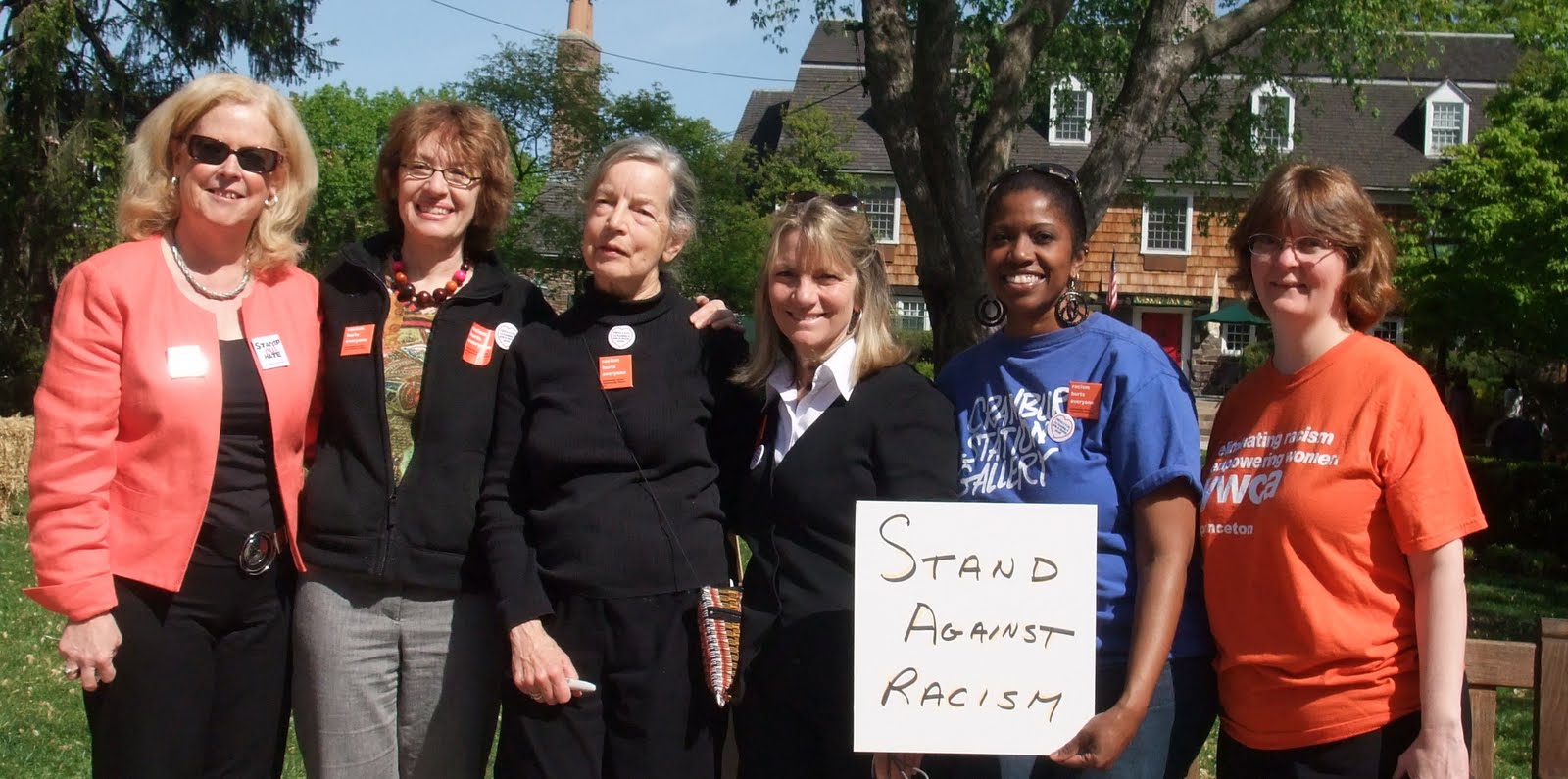
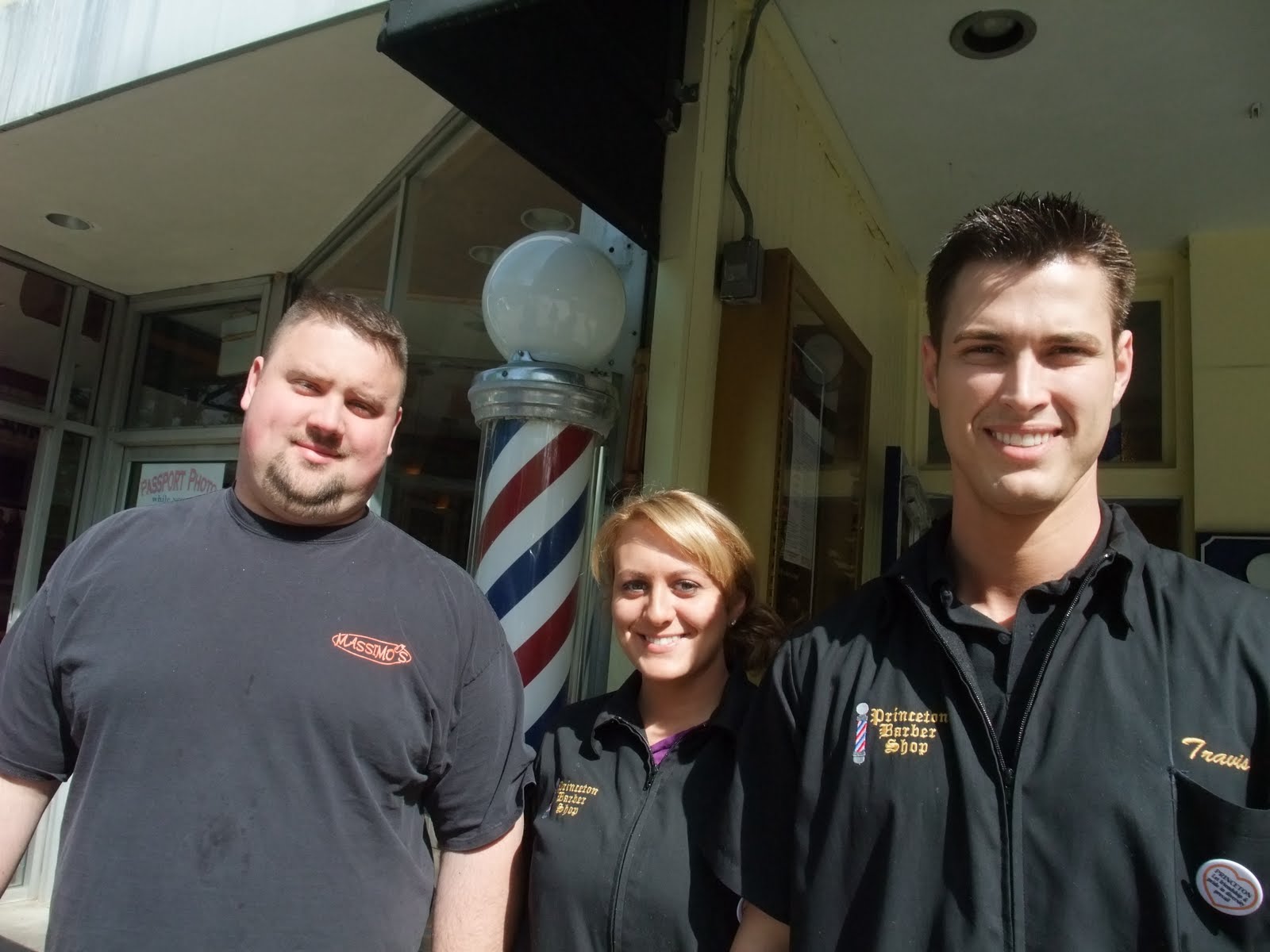
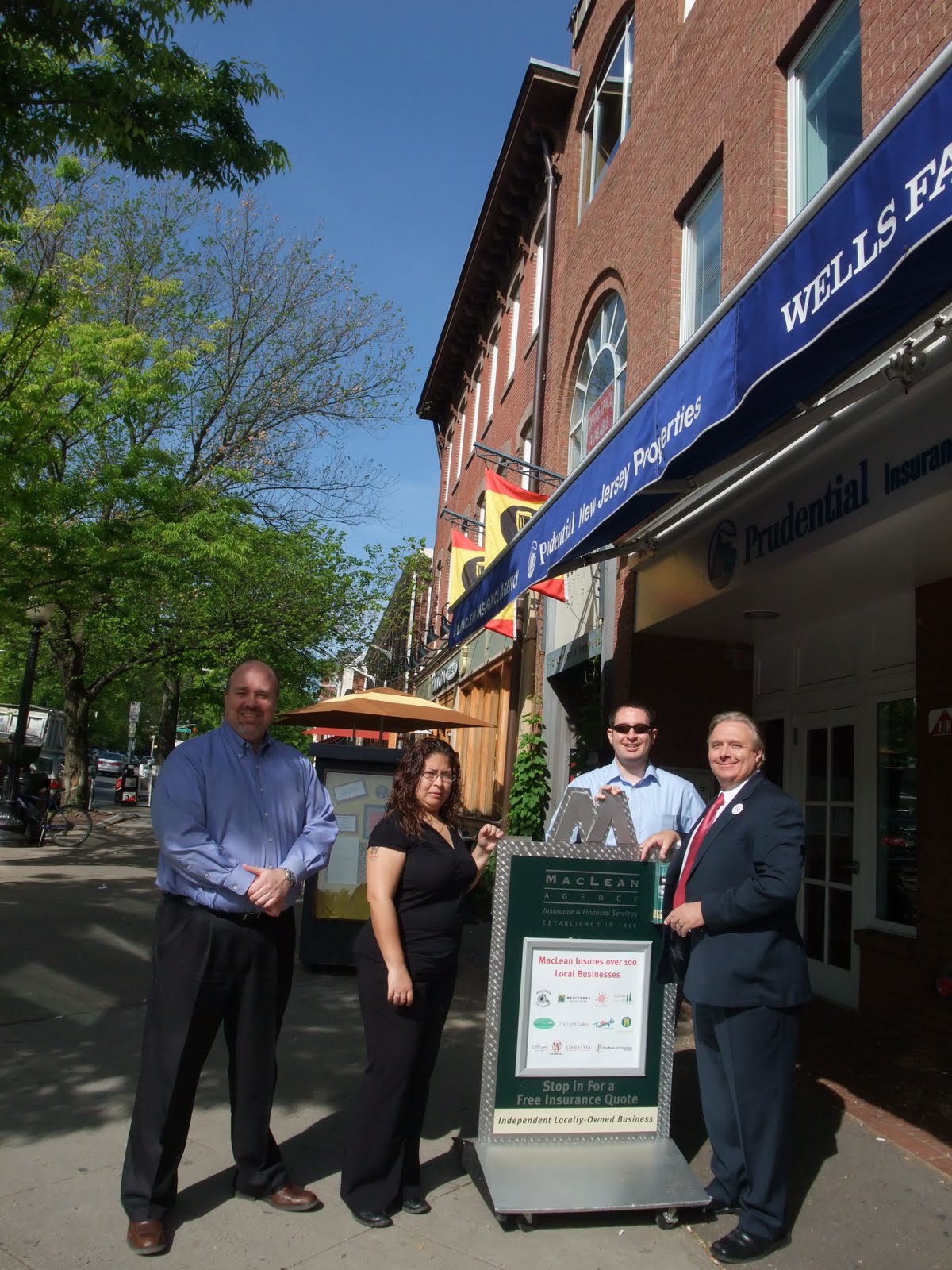
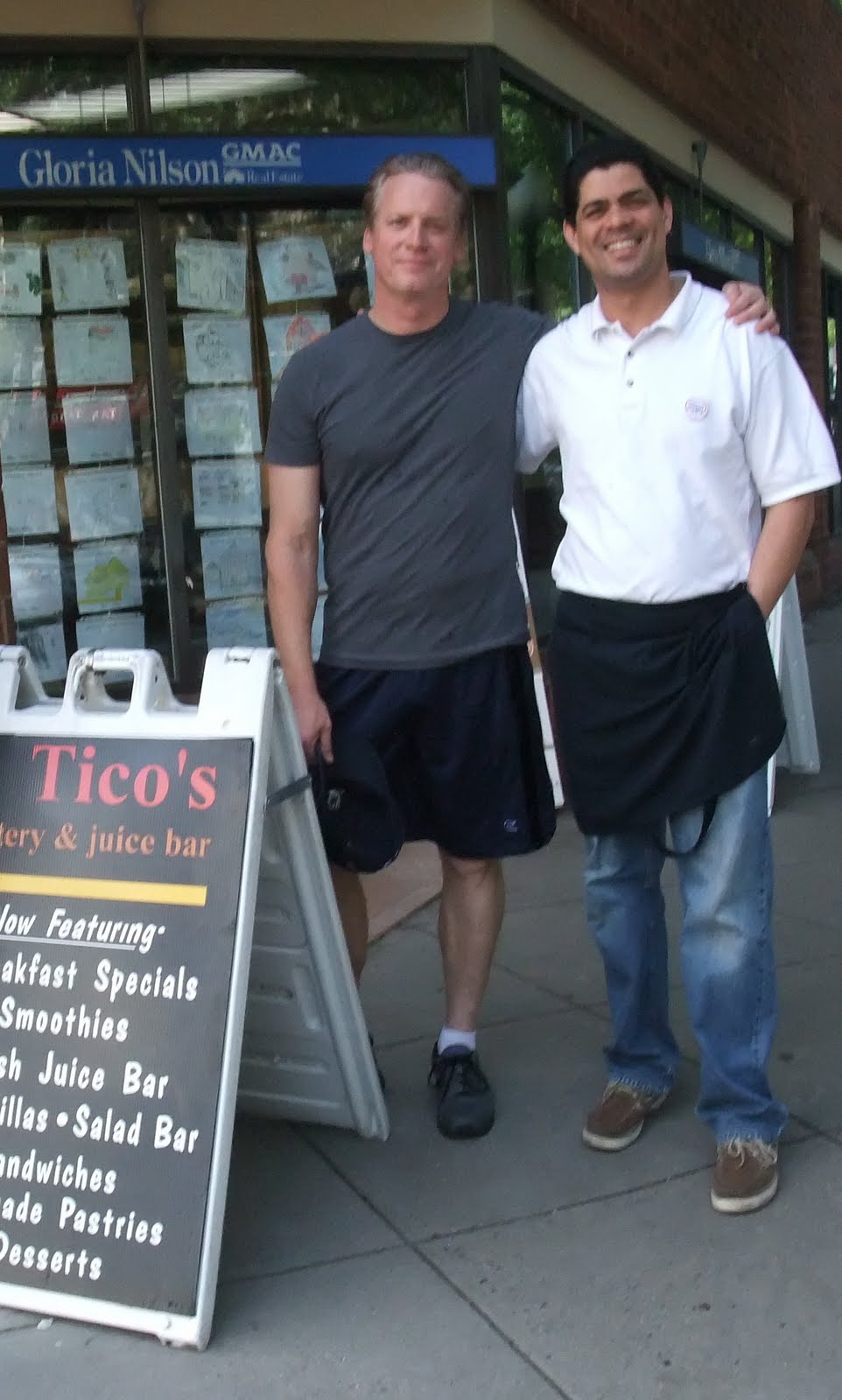
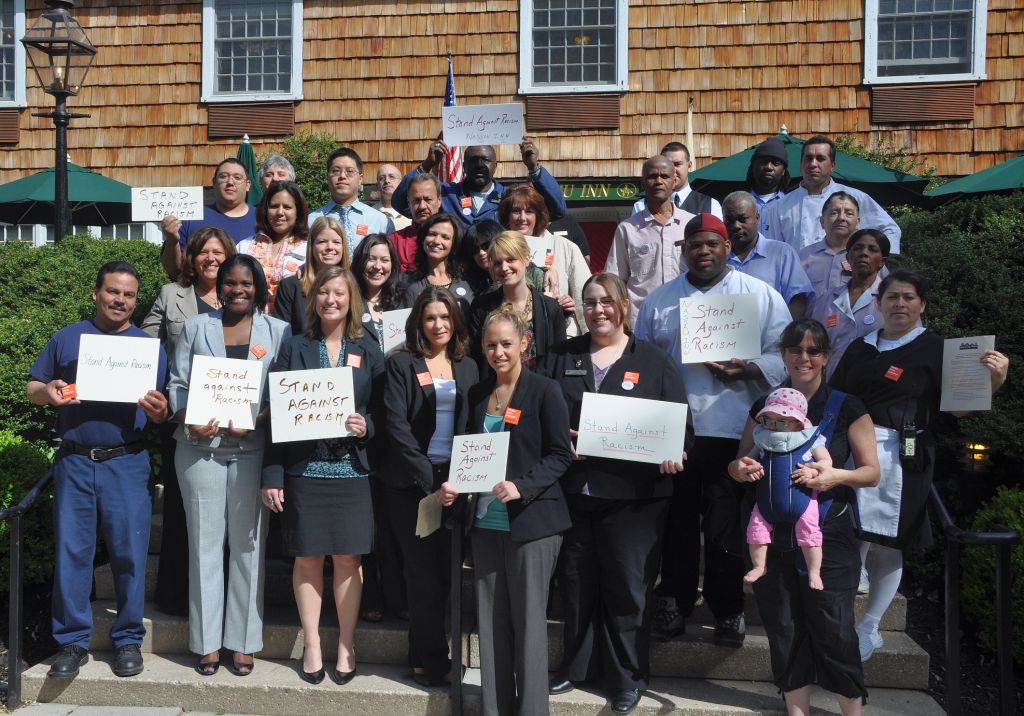
Yesterday was the YWCA’s Stand Against Racism Day and on behalf of NIOT I had fun zooming all over downtown, handing out pins taking pictures of merchants standing in front of their shops (e.g. the Nassau Inn, above)

as encouraged by Kathleen Morolda of Cranbury Station Gallery. Look for a Town Topics ad saluting the merchants and for pictures click here.

That same day NIOT-ers converged on Tiger Park in Palmer Square, handing out brochures and pins “PRINCETON: Let friendship and pride in diversity prevail,” holding signs, getting signatures, offering “think questions” to passersby.

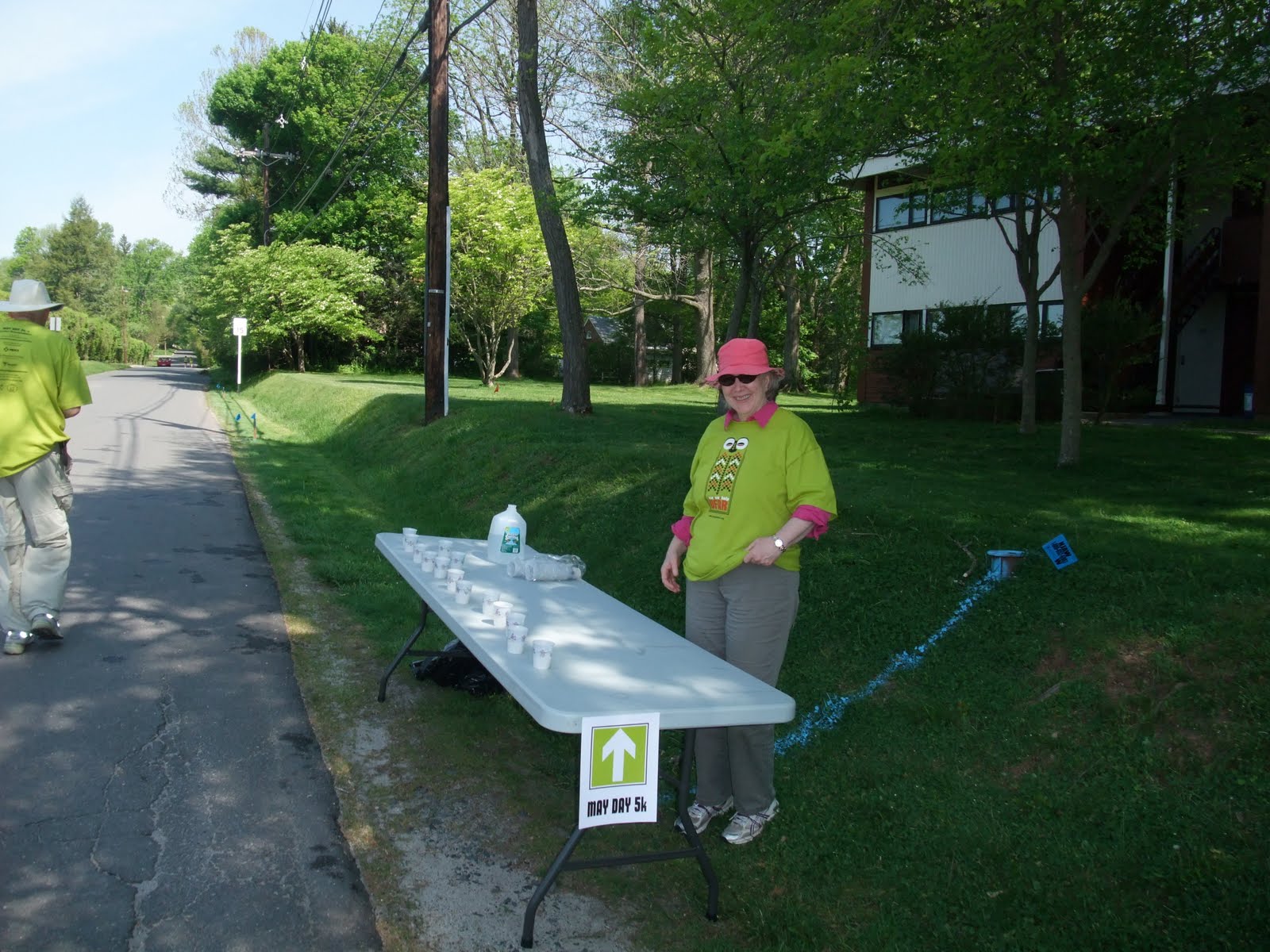
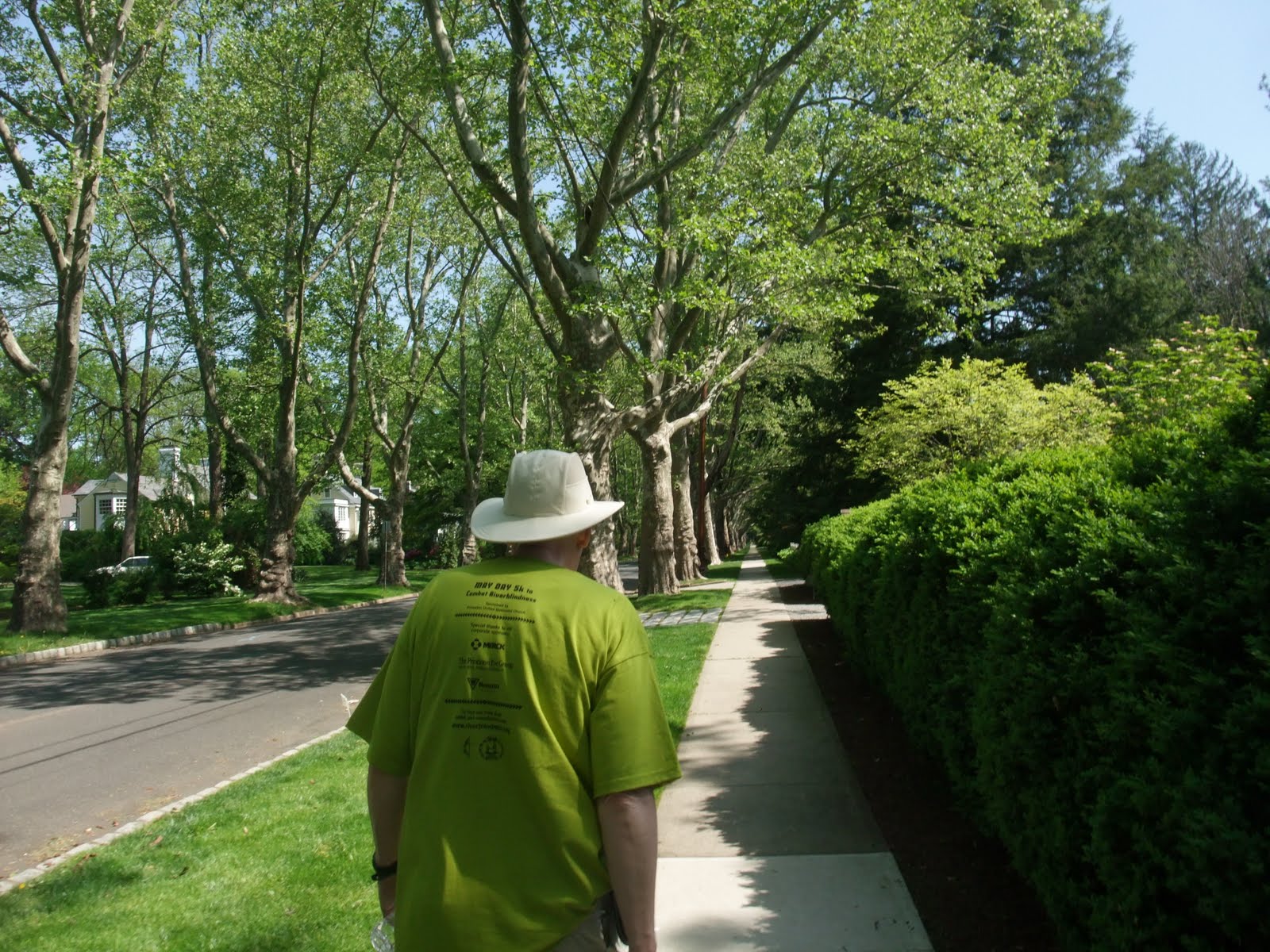
Today was the May Day 5k to Combat Riverblindness, sponsored by PUMC. At the last minute (11 p.m. the night before) spouse and I decided to go. We walked the beautiful course from the seminary, down Alexander Road, turning into Institute for Advance Studies property. As we wended our way on the gravel path I remembered the countless times I drove that bumpy road to pick up my now 43-year-old son at Nassau Swim Club. Then along Battle Road, with its beautiful sycamores and continuing a steady pace uphill to the finish line. Thanks to spouse, who forced the steady pace, we chalked up a 55 minute time, not bad for us oldsters on a gorgeous but hot day.

Sports report: the May Day 5k first place winners were Daniel Feder with 17.17 and Carrie Brox in 19 minutes, followed by Christopher Samsen, Keith Moulton, and William Hurlin on the men’s side, Heather Mitchell, Vivian Bertrand, and Susan Juronics the next three women. To my surprise, two Princeton United Methodist Church runners were in the top 10, Keith Dixon and Scott Langdon. I didn’t even know they were runners!

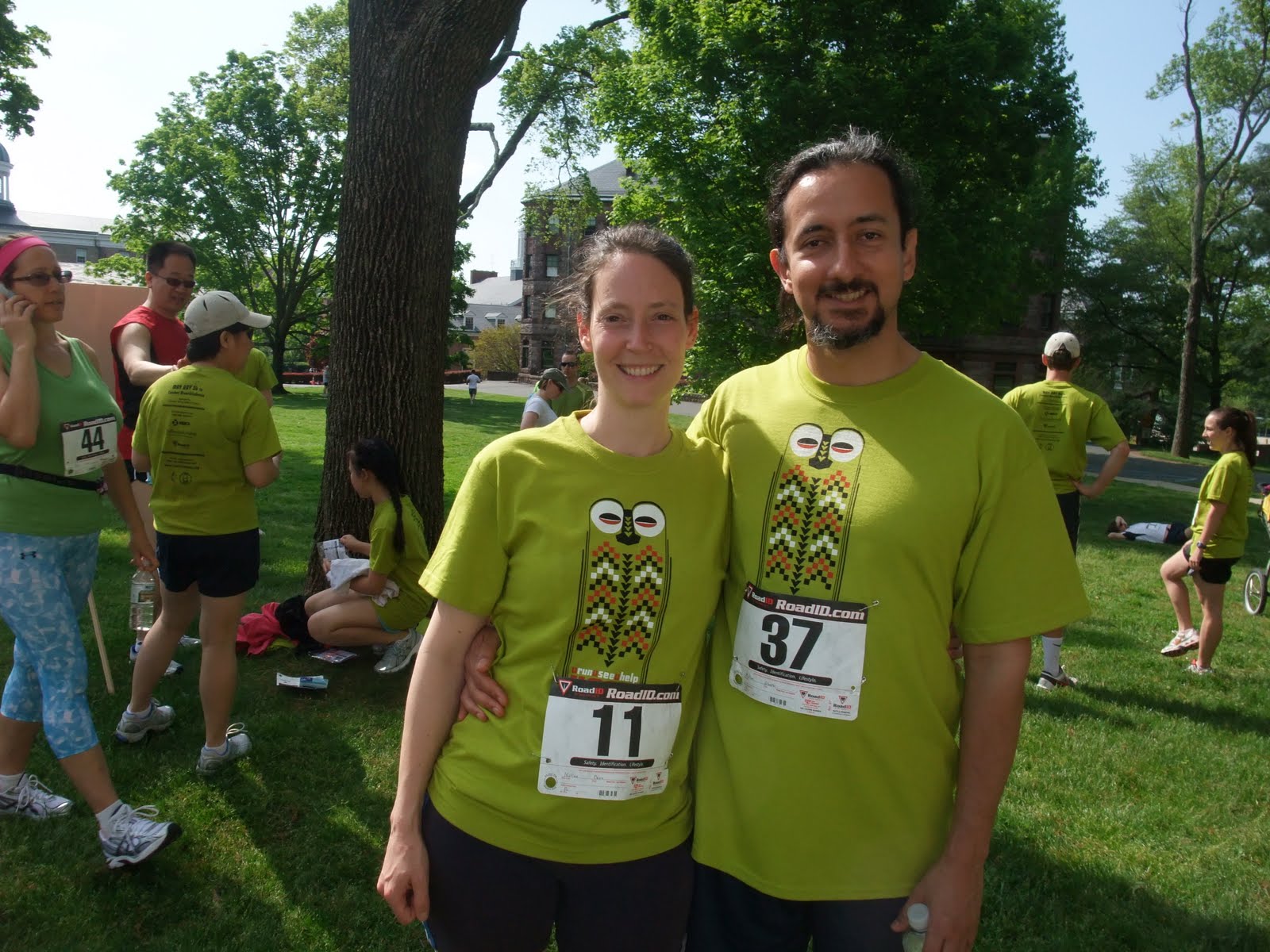
A well run race – thank you, Jim Hein, Charles Phillips, Peter Meggitt, et al. Now I proudly own one of the gorgeous T-shirts designed by Mathew Ireland, modeled here by my Einstein’s Alley Entrepreneur Group buddies, Alberto and Dana Molina. Here’s a photo album by Charles Phillips, viewable if you have a Google account.

Collapsed at home I read, in Friday’s Wall Street Journal, that such bursts of activity are to be expected. Clive Thompson reviewed “Bursts” by Albert-László Barabási (Dutton, 310 pages, $26.95) Says Thompson:

In “Bursts,” Mr. Barabási argues that bursty patterns are wired into human behavior, because we’re task-rich but time-poor. When we’re faced with having too much to do and not enough time—a category under which you could safely file “all modern white-collar work”—we prioritize. We pick the most urgent things, focus on them and forget the rest. Once forgotten, a task often stays forgotten, ignored for hours, days, months or even years. The act of prioritizing inherently produces power laws that dictate what we do on a minute-by-minute basis.

Normally, I’d have thought that our penchant for bursts of activity would make life more erratic, as one person’s burst collides with another’s stasis. But Mr. Barabási argues that the effect is precisely the opposite: If we know that burstiness is common, predicting human behavior becomes easier.

Does this mean procrastination is good, after all? That it’s OK to not try to do everything? That we aren’t bad if we don’t proceed at a steady pace?

It may work for getting stuff done, but not for hiking. In hiking, as spouse kept saying, you just have to put one foot in front of the other. You just have to keep on keeping on.

Not Holier than They

It used to be said that the people of God had a mission in the world, said Rev. Tom Lank, referring to the old style Christian missions. Lank spoke yesterday at a fundraising event for the Princeton United Methodist Church’s trip to the Democratic Republic of Congo to support the United Front Against Riverblindness. Pictured here are some of the travelers, from left: Nancy Beatty, Gretchen Boger, Jon Victor, Lank, Michelle Tuck-Ponder, Lynn Sloan, and Daniel Shungu, the founder of UFAR.

The next three events are a May Day 5k to Combat Riverblindness, a solo handbell concert on Saturday, May 15, and an African soiree on Saturday, May 22.

Lank’s discerning explanation can help those of us who cringe at the “holier than thou, smarter than thou, better than thou” aspects of colonialism. That concept, he said, drove much of the foreign missions activity in the 19th and 20th centuries. “But time and experience and reflection have forced us to revise that statement. It is more accurate to say that the God of mission has a people in the world. God is already active in all times and places. It is incumbent upon us to stop long enough to see where and how God is working, and then become a part of God’s renewal of creation.”

It also used to be said that missions were about bringing Christ to the nations. “That, too, is inaccurate, because Christ is already among the poor, the oppressed, and the downtrodden. Christ always precedes us there. Our job is to follow Christ to those places and to see the face of Christ in those we serve. We must seek not so much to transform others with the Gospel, but to be transformed ourselves.”

This same attitude — that the learners have much to teach the teachers, that the teachers don’t just bring their subject to the “great unwashed” — was expressed by a Westminster Choir College professor in Sunday’s Times of Trenton. Wendy Plump profiled Frank Abrahams, teacher of classical pedagogy, who was quoted as follows:

“The teacher teaches the students but the students also teach,” he explains. “In this kind of learning, you put yourself in the position of, OK, the kid’s got something to offer here. Let’s start from the point that they already know something worthy. What can I take from that and then add value? How can I enhance their musical experience, their understanding of music based on what they already know?”

“God has a mission of renewal and reconciliation in the world around us,” says Lank, “and God offers us ways to participate in that mission. It’s up to us to notice those unique opportunities that God presents to each of us.”

Photo by Patricia Hatton