Category Archives: Uncategorized

So Cool I Can’t Believe It: The Pi Day App


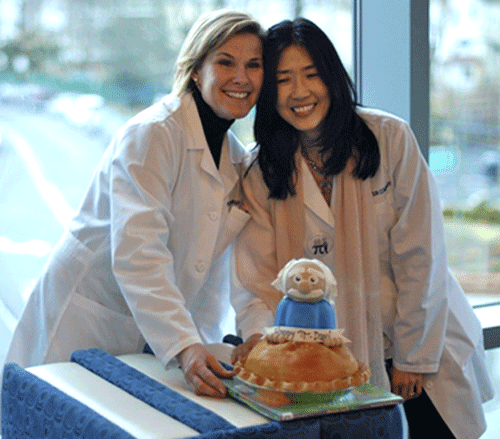
Pi Day begins today (Friday, March 11) at 3:14 p.m. and tonight is the Geek Freak Pub Crawl. The coolest part is that the Pi Day folks (Princeton Tour’s Mimi Omiecinski, left, and Joy Chen of Joy Cards) have come up with a Pi Day I Tunes App. How great is that!

It has an events calendar and, to quote, at the bottom of the detail information will be a link to set up the event in your calendar, an address that will take you to a map view, a phone number that you can tap to call, and a link to a web site for more information.” Plus videos.

But I feel left out. I have a Droid, not an i-Phone. Why do all the app makers make apps for i-Phones? Even my own church did that. An app for a church? Yes, Princeton United Methodist has one, thanks to our geeky assistant pastor, Trey Gillette. It’s called “Princeton UMC Mobile Chimes.” Some folks just have energy to spare!

Will I have the energy to come to the Geek Freek Pub Crawl Tonight? The deal is, show up at 100 Nassau and get the map, then set forth to encounter Geeks of Yesteryear. It’s free, you just pay for whatever drinks you drink. Dunno if I’ll go. Duke plays Maryland tonight, so I know spouse won’t go. But I hear all the best people will be there. If not, I’ll watch Fox News, something I rarely do, but the newcasters to whom I am not related promise to feature Pi Day tonight!

Faith and Ethics in the Executive Suite


The former CEO of a global water initiative that provides clean drinking water to villages in sub-Saharan Africa will speak on “Faith and Ethics in the Executive Suite” tonight at 7:00 pm, in McCormick Hall 101, the building adjoining the Princeton University Art Museum. It will be preceded by a reception from 6:30 – 7:00 pm. Dale Jones, now vice chairman of executive search firm Heidrick and Struggles,” will be interviewed by David W. Miller, director of the Princeton University Faith & Work Initiative, on his Protestant perspective on issues of business ethics, leadership, diversity and executive compensation.

The event is free and open to the public and is sponsored by the Princeton University Faith & Work Initiative with the Center for the Study of Religion

Postponed: March 7 Continuing Conversation

Not in Our Town was scheduled to discuss “What’s in a Name,” based on Kobina Aidoo’s documentary “The Neo African Americans,” on Monday, March 7, at 7:30 p.m. in the conference room at the Princeton Public Library, as part of the “Continuing Conversations on Race” series.

We are cancelling the Not in Our Town event because we have discovered a conflict with another event at the Princeton Public Library. The library is showing two films, Segregation and Integration in Princeton on Monday, March 7, starting at 7 p.m.

We think these two films are of vital importance; they examine key issues that shape Princeton, the town and the university.

The first tells about “The Princeton Plan,” the integration of Princeton’s schools in 1948. This film looks back at the changes that were made, the way Princeton chose to move forward and the reactions and reflections of those who lived through it. It was produced, edited and directed by the Princeton Committee of the NAACP Legal Defense Fund.

“Looking Forward: Reflections of Black Princeton Alumni” touches upon five decades of Princeton experiences and features interviews conducted during Princeton University’s Coming Back and Looking Forward Conference in 2006. It was produced, directed, and edited by Melvin McCray, ’74.

Not in Our Town will show an excerpt from Kobina Aidoo’s documentary and discuss it at a “Continuing Conversation on Race” session on April 4 or May 2.

We are truly, deeply sorry for any inconvenience this may have caused, but we want to support the library’s screening of these films.

Living in the Moment: David Parsons

Here is a guest review of Parsons Dance at McCarter Theatre by Aimee Fullman. Due to my oversight, it was not published in timely manner. In other words, it got lost in my email. But it’s so descriptive that I’m posting it anyway. Pretend you are reading the back copy of a monthly magazine!

McCarter Theatre delivered again as a performance venue of excellence with the presentation of Parsons Dance on November 18. The closing piece (Shining Star 2004) was 70’s themed and seemed very dated despite its recent inception but the rest of program featured five other fantastic works from throughout his prolific career. The opening piece, Wolfgang (2006), was originally choreographed for the Aspen/Santa Fe ballet. Although, the movement was beautiful, his dancers’ training led them to execute it a bit heavily with a lightness missing that was exhibited successfully by the ensemble in other works

By far, the favorite of myself and my companions was the second piece (Ebben-2009) -a duet about longing and an obsessive desire to be noticed. This theme was juxtaposed by the sustained movement and control exhibited by the dancers. It was an excerpt from Remember Me with music powerfully performed by the East Village Opera Company. “Caught” stole the show with its use of precise timed light flashes which in concert with the moving, controlled and repetitive jumps created the illusion of the dancer walking on air and defying gravity. The work still seemed cutting-edge even though it was created in 1982.

Particularly in light of all the recent conversations about the arts in these economic times and its value, I found myself not being drawn in by the performance to a transcendent experience but rather to reconsider the simple joys and pains of being in a body that is earthbound. By my measure of great: do I want to experience that movement physically or can the dancers make me feel the movement and the experience emotionally?—it was a great success—not because I was transported, but because I wasn’t. Every minute I was right there with the idea and it felt very accessible and a rediscovery for me of being in a body. All in all, it was a sophisticated display of the breadth of Parsons’ works and a call to live in the moment.

Drumming and Feasting on March 12

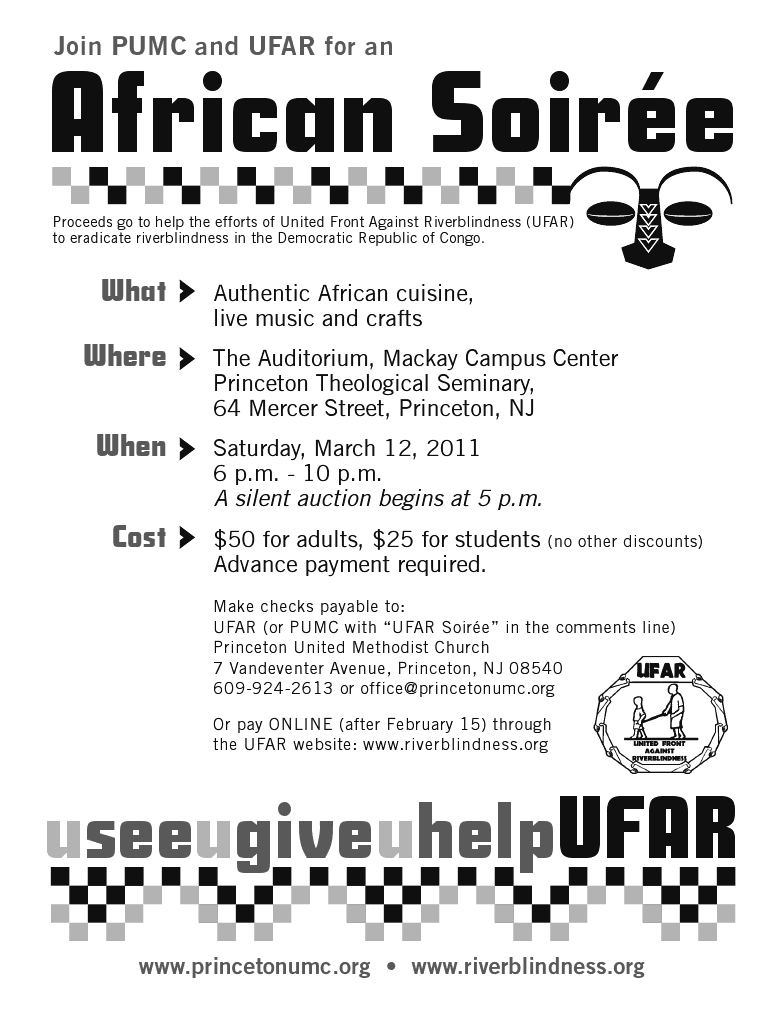
In an African village, rhythms of the drums infuse all of life – rituals, celebrations, communication, and even healing. In Princeton, drums will help to heal in a different way. They will beat at the Second Annual African Soiree, a benefit for the United Front Against Riverblindness on Saturday, March 12, at the Princeton Theological Seminary’s Mackay Campus Center, Alexander Street and College Road. Doors open for a silent auction at 5 p.m. and the program – including authentic African food, live music, and dancing to an African DJ – starts at 6 p.m. For $50 tickets ($25 for students) go to http://www.riverblindness.org or call Princeton United Methodist Church at 609-924-2613. Free off-street parking is available.

Following the African feast, provided by cooks from different African countries, the percussionists will begin the entertainment. Each of them – Foluso Mimy, Kolipe Camara, and Ray Philip – has had a distinguished career. For instance, Mimy belongs to the Mandingo Ambassadors, billed as “a living library of musical science,” and Camara, a native of Guinea West Africa, most recently was lead drummer for Les Ballets Africains. At last year’s African Soiree, these drummers accompanied the Umoja Dancers, and their brief solo stint was so interesting that the organizers of the event invited them back.

Mimy will begin with an “Apel,” a solo introduction. Then the three will play together, explaining the rhythms and breaking down each part. Two guests will have a chance to try out the various instruments in the orchestra. “Then we will perform another traditional rhythm displaying how we communicate through the drum,” says Mimy.

A socially disruptive disease, riverblindness starts with an excruciatingly itchy rash, and when it leads to blindness, children must leave school to be full-time caregivers for family members. There is a drug for it, provided free by Merck & Co., but it is a challenge to get the drug to remote villages and ensure that every person takes the drug once a year for at least 10 years.

UFAR is an African-inspired, Lawrenceville-based nonprofit charitable organization that aims, in partnership with other organizations, to eradicate onchocerciasis, known as riverblindness in the Kasongo region of the Democratic Republic of Congo. Approximately 21 million of the 60 million people are at risk of getting this disease, according to Daniel Shungu, founder.

Full disclosure: I wrote this as a press release for UFAR. Last year everybody had a wonderful time — good food, lots of fun, great support for the organization. I hope to see you there! BFF

Spring Dancing 2011

I just came back from Princeton University’s spring dance concert at McCarter’s Berlind Theater. The last performance is Sunday, February 20, at 1 p.m., and if you get this in time, it’s worth going to. Graham Lustig choreographed a lovely on-pointe etude that was well-danced by both women and men; they did the Arnie Zane/Bill T. Jones piece quite well; and the finale by Zvi Gotheiner is a lushly exuberant affirmation of joy.

I’m looking ahead and hope you are too. Based largely on Lynn Miller’s online calendar for U.S. 1 Newspaper at www.princetoninfo.com, but with a few extras added, here are all the dates I know about. If I’ve got something wrong, or omitted something, email me. You could also email the newspaper at events@princetoninfo.com.

Monday, February 21, 2:30 p.m., African drumming workshop at Princeton University.

Friday, February 25, 4 p.m. American Repertory Ballet On Pointe series, Douglas Martin tells of his new work.

Saturday, March 5, American Repertory Ballet presents Philip Jerry’s “Our Town” at Raritan Valley Community College. Also programmed, world premieres by Douglas Martin and Patrick Corbin and Kirk Peterson’s “Glazunov Variations.

Saturday and Sunday, March 5, and 6, Rider Dances with the Ghosts, directed by Kim Vaccaro, at the Yvonne Theater.

Saturday, March 12, the Kalamandir Dance Company performs in a day long festival of electronica arts at Grounds for Sculpture. It also plans a dance festival on August 1.

Saturday, March 12, American Repertory Ballet’s gala and performance at the War Memorial.

Saturday and Sunday, March 18 and 19, Princeton YWCA’s “I’ll Have What She’s Having,” perhaps not suitable for children.

Friday, March 25, 4 p.m., On Pointe series on dancing in college

Saturday, March 26, Lustig Dance Theatre in Monroe, new works.

Saturday, March 26, Corbin Dances at Raritan Valley CC.

Wednesday, March 30, Mark Morris Dance Company at McCarter, preceded by a 5 p.m. discussion with Simon Morrison.

Thursday, April 7 to Sunday, April 10, senior dance concert at Rutgers/Mason Gross.

Tuesday, April 12, Compagnia Nacional De Danza 2 at McCarter.

Thursdays to Sundays, spring dance concert at Rutgers/Mason Gross, featuring a new work by Randy James

Friday, April 29, 4 p.m., ARB’s On Pointe series, Michael Robertson on “Our Town.”

Monday, May 2: Rutgers/Mason Gross at the Joyce, New York, celebrating the 30th anniversary.

Wednesday, May 4, Ailey II at McCarter.

Saturday, May 14, in New Brunswick, the Kalamandir Dance Company presents “Prithibhi (Earth).

Friday, May 13, 4 p.m., ARB’s On Pointe series, Jelly Roll Morton and Twyla Tharp’s work.

Saturday and Sunday, May 14 and 15, Roxey Ballet’s Peter and the Wolf/Carnival of the Animals.

Saturday and Sunday, May 14 and 15, dance thesis concerts at Princeton University.

Saturday and Sunday, May 21 and 22, ARB at Rutgers/Mason Gross.

Marking Your Calendar: Princeton Chamber

Princeton’s alumni meet on Friday, February 25, to hear some intriguing speakers including Marc Freedman, not an alumnus, but founder and CEO of Civic Ventures, author of
“Prime Time: How Baby Boomers will Revolutionize Retirement and Transform America” and “Encore: Finding Work That Matters in the Second Half of Life.” If you are not an alum, you won’t be turned away, and here is the schedule.

Michael Griffith, CEO of Laureate Pharma, speaks for ACG-NJ on Thursday, March 3 at the Westin Princeton.

Some stellar speakers have signed up for Princeton chamber dates:

Lunch on March 3: Thomas A. Bracken, just-named President/CEO, New Jersey State Chamber of Commerce.

Breakfast on March 23: The Honorable Helen E. Hoens, New Jersey Supreme Court Justice and Eden Institute parent, “Stumbling Blocks or Stepping Stones — One Woman’s Path to the Supreme Court.”

Economic Summit on March 16: Robert C. Doll, Vice Chairman, Director, and Chief Investment Officer of Global Equities, BlackRock Advisors.

Lunch on April 7:
Lawyer/raconteur and author Albert Stark.

Lunch on May 5: Stig Leschly, Newark Charter School Fund, Inc. Leschly, the son of pharma exec Jan Leschly, made his own independent fortune with a rare book company that he sold to Amazon. Now he puts his energy into helping educate Newark’s children.

Lunch on June 2: James Steward, director, Princeton University Art Museum, “How the Arts Can Drive Business.”

Breakfast on June 15: Nan Keohane, Laurance S. Rockefeller Distinguished Visiting Professor of Public Affairs, Princeton University, and former president of Duke and Wellesley, will speak on Thinking About Leadership, the subject of her recently published book.

Lunch on July 7: Bob Martin, Commissioner, New Jersey Department of Environmental Protection

Drumbeats for Learning and Health


Two showcases for African drumming offer exciting opportunities for education and healing.

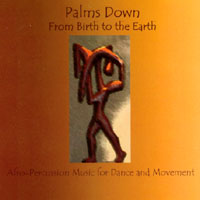
Ayanda Clarke, a second-generation African-American musician, will give a lecture workshop on Monday, February 21, 2:30 p.m. at Princeton University’s Hagan Dance Studio, 185 Nassau Street, Princeton. As founder of the group Palms Down (see inset of album cover), Clarke will examine the relationship between traditional African music and dance through video viewings, historical references, experiential discussion, and musical demonstrations. A second-generation African American percussionist, he has a bachelor’s degree from Wesleyan University (Class of 19989) and also earned his master’s degree in ethno-musicology from there. The lecture is free.

Three African drummers — Foluso Mimy, Kolipe Camara, and Ray Philip — will perform at the African Soiree, a benefit for the United Front Against Riverblindness, on Saturday, March 12, at 6 p.m.

The evening includes a silent auction, authentic cuisine and music, and a mini-concert and demonstration of African rhythms. It will be held at the Mackay Campus Center, Princeton Theological Seminary, 64 Mercer Street, Princeton. Admission is $50 ($25 for students) and advance payment is required. Go to http://www.riverblindness.org or call or email Princeton United Methodist Church, 609-924-2613 (office@princetonumc.org). Free off-street parking is available.

It’s a great cause and a fun evening (I was on the planning committee for last year’s African Soiree. Proceeds will help United Front Against Riverblindness (UFAR) to eradicate riverblindness in the Democratic Republic of Congo, where approximately 21 million of the 60 million people are at risk of getting this disease, according to Daniel Shungu, founder of UFAR.

A socially disruptive disease, riverblindness starts with an excruciatingly itchy rash, and when it leads to blindness, children must leave school to be full-time caregivers for family members. There is a drug for riverblindness, provided free by Merck & Co., but it is a challenge to get the drug to remote villages and ensure that every person takes the drug once a year for at least 10 years.

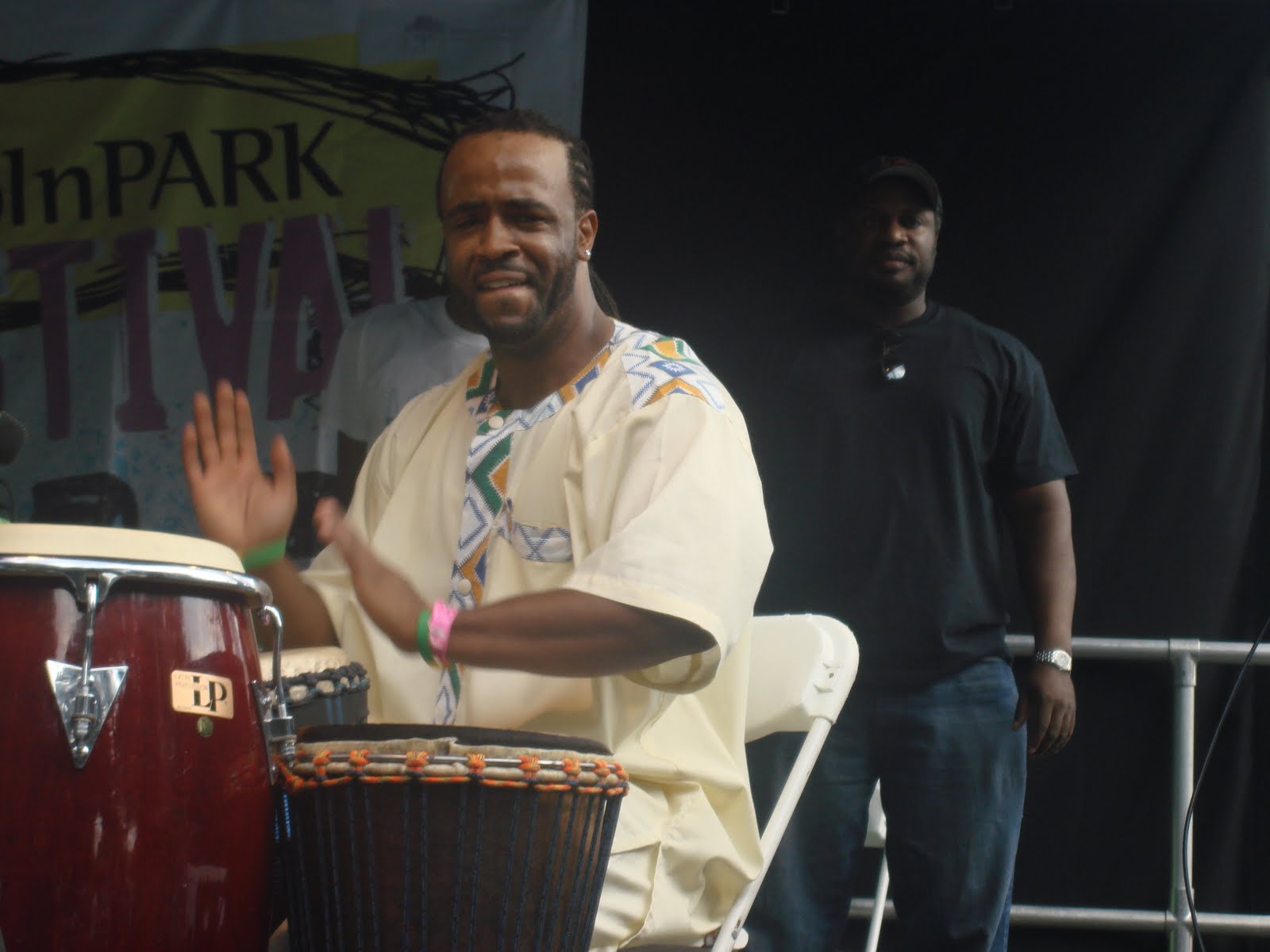
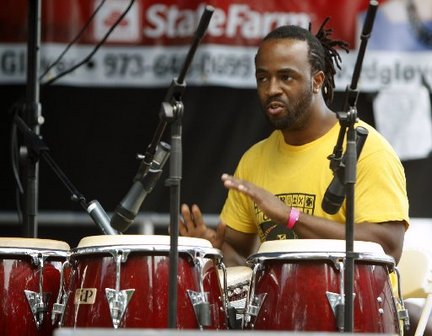
After feasting on sumptuous African dishes, provided by cooks from different African countries, and before the dancing begins, Soiree guests will be entertained by the percussionists. After a solo drum introduction, the three musicians will play together, then explain the rhythms they played, break down each part, and talk about that rhythm. Then they will introduce each instrument in the orchestra and invite two Soiree guests to come and try them out. “Then we will perform another traditional rhythm displaying how we communicate through the drum,” says Foluso Mimi (pictured with three drums at the Lincoln Park Music Festiva, photo by Amanda Brown). He belongs to the Mandingo Ambassadors, billed as “a living library of musical science.”

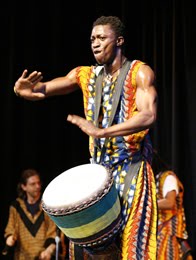
Each of the musicians is distinguished in his own right. For instance, Ibrahima “Kolipe” Camara (above, top right) began studying the djembe at age 10 in Guinea West Africa, traveling to learn the different instruments, rhythms, and dances. In 1992 Kolipe jonied Les Merveilles De Guinee, working with the world renowned director and choregrapher, Mohammed Kemoko Sano. After 3 years he joined Le Solei D’Afrique and toured out of Africa, playing in Belgium as a lead percussionist. For five years he was lead drummer for Les Ballets Africains, and he is now teaching and performing in New York.

The complex rhythms of African drums can send messages across the miles between villages, or celebrate joyful occasions, but they can also be deeply spiritual. It’s so appropriate that, on March 12, these drums will sound as heartbeats to health.

Childhood Tracings

Indelible Tracings, a new book, memorializes the United States Figure Skating Association (USFSA) team that was killed on a plane over Brussels in 1961, en route to the Worlds in Prague, as recounted in Obit magazine. The plane crashed 50 years ago today (February 17), and a prize winning documentary, The Rise, will be shown in some area theaters tonight only. Click here for details.

It brought back memories of my childhood figure skating days at the Ice Club of Baltimore in Carlin’s Ice Rink, where my sister and I trained three times a week to pass USFSA figure and dance tests. The USFSA was so small then that when we passed a test, even ordinary skaters like us, had their names printed (albeit fine print) in the USFSA bulletin. I have three such bulletins sitting in my dining room, marked by my mother (“See p. 36”) while I try to decide what to do with them. (Tear out the pages? Scan them? Leave them for my children to toss? Toss them now? Does anyone reading this want them?)

For the record, page 36 in June 1953 says that age 13 I passed my Bronze dance test, including the Fiesta Tango. I remember the judge’s name: Madeline Skirven. It doesn’t say who my partner was. Nicky Royal was my favorite partner — Billy Ridenhour was a little shaky and there was an older gentleman who was so shaky that it was scary to dance with him. (Note to grandchildren: even today I remember these details, and the details of your life will stay with you too!)

In earlier tests (May 1951) I passed the Predance. That one’s pretty easy. I can still do the Dutch waltz, even in my dotage, all forward movement.

In May, 1950, I passed the preliminary figure test, representing hours and hours of “patch” skating that I wouldn’t trade for the world. In patch skating, every move you make leaves a trace. You know absolutely for sure whether you did it right, and then you try to do it better the next time. I believe it was a huge mistake to take patch skating out of competitions, and as a result, few skaters do it. In my opinion that’s like saying ballet dancers don’t need to do a barre.

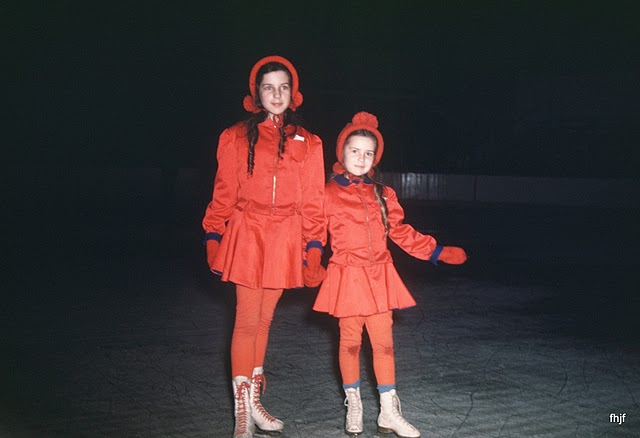
My sister and I started skating when I was three and she was five. My mother made our outfits as shown in the photo. These were reversible — blue wool on one side, red satin on the reverse. Our hats, which she made from chenille, had little pads in the back though we did soon learn to fall forward.

There weren’t many child skaters then, and we were quite a wow at our first club show. We did a “pair” number that consisted of us putting together everything we had figured out to do. As I remember, my contribution included a two-footed wibble wobble down the center line.

What did 12 years of skating bring to me, aside from knowing how to lace my grandkids’ skates?

Family time: The chance to participate in an activity with my ever busy father. My mother figured out that it was a good bonding activity for the four of us, and it gave both of them a rare chance to exercise. They developed friendships at the club and did the Dutch Waltz.

Persistence: The opportunity to work hard and be judged on whether I passed the test.

Exhilaration: The chance to skate free and fast, round and round, on an uncrowded rink. I’m spoiled for public skating forever.

A tolerance of cold temperatures, especially when bolstered by hot chocolate.

It’s a puzzle to me why I didn’t join Princeton Skating Club when we moved here. It focuses on ice dancing but it was expensive to join, and you couldn’t just come and skate. Since then, Iceland has been built, but now I can’t find my skates.

One result from the plane crash that wiped out all the skating stars: Money was raised to quickly bring the next generation to competition level, and it helped to fund the training of my all-time favorite, Peggy Fleming. She attributes her meteoric raise, according to the book, partly due to the extra training funds, but also to the vacuum at the top.

Dick Button wasn’t on the plane; his picture is on one of the Skating magazine covers and he is, of course, featured in the documentary. Perhaps the names of those who died are in those magazines in small type, along with my name. Those young skaters would have been the right age, in 1961, to be champions.
For Networking: Whatever Cricket Wants

Whatever Cricket Allen wants, Cricket is likely to get. The successful new-age beverage entrepreneur, who launched Bot Beverages, honchoes an Entrepreneur Show and Tell session on Wednesday, February 16th, 9 to 10:30 a.m., at the Whisk & Spoon Kitchen at Whole Foods. RSVP to Allen, who says it’s a “highly inspiring, comfortable & zero pressure environment to speak to and amongst our entrepreneurial peers!”

This is the second in the series, she says, and it’s “totally meant to be casual, comfortable, intimate and non-intimidating. There’s a big range of entrepreneurs, from small freelancers to people looking to sell their established companies or take on private equity capital. Everyone has the same thread in common — of struggles, successes, determination, doubt, blind faith.” What can you expect to get out of it? “Resources, new customers or just knowing your struggles are not unique.”

Get details by emailing cricket@yumeproducts.com. (Full disclosure: I have a special spot in my heart for the endeavors of this entrepreneur; she was in my daughter’s class at Princeton High. If I get there I’ll be late, coming from the Princeton chamber breakfast.)

Here are three more networking/skill building options:

The Mid-Day Toastmasters of Robbinsville has formed the Jobseekers Toastmasters Club for professionals looking to enhance their skills on the job hunt. It meets on first and third Mondays, with the next session on Monday, February 21, at 6:30 p.m. at the Robbinsville Library.

Anyone may attend a free Networking Breakfast , cosponsored by NJUnemployed, at the Princeton Public Library on Tuesday, February 22, at 8:30 a.m. Abby Kohut will present “Using Linked In to Connect and Create Career Opportunities.”

Princeton Chamber members may attend, free, a Wednesday, February 23 breakfast on the topic of transportation infrastrcture at the Nassau Inn. Among the speakers are Matthew Lawson of Mercer County Planning Division and John Subacus of Janssen Pharmaceutical. It is sponsored by the Greater Philadelphia Chamber of Commerce and you must register by February 22. Lots of influential folks will be there. Those who belong to neither the Princeton nor Mercer chambers would pay $35.

And an opportunity: The central New Jersey chapter of the National Association of Women Business Owners is calling for woman-owned business start-ups to participate in its Supporting Emerging Entrepreneurs Development (S.E.E.D.) business plan competition. NAWBO will select three businesses to receive $15,000 worth of services to help their businesses grow. All entries must be received by Friday, February 25.

Where to pick up a cute Bot bottle for your kids? In the beginning Bot had a distribution challenge, but now it’s ubiquitous at spots like Wegman’s, Bed Bath & Beyond, and, of course, right there at Whole Foods.