Category Archives: Uncategorized

an open letter to Joyce Carol Oates


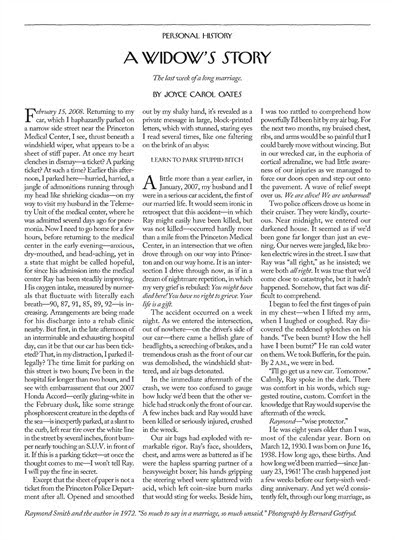
An open letter to Joyce Carol Oates, whose first person account of her husband’s death, at midnight, at Princeton Medical Center was published in the New Yorker in the December 13 issue. The full version will be published by Ecco Press/Harper Collins in February. An article in the Wall Street Journal tells how Oates was unable to write fiction during the months after her husband’s death, but kept a journal, from which this memoir was drawn. It also offers an account of her second marriage, to Princeton neuroscientist Charles Gross.

Thank you for putting into words the depths of despair that you felt — alone in the hospital — having lost your spouse — in the middle of the night in February, 2008.

You rushed to your husband’s bedside and you might have reached him before he died if only the security guard had been notified to expect you. Instead, he was required to make a phone call, taking precious minutes. “At the far end of the corridor, outside my husband’s room, I see something that terrifies me — five or six figures, medical workers, standing quietly outside the open door….Silently she points into the room and, in that instant, I know — I know that, for all my frantic rush, I have come too late….In a trance I enter the room — the room I left only a few hours before in utter naivete, kissing my husband good night…”

That feeling has haunted me for the four years since my mother died, just after I had left the nursing home (leaving at 9 pm, returning at midnight) and of course at night and in the early morning hours I replay every medical and personal detail for that night and the three days previous.

As you wrote, you are still recovering from the regret for feelings assumed, things not done or said. My husband and I have been fortunate in that he has had several almost terminal diseases (cardiac and cancer) which served as dress rehearsals for our losing each other. When he was resuscitated in Princeton ‘s ER some 15 years ago, we DID learn to start appreciating the time we have and although we are Christian we now have a strong sense of Carpe Diem.

Because you bravely wrote about this, I believe you will influence others to take stock, to make changes in time to enjoy their loved ones now.

I also hope it will influence the way the medical staff treats death on the ward.
At least you were given time (I wasn’t, in nursing homes, if a patient dies at night they want the body rolled out before the others wake up) but you certainly were not given the support you could have used. Perhaps your words about being alone will prepare families for what to expect and jumpstart a change in how healthcare providers provide for the family members.

“In this very early stage of widowhood — you might almost call it ‘pre-widowhood,’ for the widow hasn’t yet ‘got it,’ what it will be like to inhabit this free-fall world from which the meaning has been drained — the widow takes comfort in such small tasks, the rituals of the death protocol, through which more experienced others will guide her, as one might guide a doomed animal out of a pen and into a chute by the use of a ten-foot pole….It is not a correct answer to reply, ‘But I don’t want to call anyone. I want to go home, now, and die.'”

Although the memory of a parent or spouse or a child dying lasts and lasts and lasts, people stuff it down. They don’t like to talk about death or read about death. I sometimes try to de-haunt public perceptions of it because my father taught anatomy, and I spent a good bit of time in dissecting rooms, and I believe it’s healthy to look at a body as a body, not the real person. That’s all well and good until the body belongs to someone you love.

The truly haunting part of death is the memories you have, and the lost chance to create more memories. You are so gifted at evoking memories that your own true story will truly help many many people, both now and in the future.

I also suspect that you ‘had” to write this, as difficult as it was, and I hope that it helped you. I know that after reading it I ‘had’ to put down these words, and it has indeed helped. Thank you for bringing the subject up.

Note on February 10, 2011: Here is an excellent review of the book in the online magazine Obit.
Flock Logic: guest post by Nicole Plett


FLOCK LOGIC
Princeton University
Sunday, December 5, 2010
guest post by Nicole Plett

About 60 Homo sapiens of all ages, shapes, and sizes (though mostly tending toward the slender and youthful) were united on Sunday evening in the remarkable, site-specific performance, Flock Logic. The improvised movement event for dancers and non-dancers was developed by the students of the Princeton Atelier’s “Collective Motion” project. The class was co-taught by noted choreographer Susan Marshall, and Naomi Leonard, a gifted professor in the department of Mechanical and Aerospace Engineering. A core group of 12 Atelier students formed the backbone of the event; their numbers were augmented by another 20 volunteer “flockers” and a somewhat larger number of “flock watchers.”

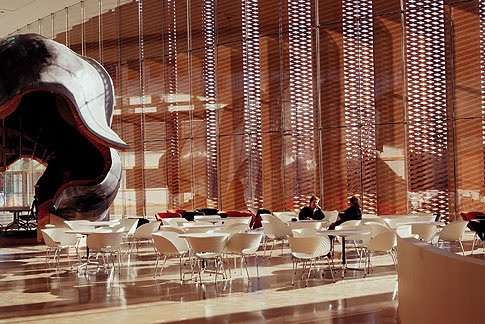
Set within the inspired and soaring spaces of the Carl Icahn Laboratory atrium (designed by Rafael Vinoly, pictured above), Flock Logic unfolds on multiple levels – with the movement action set at ground level and all the vantage points located above. It is accompanied by a small combo with synthesizer generating appropriately atmospheric music.

* * *

Flock Logic begins with the slow, uncomplicated gathering of a dozen individuals at a lounge-like area set with a few upholstered chairs and a café table. As the group gradually gathers and new members arrive, we notice the small greetings and acknowledgments we’d expect from other groups of mammals or fowl. The gathering reminds me of birds roosting at twilight.

We eager spectators are perched single-file along the railing of the lab’s mezzanine level like so many sparrows on the power lines alongside New Jersey’s railroad tracks.

Back on the floor, some of the 12 are sitting, lounging; one stretches flat out on his back. The group is inactive, but it’s a wary inactivity typical of creatures in the wild. Individuals sit, stand, turn, move chairs, and take care of some necessary grooming: a young girl casually undoes and remakes her perky ponytail.

The music begins and the group is set in motion; soon a second flock walks into the performance area and joins the first. I recognize (from my other experiences in nature and the world) that this gathering of individuals of many shapes and sizes defines itself by its cohesive behavior. And there’s a kind of serenity that seems to emanate from each member of the group – Do they find comfort in being part of a flock?

Once the flock is set in motion, the movements are quite pedestrian: walking, jogging, and an occasional sprint. Legs, arms, heads, shoulders and feet move naturally but purposefully. There are a few shared static postures that include a nice asymmetrical lunge.

The group moves with a mind of its own. An individual who appears to be a leader heads off to a corner of the space with a troop of followers. But soon she leads no longer; she has blended back into the group. There’s a resonance to this “improvised” performance because, consciously or unconsciously, we recognize its veracity. Through our accumulated knowledge of the natural world with flocks of all kinds – birds, sheep, fish – the movement seems true to life. Although the natural world requires obedience to nature’s rule, this flock adheres to a few simple rules, based on Professor Leonard’s research, but created by the students.

Minutes into the performance, there’s another group (who originally appeared to be spectators just like us) suddenly moving toward the flock. We see them rouse themselves from their vantage point on a comfy circular landing and hurry down the ramp to ground level. Once they arrive, they blend in seamlessly, no longer a separate entity but an indistinguishable part of the flock. A handful of bona fide spectators remain on the landing to continue to observe the flock from above.

As if to test the parameters of group behavior, Flock Logic introduces some outside motivators and obstacles. At one point, two creatures with small strobe lights cause general alarm; splitting the group and causing some to flee out of sight.

At another point, more café tables (which we view from above) are carried into the staging area, each marked with an arrow indicating which direction the flock must pass by. When the second table is introduced, we arrive at the event’s most dramatic moment (“the egg beater”). In a process not unlike trying to merge into the Holland Tunnel, the flock must navigate the space around the fixed point, but also, in following their trajectory out of the circle, its members must interweave without collisions. Some spontaneously change their trajectory in order to avoid collision.

The evening’s most magical moment comes as we see one individual, then another, raise one arm horizontally and place it on the shoulder of another. One after another the group mimics this gesture; something new springs into being, growing (I imagine) like coral or molecular bonds. And suddenly there’s an elegant, almost rigid structure stretching across the floor. With another unseen impetus of the flock, the structure melts away; the flock is in motion again, moving from one state to another as seamlessly as a formation of birds.

As I watch the flock in movement, I notice a group of five students, three on bicycles, casually traveling along the walkway on the outside of the building. As they pass, they glance at the interior flock in the same way one might pause to watch a formation of birds pass overhead.

Like the best performances, this improvised event rewards its spectators in relation to the qualities they bring to it. I was there to savor each lovely moment of movement and composition – intangible qualities of aesthetic pleasure, some pre-arranged, others generated by happenstance and coincidence. Melding the scientific observation and rigorous research of the 21st century with the 20th century inspirations of Cage, Cunningham, and the Judson Theater, I savor this choreographic feast and its beauties of indeterminacy.

— Nicole Plett

Today: Two Tech Heroes


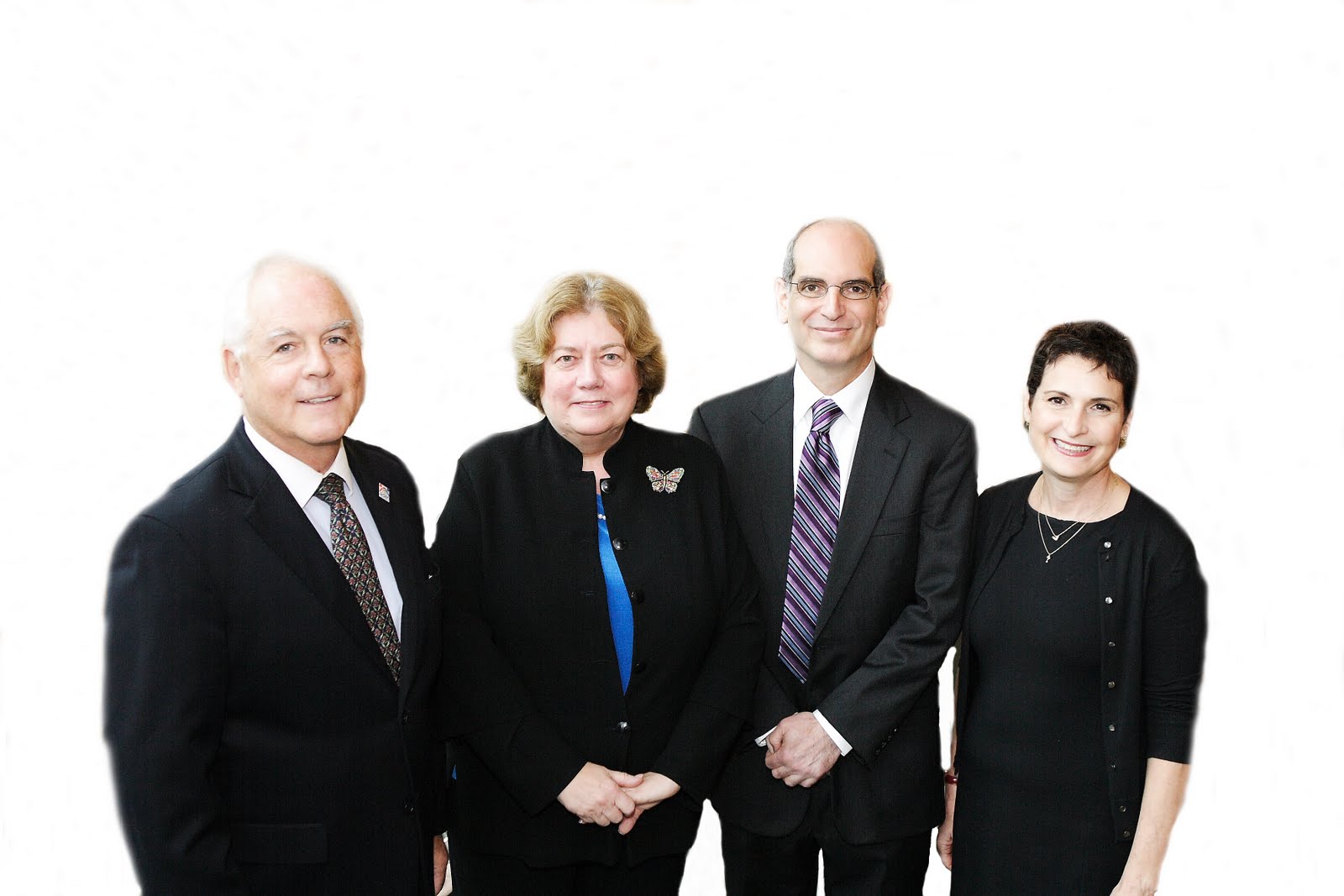
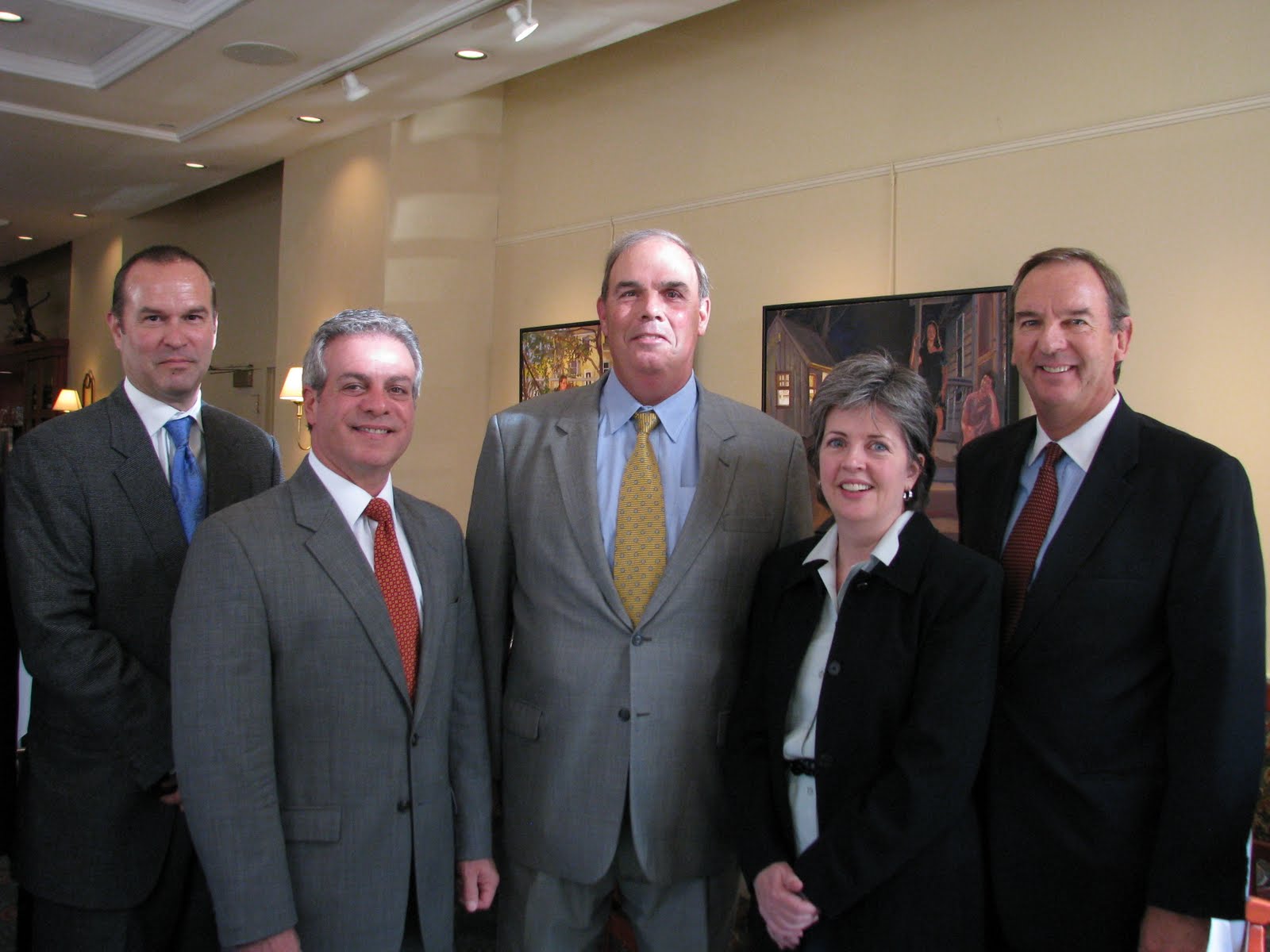
Two of my favorite techie entrepreneurs will be honored tonight at the exact same time – what a hard choice. I’ve been watching Rick Weiss (third from left, below) since he founded Viocare at a kitchen table in Princeton and now he’s ever so successful, with a handful of technology-based products aimed at keeping us all healthy. He is one of four business leaders honored at tonight’s Princeton Regional Chamber gala at Jasna Polana. The others, also extra worthy, include, left to right, Dr. Thomas McCool, president and CEO of Eden Autism Services, Christine Lokhammer, SVP of PNC Wealth Management, and Leslie Burger, director of the Princeton Public Library.

But the one I’m going to hear tonight – I’ve never met him, but I’m an avid user of his product, Mint.com. Aaron Patzer is a whiz kid from Duke who came to study with Ed Zschau, among others, in engineering graduate school at Princeton. The story goes that he left with a master’s degree in 2004 because his company idea was just too hot to keep in his pocket while he went for the doctorate. He recently sold his company to Intuit for a cool $170 million.

Starting at 4:30 p.m. today Patzer will give the G.S. Beckwith Gilbert ’63 lecture for the Keller Center for Innovation in Engineering Education. Most of the Keller events are in the Friend Center or Bowen Hall but TAKE NOTE this is in room 104 of the Carl A. Fields Center at the corner of Olden and Prospect. Hint: park on Olden or behind the Equad and enter from Olden. A reception will follow.

So though my heart is with Weiss and the other honorees, my curiosity is getting the best of me, and I’ll wear my Duke pin to go hear Patzer.

Engage with Grace at Thanksgiving


Here’s to a holiday filled with joy! And good food! And scrumptious pie! Not to mention excellent leftovers.

But I think the best holidays are the ones where loved ones engage in important conversation — happy topics or hard topics — conversations that we remember and carry with us.

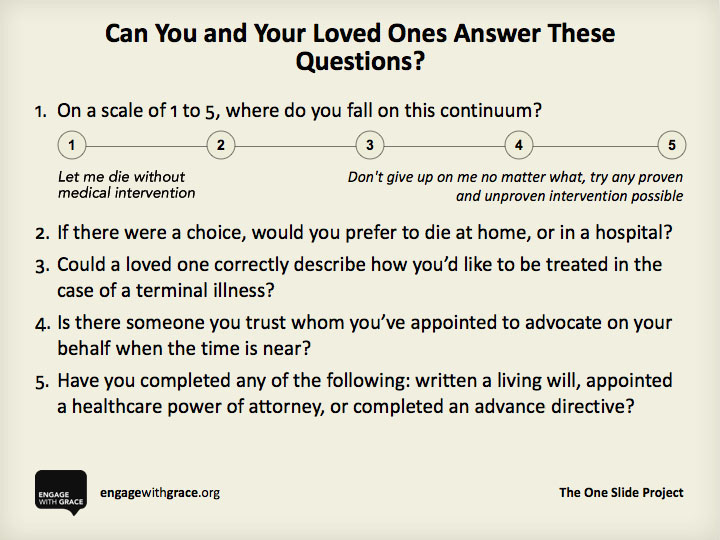
A group called “Engage with Grace” believes that Thanksgiving is one of the best times to open an “end of life” discussion. What do you want your loved ones to do when you are nearing the end of life? Morbid! you might say. No no no! you might say. Let’s keep the conversation to football and stuffing recipes.

Well, maybe this conversation is not for everyone to start, and not for every family. But it doesn’t have to be morbid. If everyone at the table is in reasonably good health, it can be dispassionate and intriguing.

I’m just bringing it up for you to consider bringing it up on this holiday weekend. Here is the video that explains it and the full text of the talk at TedMed by the founder of Engage with Grace.

Brian Ahier takes a similar tone “Letting your family know your wishes is an important way of showing your love.”

Guest Post: Karen Johnson, on Five Grains of Corn


Karen Johnson sent me this story, and am passing it on in case you are reading this between viewing the Macy’s parade, putting the turkey in the oven, and watching football. I am also sending another post in an entirely different vein, but worth thinking about, called Engage with Grace.

From Karen Johnson:
I thought you might be interested in a story that has become part of our family Thanksgiving tradition. My father was a printer, and at Thanksgiving he would distribute hundreds of copies of this story on burnt orange paper. At home by each Thanksgiving Dinner plate were five grains of corn, and this was read before dinner:

Five Grains of Corn

THANKSGIVING is distinctly an American holiday; there is nothing like it elsewhere in the world. It celebrates neither a savage battle nor the fall of a great city. It does not mark the anniversary of a great conqueror or the birthday of a famous statesman. It does not commemorate the writing of a historic public document or the launching of a new constitution. The American Thanksgiving Day is the expression of a deep feeling of gratitude by our people for the rich productivity of the land, a memorial of the dangers and hardships through which we have safely passed, and a fitting recognition of all that God in His goodness has bestowed upon us.

In early New England it was the custom at Thanksgiving time to place five grains of corn at every plate as a reminder of those stern days in the first winter when the food of the Pilgrims was so depleted that only five grains of corn were rationed to each individual at a time. The Pilgrim Fathers wanted their children to remember the sacrifice, suffering and hardship which made possible the settlement of a free people in a free land. They wanted to keep alive the memory of that long sixty-three-day trip taken in the tiny Mayflower. They desired to keep alive the thought of that “stern and rock bound coast,” its inhospitable welcome, and the first terrible winter which took such a toll of lives. They did not want their descendants to forget that on the day in which their ration was reduced to five grains of corn only seven healthy colonists remained to nurse the sick, and nearly half their numbers lay in the “windswept graveyard” on the hill. They did not want to forget that when the Mayflower sailed back to England in the spring, only the sailors were aboard.

The use of five grains of corn placed by each plate was a fitting reminder of a heroic past. Symbolically it may still serve as a useful means of recalling those great gifts for which we are grateful to God. The first grain of corn might stand for that wonderful beauty of nature which is all about us.

by Dr. Bliss Forbush

My note: Karen says that before she left to visit family for the holidays she wrapped up a financial system implementation for a telecom manufacturer. She has just returned from two major conferences, The 21st World Continuous Auditing & Reporting Symposium Rutgers
http://raw.rutgers.edu/ and The XBRL US National Conference 2010
http://xbrl.us/events/Pages/natconf2010/home.aspx.

Thank you for this contribution, Karen.

Two for Today at the EQuad

In case you forgot — I did — two intriguing tech events for day. Quoting directly from the Keller Center newsletter.

TODAY: Panel Discussion – Starting, Financing, and Building Life Science Companies to Success

Monday, November 22 at 5 p.m. in the Bowen Hall Auditorium (222) at Princeton University
The Keller Center will host a panel discussion on investing in healthcare technologies featuring executives in the biotech field. The discussion, followed by a Q&A; session, will be moderated by Ed Zschau, Princeton’s Visiting Professor in High-Tech Entrepreneurship. Reception to follow. Panelists will include:

Bob Hariri
CEO of Celgene Cellular Therapeutics

Jonathan Fleming *84
Managing General Partner of Oxford Bioscience Partners

Hal Werner ’70
General Partner and Founder of Healthcare Ventures LLC

(Bowen Hall entrance is on ProspectStreet)

Princeton Pitch 2010
Monday, November 22 at 7 p.m.
in the Friend Center Auditorium (101)
The Princeton Pitch, hosted by the Princeton Entrepreneurship Club, will be heldtonight in Friend 101! Teams will be given 60 seconds to pitch their ideas to an auditorium of guests and judges. Light snacks will be available and prizes will be awarded to the winning teams. This event is open to the public.

Friend Center entrance is on Olden Avenue.

No better opportunity, no better price, no better place — to meet and greet like-minded technology entrepreneurs and funders.

Telling Stories for a Purpose

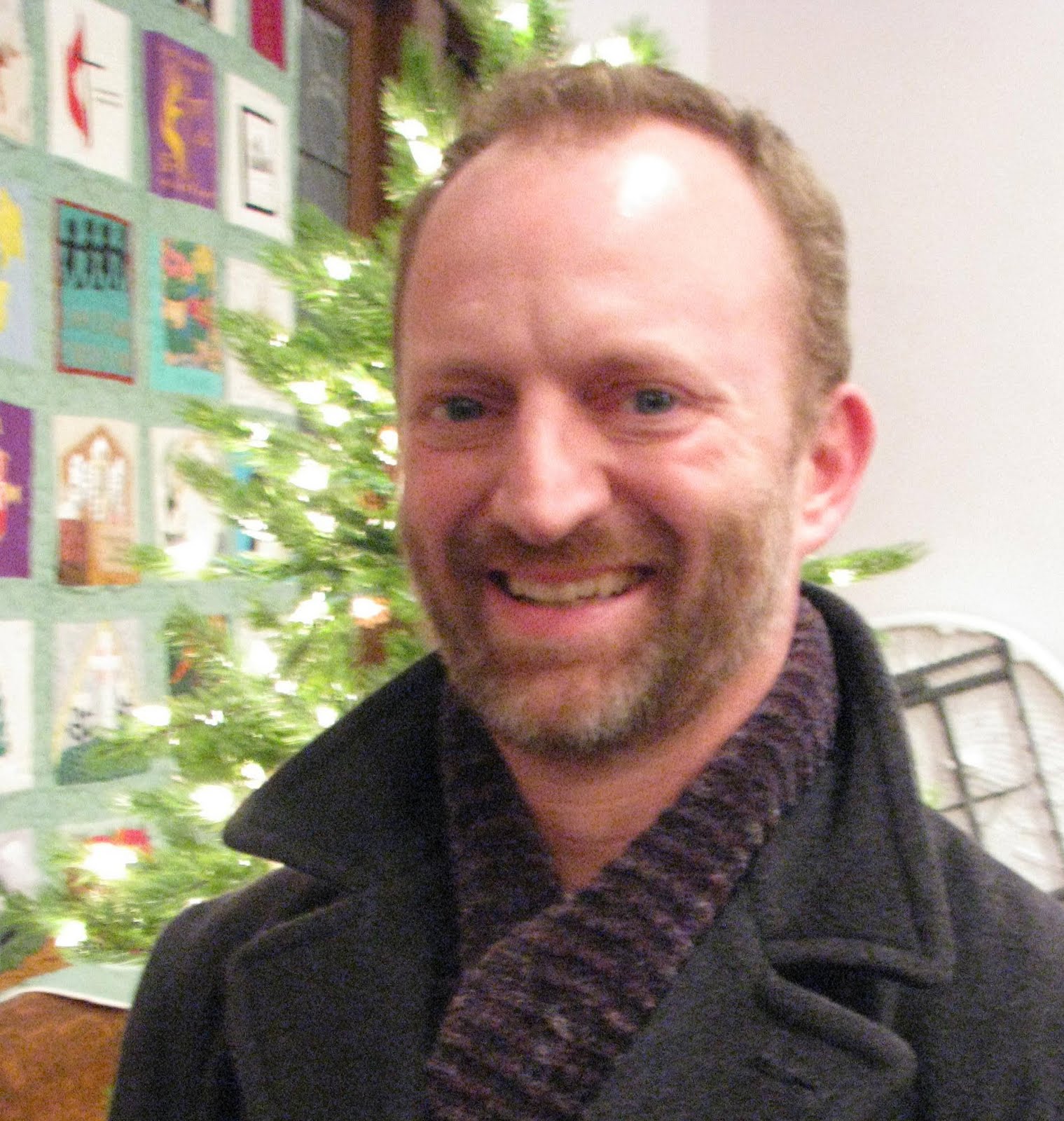
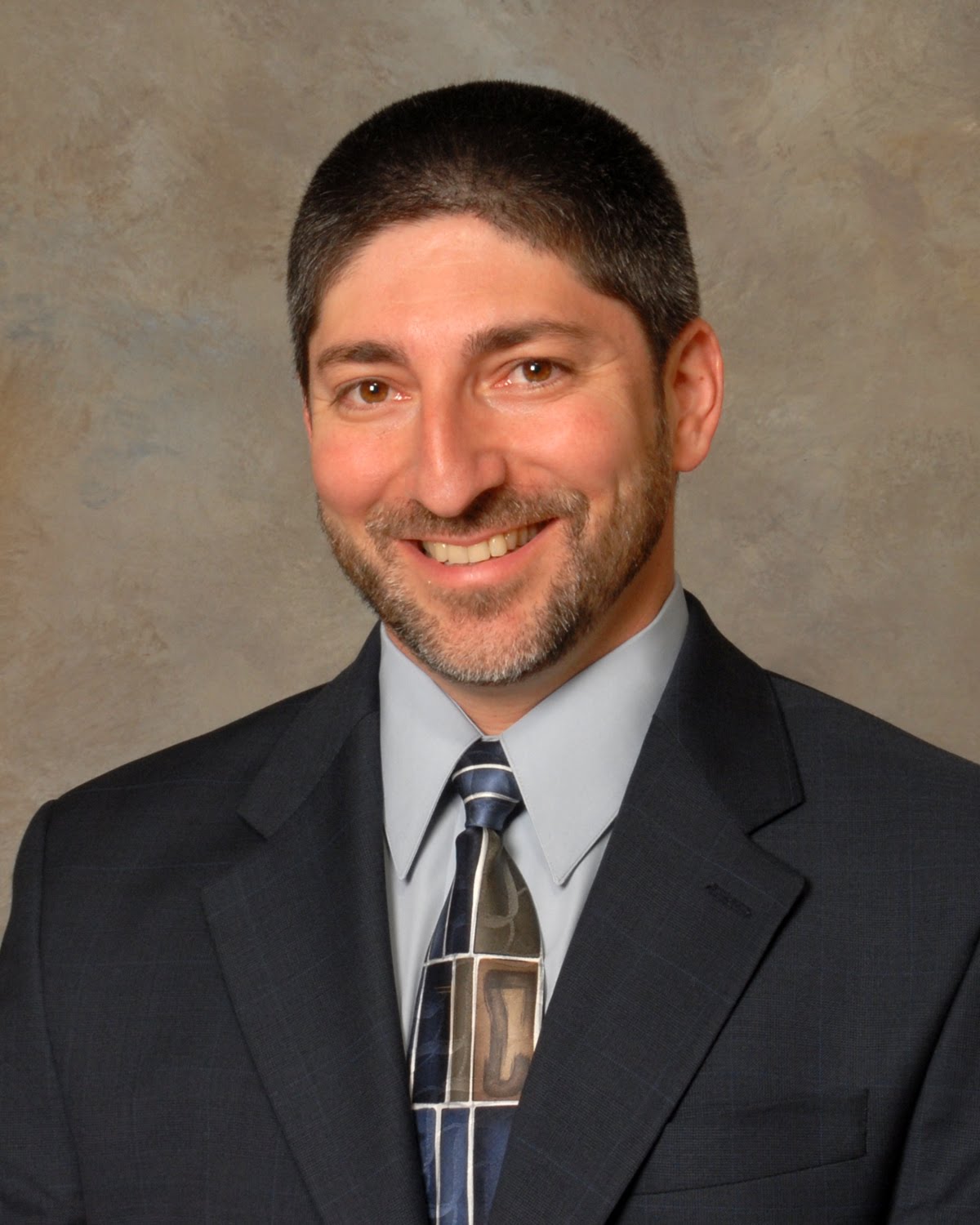
This post is about two men — actor Scott Langdon and teambuilding coach Merrick Rosenberg — and one subject — actors’ storytelling skills. Rosenberg, of Team Builders Plus (photo on left), speaks at the Princeton chamber’s breakfast on Wednesday, November 17, 8 p.m. at the Nassau Club (networking starts at 7:30).

I know Rosenberg is a fabulous communicator because I heard him at TEDxNJLibraries last spring. Here is his entertaining but useful monkey-and-banana story “the Legend of the Cold Water.” On this YouTube video, find it at minutes 10 to 15. It illustrates that the stories we tell and the questions we ask will define our workplace culture. His topic for Wednesday will be “Taking Flight! Unleash the Power of Behavioral Styles at Work and in Life” and I am sure that we will be simultaneously be entertained and enlightened.

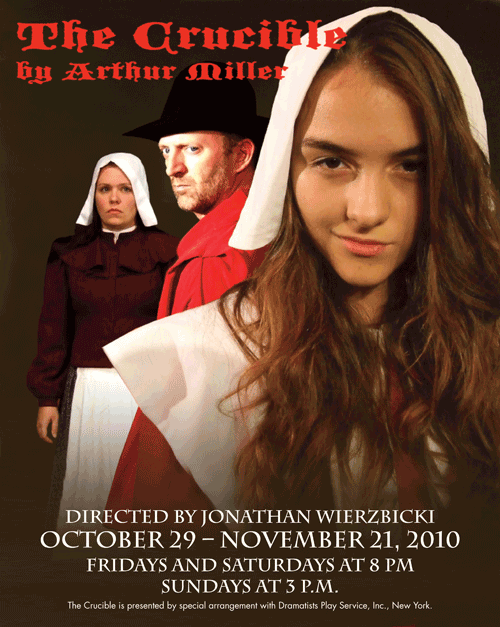
I saw Scott Langdon (on right) in a truly wonderful performance of “The Crucible” at Playhouse 22 in East Brunswick last Sunday. It continues Friday to Sunday, November 19-21. Full disclosure #1: Scott goes to my church, and I did publicity for his one-man “Christmas Carol” performance last year. Full disclosure #2: I don’t like dark plays but I went to this one because of full disclosure #1. Arthur Miller’s classic drama was made into a movie with Daniel Day-Lewis in the role of John Proctor. A teenage movie actress, Quinn Shepherd, plays opposite Langdon in the role of Abigail Williams.

Miller used some of the real characters in the Salem witchtrials to write this 1953 allegory about the McCarthy hearings, and he himself would be convicted of “Contempt of Congress” in 1956 for failing to identify people at meetings he attended. Many of the actors in this excellent production show a many-layered, nuanced view of their characters. In this tale of governmental power run insanely amok, the playwright and the players managed to convince me that the tragic ending was the right ending.

Langdon revealed every ounce of John Proctor’s humanity — his weaknesses and his strengths. He and the cast masterfully told Arthur Miller’s unforgettable story.

Princeton Comment’s Calendar Picks


Marie Savard MD, ABC’s medical contributor, traded the sleepless nights of on-call patient care for middle-of-the night trips from Philadelphia to New York for regular appearances on “Good Morning America” and is on call for breaking medical news. She keynotes the Seventh Annual Women’s Wellness Day on Saturday, November 20, from 8 a.m. to 3 p.m., at Educational Testing Service. For this U.S. 1 cover story, click here.

Jason Hollander wanted, for his children, the bucolic Princeton childhood that he had enjoyed. So he left the medical fast lane of Manhattan to locate his endocrinology practice in Princeton, yet he “keeps his hand in,” so to speak, by doing cutting edge research. He is also among the few doctors who encourage patients to keep in touch with him by texting, E-mailing, or using a secure web page. Hollander speaks on thyroid issues in women at the Seventh Annual Women’s Wellness Day on November 20.

Now for this week’s dates:

Peter Orszag, former director of the Office of Management and Budget under President Barack Obama, will present a public talk titled “Health Care Reform and Our Fiscal Future” on Wednesday, November 10, at 4:30 p.m. in Dodds Auditorium, Robertson Hall. Free.

On the same day, Wednesday, November 10, 4:30 to 6:30 p.m., the New Jersey Entrepreneurial Network sponsors a networking and poster session at Princeton University’s Friend Center on Olden Avenue.
Networking and Poster Session. Mike Wiley of the NJEDA, will be the keynote, speaking on financing and incentives for technology companies. (I note, dyspeptically, that the head of the now decimated New Jersey Commission on Science and Technology spoke at last year’s event.)

Bob Baker and Lorette Pruden demystify clear technical and business writing in a panel called “Techno-Psycho-Babble Be Gone!” at the New Jersey Entrepreneurs’ Forum on Thursday, November 11, at 4 p.m. at the Commercialization Center for Innovative Technologies in North Brunswick. Cost: $35. (Be forewarned, the organization’s website lists a different topic.)

Also on Thursday, November 11, 6 to 8:30 p.m., Herbert Greenberg, founder and CEO of Caliper Corporation and author of the New York Times Best Seller “Succeed on Your Own Terms,” will speak on “Human Capital in M&A; Transaction” for the the Association for Corporate Growth, New Jersey Chapter, at the Westin. Cost: $60.

Paul Polak, author of Out of Poverty and founder of International Design Enterprises, will share experiences working in developing countries and discuss his design approach to solving the world’s greatest problem: poverty, on Friday, November 12 at 3:30 p.m. in the Friend Center Convocation Room (113) at Princeton University, part of the Keller Center lecture series. A reception follows. Also that day, the Princeton chapter of Engineers Without Borders hosts a conference “Collective Motion: Maintaining Sustainability in Development.

The university holds a Sustainability Open House on Tuesday, November 16, 3 to 7 p.m.


The Golden Rule may not work for the workplace, says Merrick Rosenberg. That’s because other people may want to be treated differently than you want to be treated. I saw Rosenberg give a dynamite presentation at TEDS/NJLibraries at Princeton Public Libraries last spring. Now Rosenberg speaks on “Taking Flight: Unleash the Power of Behavioral Styles in Work and in Life,” on Wednesday, November 17, at 7:30 a.m. at the Princeton chamber’s breakfast at the Nassau Club. Cost: $40 non members. Call 609-924-1776.

Eileen Sinett presents her November Business Breakfast on Friday, November 19, 8:30 to 10 a.m. at 610 Plainsboro Road. Topic: “Gratitude.” Cost: $10. RSVP eileen@speakingthatconnects.com

For a complete listing of events, business meetings and otherwise, go to princetoninfo.com.

Who Gets to be Righteously Angry? Harris-Perry

Melissa Harris-Perry was witty, smart, and incisive in a post election talk that dealt as much with LGBT inequalities as with racial injustice. Her talk at the Princeton Public Library on Wednesday, November 3 packed the community room. It was the culmination of three events there, arranged by Princeton Friends Meeting and co-sponsored by Not in Our Town, in a series that celebrated the life of civil rights pioneer Bayard Rustin

Who gets to be righteously angry about the breach of the social contract of the United States, a contract that makes certain promises to U.S. citizens? Not the Tea Party, suggested Harris-Perry. If there are going to be complaints about the quality of life in our communities, about schools that fail children, about 10 percent unemployment, about the instability of the housing market, about environmental degradation – all those conditions have long been par for the course in minority — black and brown – communities. The majority’s response to vulnerable and marginalized communities has been “act nicer, work harder, and you will get want you want.”

The minority community, in our democracy, gets to sit at the table. For Democrats worried about losing the House of Representatives, this is a solace. Minorities get a say. Unfortunately that isn’t true for all minorities in all situations. As Harris-Perry said, “If you don’t get to renegotiate your contract, you are a subject, not a citizen.”

Presidents need Kings, she said, showing a picture of President Lyndon Baines Johnson with the man who helped him renegotiate the nation’s social contract, Rev. Martin Luther King Jr. But advisors like King also need their own advisors. She cited Ella Baker, who insisted that young people must speak for themselves. Fanny Lou Hamer, who educated King about rural poverty and economic justice versus urban segregation. James Bevel, who insisted on consistent pacifism and edged King to speak out against the Vietnam War. And Bayard Rustin, the subject of the talk, who urged King to commit to non-violence in every aspect.

Harris-Perry listed three steps that are necessary for fulfillment of the social contract: recognition, respectability, redistribution. In illustrating the requirement to be respectable, she compared a question from the Tale of Desperaux to one from W. E. B. Du Bois, How does it feel to be a problem? In the children’s book, it was “What does it mean when your name is a slur?”

Among her startling observations and responses to questions was her comment on President Obama’s emphasis on strong black fathers. She noted that, if Obama had had a strong black father, he would never have become president. It was his access to white privilege that came to him through his white grandmother that lined his path to the White House.

A Buyer’s Market: Glass Half Empty or Full?


Anne LaBate had the good-news scoop, at a Borden-Perlman conclave on “the real state of commercial real estate” at the Nassau Club this morning. Appliance dealer Mrs. G’s has signed a deal to develop her corner of Route 1 North in Lawrenceville. That’s huge news. Of course now a lengthy approval process begins.

LaBate, a principal with Segal LaBate Commercial Real Estate, was on a panel with Paul McArthur of Trillium Realty Advisors, Jim Silkensen of NJ Bankers Association, and Greg Tesche of Chubb Insurance, which sponsored the event.

It’s a tenant’s and buyer’s market, the panelists told the 70-plus movers and shakers who attended. Silkensen said that appraisers are subtracting 10 percent from a property’ value because of the uncertain economy. Add to that that property values are off 40 percent since 2007.

McArthur’s pessimistic statistics included that half of the $1.4 trillion loans coming due in the next four years are under water, and most are commercial mortgage backed securities.

However, “slow steady growth will start in 2012,” he said. Those who were able to structure long-term deals, 10 years rather than five years, will do well because, says McArthur, “Inflation is coming.” And if you have the cash, “the ability to close a deal will be a great asset.”

Before construction can begin, vacancies now at 25 percent in Mercer County must drop to 10 or 15 percent. Meanwhile nobody knows the real vacancy rate, because downsized companies are still paying rent on empty space.

On the good news side, small businesses are the ones creating jobs, versus what happened nine years ago. Said McArthur: “We need to put packages in place to encourage growth of small businesses.”

LaBate revealed some other potential deals, based on the premise that a buyer’s market offers an opportunity for major chains without a presence in Central New Jersey. She cited Walgreen’s, who cut back 80 percent of its expansion but has said that half of the remaining 20 percent will be in New York or New Jersey. “It is perceived as a rich market that they need to penetrate.”

“But they will pick and choose among municipalities,” she warned. “They are not going to battle for approvals – they will move on.” Obstacles to the expansion plans of Janssen Pharmaceutical, in Hopewell, everyone agreed, were an all-too-frequent example of an inhospitable environment.

Other bright spots: someone plans to build a private boarding school in Ewing, and the addition of two new hospital sites will encourage physicians to relocate and upgrade.

Because of financing challenges, public/private partnerships are where the action will be, she predicted. The College of New Jersey contemplates a “Campus Town” of mixed retail and residence. Rutgers may do a deal in New Brunswick, and Mercer County Community College could develop its Kerney Campus in Trenton.

LaBate was spitting mad about the incentives, created by the state, to keep Blackrock. Blackrock did stay in New Jersey by signing with University Square, but it didn’t even get to use the incentives. Now nobody will, she predicts, because the incentives were so large-company specific.

In general, said Tony LaPlaca, “people are afraid of living in New Jersey. Business people need to encourage government to get positive messages out. Perceptions are led by the media.”

In the photo, from left, Doug Borden of Borden Perlman, Bob Prunetti of the Mercer Chamber, Jeff Hall of Fox Rothschild, Anne LaBate of Segal Commercial, Paul McArthur of Trillium Realty