Category Archives: Uncategorized

Ingenues Give Us Hope

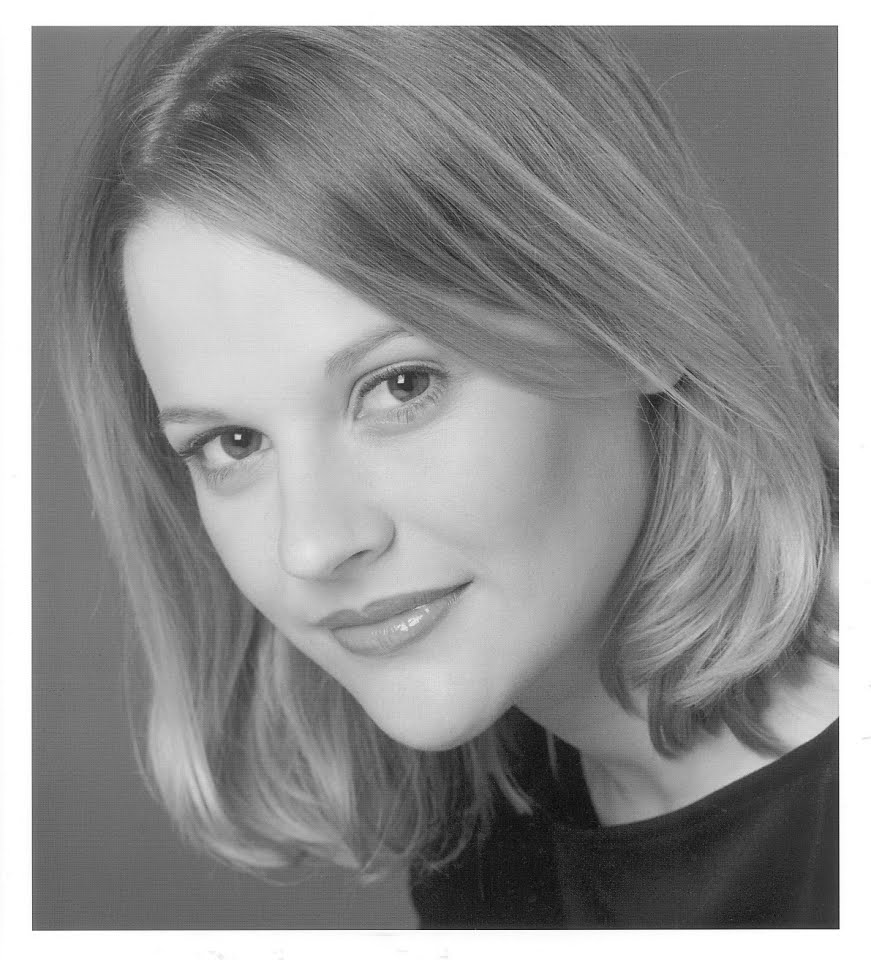
Two fresh-faced singers in ingenue roles helped me realize how youth and innocence can restore our faith in the future. In “The Always Present Present,” seen in Princeton, with lyrics by Renee Weiss and score by Peter Westergaard, Darlene Kelsey fairly radiated joy, love, and sweet passion for her lover and future husband. There was some dancing. Net: The dancing was good, the singing fabulous.

The following week I was lucky to get a friend’s extra ticket to the revival of West Side Story, with the original Jerome Robbins choreography. Argentinian opera singer Josefina Scaglione sang her heart out as Maria in the tale of the star-crossed lovers. I have a hard time with the tragedy of this story but Scaglione’s unswerving love made me believe, for at least that day, that love can conquer evil. Net: The singing was good, the dancing — of course — fabulous.

The Center City Opera has scheduled one more performance of the Weiss/Westergaard collaboration, on Saturday, September 12, at the Lantern Theater, 10th and Ludlow streets in Philadelphia. Tickets are $25 and are available online, by calling (215) 238-1555 or at the door. At 2 p.m. on the 12th, a documentary about Ted and Renee Weiss will be shown ($5). And West Side Story is a true “don’t miss” at the Palace. Peanut gallery seats would be sufficient, with opera glasses, but note it has a 2 hour 40 minute running time.

September Restart: Learn, Unlearn, and Relearn

Swim in the intellectual deep end, urges Cathy N. Davidson, John Hope Franklin Humanities Professor of Interdisciplinary Studies at Duke University. In today’s new world, she points to Alvin Toffler’s definition of literacy, “to learn, unlearn, and relearn.”

“One could argue,” writes Davidson in Duke Magazine, “that data mastery (in any field), the ability to absorb and evaluate information, and the skill to use existing paradigms to solve problems predict good grades but do not necessarily prepare students to respond effectively to the unexpected twists and turns that, inevitably, like ahead.”

Unlearning and relearning takes place when students study abroad, when they confront an emergency like a serious illness or the loss of a job or life savings. But how to simulate this in a classroom? She has a radical curriculum proposal. Essentially it requires students to take advanced courses without prerequisites, to spend time “in the intellectual deep end with our fellow students there helping us to learn to swim.”

(For more of Davidson’s radical ideas, she blogs at http://www.hastac.org/ pronounced haystack, as in needle in. For her opponents, those who espouse a standard curriculum, check out this education blog.)

Ambitious students figure out creative ways to swim in the deep end without floaties. I remember spending hours, poring over the catalog, figuring out ways to take higher level courses without prerequisites. My favorite alternative strategy, which I pass on to any college student who will listen, is to take the lower level courses but with the “star” professors. It works to wait a year for that non-major course usually taken by freshmen and sophomores. You will be more likely to get into that in-demand section as a junior.

September: Reset Your Life

In his excellent book “Game. Set. Life. Peak Performance for Sports and Life,” motivational speaker and tennis pro Ed Tseng offers tips on such topics as performing under pressure, focus, relaxation, increasing energy, having confidence, setting and attaining goals, and having more fun. In a chapter on overcoming fear and taking risks he tells of Barbara Hillary, an African-American woman who, after beating lung cancer at the age of 75, decided she wanted to walk across the North Pole. Barbara Hillary took a risk, and guess what? Now she’s planning to trek to the South Pole!”

The U.S. Open is underway and Tseng – who has just finished a speaking gig there – will share his “peak performance and mental fitness” tips at Mrs. G’s TV & Appliance Store on Thursday, September 3, 6 to 8 p.m., followed by an opportunity to watch the U.S. Open on the store’s new 82-inch Mitsubishi Home Theater. It’s free but please RSVP to 609-882-1444 (mention this bog) or rich@mrsgs.com.

Tseng laces his advice with sports celebrity anecdotes. On the following Thursday (September 10) at a Princeton Chamber lunch, four-time Emmy winner and Broadway star Bill Boggs relates entertainment celebrity anecdotes as he shares success strategies from his book at a Princeton Chamber lunch. His talk: “Got What It Takes? Successful People Reveal How They Made it To the Top” is another good chance to “reset your life.” Call 609-924-1775 or info@princetonchamber.org

Everybody gets nervous, whether before a presentation or a tennis match. Tseng quotes Georgia O’Keefe: “I have been terrified every day of my life, but that has never stopped me from doing everything I wanted to do.”

Quoting Tseng: “Taking risks can be compared to working out. When you work out, you need to do the right exercises and do it consistently. Your mind is the same; you have to train your mind to practice taking risks.

“During a talk I gave for Disney employees, I walked on broken glass to prove a point. At first, I was nervous, but I did it anyway. The glass walk is a metaphor for taking risks and getting out of your comfort zone.

“Fear keeps us where we are. Fear keeps us from reaching our potential. If you carefully live your life, then the people that take risks will quickly surpass you.

“Are you willing to give up what you want now for what you want MOST?

“Even if you don’t win, you can still learn. You actually learn MORE from a loss than a win. It’s great if you can treat your pursuit of a goal as a game.

Tseng quotes Wayne Gretzky: “You miss 100 percent of the shots you never take.”

O’Keefe Image from Wikipedia: Georgia O’Keeffe, Ram’s Head White Hollyhock and Little Hills,1935, The Brooklyn Museum


Ted & Renee Weiss Tonight — in Dance and Song

Somehow I missed knowing about the Renee Weiss/ Peter Westergaard opera, staged here in Princeton for one night only, tonight, Saturday, August 29, at 7:30 p.m. at 185 Nassau Street.

So I’m hurrying to tell about it, Tweeting and Blogging. This is an “acid test” of social media. If you hear about it from me for the first time and are as eager to attend as I am, let me know andlook for me tonight. I’ll be with my houseguest from Dallas.

From the Princeton University website:

A collaboration between two longtime members of the Princeton community has produced a chamber opera based on a true story of love and courtship featuring singing, poetry and dance.

The Center City Opera Theater of Philadelphia will present the first fully staged production of “The Always Present Present” by librettist Renée Weiss and composer Peter Westergaard at 7:30 p.m. Saturday, Aug. 29, in the Matthews Acting Studio at 185 Nassau St. The show then will move to Philadelphia, where it will be performed Sept. 8, 10 and 12, as part of Philly Fringe.

The opera is an extension of a book of poetry and letters by the same title published in 2006 and written by Weiss and her husband, Princeton professor Ted Weiss, an award-winning poet, editor and literary critic who died in 2003. The story draws from correspondence the two exchanged 70 years ago when they were falling in love, separated by the distance between her home in Allentown, Pa., and his graduate school in New York City. The book was the last volume of the Quarterly Review of Literature, which the Weisses edited together for nearly 60 years and which was nationally acclaimed as one of the most influential and cutting-edge literary publications of its time. More here

To get a whiff of why I am excited about this, how Renee and Ted Weiss led quiet lives but with global influence, here is Carolyn Foote Edelmann’s story in U.S. 1

And for another whiff of the sweet sweet book of loveletters that Renee published after Ted’s death, a book review by Stuart Mitchner.

Some tickets are still available because I just bought two online. But you could try your luck at the door, and repeat performances are in Philly.

Did I mention the production features two dancers?

Twittering Not for the Young

Twittering, it turns out is not popular with teens, according to the New York Times today, and I can see why. If teens are texting, they don’t need to Twitter. And if they are Twittering, they may lose control over who sees their Tweets.

I don’t text, and I’m experimenting with twitter on a trial and error basis, mostly error. My most recent “private” tweet turned out to be public but thankfully not embarrassing.
If you are thinking about entering the twittering arena and welcome “the blind leading the blind” help, here are two sources I’m finding useful.
http://bit.ly/ is a website, apparently now owned by Twitter, that will Twitterize a URL, so you can link to an article without using up all 140 characters.
Social Media Magic offers a free 90 minute live webinar (no obnoxious followups) that includes answering all your questions. Yes, you get a pitch for 10 session paid course, but even that looked pretty good. The “Capitalizing on the Conversation” webinar firm is based in Georgia.
I welcome anybody’s contributions on Princeton-area sources or tips for Twitter help. E-mail me or comment here.
Twitter does give you an opportunity to choose or block your prospective followers, but you have to do some sleuthing to figure out who they are. I don’t think it’s because of what I write, but my sleuthing reveals that one out of every two wanna-be followers of my Twitters is looking for a date, or worse.
That’s a really good reason for why teens shouldn’t Twitter.

Paradise as a Default Setting

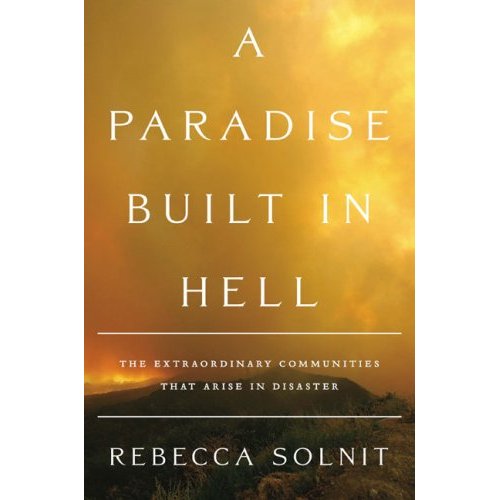
If you, like me, have come to dread the anniversary of 9/11, with all its attendant angst, Rebecca Solnit’s new book, “A Paradise Built in Hell: The Extraordinary Communities That Arise in Disaster” could provide some solace and/or diversion. I’ve not read it, only read Dwight Garner’s review in the New York Times and Steven Winn’s in the San Francisco Chronicle, but I wholeheartedly agree with Solnit’s premise, that most people respond heroically in emergencies large and small and, in fact, derive satisfaction from their generous actions.

From Publisher’s Weekly: “Surveying disasters from the 1906 San Francisco earthquake to 9/11 and Hurricane Katrina, she shows that the typical response to calamity is spontaneous altruism, self-organization and mutual aid, with neighbors and strangers calmly rescuing, feeding and housing each other. Indeed, the main problem in such emergencies, she contends, is the elite panic of officials who clamp down with National Guardsmen and stifling regulations.”

According to the reviewers, Solnit documents racist policies that made the Katrina situation worse and notes that more people should have been able to escape. She quotes a minister: “Can you imagine during 9/11, the thousands who fled on foot to the Brooklyn Bridge…? What if they had been met by six or eight police cars blocking the bridge, and cops firing warning shots to turn them back?”

Says Solit: “The joy in disaster comes, when it comes from that purposefulness, the immersion in service and survival, and from an affection that is not private and personal but civic: the love of strangers for each other, of a citizen for his or her city, of belonging to a greater whole, of doing the work that matters.”

In workplace situations that don’t count as disasters, such as when a valued colleague leaves and everyone pitches in to get the work done, I have seen this kind of “social capital” at work, people immersing themselves in service, pitching in to get the work done, and feeling good about their efforts.

Solit calls it “paradise” when a community pulls together to pursue a survival goal and achieves a sort of euphoria. And I’d like to think that I, as an individual, could achieve the same high if I could manage to pull myself together – and somehow, once and for all, organize my time — to reach a goal.

As quoted by Garner, Solnit shows the way: “Her overarching thesis can probably be boiled down to this sentence: ‘The recovery of this purpose and closeness without crisis or pressure’ — without disaster, that is — ‘is the great contemporary task of being human.’ “

In September the Jewish calendar starts over, a new school year begins, and — no matter what our religion — we get to start over. I’m going to try not to look backwards at September 11, but forward from that date. Quoting Solit: “Just as many machines reset themselves to their original settings after a power outage, so human beings reset themselves to something altruistic, communitarian, resourceful, and imaginative after a disaster, that we revert to something we already know how to do. The possibility of paradise is already within us as a default setting.”

For specific suggestions on how to “reset” your life , consider listening to the motivational speaker Bill Boggs, scheduled for the Princeton Chamber lunch on Thursday, September 10, at 11:30 a.m. at the Forrestal Marriott. The four-time Emmy winner will share success strategies from his recent book, “Got What It Takes? Successful People Reveal How They Made it to the Top.” Call 609-924-1776 or www.princetonchamber.org.

The Body Never Lies

Descartes is the villain, said Amy Castoro of the Irimi Group, if you are having trouble getting your mind to stay in touch with your body. Castoro, in a fabulous workshop for the Association for Woman in Science yesterday at the Miele headquarters, told the fascinating history of somatic psychology, how the body affects the brain and vice versa. “The price of learning to think objectively is the separation of mind and body,” she said.

I had to leave the meeting early, but not before she had everyone up on their feet in a “centering” exercise. Emotion can happen from the outside in, she suggests. If you hold a facial expression long enough, your body and your thoughts mirror it. “All of us have a shape. The shape we hold reflects our history.”

So if we consciously change our shape (our posture, our stance, the way we hold ourselves) we not only change the way we look to others (as in a job interview), but we can also change our mood.

One of her mentors is California-based Richard Strozzi-Heckler and another is right here in Princeton, Les Fehmi, author of “The Open Focus Brain: Harnessing the Power of Attention to Heal Mind and Body.” (I’m also a believer in the Open Focus methods of dealing with everything from hypertension and ADD to insomnia and pain.)

Though Castoro quoted Alice Miller as saying “the body never lies,” the woman who more famously said that was Martha Graham. The body might not lie, but you can negotiate with it. If you stand up straight and tall and look like a winner – you will feel like a winner. And you’ll likely be one.

(Writing is one of the few occupations where you can hide your body language. If you are reading this on Thursday, August 13, stop by to meet a bunch of writers, at the U.S. 1 Newspaper reception for writers (and readers), 5 to 7:30 p.m. at Tre Piani in Forrestal Village. This cash bar event celebrates the U.S. 1 fiction and poetry issue but welcomes everyone. So what do poets look like, anyway?)

Sorcerer’s Apprentice on LinkedIn: Get the Mop


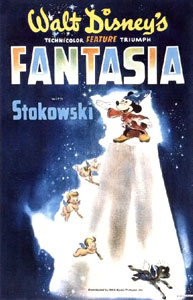
Do you remember the scene in the Disney movie, Fantasia, when Mickey finds the Sorcerer’s Book of Magic? Mickey got in trouble for reading only half of the directions in the Book of Magic. That was my mistake, twice — once when pressing the first button on Linked In, again when trying to clean up the mistake.

So what happened? I’ve been trying to slow down my acquisition of Linked In contacts partly because I was getting overwhelmed but mostly because I thought I would have to pay for extra space. (Wrong, as I found out.)

That’s the background.

About 9 a.m. Sunday night I was noodling around and spotted a siren call. “Check to see who, on your email list, could be invited to Linked In.” I did this once before and accidentally invited everybody on my email list to, swooping up lots of people like my husband’s retired first cousin who apologized profusely about not wanting to join.

This time I was sure I knew what I was doing. Just select four of the 364 people in my gmail list. Press button. I sent out 360 invitations.

Some went to people I know, others to people I don’t know that well but who are perfectly logical to link to, but many to travel agencies and PR people who have emailed me once.

Think back to where Mickey gets the bucket and mop, times two, times 200, times 2,000.

I reached for the mop. According to the Help section on Linked In, I could withdraw each invitation and “no message will be sent.” That sounded like the unintentionally invited folks would never know. No message would be sent, right? Blissfully ignoring my lurking suspicion that a first message had already been sent, I carefully deleted most of the 360 invitations. How long does that take? About 90 minutes, at five keystrokes each.

Whew. I went to bed, figuring I could at last sleep well. I didn’t sleep well. And I woke up to some puzzled email messages, like this one.

“Just wanted to ask, was it something I said :)”

It turns out that “No message will be sent” means “No second message will be sent.” So when the eager Linker goes to click “yes” the cupboard is bare.

How insulting! How obnoxious! What a slap in the face! What to do?

Since Emily Post lacked advice on this 21st century problem, I asked communications trainer and coach Ken Jacobs, who had good advice, including blogging about it in a “humorous, appealing tone.” Said Jacobs: “I believe that people are understanding when you own up, apologize, and show a little humor.”


Okay, so here it is. If you are getting this, and you were puzzled, discombobulated, or otherwise thrown off balance by getting my LinkedIn invite — only to find it didn’t work — I humbly apologize. Bit by bit, I’ll go back through that list and give us both another chance. If you want to say yes, I’m sure we’ll make beautiful networking music together. Or, to speed it up, get proactive, just invite me, and I’ll say yes!

Cue Stokowski and Paul Dukas… . “Gee thanks, so long, I’ll be seein ya.”

Refreshing the Fresh Air Runners


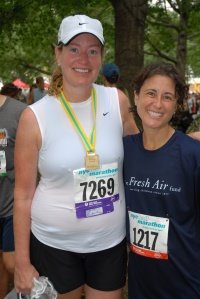
If you admire those who open their homes to Fresh Air kids from New York City — but have never figured out how to put that into your schedule — it”s not too late to sponsor a runner in the Fresh Air Fund half-marathon, in New York City on Sunday, August 16, says Sara Wilson.

Last summer, she says, the race raised more than $125,000.
And it’s probably not too late to join the race! Check it out at http://freshair.org/racers

Blocking and Tackling for Capital Health

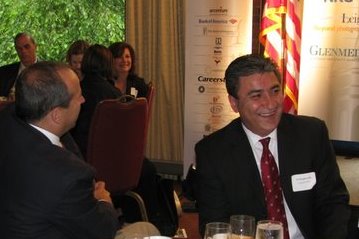
Frankly, I was worried about Capital Health System’s building a new hospital on Scotch Road in Hopewell, while at the same time University Medical Center of Princeton is building its own new hospital in Plainsboro.

How will both have enough patients to be viable, I doubted.

Capital Health’s CEO Al Maghazehe (pronounced “MAG a see”) cleared that up today, speaking at a Princeton chamber lunch on how CHS contributes to the area’s economy. CHS will draw some patients from Princeton’s catchment area, yes. But as the southern-most high tech hospital, it can tap patients from all the smaller hospitals to the south, a rich source of revenue indeed.

Okay, now I get it.

Maghazehe also revealed some intriguing business strategies.

Yes, he promotes teamwork. Yes, he advocates employee empowerment.

But how did he walk away with the largest loan that the U.S. Department of Housing & Urban Development ever made?

He credits his “down year” of 1998 when, after the merger of two century-old hospitals (Helene Fuld and Mercer), he had trouble meeting payroll. “The auditor sat in my office. I had terminated just about everyone on the management team – the CFO, the two medical directors, the CIO, and many midlevel directors,” he said. “It was just me.”

With a new team he reversed the trend and doubled business. And this is what he says HUD based its nearly $800 million loan on — not on a balance sheet that shows 700,000 patients and a half million dollars in revenue — but on its confidence in CHS being able to cover its debt service.

Other strategies:

Incentives to primary care practices. “The primary care network should be large enough to fuel growth. Some hospitals have 200. We are up to 35, and adding.”

Designating Fuld as a trauma center and bringing in top-level doctors for it.

Buying technology (the cyberknife and robotic surgery) and bringing in people to run it.

Competing with Philly by hiring away entire teams (including the stroke and cerebro-vascular team from Thomas Jefferson, though he didn’t name that hospital in his talk). And setting up cutting edge (sorry for that one) equipment.

Opening satellite offices like the Hamilton walk-in surgery center, which went from 7,000 to 35,000 procedures annually.

Designating the Philadelphia Eagles as CHS’s official team (no, that’s the inside joke of the lunch today, but Maghazehe is a notorious Eagles fan).

Perhaps the most interesting revelation, that Maghazehe is a one-job man. He came to CHS as an intern and never left. That may explain why he is so famously and outspokenly loyal. On this occasion he introduced a table-full of his own doctors, but he also gave gracious nods to Skip Cimino (just named CEO of RWJ at Hamilton) and metaphorically doffed his hat to Princeton: “This region is extremely fortunate to have two brand new hospitals built at the same time.”