Each Moment New: Jane Buttars

tympanumMost musicians bring life to a page of musical notes and try to make it sound fresh and in the moment. Pianist Jane Buttars and cellist David Darling improvise their music — moment by moment. In their first album together, Tympanum, the listener gets to sit in on their exciting moments of creation. Each piece is a journey, imagined and created step by exciting step. Do not expect to listen to their improvisations while you are doing something else. Their focus is so intense that it snatches you and demands your full attention.

Each of the 14 selections takes a different mood journey. Sometimes persistent but unexpected rhythms bubble up to the surface and fairly bid the listener to get out of a chair and MOVE for heaven’s sake. Or gentle swaying lifts your spirits, like a high swing, and then subsides into still calm.

They are not limited to major, minor or modal; they can play for two minutes in the key of silence.

How to compare it? Maybe to say, think of combining the energy of jazz improv plus the adventuresomeness of Poulenc, plus the whimsy of e.e. cummings, But keep in mind that this is a duo of classical musicians.

Grammy Award-winner David Darling formerly played with the Paul Winter Consort and co-founded Music for People, which aims to encourage trained musicians to find joy in improvisation and ordinary people to find music in themselves. (This is my translation of MfPs mission statement.)
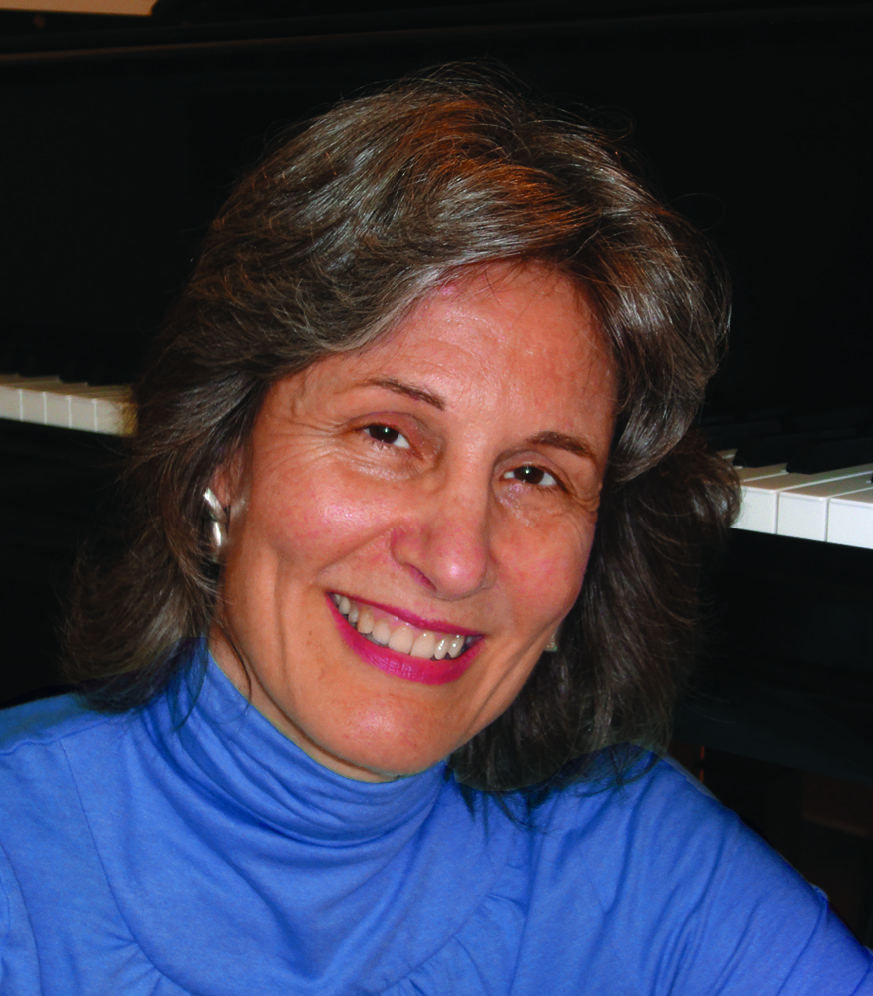
JB on CD better Buttars is a classically trained performer and teacher,  a Fulbright Scholar, and a dance and Dalcroze student, with a Doctor of Musical Arts in piano and harpsichord performance.  (Full disclosure: she is my workout partner at the Rabara Pilates studio.) Based in Princeton, she directs Music From the Inside, a program of group improvisation classes and workshops for all levels, beginners to professionals, and she leads Music for People sessions.

I can envision several important uses for Tympanum, beyond listening for delight. These improvisations fairly beg to be danced to — by those who do “contact improv” or those who choreograph. They could work wonderfully as part of a worship service, to introduce or follow a psalm or meditation that fits the particular mood. Creative dance teachers and nursery school teachers– here is a gold mine.  Listen at CDBaby.

Mostly, though, I just want to sit in my rocking chair, look out the window and be taken on one journey of imagination after another, each moment new.

Quilting for UFAR

2014 michele Scott 2

This gorgeous quilt, sewn with African fabrics by Michele Tuck-Ponder (shown here with Scott Langdon), will be auctioned at the fifth annual UFAR African Soiree on Saturday, March 1, 5 to 8 p.m., at Princeton Theological Seminary’s Mackay Center.

To benefit the United Front Against Riverblindness, it will include a buffet of international and African food, folk tales told by actor Scott Langdon and UFAR founder Daniel Shungu, a showing of African fashions, and an African marketplace. Tickets are just $60 ($30 for students). Call 609-688-9979 or email UFAR@PrincetonUMC.org.

The king-sized quilt features Adinkra symbols native to western Africa.The symbols, hand stamped by the quilter during a visit to Africa, give a unique spin to the traditional log cabin block design. Many of the fabrics were purchased in Africa and supplemented by fabrics from the quilter’s own collection. The quilt is made in shades of purple, orange and green with tan and brown borders. Professionally quilted in a Greek Key design. The estimated retail value of the quilt is $750.00.

A former mayor of Princeton Township, Tuck-Ponder not only made the quilt, but will call the live auction, which will also include a specially designed copper bracelet from Randi Forman of Nassau Street-based Forest Jewelers, and a scarf designed by Aruna Arya, owner of the Palmer Square-based fashion store Zastra, and a painting by Rhinold Ponder.

A special award will be presented to the family of the late Peter Meggitt, a UFAR supporter and Princeton resident who traveled with the mission team.

More than one-third of the 60 million people in the Democratic Republic of Congo are at risk for getting riverblindness but UFAR is able to treat more than two million persons each year.

Race, Slavery, and the Troubled History of America’s Universities

Slavery shaped America’s old, elite colleges, says MIT historian Craig Steven Wilder in his book Ebony and Ivory. Wilder told NPR’s Robert Siegel, host of All Things Considered, this tidbit about Princeton: “John Witherspoon, the president of Princeton just before the Revolution, sent a missive to the West Indians promising that their sons were safer in New Jersey than they could ever be in England, where notorious and mean-spirited men preyed upon wealthy boys in the West Indies. But in New Jersey they would be protected and cared for, catered to and turned into responsible citizens.”

Here is the transcript, and here is the summary article, courtesy of Michele Tuck-Ponder. BF.


Tim Wise: Colorblindness is the Enemy

bfiggefox's avatarNot In Our Town Princeton

Tim Wise began his February 3 talk by crediting women and men of color for doing the hardest work. In particular, he honored the British Stuart Hall, known as the “godfather of multiculturalism,” who has just died.

“Having done this work for 25 years, I have learned a few lessons: The problem we confront is far far bigger than anything we imagined. After graduating from Tulane, I worked against David Duke’s campaign for governor. He lost, but not because of white people — 6 out of 10 whites voted for him. Black people saved us and said ‘you can thank us later.’ We asked ourselves, who is the enemy here? I knew that 6 out of 10 whites were not ‘that far gone’ (so what happened?)

David Duke scapegoated. He said that black and brown took slots for college and jobs — and then he said they don’t…

View original post 547 more words

“Just like that, Mr. Aubrey fell into reputation’s ditch, and the Christie administration piled dirt atop him. Except — and this is not incidental to our story — Mr. Aubrey did nothing wrong.”

This is an excerpt from Michael Powell’s January 28 column in the New York Times entitled “A Lieutenant Governor, An Artist, and the Portrait of a Smear.”

It was written in response to the January 15 U.S. 1 cover story, Bully Pulpit, written by my colleague, Dan Aubrey. As editor Rich Rein says in his column today, Aubrey wasn’t eager to revisit an unjust lawsuit. “Then Aubrey and I both realized that his story might not connect the dots between Christie and Guadagno, but it would provide another dot that might help paint the full picture of this administration.”

Following that cover story in U.S. 1, economic guru Paul Krugman, a Princeton resident, wrote about it in his blog post ,  pointing out that though print media struggles, print media reporters are important, and that a mere transportation reporter broke the “Bridgegate” story.

Powell credits the Star Ledger with investigating and clearing Aubrey of any evidence of wrong doing. Powell looked further and found — Lo! — Guadagno’s attacks on the New Jersey State Council on the Arts were attacks on herself. “The lieutenant governor and Department of State, it turns out, had control of the Arts Council’s spending all along. Her divisions signed off on every payment.”


February 2 will be Walter Harris Day.  A Princeton Borough police officer, he was shot and killed in the line of duty on February 2, 1946.  Greta Cuyler writes about it for Princeton Patch.

What caught my eye was this paragraph: The grandson of slaves, Walter Harris was born in Princeton and grew up on Jackson Street, which later became Paul Robeson Place. The family’s house was moved to Birch Street when Palmer Square was being developed and the trolley used to run in back of the Harris’ house.

What is now Palmer Square was formerly an a neighborhood of African Americans, many of whom worked at the university.  Those who now live in what is sometimes known as “the Witherspoon neighborhood”  remember the displacement.

Palmer Square is now, indeed, a tremendous asset to Princeton for both tourists and townies. It is a wonderful gathering place. But, as Sheldon Sturges says, it was “an enormous social  justice wound.”

For the Historical Society of Princeton, Shirley Satterfield has put together a wonderful tour of the African American history of Princeton — and anyone can take it, any time, via cellphone.

Take the Nobel Prize, add the Oscars, and you have the Breakthrough Prize, screened on  Science Channel
as I write. Billionaires who made their money on the Net pay homage, Hollywood style, to scientists who get $3 million. What is the Princeton connection? Louis Botstein got one last year, the first year.

Of course he did leave The Sigler Genomic Institute for California later that year, but Princeton University got the credit for the prize at the time. Who will be the next laureate from here?

As the daughter of a scientist it is so exciting for me to watch them lauded as not just celebrities but glamorous celebrities. And heroes. Stockholm, eat your heart out.

Zuckerberg just announced that next year there will be a Breakthrough Prize in mathematics. Wow.

Only 7 of the 48 luxury homes in Palmer Square have sold, says the New York Times.

It quoted Sheldon Sturges of Princeton Future as saying the development represents an “enormous social justice wound.” Indeed.

The homes are marketed as a “bespoke luxury.”

Tough sell? Oh well.

“I don’t think most whites understand what it is to be black in the United States today,” said Douglas Massey, a Princeton University sociology professor in the Office of Population Research. “They don’t even have a clue. They blame the blacks to a large degree for their own problems.  . . . As a white, I can tell you that whites have a lot to do to make it a fair game.”

White privilege is not an easy concept for many of us whites to understand.  Massey investigates the academic side of it. Tim Wise explains it to the general population with books like “White Like Me.”  Wise speaks on Monday, February 10, at 6 p.m. at the Carl Fields Center. Not in Our Town holds “Continuing Conversations on Race and White Privilege” on first Mondays at 7 p.m. (February 3 and March 3) at the Princeton Public Library

The Massey quote came from “And don’t call me a racist! A treasury of quotes on the past, present, and future of the color line in America,” selected and arranged by Ella Mazel, Argonaut Press, available free for download here.

Image
Cosmo Iacavazzi, left, with Dan Papa of ETS and Coach Bob Surace

Pressure bursts pipes or makes diamonds. Pigeons eat crumbs — be the eagle. 

Princeton University football coach Bob Surace  entertained the Princeton Regional Chamber breakfast crowd with inspirational one-liners that work as well for business as for sports.

At my table was Dan Papa, director of HR at ETS, who had been a senior on the Princeton squad when Surace was a freshman. And Surace was introduced by Princeton’s NFL celebrity, Cosmo Iacavazzi.

Just two years from a 1-9 season, Surace won this year’s Ivy League championship, surely a man worth listening to:  Have answers not excuses. To combat nerves, do what you are supposed to do when you are supposed to do it. Develop habits and rely on your technique when you are under stress.  

In the NFL, only results matter. At Princeton, growth matters. So, says Surace: Constantly evaluate. Make people feel special. Those who had the best workout Monday get to wear the special Tshirts on Tuesday. By working on strength and making other changes, he reduced concussions dramatically.

Here’s one to take home — Surace asks the Princeton business community to consider offering internships to his football players. He’d love to have them in his weight room this summer.