Mimi O: No Place Like Princeton

Faithful readers: I apologize for this format. I am flummoxed by Blogspot’s new version. Anybody who wants to help me out, tell me how to keep the paragraphs in!

I knew Mimi O (Mimi Omiecinski) would be a good speaker at the chamber, but she was way better than even I thought. Everybody loved her trademark enthusiasm and informality but she also exhibited the smarts of the “smarty pants” whose IQ she likes to tweak. Her topic was, loosely, what’s good about Princeton as a tourist destination and as a place to relocate your business. “I have been all over the planet, and there is no place like Princeton,” she says. Her premise was that, before the Revolutionary War, Princeton was the number one “layover town” in the country, the town where you stopped to rest your horses between New York and Philadelphia. So her “call to action” was “Let’s make Princeton the number one day trip destination in the country.”

 She’s doing it. Princeton Tour is the top tour in the country, according to one of the travel social media networks, and she sure had the sold-out chamber crowd in the palm of her ever-so-Nashville hand. You can read about her elsewhere, but here are the amazing statistics she trotted out. The NJ tourism GDP is larger than the entire GDP of 97 countries.  In 2010, NJ hosted 68 million visitors spending over $13 billion dollars, and 1 out of every 10 workers owes their livelihood to tourism — and for every 180 visitors a new job is created. Over 300 million people live within a 4 hour drive of the Princeton area. Meanwhile, she said, Princeton University has more Pritzker prize buildings than any other two square miles. “Tiger Moms – they cart their children to look at Princeton AND they spend their money.”

Mimi O knows her celebrities so well she could have been an editor at People magazine. She knows them and she ogles them – Charlie Gibson, Paul Muldoon, Joyce Carol Oates, Andrew Shue, Bebe Neuwirth, Ethan Hawke, Paul Krugman, George Schulz – she ticks them off, telling where she spotted them. “I landed in the Hollywood of academe, yet I was the only paparazzi.” She knew she had to start a business that would tap this “strangely possessed” spirit or “I was going to get arrested for stalking.”

 Three merchants – Kopp’s, Hamilton Jewelers, and Landau’s – gave up their borough right to have a sign on the street so that Princeton Tour could station photo cutouts (put your face through it and have your photo taken as Einstein, the President’s wife, or F. Scott Fitzgerald, all drawn btw by Joy Chen) of Joy Cards. That was just one of the examples of inter-business cooperation that she cited.

She cited the famous Robert F. Kennedy quote, from 1968 in Kansas, about exactly why we are proud to be Americans. It reads, frankly, like the Beatitudes – nice to think about yet impossible to achieve – but she says Princeton has it all. And that’s how she made her second “call to action.” We need to convey to business owners how great a community greater Princeton is.

 “People won’t uproot unless the new community is perceived to have smart, successful, and happy people,” she said. Happy, said Mimi O, is everywhere here because Princeton folks have such a passion for what they do that they might even work for free. They work all the time, yet she called them, not workaholics, but a great new word “work a frolics” who value experience over acquisition and believe that their products and services will improve lives.

 Her examples: Greg Olsen, an entrepreneur into space who aims to inspire minorities and women to study science. He paid to have his space capsule carted into MarketFair to this end. And Jessica Dhurrie of Small World Coffee, Ruth Chris of the national steak house chain, and Seward Johnson. Happy people want to feel connected and they want to feel they can collaborate.

 Among the biggest and best, incidentally, New Jersey has the number one golf course, the largest Buddha, among the most green space, and the largest rowing facility – inhabited by the Olympic rowing champions who helped found and later sued Facebook.

“Happy people want to stay curious,” said Mimi O., “and if you can’t stay curious in this town it is probably your own fault. Happy people want to give, and we have vibrant nonprofits with great ideas, backed up by the government and business community.” I’m happy I went. If you missed it — well, sign up for a tour with Princeton Tour! Second best, get on the list for Mimi’s blog called Princeton Wannabe. That and the Black Squirrel will give you the flavor.
Last Wednesday, This Wednesday

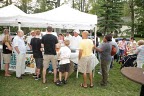
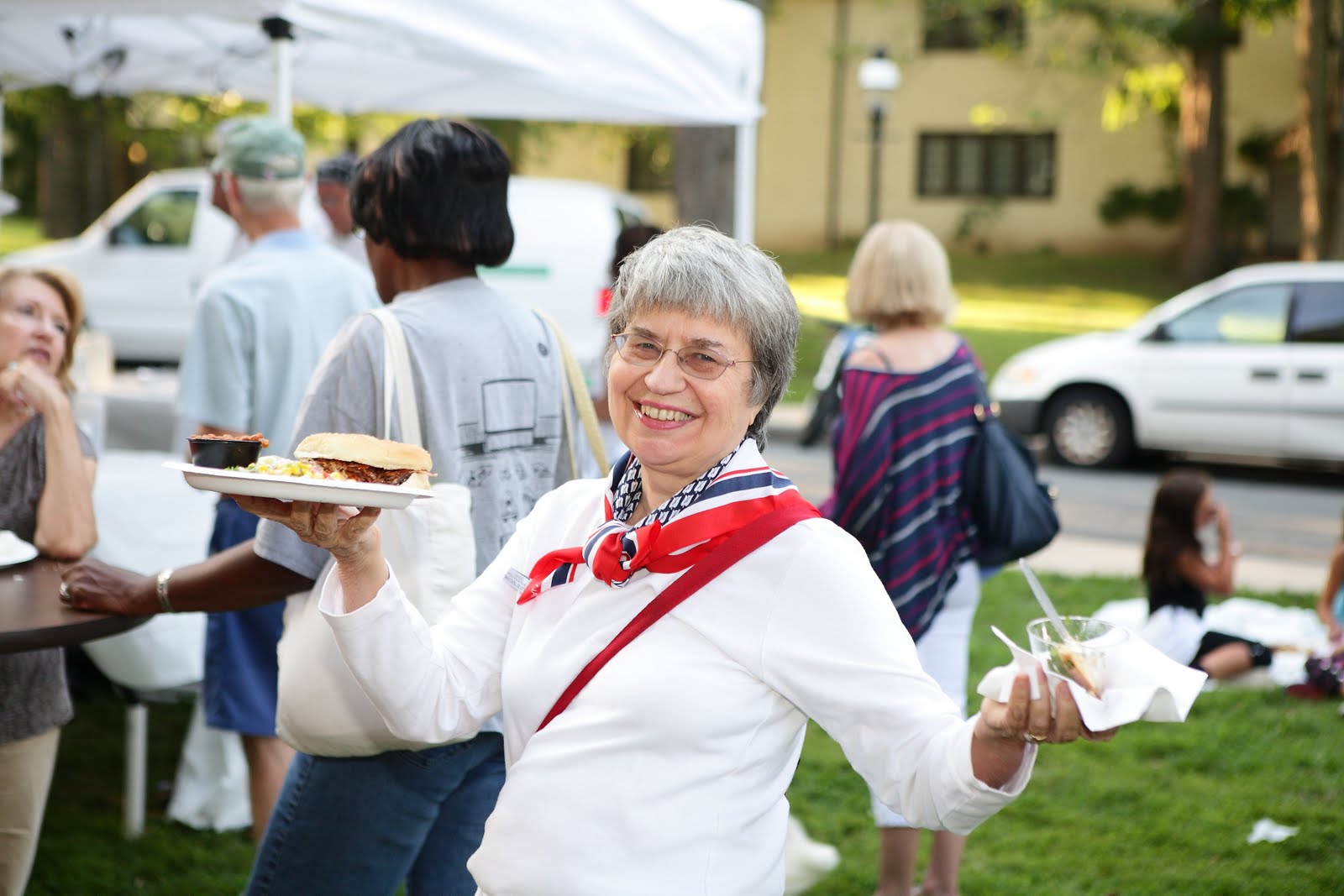
Last Wednesday I was chumming and grubbing at McCarter’s block party (the great photos by Don Addison, addison1028@gmail.com). This Wednesday I am lugging wet paper up the basement stairs, thanks to Ms. Irene.

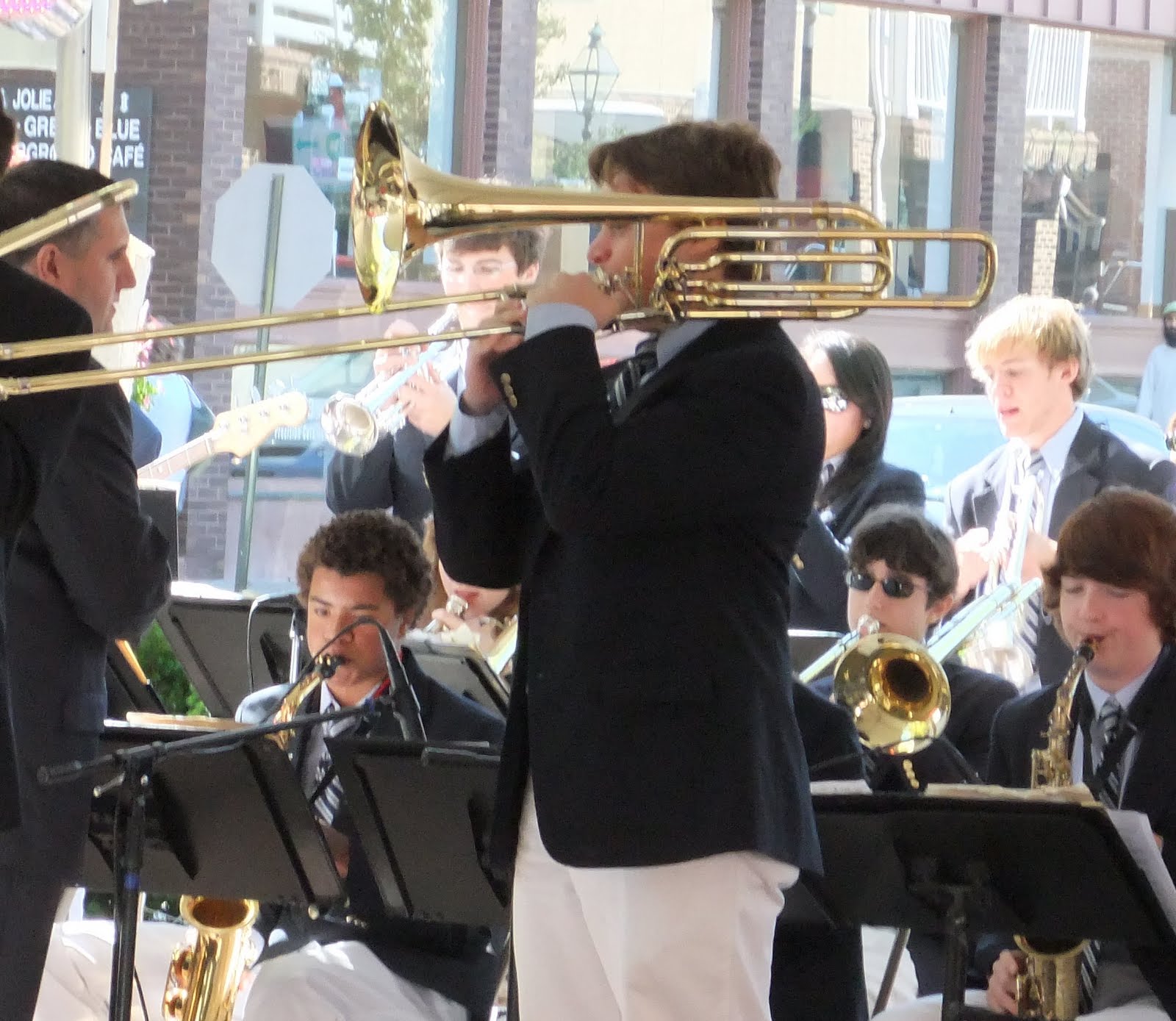
Ah well, the Philadelphia Jazz Orchestra was fun to listen to (as did this crowd)

and I did like the pulled pork by Blue Diamond Que (below) and the “world tour of cheese” by Olsson’s Fine Foods.

And it’s a beautiful day today.

If you think this post is an excuse to post Don’s terrific picture, you’re right. At my age and stage, how many great candids can a 71-year-old person expect to have taken (:

I’m also very pleased that three Princeton Regional Chamber members told me, that day, that my last-minute blog post told them about it and got them there. Now that’s what I call ‘reader response.’

Open Hearts, Open Doors, Open Internet Connection

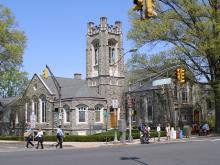
This notice just came from my church, located at the corner of Nassau and Vandeventer, and I pass it on. Our household was lucky enough to get power — but perhaps you are among those searching for a place to charge your cell phone and access the Internet. The Princeton Public Library is also open.

Princeton United Methodist Church will open the doors of the Sanford Davis Room today from 10 a.m. to 5 p.m. — welcoming anyone to drop in — to charge your devices, use WiFi internet, or join in a conversation.

The chapel will also be open for anyone who would like quiet time for prayer or meditation.

Call the church office at 609-924-2613 or email office@princetonumc.org with questions or concerns. For now, until university classes begin, free parking is available behind Thomas Sweet, off of Williams Street, in the university lot.

No power?

Bring your laptop to Princeton Public Library, open to 11 pm It might be a slow but they are trying to get more capacity..

Tonight: McCarter’s Block Party

This really sounds like fun — a community-wide Block Party on the Front Lawn on Wednesday, August 24 from 5 to 9 p.m., with live music — featuring two of my favorite musicians (one pictured) in the Philadelphia Jazz Orchestra, directed by Joe Bongiovi, and one of my favorite catering companies, Blue Diamond Que.

To quote the press release:

This free, fun night of entertainment and community bonding will include dancing under the stars with members of Fred Astaire Dance Studio to live music of the Philadelphia Jazz Orchestra, featuring the finest high school and college jazz musicians in the Greater Philadelphia and New Jersey regions; and opportunities to win fabulous prizes and tickets to McCarter’s 2011-2012 season. Bring the kids for spin art, face painting and activities with JaZams, Princeton’s locally owned and operated independent toy store.

There will also be vendor food items for purchase from Bitter Bob’s BBQ, Blue Diamond Que, Carter & Cavero Old World Olive Oil, Chambers Walk, Chez Alice Catering, Dish Catering, elements, Emily’s Café & Catering, Jen’s Cakes & Pastries, Jimmy Duffy’s Catering, Mediterra, Olsson’s Fine Foods, and Uncle LouisG’s Italian Ices. There will also be a cash bar offering beer, wine and other refreshing beverages.

When I post about an event, I don’t always get to go to it. This one, I’m determined to attend!

The Perils of Picturesque

I meant only to glimpse today’s New York Times front page soft feature on the way to showering off the dirt of digging in the garden. Then I read this description of a maitre d’ in a Hollywood restaurant.

Dmitri Dmitrov, a 60-year-old Macedonian immigrant with Rudolph Valentino hair, a Chiclet smile, an Eastern European accent theatrical enough to seem invented and a manner so ostentatiously courteous it conjures up a Slavic geisha scripted by Mel Brooks.

Momentary thought: Gee, I wish I could write like that.

Then again, If I wrote so picturesquely about someone in Princeton, they might never speak to me again.

It becomes clear when I look up the byline, Guy Trebay, a fashion reporter known for being on the edge. If I were the “major studio executive who dines on successive nights with his daughter, wife and mistress” who is “guided to cozy spots at Tables 21, 22 and 12,” I would sue.

The rest of the article, of course, redeems the obnoxious copy in what the newspaper business calls “above the fold” or, in this case, “on the turn” to the second page. It always does. Fair and balanced, right? Try convincing the owner of the ox you gored on Page One.

When I was younger, I had more of an edge. But along the way I talked to a lot of owners of oxen. Now my mantra is the familiar “Is it true? Is it kind? Is it necessary”. I admit that, for a journalist, especially one like Trebay, it’s indeed “necessary” to keep one’s edge.

But in general, I am often too quick with the quip and am working on holding my tongue. Among the dozen or so Biblical instructions on holding one’s tongue is Ephesians 4:29: Let no corrupting talk come out of your mouths, but only such as is good for building up, as fits the occasion, that it may give grace to those who hear.

Still. If I were the wife of the Hollywood executive, I would sue. Or at least demand not to sit at Table 22.

Art Deciphers Loss


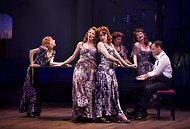
Catch the review of McCarter’s first show, Ten Cents a Dance, in today’s New York Times. Ben Brantley gets to review it ahead of time? Yes, it opened at Williamsport and comes to McCarter September 9 to October 9. My goodness, Brantley makes me want to be sure to see it.

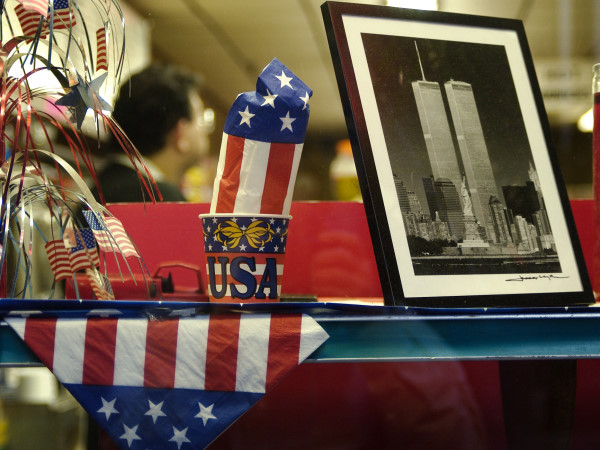
The show is part of a year-long collaboration in Princeton, Memory and the Work of Art, that reflects on the 10th anniversary of September 11. How do the arts shape our collective memory of the past? How does art decipher loss and inform our experience of global events? ask the collaborators.

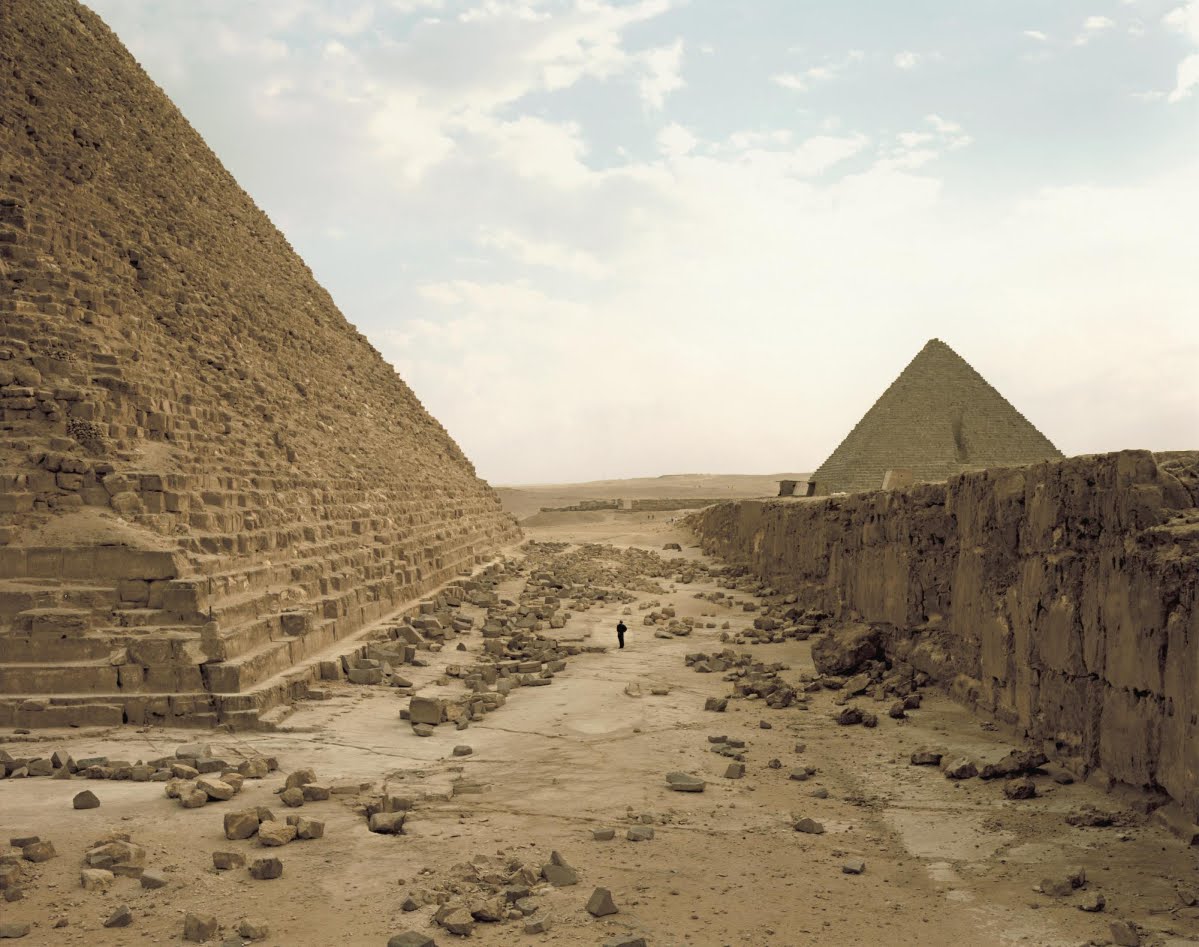
With a dozen partner organizations, half from town, half from gown, the collaboration includes lectures, performances, and exhibits. For instance, The Life and Death of Buildings has just opened at the Princeton University Art Museum and been reviewed in U.S. 1 Newspaper by Ilene Dube, image below.

Two events to celebrate “Memory and the Work of Art” are set for Saturday, September 10. At 4:30 p.m. at the Arts Council’s Solley Theater there will be a reading of Adopt a Sailor and Ten by Charles Evered, followed by discussion. The first was written soon after the 9/11 attacks and the second explores where we are now. At 5 p.m. there will be at 5 p.m. a lecture at the museum by the curators of an exhibition, Cartographies of Time. Entitled “Mapping History, Marking Time,” the lecture will be followed by a reception.

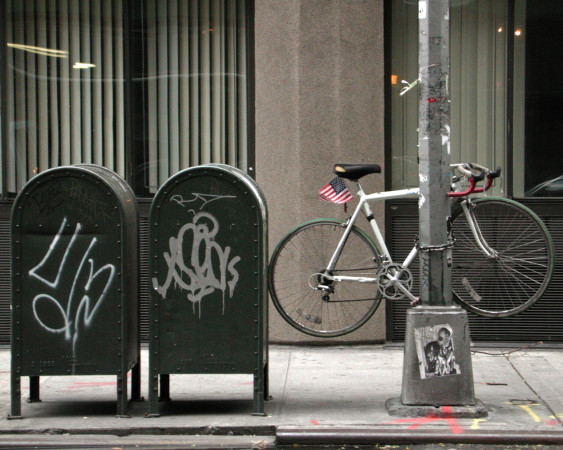
Also at the Arts Council, two exhibits on the theme of Memory and Remembering open on Saturday, September 10 with a 3 to 5 p.m. reception. The main gallery will feature a members’ show of works on Memory; one flight up will be Jay Plett’s exhibit, “Moment: Memory,” a series of street photographs taken in Manhattan during the fall of 2001 (top and below, left).

This collaboration shows how the leadership of a great university, namely the Lewis Center for the Arts and the Princeton Council on the Humanities, can help organize an ambitious schedule. Yet in some cases the connection to “memory” is not so obvious and I wonder if it’s a little artificial. For instance, on October 6 for Princeton University Concerts the Emerson String Quartet plays this program:

Beethoven Quartet for Strings in E-flat Major, Op. 127

Barber Adagio from String Quartet Op. 11

Shostakovich Quartet for Strings No. 5 in B-flat Major, Op. 92.

I’m not musically smart enough to guess just how this program fits into “memory.” Can anyone fill me in? Perhaps if I attend the pre-concert lecture I’ll find out.

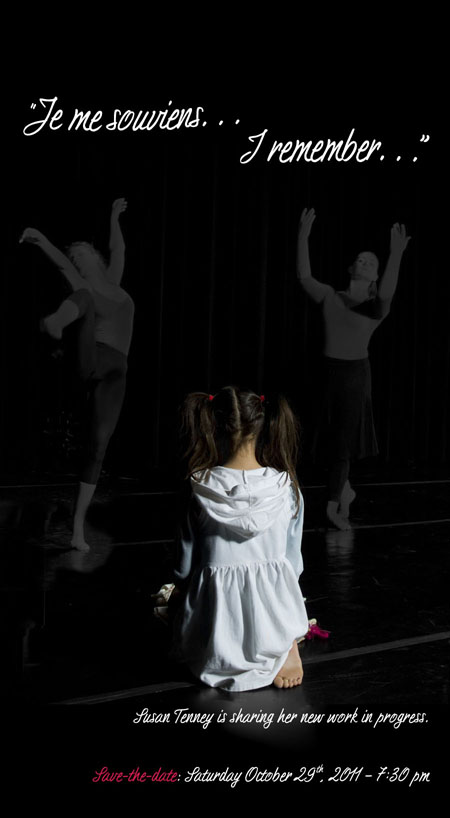
One performance that might fit right in with this theme is Susan Tenney’s “je me souviens . . I remember” as described in earlier posts.

Though it’s slated to be danced in New York, not Princeton, Tenney is a Princeton-based choreographer, and she does answer the question, How do the arts shape our memory of the past….and decipher loss?

Brantley titled his review “Music, Memories, and Regret” and opens with “A piano is a dangerous thing in Ten Cents a Dance, John Doyle’s beautiful, brooding collage on the songs of Rodgers and Hart. a piano, you see, makes music. And music makes memories. And memories, well, as often as not they make regrets. So a piano can hurt a guy bad, especially in a place like the deserted gin palace where “Ten Cents a Dance” takes place.”

I’m looking forward to seeing Donna McKechnie, the original Cassie in Chorus Line, in the six-person cast.

Photos, from top: Jay Plett, T. Charles Erickson, Richard Misrach, Jay Plett, Elliott Gordon.

Tenney’s Homage to Delerue


Even while neo-romantic film composer Georges Delerue illustrated the dramas being played out on the screen, he invested his scores with layers of half-remembered emotions. So when we think we know what is going on, our subconscious memory is responding on a deeper, mysterious level.

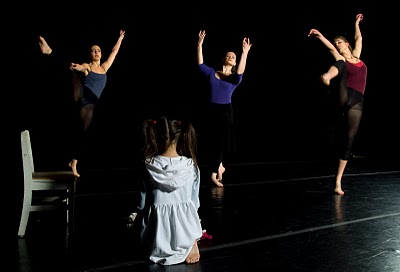
At its best, “je me souviens. . . I remember,” Susan Tenney’s homage to Delerue, choreographed to his music, also evokes layers of hidden memory while it narrates everyday scenes. One of the dancers, Cynthia Yank, is a “real” little girl, not a small adult pretending to be a child! Somehow having a child onstage helps us recall our own childhood.

I was fascinated by the most recent excerpt, which I saw in rehearsal at the Princeton Ballet School of American Repertory Ballet in June. Tenney will present this and other excerpts on Saturday, October 29, at 7:30 p.m. at Florence Gould Hall of the French Institute Alliance Francaise, 55 West 59th Street, between Madison and Park, in Manhattan.

This opens with six dancers (Naoko Cojerian, Yoshie Driscoll, Gary Echternacht, Fanny Marmayou, Anya Kalishnikova, and Pam Pisani) circling their arms, tick tock style. Interrupted by a seventh, Alexandra Fredas, they join her in lyrical celebration.

Then, with the leisurely detail of a Fred Rogers episode, the little girl watches her grandfather’s mimed shaving ritual, followed by their carefree romp. Preparations for the dad’s birthday involve all the usual family aggravations and rivalries, but it ends up being a memorable and happy time in this family’s life.

Things get unpacked, and objects take on meaning. The mother, Cojerian, examines the contents of a box and with unhurried pleasure explains each item to the child. The grandparents (Echternacht and Driscoll) unpack a satchel and lay out the significant objects of their lives. For the man, it is a shirt and soldier’s hat. For the woman, it is a book, a stuffed frog, and a string of pearls. They cavort and court in an outpouring of love and delight.

Together they pull out a long red banner, swooping and swirling it before they walk on it, down the aisle. Suddenly the woman panics and runs away but, gathering her courage, returns and they start over, down the ribboned path, gathering the ribbon behind them like a cloak or shroud.

It is the child’s turn to leave. She too tries to run back but is urged onward and passes under the arch made by the ensemble.


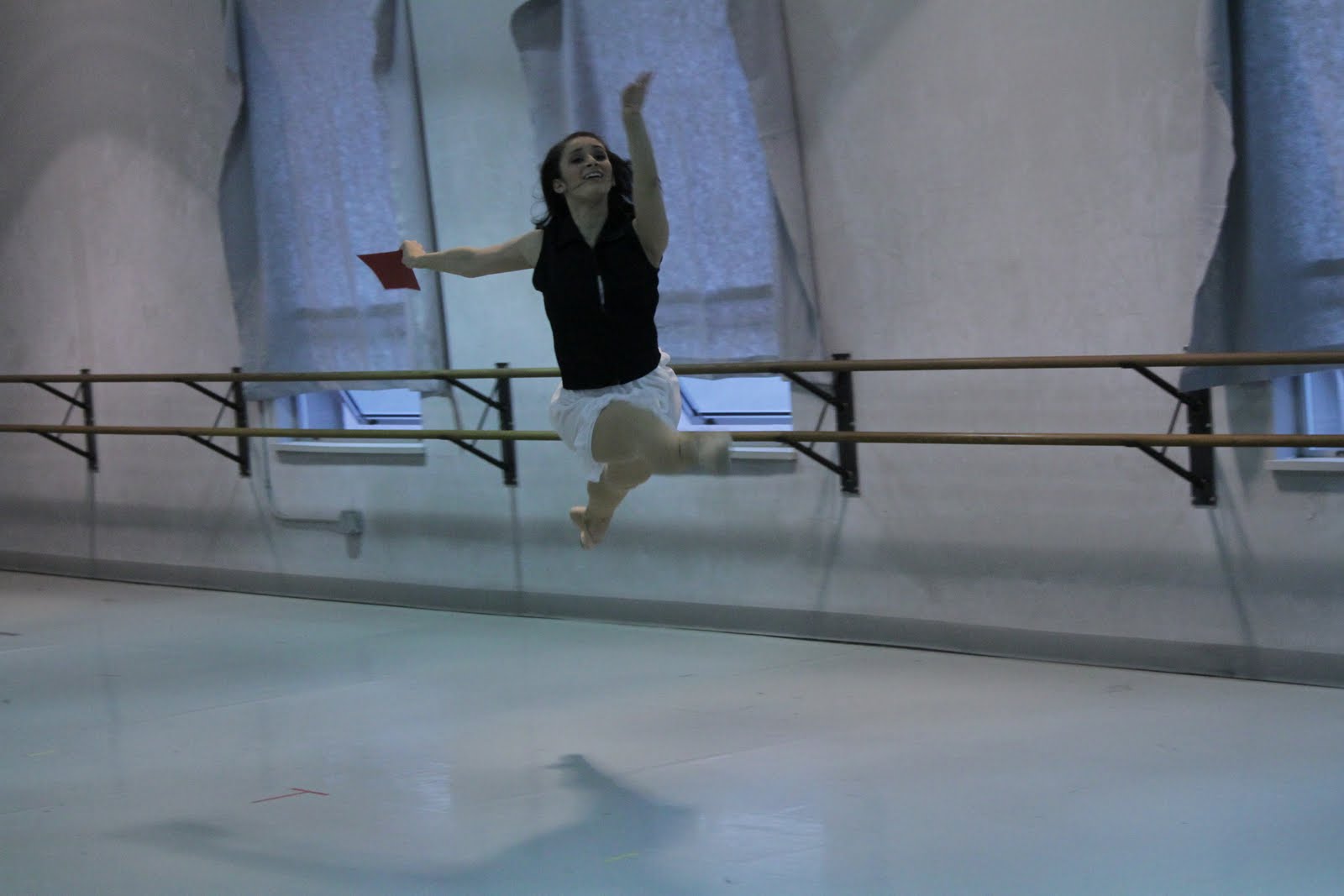
Samantha Gullace, the child’s adult self, enters with a red envelope. In a lyrical emotion-filled solo, she reveals all the facets of her love-hate relationship with the envelope’s contents. She stands behind the child, who carries the satchel with the remnants of her grandparents’ lives. Carefully the child takes the necklace out, stands on the chair to see herself in the mirror, the same mirror that her grandfather used for shaving, and puts the necklace on. Behind her, her grown up self mimes the same. Then she takes the stuffed frog out of the satchel and sits down, pensive.

Susan Tenney’s dances evoke hidden layers of emotion; she is going to be the Frank Sinatra of George Delerue’s music.

Delerue said his musical goal was “to reach out to other human beings as rapidly as possible, to go straight to the heart.” This rendition of “je me souviens” truly went straight to my heart, leaving me awash in my own forgotten memories.

Photo of Samantha Gullace by Leighton Chen. Save the Date invitation photo by Elliott Gordon. Invitation design by Danny Garber, dannyrome designs.

Still Divisible by Race?

From the sidelines, I watch the conflict over identity politics play out. Sometimes Princeton’s Cornel West or Tavis Smiley face off with one of my favorite talking heads, Melissa Harris-Perry (Melissa Harris-Lacewell) formerly on the Princeton faculty, now at Tulane.

Then I read yesterday’s New York Times with Dwight Garner’s review of “The Persistence of the Color Line: Racial Politics and the Obama Presidency” by Harvard Law professor Randall Kennedy (Princeton, Class of 1977). Again, my interest was piqued. Entitled “One Nation, Still Divisible by Race,” Garner’s review praises the book as seeming “to be carved from intellectual granite.”

Garner likes how Kennedy hashes “through the positions about Mr. Obama staked out by black commentators on the left and right, from Stanley Crouch and Cornel West to Juan Williams and Tavis Smiley. He can be pointed. Noting the way Mr. Smiley consistently ‘voiced skepticism regarding whether blacks should back Obama,’ Mr. Kennedy quotes, with seeming approval, (the headline of Harris-Lacewell’s essay on TheRoot.com which asked), ‘Who Died and Made Tavis King?’

“Mr. Kennedy has special scorn for the (white) Princeton professor Sean Wilentz, a Hillary Rodham Clinton supporter who, during the 2008 campaign, the author writes, ‘was persistently tendentious, casting in the worst light the possible motives of Obama and his backers.'”

I’m most curious to find out what Kennedy says about Harris-Perry, who often accepted invitations at events co-sponsored by Not in Our Town and the Princeton Public Library.

Kennedy’s book goes on sale on August 16, and perhaps it will be a future choice for the African American Interest Book Group that meets at Barnes & Noble. Led by Barbara Flythe, a retired public school educator and diversity consultant, it meets on fourth Mondays at the Market Fair at 7 p.m. For the fall discussion schedule, which also includes the memoir by NPR’s Michelle Norris, click here.

The August book is by Douglas A. Blackman. He was a reporter for The Wall Street Journal when he explored “the possibility of a story asking a provocative question: What would be revealed if American corporations were examined through the same sharp lens of historical confrontation as the one then being trained on German corporations that relied on Jewish slave labor during World War II and the Swiss banks that robbed victims of the Holocaust of their fortunes?”

The Pulitzer Prize- winning book, Slavery by Another Name: The Re-Enslavement of Black Americans from the Civil War to World War II, is cited as “a groundbreaking historical expose of this shameful era in American history……which unearths the lost stories of the thousands of slaves and their descendants who were forced by political, social, racist, and economic pressures into involuntary servitude and poverty.”

(The next NIOT co-sponsored event at the Princeton Public Library, also cosponsored by the Latin American Legal Defense Fund, will be the screening of the documentary “Light in the Darkness” on Monday, September 12. The documentary, produced by the national NIOT, airs on PBS nationwide on September 21.)

Note that Not in Our Town Princeton hosts “Continuing Conversations on Race” at the Princeton Public Library on first Mondays at 7:30 p.m.

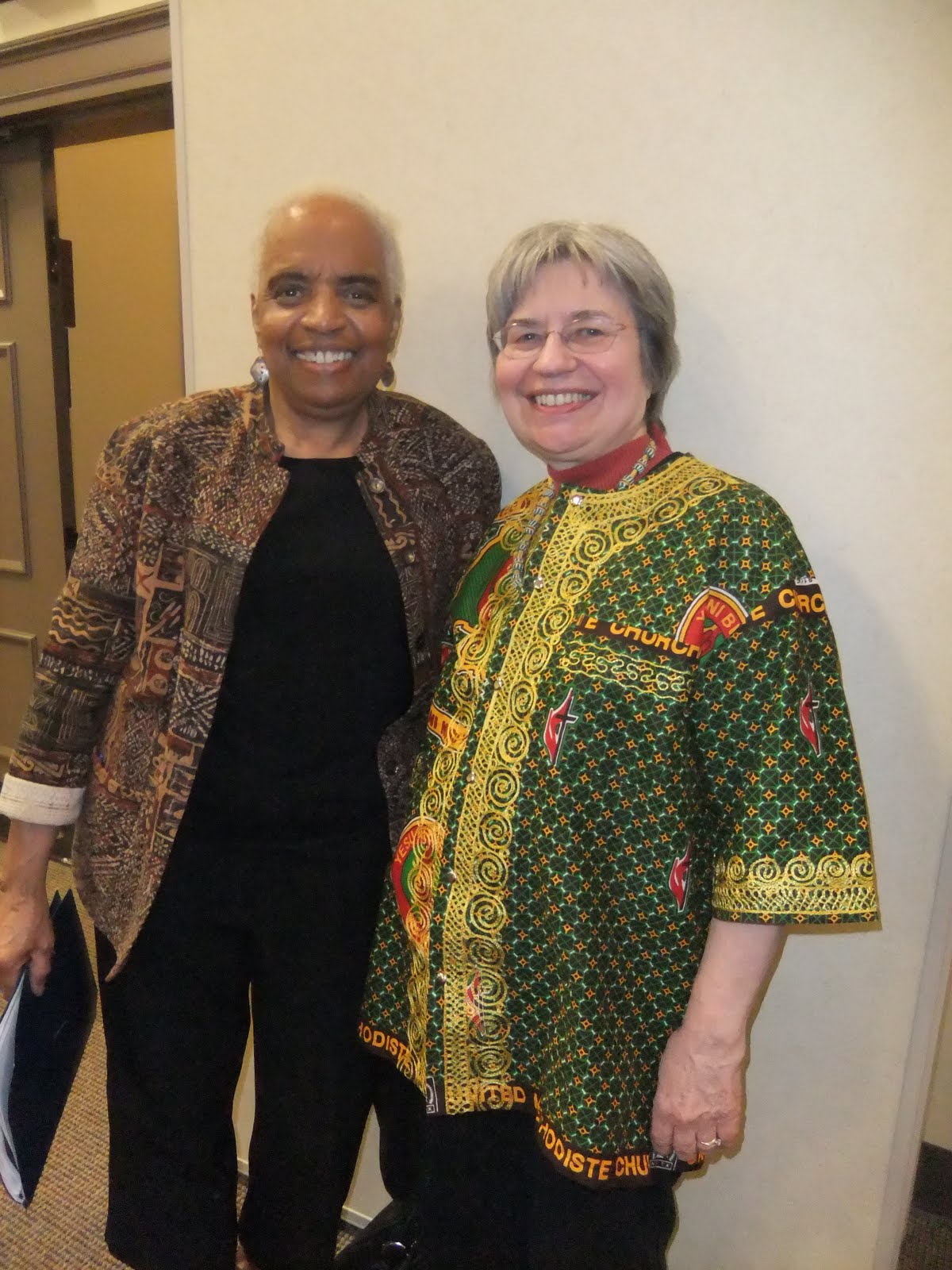
Photo: The two Barbaras (Barbara Flythe and I) were snapped at a United Front Against Riverblindness benefit.

It’s What’s Inside that Boggles Your Brain

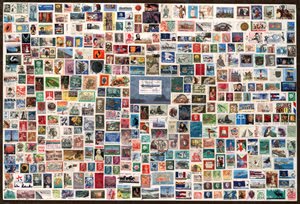
Stamps are not my passion, but I admire those who collect them. So I drove to the Straube Center to buy a copy of Win Straube’s surprising collage, made with hundreds of stamps. (The original is $60k, the poster copies are $20.)

Straube had warned, nay, tantalized me with the admonition that “there will be a surprise for you.”

I thought there might be an additional sculpture in the outdoor garden and wasn’t prepared for the brain boggling experience of The Shed.

The Shed is an unprepossessing looking structure, a little taller than the usual garden tool shed, the work of Geneva Anastasio.

Open the door and you are confronted with wall to ceiling to floor mirrors, cut in patterns. In the center is a round column, lit from the inside, with the light coming through thousands of pinprick holes and hundreds of little Christmas tree bulbs. Close the door, somebody turns on the switch, and the column slowly turns in the darkened space, a phantasmagoric planetarium or an acid trip without the chemicals or a blissing out spa experience.

It is titled “It’s What’s Inside That Counts.” I like what Hildegard Straube dubbed it, “The Glitter Shed.”

If it were to be sold, the price would be $25,000. But for now, anyone can come to the Straube Center — during business hours — and ask Alisandera Wederich, gallery curator, to open the door.

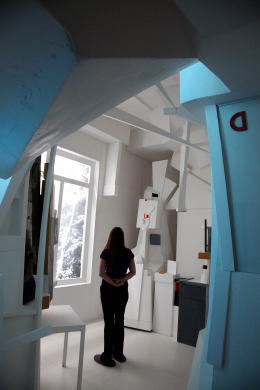
The awe I felt from being in this room was comparable to my visit to the re-creation of a room, the Merzbau installation, built by German modernist Kurt Schwitters. I saw it almost by accident, because I attended a Princeton Regional Chamber reception in the Princeton University Art Museum and wandered into the Schwitters exhibit.


Awe! wonder!

Someone will be able to write about Anastasio’s installation in a lucid way, but not I not now. I’m just trying to tip off my friends before the formal opening.

Photograph of the Schwitters room: Mayra Beltran for the Chronicle
Photograph of the Anastasio installation: provided by the Straube Foundation