As many of you know, NOT IN OUR TOWN PRINCETON is a multi-racial, multi-faith group of individuals who stand together for racial justice and inclusive communities. Our focus is to promote the equitable treatment of all, and to uncover and confront white supremacy — a system which manipulates and pits all races and ethnicities against each other.
Our goal is to identify and expose the political, economic, and cultural systems which have enabled white supremacy to flourish, and to create new structures and policies which will ensure equity and inclusion for all. In our commitment to uncovering the blight of white supremacy on our humanity, we take responsibility to address it and eliminate it in all its forms through intentional action, starting with ourselves and our communities.
Our next general meeting, one in a long monthly series entitled “Continuing Conversations on Race & White Privilege” – is slated to take place in…
What is white supremacy? Is it limited to outrageous acts or is it something more? March’s Continuing Conversation will look at an expanded definition of the phrase as well as Not in Our Town’s revised mission statement.
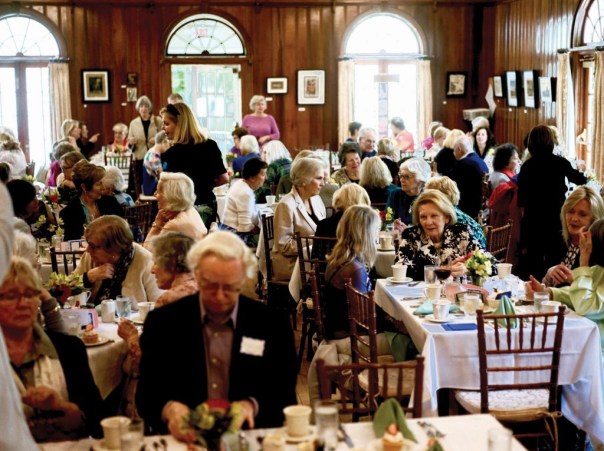
Validating ladies who lunch: this article in the Princeton Echo about The Present Day Club, depicted by E.E. Whiting, telling how for 120 years it has “consistently met the needs of an ever changing society.”
Are we ladies who lunch? Damn straight we are. We are also women who think, innovate, challenge, participate, and achieve. And we do this all together in that stately home on Stockton Street.
The United Methodist Church provides this very useful toolkit, applicable to any group.In my experience, most groups of white people in Princeton are in the introductory category. Those who gather at Not in Our Town’s Continuing Conversations at the Princeton Public Library are in the ‘What’s Next” or “Veteran” categories.
Where do you belong? Excerpts below
The resources below are offered to provide tangible and meaningful learning engagements for individuals and small groups. They are for both laity and clergy and can be used contextually in church, church and community conversations, individual reflection, or sermon preparation. They are separated by “entry-point” groups. Read the descriptions for each category to determine the best fit for where you are entering into the work of racial justice and equity right now.
INTRODUCTORY: For preachers and/or churches who are just entering into the work of racial justice and equity. Beliefs about racial injustice or terror have not been preached from the pulpit. The term “white supremacy” describes only the acts of “fringe groups” like the KKK, cross-burning, or lynching but not associated with historic or contemporary Christianity. The events of Charlottesville were shocking because it was believed that “we were past that” or “we didn’t realize those fringe groups were still around.”
Moving the Race Conversation Forward is a video that breaks down the differences between four types of racism and defines the concept of systemic awareness. (You can look at this individually – or – gather a small group of pastors and ot laity from your area or annual conference and watch the video together – then brainstorm the following questions to provide a wider breadth of knowledge and wisdom for preaching about or responding to racism in the future.
What are the 4 types of racism presented in the video?
What are the differences between them?
What does it mean to be “systemically aware?”
Think back to discussions about racism you have heard in the church. On what “type” of racism were they concentrated? Was this discussion systemically aware? If not, imagine what would have been needed in order to transform it into a systemically aware discussion (i.e., what changes to focus, what changes to language, what information needed to be added or left out).
WHAT’S NEXT? For pastors and/or churches who are able to define “white privilege,” “systemic racism,” and “anti-racism.” Beliefs about racial injustice or terror have been preached from the pulpit and many people will have also participated in intercultural competency or anti-racism workshops. The term “white supremacy” describes both acts of the KKK and white nationalist groups as well as systemic racism that benefits those who are racialized as white. The events of Charlottesville were shocking because it was believed that radical white supremacist groups were not “part of our neighborhoods and churches.” Statements like, “go home” and “we won’t put up with that here” were used to separate everyday acts of white supremacy or the “people who would attend the rally” from who “we” are.
Many people have been shocked by the events of Charlottesville. What is more difficult is for some is to connect the events of Charlottesville with white privilege or systemic racism. What was most shocking to you about the events in Charlottesville? Why were they shocking for you? Create a list with the connections between white privilege and the events of Charlottesville. Reflect and discuss.
Many people consider Charlottesville a “one-off” event. Some consider it an event which also sparked responses such as those occurring the next weekend in Texas, California, and Massachusetts. Google the “response events” and discuss the similarities and differences between them. Now consider how Charlottesville is connected to other events/decisions based in white supremacy and systemic racism. After reflecting and discussing the connections in “society out there” consider seriously the connections in “the church right here.”
Many of the events of Charlottesville were captured on video, many were not. Share anything you have heard from those who were at Charlottesville (either that you heard in person or read a witness account) that were not captured on video. What are the similarities and differences of what was publicized widely and what wasn’t? Reflect and discuss the “both sides” argument that indicates fault/blame on both protestors (those who were protesting the removal of the confederate statue) and counter-protestors (those who were protesting against the “Unite the Right” rally). What evidence are you using? Why?
Now that you have seen the events that occurred in Charlottesville, what does it mean for you/your church/sermons to bear witness to them? What evidence will you use?
Many of the UMC Bishops in their statements and UMC preachers in their sermons responded to the events of Charlottesville with a call to remember our baptismal vows. This resource provides a step by step reflection and engagement of the UMC baptismal vows as it relates to anti-racism. After reviewing the vows which can be found in the the United Methodist Hymnal, what concrete, specific, actionable, and measurable steps will you/your small group/your church take to enact our baptism in the fight against white supremacy and racism in all of its forms?
Depending on how much work you/your group/your church has done with privilege (racial, economic, gender, etc) consider adding or substituting the following questions in the “post quiz questions for consideration:”
Compare the protests in Ferguson and counter-protests Charlottesville. Make a list of the similarities and differences. How does race influence these similarities or differences? How, if at all, did racial privilege affect safety, police response, or descriptions of the events?
Name your own privileges in your own words. How will you use your privileges to do the work of dismantling and defeating white supremacy and racism in all of its forms? Name those actions specific to that work IN the church.
The Rev. Dr. William Barber, Disciples of Christ pastor and architect of the Moral Movement, offers a succinct, historical, and powerful overview of ways to situate white supremacy within the larger American context as well as provide a roadmap for future action here. After watching the video, reflect on and discuss the following Individual or Small Group Questions:
What does Dr. Barber say is the difference between denouncing Charlottesville and denouncing white supremacy?
What does Dr. Barber say is the difference between and the usefulness of addressing the “statues” and the “statutes” of white supremacy?
How does Dr. Barber refute the claim of “I am not a racist” when only based on someone having a Black or Brown friend?
Barber mentions the names of many Civil Rights sheroes and heroes who have died and empowers us to consider ourselves their children who will continue the fight today. Name 3 Civil Rights ancestors whose legacy you will connect with and continue. (For white people, it is imperative to name at least 1 white person active in the work of Civil Rights with whom you can claim affinity.)
What specific actions will your church take within the next week and the next month to engage in some of the specific action items that Dr. Barber suggests in fighting white supremacy?
VETERAN (What Else Can We Say/Do): For preachers and/or churches who have been doing the work of anti-racism for a long time in multiple arenas: from the pulpit, attending and offering workshops, activism, changing structures and policies within the local and/or connectional church to ensure racial justice and equity. The term “white supremacy” describes both acts of the KKK and white nationalist groups as well as systemic racism that benefits those who are racialized as white. The events of Charlottesville were shocking because the rally was in broad daylight and the Klan no longer wore hoods. The connections between the expressions of white supremacy at Charlottesville and the day-to-day expressions of white supremacy are historic, deep, and entrenched. This group might have difficulty figuring out “what else” to say or be and is burnt out from what Rev. Dr. Teresa Fry Brown calls “Justice Fatigue” that they need care themselves.
First go through the learning engagement as it is. Then add the following questions:
What is the difference between tolerance and understanding someone who thinks differently than you, according to the resource? Consider whether you “tolerate” or are in “community with” people who have different perspectives about Charlottesville. What would it take for you/your church to do more than “tolerate” a person who has a different perspective on taking down confederate statues, the right to hold rallies and the right to free speech, or Black Lives Matter and Blue Lives Matter?
Consider the Tolerance Paradox attributed to Karl Popper in 1945 which states that tolerance cannot tolerate intolerance because the first thing intolerance does is to eradicate tolerance. Read that statement again. Reflect and discuss your thoughts about this. Do you think tolerance (in the sense of allowing for multiple perspectives to be valid even when people don’t agree upon them) is ever “allowed” have intolerance for anything? In other words, does intolerance of intolerance make us tolerant or intolerant? If not – how does our Christian faith help us to draw the line in faithful places?
Add or substitute the following questions in light of the events at Charlottesville.
Consider the statement, “Resistance to oppression requires creativity.” What aspects of your faith help to create spaces for and defend creativity? How has conformity to Christian doctrine or traditions helped to assist oppression and oppressive systems? What does it mean to “be the Church” in light of Charlottesville?
Some Christians would not participate in the non-violent counter-protest organized by Congregate Charlottesville (or in the taking down of confederate statues before laws were changed) because they did not agree with participating in civil-disobedience. Some Christians denounce the acts of the “Antifa” because, while the “Antifa” are committed to non-violence as a default, they are not opposed to using violence to defend themselves or others in response to physical violence. How do you discern where the line is between conformity and creativity in the work of anti-racism or destroying white supremacy?
LONG-TERM ACTIVISM (When Those in the Fight Need Care): Sermons with discussion questions – especially for those who are burnt out from years of anti-racism activism and work and/or are “sick and tired of being sick and tired” (Fannie Lou Hamer).
Further reflection and discussion questions after watching these videos:
How did you respond to the events of Charlottesville? If you were there, describe your participation and perspective. Reflect and discuss how your previous work in anti-racism affected your response (in whatever form including internal responses and not actively engaging in public response) to Charlottesville.
If you are a person who is directly targeted by the oppression and terror of white supremacy – how did you (are you) seek/ing care for yourself since Charlottesville?
What do you do individually?
What do you do (or not do) in different communities in which you participate?
How does your faith or the examples of your faith-filled sheroes and heroes inform your regimen of self-care?
Do you ever feel guilty for needing or participating in self-care? What aspects of your faith or examples from others might help alleviate your guilt for taking the time for self-care?
If you are burnt out right now – how would you like others to support you?
How might the work of multi-racial coalitions doing the work of anti-oppression together create spaces for self-care even in the midst of the ongoing struggle for liberation and safety for all? How much time will you protect for yourself before working to create or participate in a multi-racial, intersectional, anti-oppression coalition?
The Guaranteed Minimum Income plan, or Universal Basic Income, is not new. It was researched by a Princeton company, Mathematica Policy Research (MPR), back in 1969. It’s the subject of Diccon Hyatt’s excellent cover story “Driven by Data” in this week’s U.S. 1 Newspaper.
Led by Paul Decker, MPR is a company I’m proud to have in Princeton.
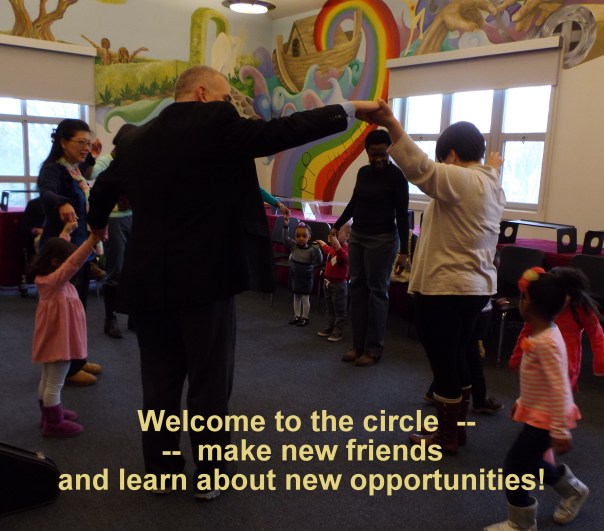
Tom Shelton, children’s choir director at Princeton United Methodist Church, welcomes three and four-year-olds to musical fun during Sunday morning Sunday School.
Dear new neighbors! Welcoming people to Princeton is one of my favorite things to do. For families with young children, here is a sprinkling of not-so-obvious opportunities that are good to know about for this summer and fall.
Music Together, for your 3 year old and even your new baby, is a cost-effective activity for families. Did you know that children get all their tone discernment before the age of 5? With this program, the parents learn the songs (with weekly classes of fun activities with the kids) and the tunes are integrated into your daily life. There are classes everywhere including at my church at the corner of Nassau, opposite the Garden Theater). Which brings up —
Princeton United Methodist Church – we have excellent music programs for all ages, even as young as three. Pictured above, our children’s choir director, nationally known, is Tom Shelton. We welcome a new preacher, Trey Wince on July 16 and begin monthly alternative worship services on July 23. If Sunday morning attendance isn’t for you, but you’d like to meet some families with kids, come to a ‘fun night’ on July 16, 7 p.m. and on later dates this summer, details here.
Another good place to meet families with kids is Marquand Park. Playgroups seem to congregate there. Harrison Street Park has good 3-year-old opportunities (sand box, good swings) but gets fewer visitors. And then there’s the little Sigmund Park, named after a beloved mayor, opposite Westminster Choir College or Mary Moss park, if it’s reopened, in the Witherspoon Jackson neighborhood. In the fall, try the events at Cotsen Children’s Library, part of Firestone at the university but you can also just browse. And of course the story hours at the Princeton Public Library are probably the most populated.
Newcomers may not realize that the “go-to” newspaper for local news is an unassuming little paper called Town Topics. It doesn’t look like much, but it’s generally accurate. You’ve been getting it on Wednesdays. I’m very interested in newspapers because I was editor, for two decades, of U.S. 1 Newspaper known online as PrincetonInfo. The sister monthly paper is the Princeton Echo. U.S. 1 has newsstands and pick-up points in town (the closest to us is Bank of America or Whole Earth) but its major distribution is to businesses – retail and corporate – in greater Princeton, which encompasses three counties and 27 municipalities. People love it for many reasons but an important one is the “go-to” event calendar. I’m retired, but am still on the masthead thanks to an ever-loyal boss. Here is his account of the area newspaper scene.
When visitors come to town (you will get plenty, Princeton is a draw), they’ll want to see Einstein’s house, but there are several other Einstein-mania sites: the mini museum in back of Landau’s and the sculpture. a good photo-op, at the intersection of Bayard and Nassau.
If you have concerns about social justice, I work with Not in Our Town Princeton, and we do first Monday “Continuing Conversations on Race” at the Princeton Public Library. We will also have a booth at the – mark your calendar – Community Night at the community pool, free admission, bring bathing suits, August 1, 5 to 8.
Other town-wide parties: the Thursday night concerts at the Princeton Shopping Center and McCarter Theatre’s open house on August 23 (food and free entertainment). Students at Princeton University put on a rip-roaring kids show in the summer, apparently suitable for age 3 as they encourage three-and-under to attend free; this year it’s about Amelia Earhart,
And so you know what I look like, here is a picture of me, featuring my button collecting interest, used here at Princeton Comment.
Whew! Now that I’ve done this I’m going to post it on my blog – without your names of course – to help other families with kids. Do comment on anything that you’ve found. First impressions of a new town are priceless and easily forgotten, so pass them on!
To read “The strange origins of the GOP ideology that resists caring for the poor” click here. Reported by Jack Jenkins, the senior reporter of Think Progress.
Having just come from the Frederich Beuchner writers workshop at Princeton Theological Seminary, I can testify that virtually all the attendees and workshop leaders agree with Jenkins.
On May 5 the U.S. Department of Education released the names of the Presidential Scholars, two students from each state plus winners from the arts and career/technology. This year’s Presidential Scholar List include a student from Princeton High School, Winona Guo, and one from Mercer County’s Health Science Academy, Sanjana Duggirala, of East Windsor.
Established in 1964 the program was expanded to include those who excel in the arts, as well as in academe, and it was expanded again in 2015 to add those in career and technical fields. I remember how excited I was when, in 1979, dancers were included in this prestigious program. Some years, the arts scholars performed at the Kennedy Center.
Here is how the scholars are selected. Under the original plan, the first cut is by SAT or ACT scores — the top 20 men and women from each state. For New Jersey, more than 350 were selected. This includes those who were selected by different criteria — for their achievement in the arts or in career technology fields. Then that group submits materials: essays, self-assessments, secondary school reports, and transcripts. That winnowed it down to 16, plus four arts students and two career/technology students.
Happy birthday to Richard K. Rein, who turned the Big Seven Oh yesterday and ruminated on the milestone in his column today, here.
Seventy’s good, from my point of view. Seven years ago I ruminated on the same number, here. The wisdom that still works today is from Frederick Buechner: “The place God calls you to is where your deep gladness and the world’s deep hunger meet.”


 The United Methodist Church provid


 Princeton Comment