Category Archives: Business

Princeton Regional Chamber Events, useful tips from U.S. 1 Newspaper

Words, not slides

EileenSinett_colorIn presentation circles, telling stories is the new black. Eileen Sinett presents a July 24 workshop, on how storytelling makes us more effective speakers.

As a journalist, i helped tell stories of accomplishments and life lessons, but it’s even better when folks can learn to tell their own. Everyone has at least one fabulous story that needs to be told.

U.S. 1’s Diccon Hyatt explains in this article. Tell stories with words, not slides.

Environmental David vs Real Estate Goliath?

farewell

Do I have this straight? After decades of trying to develop the former Western Electric site on Carter Road, environmentalists and preservationists in Hopewell (known for their combativeness when it comes to defending rural turf) managed to fend off Berwind Property Group from building high-density housing.

The property, as described by MercerMe.com, is
“the first corporate park ever created in the United States. Built during the Cold War by Western Electric, the 360-acre site included an underground nuclear bunker for the use of the President of the United States and a runway for the President’s plane in the event of a nuclear attack.” Part of this campus has already been developed as Technology Center of Princeton, with Sensors Unlimited its most recent occupant of the largest building, with Worldwater and Lexicon also on the campus. 

Jim Waltman, executive director of the Stony Brook-Millstone Watershed Association, had a hand in the deal, which went down in April. Waltman speaks at the Princeton Regional Chamber breakfast on Wednesday, June 17, at 8 am (networking at 7:30) and that’s TOMORROW if you are reading this Tuesday night. Yes, I know, late notice. But you don’t pay extra to be a walk-in — $25 for chamber members and it’s a good breakfast. 

Waltman will surely introduce the new Platinum-Leed-certified environmental center, shown above and designed by Farewell Architects (though not so credited on the Stony Brook website.) But also ask Waltman about how they managed to “do the Carter Road deal.”  His more well-known battle was with Westerly Road Church (now Stone Hill Church) on its development of the Princeton Ridge. I’m guessing he’d answer questions about that too.

Maundy Thursday: Airline Miles and Shy Feet

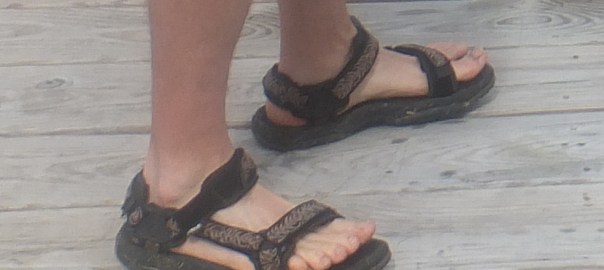
shy feet

In my email on Linked In this morning, chamber colleague Ken Haag published Is Your Business Heartland Secure? 

By following Haag’s link, I reminded myself that Heartland has a shop local card that helps Princeton merchants by eliminating processing fees. Another colleague at the Princeton Regional Chamber of Commerce, Adrienne Rubin represents that division. With the One Princeton card, you can pay for things with your smart phone. Benefit to consumer: one percent of every transaction goes to the consumer’s choice of any of dozens of nonprofit organizations, including the Latin American Legal Defense Fund,  Princeton Senior Resource Center, and Princeton Community Housing

I sure hate to give up airline miles, but frequent flyer seats are getting scarce.

And thanks to Rothstein Hughes, who attends Grant Chapel in Trenton, I learned that on Maundy Thursday (today, when Jesus observed his last Passover meal with his disciples) it’s traditional to — not only wash the feet of the poor — but also hand out alms.

Queen Elizabeth follows that tradition TODAY in Sheffield, England, giving money to 89 people, a number that represents her age.

So today I’ll actually join up to get that One Princeton card. With every transaction, I will lose airline miles — but one percent of the transaction will benefit charity.

No, Queen Elizabeth is not doing the foot washing part — but some of us will. Tonight at 7:30 at Princeton United Methodist Church the youth choir leads the Holy Communion Service along with foot washing.

For folks like me, the alternative is hand washing. I have shy feet.

And you?

Behind the Political Bubble: McCarty

“Behind every financial crisis lurks a “political bubble”–policy biases that foster market behaviors leading to financial instability”

“Just as financial bubbles are an unfortunate mix of mistaken beliefs, market imperfections, and greed, political bubbles are the product of rigid ideologies, unresponsive and ineffective government institutions, and special interests”

That’s the description of the new book, published by Princeton University Press, Political Bubbles: Financial Crises and the Failure of American Democracy, co-authored by Nolan McCarty and Howard Rosenthal (both of Princeton University) and Keith T. Poole of the University of Georgia. They “shed important light on the politics that blinds regulators to the economic weaknesses that create the conditions for economic bubbles and recommend simple, focused rules that should help avoid such crises in the future.”

Simple, focused rules? Bring ’em on!

In 1989 Bill Gates was the speaker at the Trenton Computer Festival, the oldest such festival in the world. Now the festival turns 40. Read about it here.

John Springrose: “Prototype your imagination”

Sometimes a better chamberspeaker says what they said to a U.S. 1 reporter as published in the previous issue. Not so this time. Diccon Hyatt’s interview with John Springrose was way different from his talk at the Princeton Regional Chamber breakfast this morning. Springrose’s company (formerly inDimension3, now Philadelphia-based Koine) pioneers in 3D printers, more aptly named “rapid prototyping machines.

An IBM-er turned investment banker, Springrose  began with a “then and now” show of how innovation increases productivity, even though jobs are lost along the way. For instance, IBM’s first middle market computer, System 32, cost $40,000 and had only 5k of memory but in 1975 it could replace accounting functions. Checkers were replaced by self checkout and scans, tellers by ATMs, German auto workers by robots, and so on. “Innovation does lead to productivity,” he tells students, “and it forces us to think.” Be an innovator or run the risk of losing your job.

Examples of how a rapid prototyping machine can work: High school student gets an idea for jazzing up the wine drinking experience. Prints a prototype of a new wine holder, gets it manufactured in China, sells several hundred units on ebay for $40 each, total cost of each unit $1.89, accomplished this in less than a month. Product: a wine bottle holder that is lit from underneath, sending colors through a bottle of white wine. Cool. True story.

A plant “goes down” for lack of a part? A 3-D printer could make that part in a snap. A corporation could have a rapid prototype machine in the lobby and greet clients is greeted with a logo or miniature product from their company. Now that’s hospitality.

Three-D printers like toys can cost as little as $700 but, to be reliable, one should cost at least $5,000 for business use. Customers are mostly overseas. Springrose worries that the U.S. is getting left behind.

In addition to plastic, products can be in wood, metal — “anything that will melt.’ His industry today is where IBM’s System 32 computer was in 1975. “You give me the industry, I give you the use,” he offered.  “Prototype your imagination,” he challenges. “If you think about it, you can do it.”

As for the difference between the interview and the talk — the reporter dug into the not-so-successful early stage of Springrose’s company, when it was making cheap printers that were not reliable and got scathing online reviews. That’s why Springrose moved to the high end. More than 700 startups make 3 D printers but just three– including Koine — are working on business-quality tools.

Springrose has a very personal interest in the medical applications for his devices. He looks forward to the day when a rapid prototyping machine can print out a liver or a kidney. That’s because he has lived through a liver transplant. But printable organs won’t happen any time soon. Springrose came without a demo machine because — the day before, he demoed to doctors at Jefferson — and they broke the machine.

Photo: L to R, Grant Somerville (chamber program committee), John Springrose, Peter Crowley (chamber CEO).  

Towers, teapots — and boathouses

Michael Graves in his studio DSC_0043 ret, 13 inches wide, credit Jon Naar, 2011 (1)

You probably read the New York Times  “designer of towers and teapots” obituary on Michael Graves, who died yesterday (3-12-15) at 80.

You probably did not see this excellent video of Grounds for Sculpture’s Tom Moran reminiscing about Graves, taken yesterday by Times of Trenton’s Michael Mancuso. Grounds for Sculpture has a 50-year Graves retrospective running through April 5.  Everybody is talking about their Michael Graves memory.

Early in my tenure at U.S. 1, Rich Rein assigned me to write a cover story on Graves. In the early days, U.S. 1 was a monthly, then biweekly, and cover stories ran at least 5,000 words.

The only way Graves could fit me into his schedule was for me to accompany him on a 6 a.m. Amtrak train to Washington, D.C., so Rein agreed to buy my business class ticket.

Bleary eyed, notebook equipped, I met the courtly Graves on the Princeton Junction platform. Two of the things he said stay with me today. He was telling about his upbringing. “I guess your mom was proud of your drawings and put them on the refrigerator?” I asked. His answer was . . . pause, “No.”

I thought that was a poignant comment and made a mental note to visibly appreciate my own children’s talents more.  At that point in his career, though the Humana building was up, and the Disney hotels were in the works,  no significant buildings carried the Graves signature in Princeton. Just a couple of house designs. It took a long time before a major Graves postmodern design, for the Arts Council of Princeton, would make it to the streets of his home town.

In any case, it was a heady moment for me. Until I joined the staff of U.S. 1 in 1987,  I had been a dance writer. I had interviewed famous dancers, but never an architect, let alone a famous architect.

Then, as  the train pulled into Philadelphia, Graves called my attention to the boathouses along the Schuylkill River. “Each is a different style, each a gem,” said Graves, of the 19th-century designs, noting that he assigned boathouse design to his Princeton classes.

Baltimore is my home town. I  got off in Baltimore and taxied to see my mother.  I made that train trip monthly for more than  a decade. Remembering that morning, I always craned my neck to catch a fleeting glimpse of the Schuylkill boathouses.

Photo by Jon Naar, U.S. 1, January 26, 2011.
That story “Called the Architect for the ’90s, but his work is invisible here,” was published on November 29, 1989, soon after U.S. 1 Newspaper had gone from a monthly to a biweekly. The paper has published many stories on Graves since that time, searchable in the archives.


Danielle Allen: canceled — but — wait!

The Princeton chamber lunch on Thursday with Danielle Allen has been cancelled, due to weather — but you have another chance to hear her.  She will speak at Labyrinth bookstore on Tuesday, March 10,  at 6 p.m. With Melissa Lane she will discuss Lane’s new book the “The Birth of Politics: Eight Greek and Roman Political Ideas and Why They Matter.”

Here is Diccon Hyatt’s interview with Allen in the current issue of U.S. 1  This interview focused on her reading of the Declaration of Independence, whereas I was more interested in her direct declaration of how she advocates for bridging cultural divides, as reported by Not in Our Town Princeton here.

The chamber lunch will not be rescheduled, but Allen will stay in Princeton till June. Perhaps she be persuaded to talk about intercultural dialogue here, before she goes to Harvard.


Capstone for a Career, Strategy for the Next One

JaneTervooren2

Jane Tervooren has had multi-layered careers,  chronicled  in U.S. 1, most recently in a December 10 cover story by Diccon Hyatt. Tervooren’s departure from one fulfilling job to invest in an exciting new company was occasioned by a health event. As Hyatt describes, “surviving cancer is what led her to put a capstone on an 18-year career.”

Being diagnosed with a fatal disease, no matter what the outcome, inspires change.

Tervooren’s advice is appropriate for the New Year: “it’s never too late to re-invent yourself. Don’t settle if you’re unhappy in a relationship or a job. have the guts to make a change. If you are stuck, it’s because you feel stuck. People have options.

NJ makes “worst 10” list

According to this survey by 24/7 Wall St. New Jersey ranks 43 out of 50 on the bad list. What does this mean for Governor Christie’s presidential ambitions?

And I quote:

43. New Jersey
> Debt per capita: $7,287 (5th highest)
> Credit Rating (S&P/Moody’s): A+/A1
> 2013 unemployment rate: 8.2% (10th highest)
> Median household income: $70,165 (3rd highest)
> Poverty rate: 11.4% (8th lowest)

New Jersey is one of only a handful of states where debt exceeded the state’s fiscal 2012 revenues. The state reported $7,287 in debt per capita in fiscal 2012, among the highest figures nationwide. Due to its difficulties in maintaining a balanced state budget, Moody’s awarded New Jersey among the lowest ratings of any state, as well as a negative outlook. On the other hand, New Jersey residents are among the nation’s wealthiest. A typical household earned more than $70,000 in 2013, higher than the median household income in all but two other states. A typical New Jersey home was also worth well over $300,000 in 2013, versus the national median home value of $173,900. However, residents may not be as well off as they seem as the cost of living in New Jersey was 14% higher than the rest of the country in 2012, the third highest cost of living nationwide.

The reporters were   on 24/7 Wall St. 

Only Georgia,  Arizona, Kentucky, Rhode Island, Mississippi, New Mexico, and Illinois ranked lower than NJ, and  Pennsylvania was  #36.