The four known for-profit finalists are Lautriv Information Systems, a company that has worked with insurers to develop software that automates business rules and scope decisions for claims adjusters; FashionStake, a new online source for contemporary fashion; Open Blue Sea Farms, which works toward sustainable free-range farming methods for saltwater fish; and CoAx Systems, which aims to market its new method of designing wellfields for heat pumps that will greatly reduce the cost of geothermal heating and cooling systems. CoAx, founded by Alex Gasner of Princeton’s Class of 2010, already won the first-place prize of $5,000 in the TigerLaunch Business Plan Competition held in February.
Category Archives: Uncategorized
That Book in Your Head? Or the Desk Drawer?
My friend and colleague, Karen Hodges Miller, read what’s on my mind — and perhaps on yours. I have a book in my head, started but not finished. When will I get it done? I know of one Princeton-based agent, Marie Galastro, who can help me when I get it finished. Now Karen offers a way for procrastinating, would-be authors to actually get it written.
I invited her to be a guest blogger at Princeton Comment, as below:
If you’ve always wanted to write a book, but somehow just haven’t gotten around to it, I’m planning a seminar that is just for you. Open Door Publications will offer “Unlocking Your Ideas Your Book from Concept to Publication,” at two and a half hour workshop, on Monday, June 21.
I’ve been writing and editing for over 30 years and I’d often helped people to complete book projects. I saw many interesting, well written manuscripts that never got published because it was just too hard for a first time author to find an agent or a publisher. It’s that old Catch 22; publishers only want to look at authors who have already published, but how do you become a published author if no one will read your work?
About four years ago I decided to that it was time for me to take the process one step farther. I opened Open Door Publications, a publishing company that offers “assisted self-publishing” for aspiring authors. Since then we’ve published eight books. I’ve already published two books this year and plan to have two more out before the end of the year.
I’ve learned the questions that writers ask the most and my workshop will answer them. It will focus on:
Identify who your readers are
Organizing your material
Finding the time to write
And publishing and marketing basics.
I promise that the participants will leave with a personal plan for completing their book.
The workshop will be held at the Inn at Glencairn, 3301 Lawrenceville Road in Princeton, from 10 a.m. to 12:30 p.m. on Monday, June 21. The price of $79 ($59 early bird registration before June 13) will include brunch at the Inn and a copy of “Unlocking Your Ideas,” my new book designed to help aspiring authors write the book they’ve always dreamed about.
For more information contact Karen at khm@opendoorpublications.com, or to register go to http://unlockingyourideas.eventbrite.com/
Barbara’s extra note: The closest I have come to self-publishing is helping Wayne Cooke with his book “On the Far Side of the Curve: A Stage IV Colon Cancer Survivor’s Journey,” published in December. Now Cooke and his oncologist, Dr. Peter Yi, appear on a panel for National Cancer Survivor’s Day at the Unviersity Medical Center of Princeton on Sunday, June 6, at 9 a.m. The full program runs 8 to 11:45 a.m. Register here.
Everyone I know who has cancer, or knows someone with cancer, has found Cooke’s book exceedingly useful. This is how it should work — to have a powerful idea and get it printed, so the world can use it. When Cooke was doing his book, we didn’t know about Open Door Publications. How good it would have been to work with someone right here in Princeton.
Je me souviens
At the Princeton Ballet School faculty concert on Sunday, May 25, I had the chance to deconstruct Susan Tenney’s wonderful “Je me souviens” which I’d seen at its Rider debut in the “I’ll have what she’s having” concert.
Ashton, Taylor, and Graham come to mind.
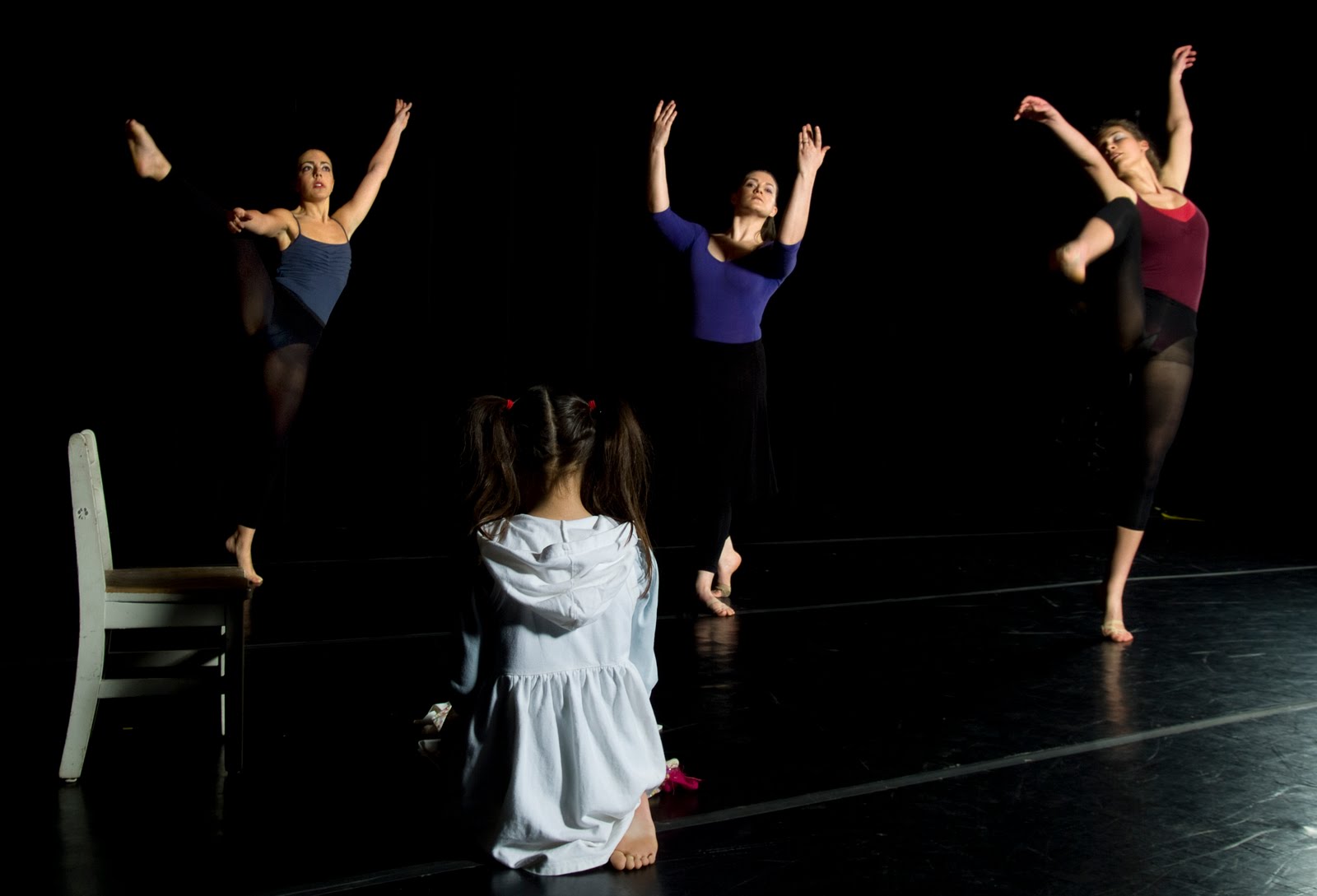
Seven-year-old Cynthia Yank opens the dance, “innocence observed,” using a watering can to figuratively moisten the feet of statue-like dancers. Later a mother figure (Clara Coleman), wraps her in a too-big red coat, and she sits on a small chair to concentrate on folding her blue chiffon scarf, just so. No matter what the sturm und drang, she remains composed, calm.
Much of Tenney’s movement is expansive — reaching, extending, running — but two tall women, Anya Kalishnikova and Alexandra Fredas, unfold themselves particularly beautifully. Kalishnikova returns for a hop-skip-and-jump Platonic duet with young Kylan Hillman, one of the two male dancers. Fredas will return as a sort of Lilac Fairy, blessing the characters as they take their leaves.
When Naoki Cojerian hurtles onto the stage, packed with energy, she starts a ball throwing sequence. As if throwing the dice or fixing something delectable, Gary Echternacht rubs his hands together gleefully, a gesture that is sparingly echoed later.
Thumbs in imaginary lapels, the dancers folk-jig in lines, then extend their airplane/eagle wings to swoop in vast curves.
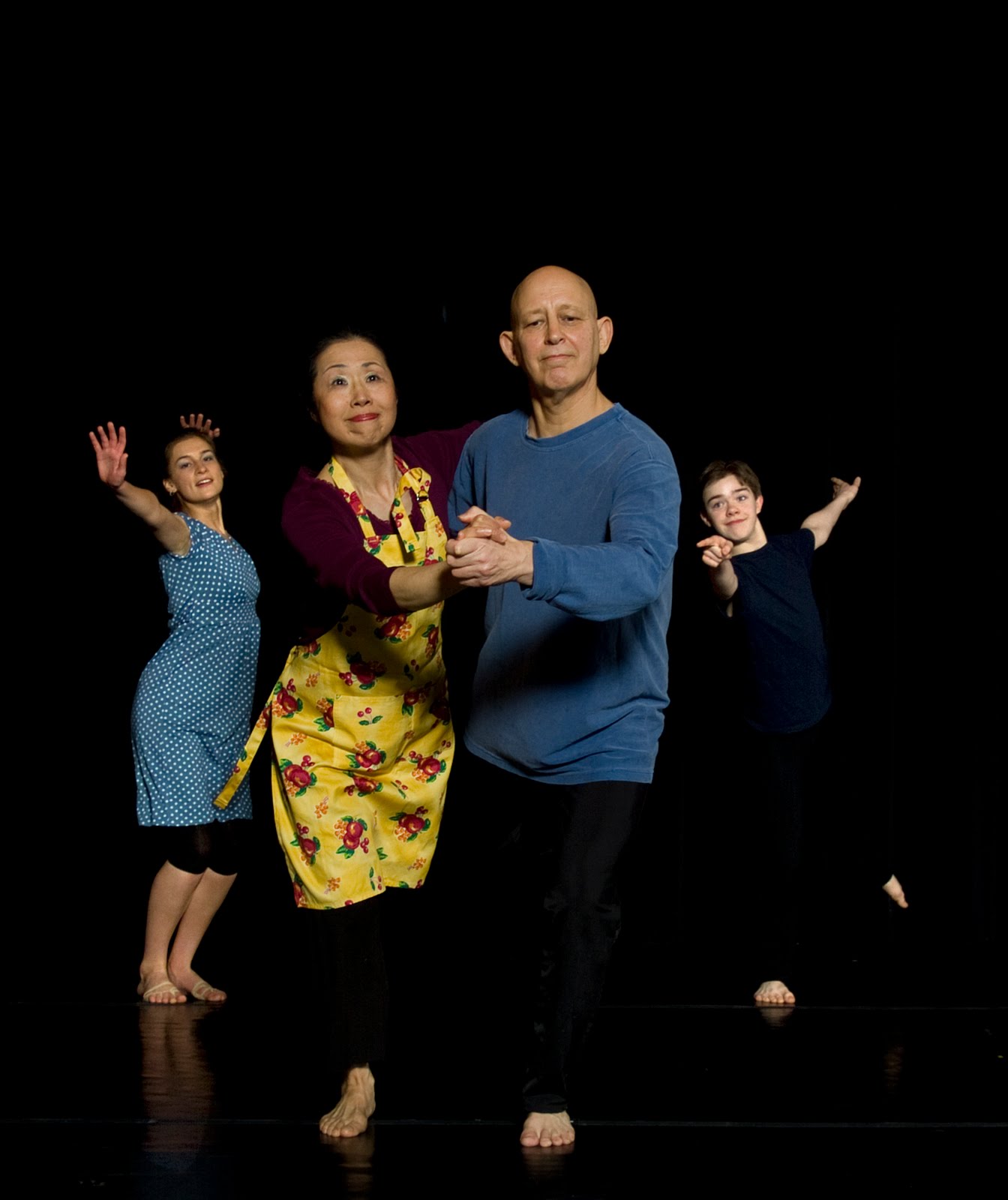
At this point it’s all seeming like a Thornton Wilder play that evokes hidden emotion with every-day scenes. Everyday comes to a halt with a vignette for Echternacht. Solemn women dress the pompous, self satisfied man as if he were Louis XIV. They polish every inch of his attire including his bald pate. Servant-like they dance attendance on him, like a wife waiting on her husband hand and foot. He rises, walks, and, shockingly, falls flat on his face. Whether he’s supposed to be dead, I’m not sure, but he gets himself up and walks off, after a brief encounter with the little girl.
The somber mood continues. As Tenney taps Echternacht’s ability to be arrogant, she gives Yoshi Driscoll a stunningly dramatic vignette. Driscoll seemingly cradles a baby in a blanket, mourning in a long adagio phrase, reaching it out to the audience for a slow 180 degree turn. The blanket becomes the vehicle for her grief, as she stretches it tight in a lament akin to Martha’s. She falls to the floor, and her feet propel her forward in a sobbing rhythm, a stark contrast to the legato. She staggers in side steps, as the matter of fact little girl leads her calmly away.
Hillman and Kalishnikova change the mood, step-hopping and prancing around Echternacht, a puzzled Farmer in the Dell. Brash and young, they hold hands, and their movement is big and wonderfully joyful. Driscoll tries to take Echternacht away but he jerks away to meet the young Hillman. The two men dance together, in question and answer, as if Echternacht is talking to his own youth. They embrace, do a soft shoe duet, then Hillman rejoins Kalishnikova, and Echternacht dances with Driscoll ballroom style.
At the close, the cast walks backward, away from the audience, and the little girl walks forward to the audience. It’s as if the child is rejoining the world, and the other dancers are leaving a surreal dream.
Once again Tenney proves that, with sensitive and appropriate choreography, focused non-professionals, no matter what their ages, can have more emotional impact than many professional troupes. This is a wonderful work.
Tenney’s was joined on this program by the excellent work of other faculty members at Princeton Ballet School, some that I’d seen on March 7 at “Rider Dances,” some I’m going to see this weekend at the Mercer Dance Ensemble concert.
Cheryl Whitney-Marcaud in Mary Barton’s “Sarabande” — the choreographer and the dancer must have had wonderful time working together. Whitney-Marcaud’s long long limbs are an evocative palette for the abstract emotion that the music implies. Whether with a rippling extension, a small, sudden gesture, or a change of focus, she painted the exact picture that she intended.
Barton’s new piece was a charmer for two young dancers, Morgan Heiser and Eric Ham, to Emil Waldteufels’ “Immer Oder Nimmer” waltz. They are a well trained and lucky young pair to have a piece set on them that has the charm (if not the actual style) of Bournonville.
Alma Concepcion contributed three Spanish dances, and I was particularly delighted by the one in 18th century Bolero style, which used soft slippers, lots of ballon, and allegro footwork, to music played by pianist Doug Kramer. And Danielle Sinclair – a professional singer who was in Concepcion’s beginning Spanish class with me some years ago – has kept on with it. She both sang and danced to “Zorongo Gitana,” a Garcia Lorca poem that refers to the famous 1930s performer “Argentinita.”
Full disclosure: I have taken class with half the teachers on this program, a potential conflict of interest that horrifies New York-based critics but is common place outside of New York. One wants to study with the best available.
This was an informal loft-style studio performance. I’m eager to see the works by Jennifer Gladney and Janell Byrne repeated this weekend at the Kelsey Theatre’s Mercer Dance Ensemble concert, celebrating Byrne’s 30th anniversary there. Best of all, I get to see Byrne, Whitney-Marcaud, and Diane Kuhl for the third time in “Elle(s)” It takes me back to 25 years ago. Je me reviens.
“County Sin Rate” Rooted in RWJF Study
Here’s an attention-getting way to use statistics to improve public health: Publish a “sin rate,” county by county. You can see where YOUR county ranks on the list of the Seven Deadly Sins (chlamydia rate – lust; adult obesity – sloth).
Of course I went straight to Princeton 08540, which pops up as Mercer County (it’s easy, here). According to the creators, the “sins” are actually the health factors researchers used to assess the health of populations in individual U.S. counties.
Our “Lust” rate is (343 new cases of chlamydia reported per 100,000 population), whereas in Burlington County it is 220.
Our “Wrath” score (violent crime rate) is 493 (per 100,000 people) versus Burlington’s 175.
Our Greed (measured by income inequality with zero representing total equality) is 47 versus 40 for Burlington.
We’re about the same for Pride (high school dropouts) and Envy (unemployment).
Does this statistical illustration make me want to move to Burlington? Naah. I’ll stay put in my neighborhood, which happens to be a couple of miles from where the Robert Wood Johnson Foundation lives. Maybe some of its health wisdom will inspire me to go for a walk (combating sloth) or lose weight (combating gluttony).
After all, our neighborhood does better on the gluttony scale (22 percent adult obesity versus 26 percent for Burlington).
Forum One Communications. has offices in Alexandria, Seattle, and San Francisco. It plainly says that the Robert Wood Johnson Foundation and its partner, the University of Wisconsin Population Health Institute, did not fund this effort to prove “that data can be amusing and engaging while promoting good public health policy.”
County Sin Rate was created, they say, “in good fun. We don’t really think your county is greedy or slothful..We relied on public data from CountyHealthRankings.org, but we created our website independently from that initiative and received no funding nor counsel from that project’s sponsors…We alone are responsible for this irreverent riff on their research.”
How did I learn about this. Through a Twitter feed about the Government 2.0 Expo, now underway in DC. Sorry, print. Social Media won this round.
Free on Friday and Saturday
Talk about late notice. Here is a free conference for women scientists and technologists, and it starts tomorrow. Maybe you can still get in. “Retooling for an Economy that Can Handle Curves” is Friday, May 21, 8:30 a.m. to 4 p.m. at the Conference Center at Mercer.
It features Sarita Felder, a coaching and branding consultant, and Sandi Webster & Peggy McHale, authors of “Black and White Strike Gold.” Breakout sessions include cultivating advisotrs, marketing who you are, entrepreneurship and ‘intra’ preneurship. The host is NJ State Employment and Training Commission Council on Gender Parity in Labor and Education. Funding is by BIO-1, coordination by the Center for Women and Work.
Lunch is included in the “free” price, and if you can still register, here is where to do it. Or maybe just show up? Or call 732-445-1244.
The following day, Saturday, May 22, from 11 to 3 p.m. the Princeton Public Library and SCORE co-host a small business fair. Expanding from last year, it will spread out from the Community Room into the Albert Hinds Plaza, and it is a great opportunity to network. Last year we met the CEO of a British pharma service company, just off the airplane. He came to be introduced to the Princeton business community.
A bonus: U.S. 1 Business Directories will be on sale at a discount.
One more: a “Professionals in Transition” workshop hosted by the Mercer Regional Chamber on Thursday, May 27, 4 to 5 p.m., before the “Event under the Tent” starts at 5 p.m. Robin Fogel, consultant, and Steve Szmutko of Drexel’s Le Bow College of Business will speak. Cost, $10, pre registration required.
Princeton Alum: Pants that Fit

Men’s pants that fit? It was a new idea three years ago when Brian Spaly (Princeton, Class of 2000) co-founded Bonobos, the company that aims to revolutionize how men buy pants.
Spaly keynotes the Princeton Entrepreneurs’ Network Conference at Princeton University’s Friend Center on reunion weekend — Friday, May 28, 9:30 to 4:30 p.m. He named the company after a endangered species of Great Ape that is found only in the wild in the Democratic Republic of Congo, and the company supports an ape sanctuary in the DRC.
Tickets for this conference are $30 and are open to all, not just alums.
The agenda shows that Spaly’s keynote speech is at 10, followed by a choice of workshops.
– Press Panel :: How To Land Your Story In Print with panelists from Inc. Magazine, Inc.com, NJBIZ, and The Times of Trenton. Kevin McLaughlin of Resound Marketing is the moderator and sent me the agenda, thank you, Kevin.
– Legal :: The ABCs of Emerging Growth Companies with Steve Baglio from Gunderson Dettmer
– Planning :: Business Plans for the Real World with expert Tim Berry
Lunch is at 12:15, and the all important business plan competition starts at 1:45, ending with cocktails and networking at 4 p.m. At $30, that’s a bargain in information, let alone in networking. Wear orange.
For Websites. Pretty is Not Enough
Newcomers to the Princeton chamber came out in droves to hear Jennifer Baszile speak about online marketing this morning at the Nassau Club on “Five Fatal Online Marketing Myths that can Kill Profits and Sales in Any Business.”
Karen Nathan of Olivine LLC was new to me, as was Kathy Kyriakous of M & K Enterprises. Some in the 50-person audience, like Wilma Solomon and and Barbara Flythe of Not in Our Town and Mary Clare Garber of Princeton Legal Search Group, were fans of Baszile’s book “The Black Girl Next Door.” Others, like Helene Mazur of Princeton Performance Dynamics and Naomi Vilko of Vilko Corporate Consulting, knew they needed the information. And then there were the pros, experts in the field of internet marketing, like Dan Beldowicz of Single Throw, who were there to check out the competition.
Essentially Baszile said you do need to do online marketing and you probably can’t do it yourself. Career marketers are working night and day to outwit Google, and the scene is shifting like sand all the time. It’s almost impossible to do it right and still run your business. She reiterated what these insiders know, that mobile will be big, huge, and video is going to be more and more important to the success of a web strategy. “People today like to watch, not read.” And if you get a sales pitch from someone who doesn’t know about “direct response marketing,” find another consultant.
What resonated with me was her insistence that “pretty is not enough.” All the beautiful colors and fabulous art work are useless if a website doesn’t have good “bones.” At U.S. 1 Newspaper, where I was the webmaster for 10 years starting in 1996, I was always a little sensitive about the look of our website, http://www.princetoninfo.com. It was fabulously useful but it wasn’t that gorgeous. It’s still fabulously useful, though it has been redesigned to be pretty, and I, now retired, am thankful not to be responsible for whether it meets Baszile’s standards: to increase profits, get new clients, and nurture existing customers.
Baszile generously offered every person in the room the opportunity to get two free 30-minute phone consultations on strategy for their websites. Many took her up on this surprising offer. Someone asked where to get training for an employee to work on the website in house, and she suggested Chicago-based Perry Marshall but closer to home there are lots of firms that would be glad to help, visible in the U.S. 1 Directory.
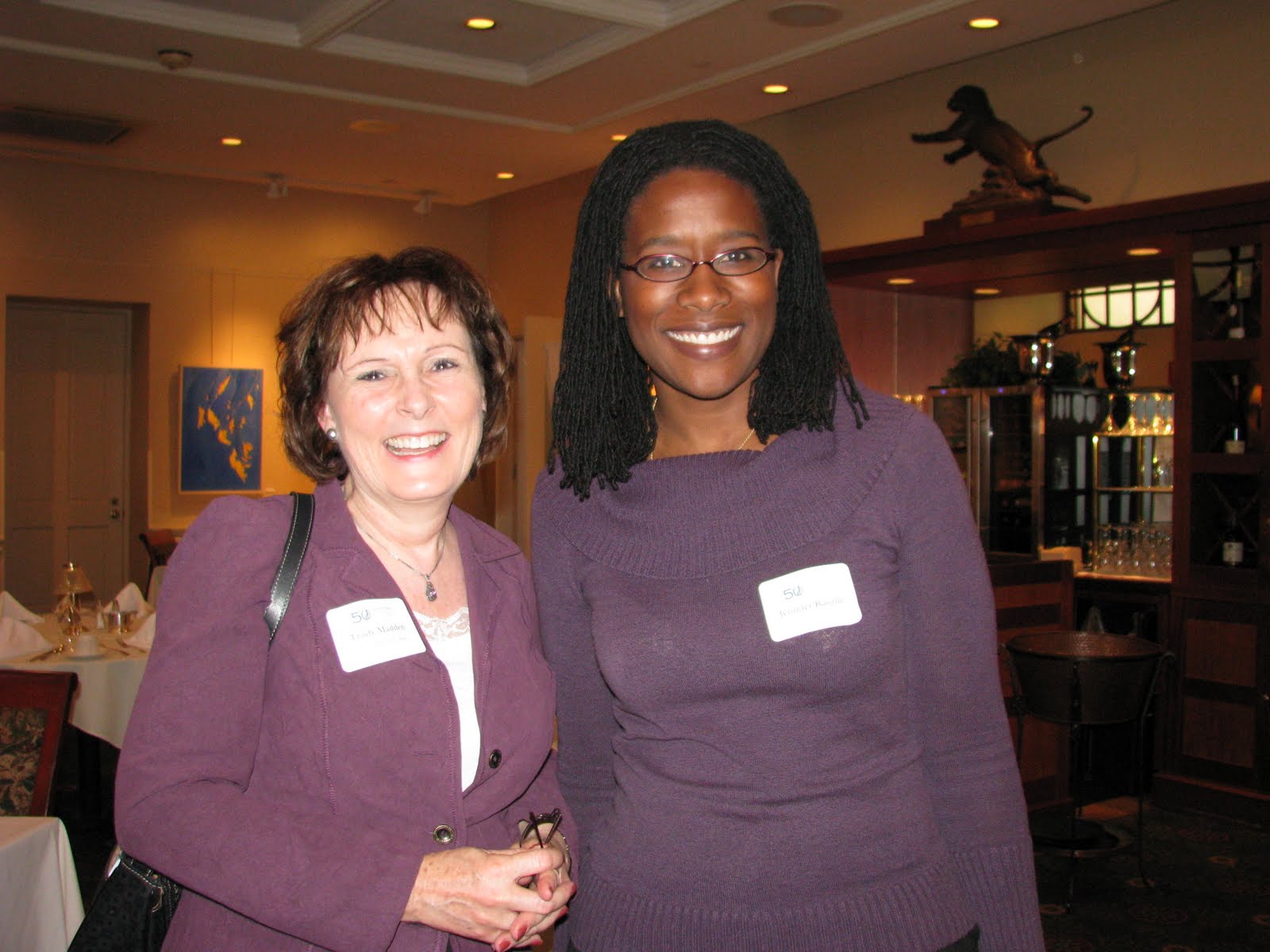
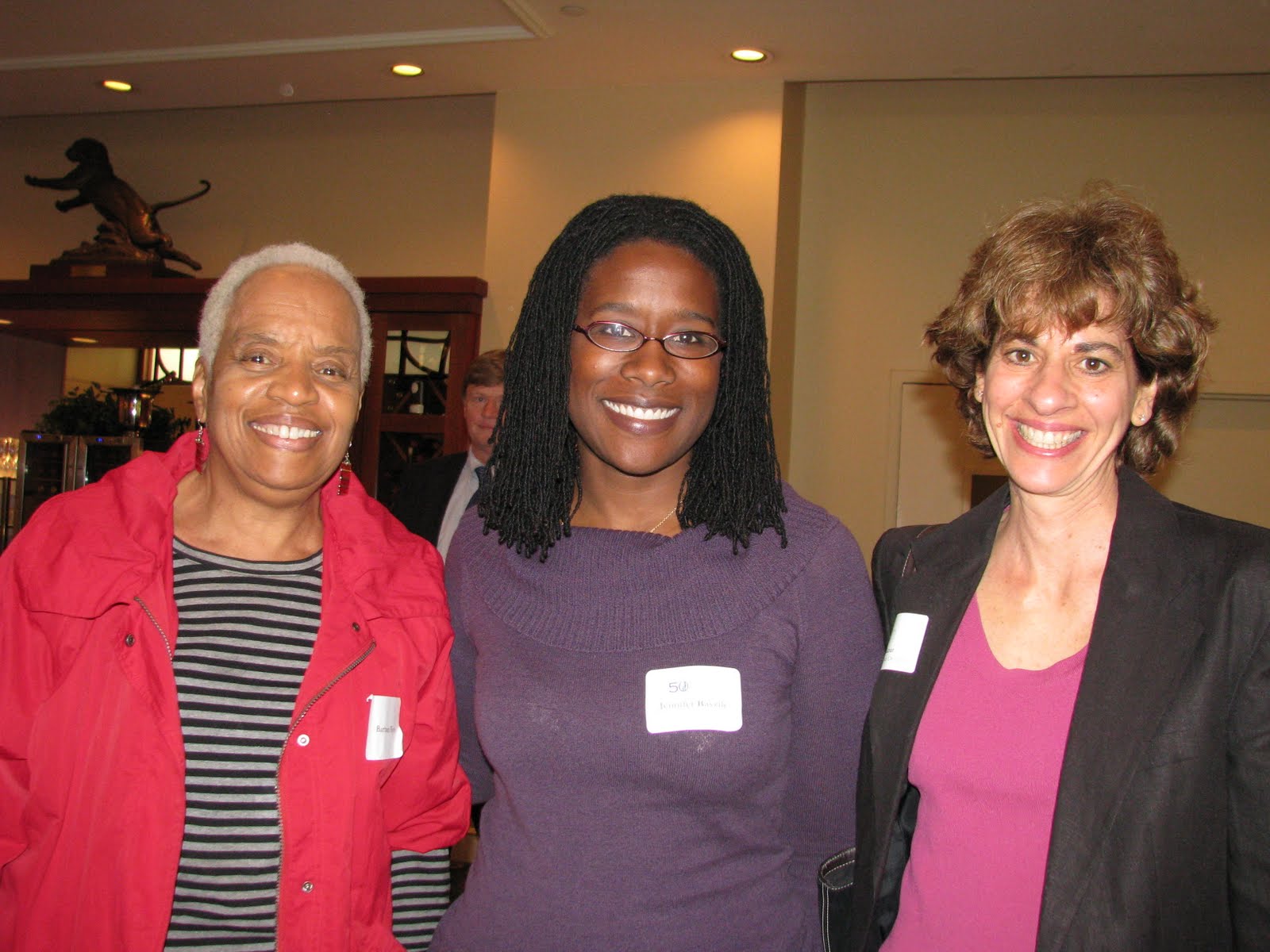
Photos: Left, Trudy Madden, the new director of U.S. operations at Scope Medical, with Bazile. Right, Barbara Flythe with Bazile, center, and Helene Mazur on right.
We All Need to Dance: Especially Children

“There seems to be a human need to dance – to dance for joy, for sadness, to petition the gods and then to thank them. Children feel this need to dance acutely; often its just the opportunity, the invitation, they lack,” says Jacques d’Amboise, founder of the National Dance Institute.
NDI’s branch, the Trenton Education Dance Institute, has been working with some pretty lucky schoolchildren in Trenton this year, and their culminating performance is at Patriots Theater, War Memorial, in Trenton in Thursday,May 20, at 7 p.m. The performance is free, so that all may come but donations are encouraged.
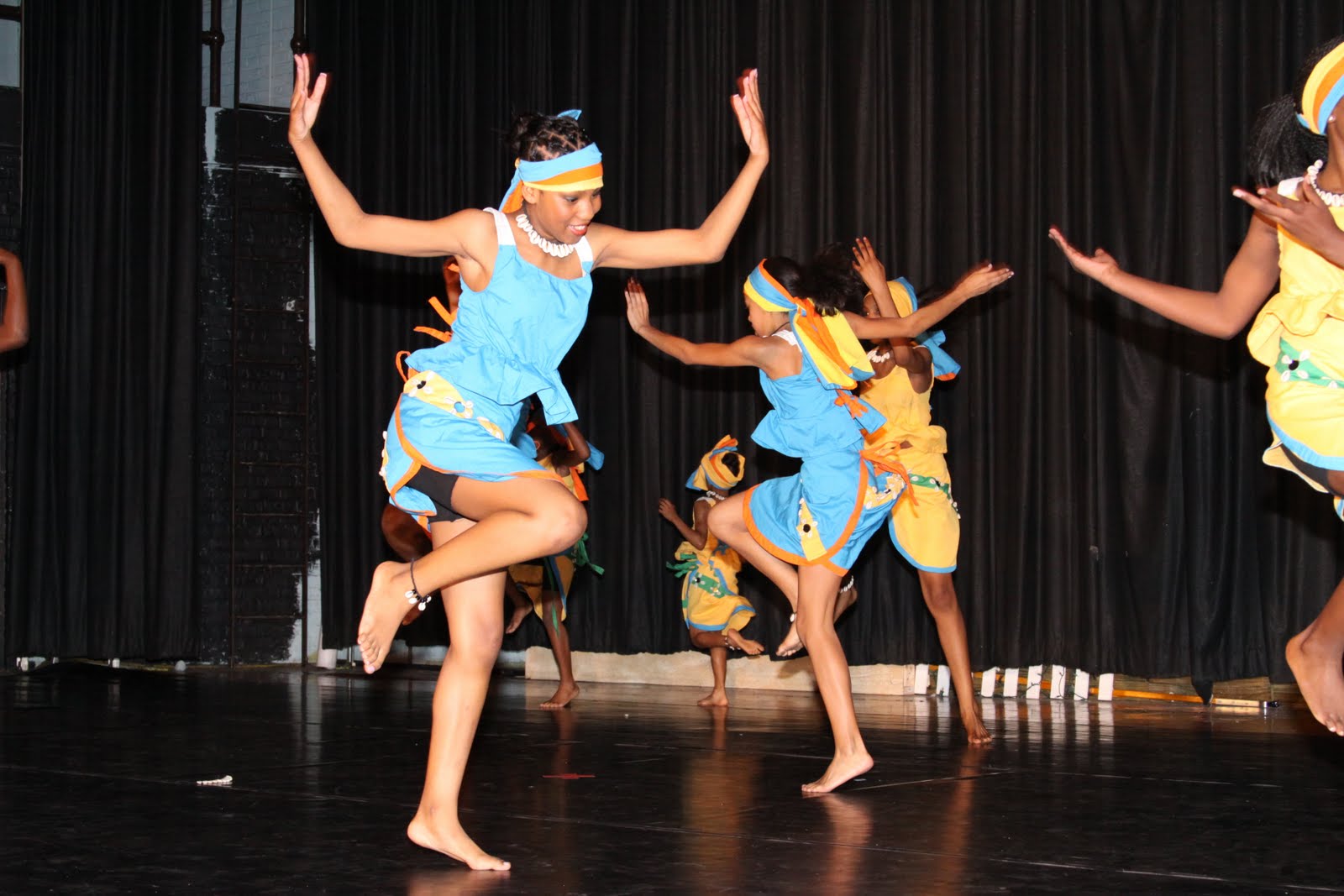
Another wonderful opportunity to see youth dance is on Saturday, May 22, when the dancers from a preprofessional performing youth company, Usaama, accompany Karen Love’s professional troupe, the Umoja Dance Company,at the African Soiree, at the Carl A. Fields Center, starting at 6 p.m. The evening offers authentic African food, music, and entertainment, all to benefit the United Front Against Riverblindness. Tickets are $50. Call 609-924-2613 or email office@princetonumc.org.
Usaama means “precious” in Swahili. Pictured above, Usaama strives to give today’s youth a sense of pride, culture, and knowledge through dance. Love’s professional troupe is named after the word “unity” in Swahili. The New Jersey-based multi-cultural company was founded in 1993 to educate, preserve, and present dance as a communal and spiritual expression of life. With a BFA from Montclair State University and an MFA from New York University, Karen Love has studied in Guinea with M’Bemba Bangoura and in Senegal, and the Gambia of West Africa with Chuck Davis. “My fusion of contemporary modern and West African dance reflects the evolution of movement and spirit becoming one,” says Love.
But for the African Soiree, all of the dances are from Guinea, West Africa.
• Opening Village Scene
• Sumunku: a dance for healing (Usaama)
• Sorsone: An initiation dance from the Baga people. It assures protection of the youth. (Usaama)
• Macru: A celebration dance performed by the women after they have successfully found their mate. (Umoja)
• Drum solos
• Soli : An initiation dance that celebrates all ages. It is an opportunity for everyone to show their best movement. (Usaama and Umoja).
• Bantaba: “Dancing ground” (Audience participation)
Let the dancing begin! And if you have never danced to the music of African drummers, perhaps you have never danced.
From Under the Mattress

Everybody knows there’s money in Princeton. Some of it, because of the stock market decline, is probably hidden under a financial mattress. Now a real bed of course, but some kind of safe banking hideout that offers next to no interest.
I’ve said it before and will say it again: some of that money could well be invested in new businesses in the Princeton area. Risky? Maybe no more risky than Wall Street and at least you would have the pleasure of helping out an entrepreneur, improving the area economy, and enjoy the possibility of getting a real return on your investment.
Note that I am not any kind of financial expert and am making no claims therefore subject to no regulation.
But other people are thinking along the same lines. Einstein’s Alley, the advocacy group in Central New Jersey, has begun to encourage those interested in becoming angel investors in the next great company.
An angel, according to a recent Wall Street Journal article, “is a wealthy individual willing to invest in a company at its earlier stages in exchange for an ownership stake, often in the form of preferred stock or convertible debt.”
How wealthy? I think the current rules are, but don’t quote me, this is just to give an idea – an prospective angel needs an income of $250,000 OR a net worth of $1 million including your house. The rules might change to an income of $450k or a net worth $2.3 million not including your house.
What good does an angel do? Says Katherine Kish, co-executive director of Einstein’s Alley: “Angels are a powerful resource for entrepreneurs providing nearly 20 times the capital to new companies in the aggregate than venture capital firms do.”
An Einstein’s Alley seminar on May 4 covered the ins and outs on angel investing. It was hosted by Richard Woodbridge (an Einstein Alley board member and Fox Rothschild attorney) and it featured Jeffrey Nicholas (a Fox Rothschild colleague and founder of Delaware Crossing Investor Group).
Now here’s where I’m supposed to be careful. According to the lawyers, I have to say this in exactly these words: “Those interested in finding out more about angel investing, email kkish@einsteinsalley.org or call 609-799-8898.” In other words, talk to Kish. But don’t put your mattress at the curb.
25th anniversary: RKR on TV

This post consists of six tweets, written while I watched my ex boss be interviewed by Anne Reeves for a Princeton Community TV show “Connect.”
Richard K. Rein (U.S. 1, @princetoninfo.com) on cable TV for 25th anniversary, am biased because I worked there…
but it’s good stuff, “Barbara Sigmund held everyone to a higher standard for development” this about 13 minutes in.
This show is hosted by Anne Reeves, a pal of the late Barbara Sigmund’s, and both Reeves and Rein are relaxed, chatty, informative.
Editing newspaper like running a chef-owned restaurant: says RKR
Editing a newspaper like producing a one-time show, sez RKR, you have to do it all over again the next week.
$64k question, would Richard K. Rein found a newspaper if he were starting in 2010? He answers 20 minutes into the show.
Answer: a qualified yes.
One more tweet: a link to RKR’s latest column