Santa’s Techie Elves

This week’s U.S. 1 cover story has Doug Dixon’s tech toys picks (will the Kindle Fire be the Next Big Thing? 


Maybe you went to Dixon’s talk at the Princeton Regional Chamber breakfast on Wednesday morning. 


If not, here’s another chance to learn about what tech toys to buy — a Gadgets Galore session at the Princeton Public Library this Friday, November 18, at 1 p.m. Did you know you can borrow tech toys to try them out?

Eiko: Stepping on Tiny Flowers

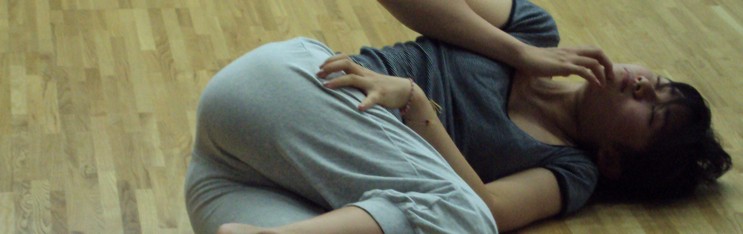
Eiko & Koma make beauty from stillness and slowness. In 1980 at the American Dance Festival Eiko (she goes by her first name) taught students how to walk ever more slowly so that they could show, in their bodies, the loveliness surrounding them. In a workshop in Philadelphia in the ’90s she showed how to place your foot on the floor so it looked like you were treading delicately on tiny flowers. I found that crossing a room while walking with such care requires at least 30 minutes. The avant-garde technique of Eiko and her partner is rooted in the work of Kazuo Ohno and Mary Wigman, but it is all their own.

Eiko Otake gives a free lecture — and, presumably a demonstration — at Princeton University on Tuesday, November 22, at 7:30 p.m. in the Patricia and Ward Hagan ’48 Dance Studio at 185 Nassau Street. Alas, I can’t be there but I can promise an unforgettable experience. In my mind’s eye (and in the soles of my own feet) I can envision what she calls “Delicious Movement.” Eiko & Koma also offer a Delicious Movement workshop at New York’s Japan Society on December 1 from 1 to 3 p.m.


Photo by Eiko. 

McGrath at the Top

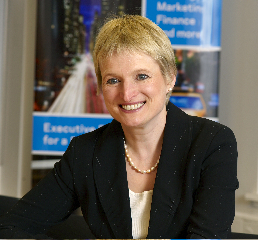
Here’s some good news about Rita McGrath, a Columbia biz-school professor and author who spoke at the Princeton Regional Chamber last year. She has just been named one of the world’s top 20 business thinkers. Discovery Driven Growth is the latest of her books.

Well, we here in Princeton knew that she was oh-so-smart all along. I’m especially fond of her advice to “fail fast and fail cheap.” To learn, you’ll need to fail – but if you fail fast, and fail cheaply, you can gain a significant edge over more timid competitors.

Sacred in Two Religions

“Everyone who hears us perform will share something meaningful and powerful,” says Neshama Carlebach. “Black and white, Jewish and non-Jewish, we are united – we are all one.”
Carlebach sings with the Green Pastures Baptist Church’s gospel choir, under the direction of the Rev. Roger Hambrick, at The Jewish Center of Princeton, located at 435 Nassau St., on Saturday, Nov. 19 at 8 p.m. Tickets: $36, general admission; $72, reserved. To order, go to www.thejewishcenter.org/neshama. For more information, call the Jewish Center at 609-921-0100, ext. 200
 
Quoting the website “Vidyid,” the Toronto-born daughter of the late Jewish mystic Rabbi Shlomo Carlebach, the father of modern Jewish music, has taken up his mantle and is devoting her professional life to performing and recording his music both in Hebrew and English. 
“My father’s music is my music,” says Neshama (Hebrew for soul) Carlebach in a phone interview from her New York home. “He was a hugely prolific songwriter, and after his death, I began my professional career in fear that if I didn’t sing his songs, they would be forgotten.”

Friends in the Business: Dixon & Sinett

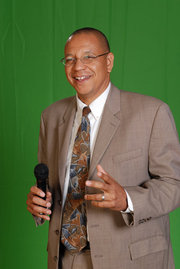
It helps to have “a friend in the business.” When I’m selecting tech tools, that friend is
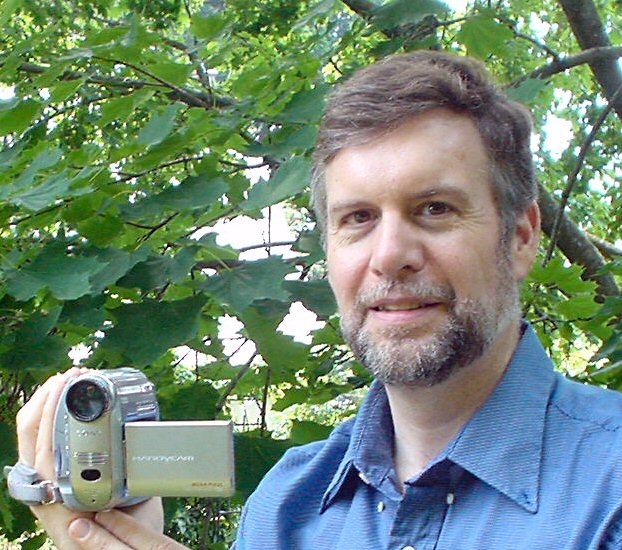
Doug Dixon, a colleague of mine at U.S. 1 Newspaper (we’re both freelancers now). He writes an annual December “Tech Toys” issue, and I depend on this easy-going fellow, to an embarrassing degree, for advice on which tech toy to buy which favorite uncle.  An ex-Sarnoff guy turned independent technology consultant, Dixon wrote four books and runs a blog at www.manifest-tech.com, “for people who are interested in using the cool technology but need help figuring it out.”

Speaking at the Princeton Regional Chamber breakfast on Wednesday, November 16, at 7:30 a.m. at the Nassau Club, he’ll answer questions like — can one smartphone do it all, or do you still need a camera, media player, and e-Reader. And can a tablet really replace a laptop for serious use?

I’ve seen him do his show-and-tell demo of all the latest goodies, and it’s an eye-opener. Plus you get to ask your questions. Like having “a friend in the business.”

Another “friend in the business” who has been very helpful to me is Eileen Sinett. Sinett is giving a breakfast workshop on Tuesday, November 15, at the Wyndham. Having taken workshops with her, I can vouch for how she “helps you help yourself” to be a better public speaker. “Memorable speakers connect with their material, with their listeners, and with their inner selves,” says Sinett. The $149 registration fee includes a copy of her excellent new book, Speaking That Connects.

Chris Kuenne: An Idea Is Not Enough

When you find one thing that you are passionate about, says Chris Kuenne, founder of Rosetta, explore it — academically or professionally. I talked to Kuenne for U.S. 1 last year, when he had just bought another firm and had 175 employees at American Metro and 725 people worldwide.

Just 10 weeks later he sold his digital agency to the giant conglomerate Publicis for $575 million. And no, he didn’t leak that. But it must have been in his mind. Ten years before he had evaded a Publicis takeover by buying out his division of another firm.

Read the U.S. 1 story to learn about his father, a Princeton University professor who died of Lou Gehrig’s disease. “He taught me that an idea is just not enough, you have to work it, develop it, and ultimately master it, for it to have relevance in the world,” said Kuenne then. Kuenne started out at Johnson and Johnson and got the idea of interactive marketing — working it, developing it, and mastering it.

Check out the short form of his bio on the Princeton Regional Chamber website. And sign up to hear Kuenne tell the secrets of entrepreneurial success at the Princeton Regional Chamber lunch on Thursday, November 3. His topic: “Marketing with Personality: Identify & Understand What Drives Consumers to Buy Your Product.” He has an amazing story.

Tenney Takes It To New York

For the past several years I’ve been intrigued to watch the progress of Susan Tenney’s evening length dance, set to the music of Georges Delerue.  Delerue is well-known for such scores as Francois Truffaut’s Jules and  Jim, and he won an Oscar for “A Little Romance.” Enamored with his music, Tenney has based “Je me souviens…I remember” on his work. 

Every time I see “Je me souviens” it taps hidden emotions, in part because it focuses on a young girl, Cynthia Yank, who grows into a woman, Samantha Gullace. It’s hard to explain, but I have tried to write about it here, and here are the choreographer’s notes, and here is an article by Valerie Sudol.

Tenney has shown parts of this piece on various unprepossessing stages, including in the Princeton Ballet School studio (with dancers and watchers within arms reach of each other) and on the green at Palmer Square.   Now she is making the Big Leap to show it in New York, this Saturday (October 29) at 7:30 p.m.  

Try to get there if you can. It’s not often that a Princeton choreographer can gather the resources to present in Manhattan.  I’m looking forward to seeing the piece on a real stage at the Florence Gould Hall, 55 East 59th Street, between Park and Madison. The cast includes Gary Echternacht, Yoshie Driscoll, Alexandra Fredas, Anya Kalishnikova, Naoko Cojerian, Kelly Meir, Alexis Branagan, and Pam Pisani.

Tickets are $25 ($75 includes the patron reception), or $15 for students with an ID.  They are available on line or at the door. 

Tenney worked closely with the composer’s daughter, Claire Delerue, who offers an appreciation for the program notes. An excerpt: 

Great choreographers who use music from various sources other than the ballet repertoire  acknowledge the beauty and intensity of the emotions which such music conjures; creating dance around it, they give it renewed life and meaning. 

Therefore it is wonderful to know that Georges Delerue’s film music, which has made such a powerful impression on film lovers over the years, will also now create new emotional connections for audiences through it being danced to.
   
I thank Susan Tenney for having tapped into her superb creativity and found new, singular ways of making people vibrate to the sound of these beloved pieces of music.

Photo: Tenney, far left, with the company.
Post script: Another Princeton choreography takes her work to The City, but this time, Philadelphia. From Marie Snyder: I will be showing a new work  blending modern and Latin style dancing on Sunday at 9:30.  I think this is the first time a modern choreographer was invited to the Philly salsa fest…  so excited!!http://philadelphiasalsafest.com/cart/index.php?main_page=page&id;=13&chapter;=0

Caldwell: Evangelist for Success

He comes from three generations of Methodist preachers, and his father was an international leader in the areas of civil rights and social justice, but Dale Caldwell has turned his considerable talents of persuasion to improving the world in ostensibly secular ways. A graduate of Princeton, Wharton, and a Harvard executive program,  Dale Caldwell has been a senior manager at Deloitte, executive director of the Newark Alliance, deputy commissioner of the NJ Department of Community Affairs, a Certified Financial Planner, and CEO of 10 organizations, mostly recently Strategic Influence LLC. 


At the Princeton Regional Chamber breakfast on Wednesday, October 19,  at 7:30 a.m. at the Nassau Club, Caldwell will reveal his “Intelligent Influence” secrets on recognizing how people make decisions and what influences their decisions. “Influence is not purchased or assumed, it is bestowed,” says Caldwell. “Understanding how one is influenced, how to influence others, how to influence an organization, and how to influence outcomes is to understand how to create success.” 
In the career education arena, Caldwell wrote “School to Work Success” (now in paperback and Kindle), and founded the Residential After-School Program, Take-Your-Community-To-Work-Day, and School-to-Work Day. In the volunteer world, he was president of the New Brunswick Board of Education, Crossroads Theatre Company, and the eastern section of the United States Tennis Association. His love of tennis resulted in his latest book, Tennis in New York City: the Most Important Sport in the Most Important City in the World.  

If you missed the chance to see Dale Caldwell weave his speech magic at the Princeton Public Library’s TED X event, come to the chamber’s breakfast on Wednesday. It’s the chamber event where everyone gets to introduce themselves, and walk-ins are welcome. 


Next up: Chris Kuenne of Rosetta on Thursday, November 3. 

Sister Citizen: Harris-Perry

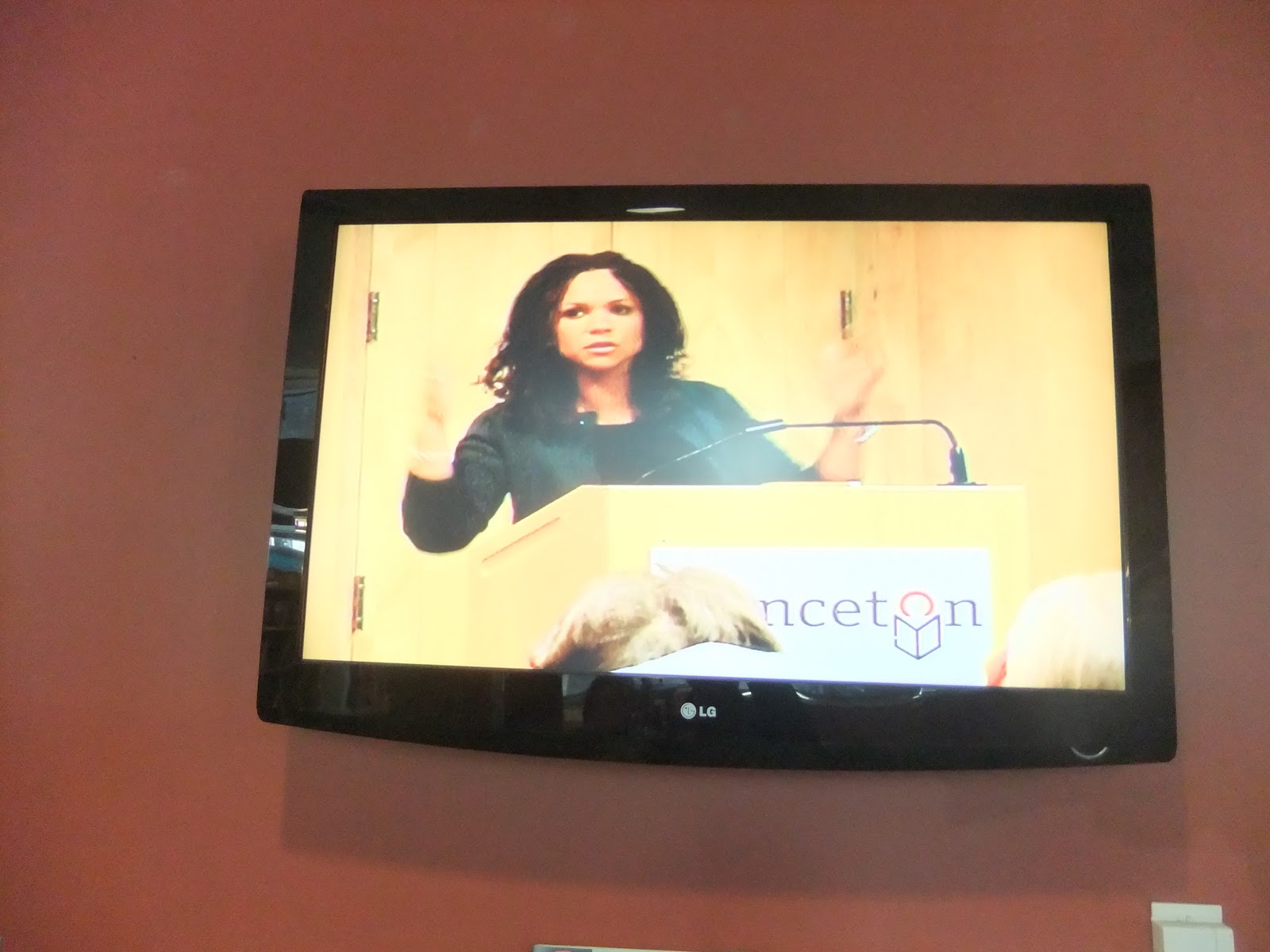
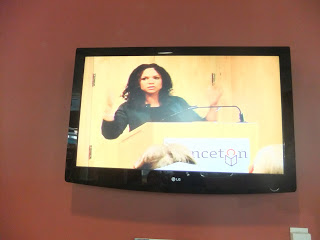
Melissa Harris-Perrydoesn’t like the book or movie “The Help,” and that’s an understatement. It wasn’t the topic of her talk at the Princeton Public Library today, but somebody asked that question and set her off on one of her always provocative, often funny, riffs on racial politics.
She returned to Princeton today (October16, as shown on the screen in the lobby) to talk about and sign her book, “SisterCitizen: For Colored Girls Who’ve Considered Politics When Being Strong Isn’t Enough.”
She listed three familiar stereotypes. The first is The Mammy as in HattieMcDaniel (and, there’s that “The Help” book again.) The second is The Jezebel. The third is the Angry Black Woman, as in Sapphire.
A current stereotype is “Strong Black Woman,” but Harris-Perry questions whether that should be today’s acknowledged goal. 
She got an uncomfortable laugh from the packed room at the library when she noted that, if “strong” is the compliment for a black woman, the highest compliment for a white woman is “thin.” In the book she says that the goal of strength contributes to “pervasive experiences of shame for black women… a shame management strategy that has both emotional and political implications for black women.” It leads to “political anorexia.”
Skimming the book (a long, long line to get it signed) brings me to comments about Michelle Obama, a graduate of Princeton and Harvard Law, who decided not to take an active role in her husband’s administration in order to focus on being Mom in Chief. “She subverts a deep, powerful, and old public discourse on black women as bad mothers….Black single motherhood is blamed for social ills ranging from crime to drugs to urban disorder…”
“Michele Obama’s insistence on focusing on her children is also a sound repudiation of the Mammy role. Mammy…ensures order in the white world by ignoring her own family and community. Calling on Michelle Obama to take a more active policy role while her children are still young is in a way requesting that she use her role as First Lady to serve as the national Mammy. Michelle refused.”
The Mammy stereotype in “The Help” enrages Harris-Perry. From the viewpoint of the white author, at no time in any black servant’s life, does the servant not utterly adore the white children she cared for. Nor does the author acknowledge the difficulties and consequent feelings that the black servant might have regarding her ability to care for her own children and husband.

Worst: by making up a disempowering history (the white author gets the money and the job and leaves her co-authors behind in Jim Crow Mississippi), the real history fades.
 The real history is that, when Medgar Evers was killed, those same black domestics in Jackson– had actually organized on their own behalf. ”By telling the story this way, it either suggests that there weren’t real women who did real things or it allows us to ignore how much more dangerous, complex, and personal those stories were than this fictional one we’re getting.

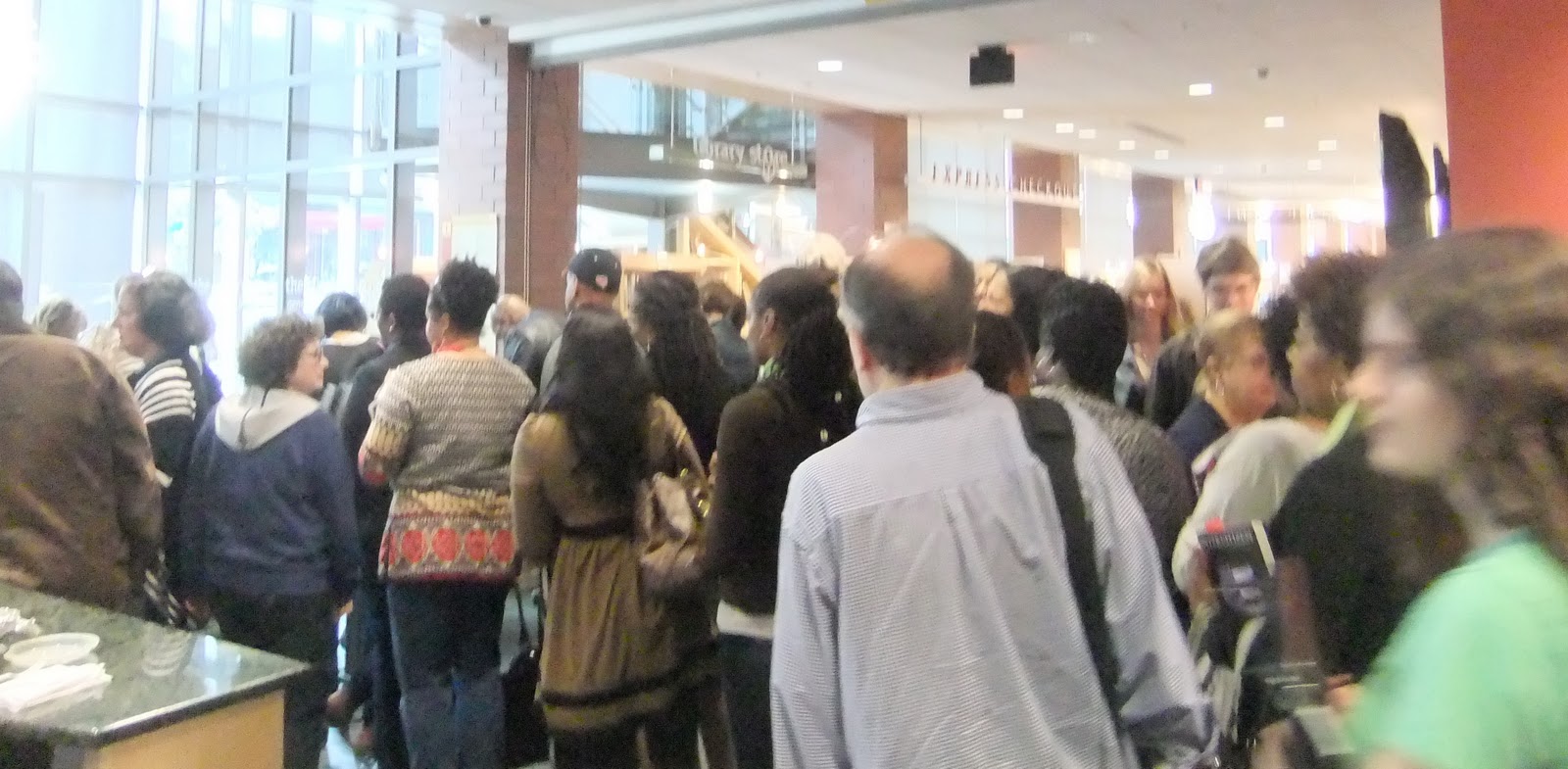
The line for “Sister Citizen” booksigning stretched from the library’s front door to the library’s back door.  The initial chapter is available at Amazon.

e-Patient Resource: 24-hours free

While trying to find the online version of a particular book, edited by someone I knew, I happened upon a potentially useful resource for e-Patients — the free 24-hour trials available at Elsevier. (Does every medical publisher offer this?)

If you buy the $400 book at Elsevier, you get the online resource, Expert Consult, for free. An e-Patient could use this access to find doctors who are publishing in her specialty, or to discern the latest discoveries. Would she spend $400? No. But she could email Expert Consult to get the 24-hour free pass to those pages. One day is enough to find what she needs — and the online version even has clickable links to the footnotes.

It’s better than an index search of the print version, because you can search on phrases.

I tried it. I asked for access to the fourth edition of Fetal and Neonatal Physiology, by Polin, Fox, and Abman and got it, no questions asked.

When I asked my own questions, the customer service rep said that access is generally granted for whatever books you asked for, as long as you are not trying to get the whole catalog.

Other cool things Elsevier is doing — it has an iPad app for anatomy students in dissection labs, Elsevier has offices in St. Louis and used to have a couple of locations in the Princeton area, but it has decamped to Philadelphia.