Suzanne Farrell: Stay Out of Your Comfort Zone

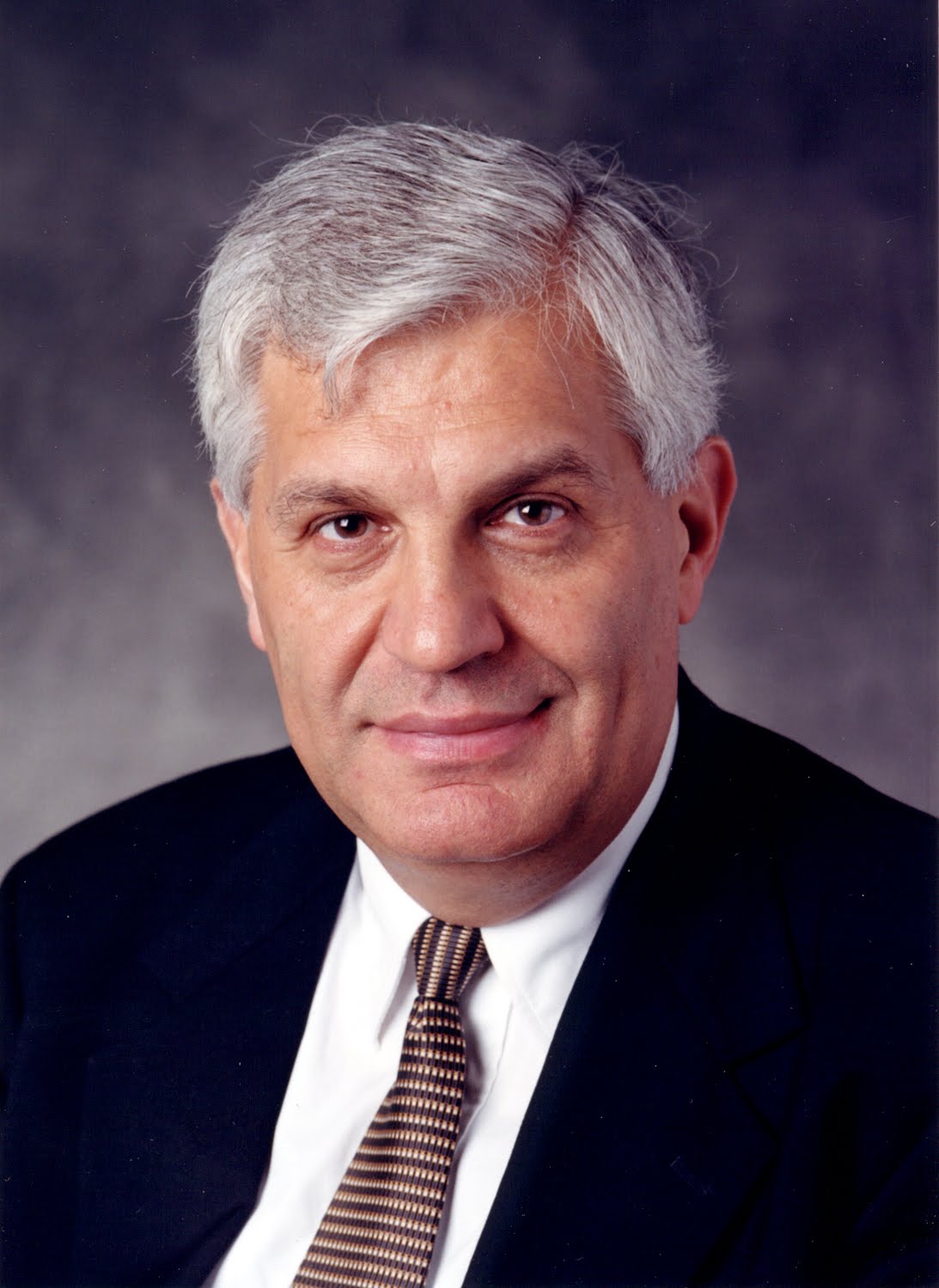
When you work on a new dance you are called upon to make a new world, to make something from nothing, said Suzanne Farrell, speaking after her ballet company performed works by George Balanchine at McCarter earlier this month. In the photo she is flanked, on the left, by New Yorker dance critic Joan Acocella and, on the right, by Simon Morrison, professor of music at Princeton. On the program were Balanchine works set to Mozart, Stravinsky, and Morton Gould. The latter, “Clarinade,” had been set on Farrell when she was just 18.

I’ve tried to transcribe Farrell’s post performance conversation here, or if you can’t see that, try this google doc, but this is not the final version. I’m hoping others — including Acocella, Farrell, or Morrison — can correct or add to this document.

A Princeton connection: Erin Mahoney, who trained at the Princeton Ballet School and with ARB, danced with Farrell’s company in 2004 and was reviewed by John Rockwell in “Clarinade” in 2004.

“I call Mr. B’s ballets ‘worlds.’ At first they feel foreign. You have never been there before,” said Farrell. “It takes a certain amount of inner resources not to fall back on what you have done before, not to paint the choreographer into a corner where you are comfortable. “

Sounds like risk management to me. Entire libraries have been written about that, and here a dancer is saying don’t manage risk. To be creative yourself, to put yourself at the service of a creative person’s ideas, don’t manage risk, take the dangerous chance.

That’s as scary an idea for a writer as it is for a dancer. (You mean I can’t just dish out a new version of Article Template B? I have to start fresh each time? Sounds like lots of work.)

Farrell made her challenge even more difficult: “Dancers need to rehearse different options of how it looks, different options to have in their arsenal of memory. They need to live in the moment, and if something unexpected happens, be ready to take the challenge.”

Live in the moment? That’s another truism that is easier said than done.

Both concepts — taking risks, living in the moment — are crucial to learning how to be creative. Both can be learned by dancing.

Posted by Picasa

Local Man in the News: Bob Hillier

As accustomed I am to seeing Princeton residents show up in the news, it still gives me a little jolt when I casually read a Small Business column in the New York Times (Thursday, October 8) and lo! it was about Bob Hillier, aka J. Robert Hillier, the president elect of the Princeton Regional Chamber of Commerce, publisher of the online Obit magazine, part owner of Town Topics and Princeton Magazine, part time teacher of architecture at Princeton University.

Frankly I didn’t recognize Hillier in the NYT photo, with him sitting on a curving stair and the photographer, Laura Pedrick, towering above him.
Columnist Brent Bowers used the chance to re-interview Hillier to announce that he will quit writing the column in December. He had Hillier tell about his many projects, so many that one wonders how he does them all, and Bowers doesn’t even include the chamber presidency, which starts in January. (Full disclosure, I am a member of that board.)

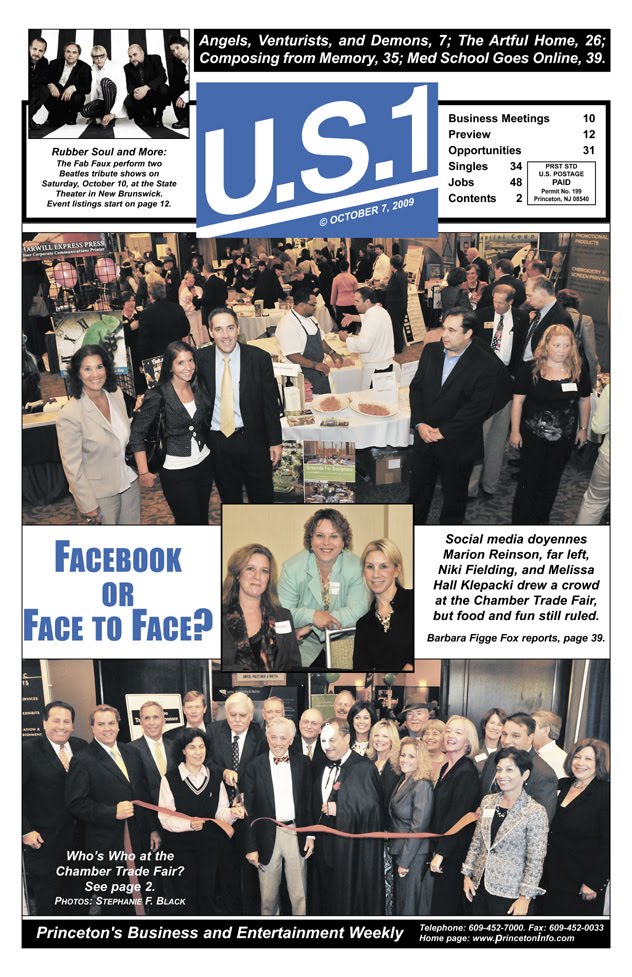
In case you can’t get access to that NYT page (too bad, you’ll miss that picture, but he’s on the cover of U.S. 1 Newspaper this week bottom photo, center, taken at the ribbon cutting of the chamber trade fair), here are the money numbers you might be curious about:
Merger of his architecture firm with RMJM was a $30 million deal.
New firm, J. Robert Hillier on Witherspoon Street, landed 12 projects in first six weeks.
Obit has 100,000 hits a month but “winning over advertisers is not easy.”
Town Topics has circulation of 13,000, and he described it as a “gold mine” with a return of 26 percent.
Princeton Magazine has increased ad revenue by 40 percent, and he expects the 34,000 circulation to grow to 50,000 in five years. A “home run” claims Hillier.
I guess architects are really good at multitasking.
But I question Bowers ‘ conclusion that Hillier is prospering, not in spite of, but because of, the recession. The RMJM deal didn’t have anything to do with the recession except give Hillier the chance to add an admirable, but money-losing online project, Obit. The one enterprise affected by the recession would have been the acquisition of Princeton Magazine, no doubt at a fire sale price.

Still, it’s fun to see Bowers to go back to his sources and find out where they are, what they are doing. Usually we business reporters have to pursue new subjects. Talking to sources that we like, then writing about it — it’s not something that we often get to do. And Hillier’s enthusiasm and verve are infectious. “It’s all about having fun,” he said. Yes.

Melissa Harris-Lacewell on White Privilege & the Nobel Prize

It’s Saturday night, time for sleep, but I just discovered — through a Twitter feed — a column written for The Nation’s blog by my neighbor, Melissa Harris-Lacewell, associate professor of politics and African-American studies at Princeton. Apparently she had been taken to task for indulging in some Nobel prize humor.
Her response included a reference to Tim Wise, author of White Like Me, which the anti-bias group I belong to, Not In Out Town, had used as the basis for its White Privilege workshops at the Princeton Public Library last spring. (A continuing discussion starts at the library on Monday, November 2, 7:30 to 9, and the library has several copies of the book). I perked up.
She compared what she called with the “Affirmative Action Dilemma” (the fear that others may think African Americans do not deserve the privileges they receive) with the dilemma that some believe white people have, the White Privilege dilemma, so well explained by Price. I recommend the full text of her blog but here is an excerpt, in italics.
White privilege is the bundle of unearned advantages accessible to white people in America. White privilege is not equivalent to racial prejudice. All whites share certain element of racial privilege regardless of their political or racial views. This does not mean that life is perfect for all white people. I was raised by a single, white mother, so I certainly know that white American face real barriers and struggles based on class, opportunity, gender, education, sexuality, and other cross-cutting identities. But white privilege exists and has powerful consequences. This does not mean that race is more important than socioeconomic class. It does mean that in the United States there is a preferential option for whiteness, and this preference means racial privilege produces a certain wage of whiteness.
Simply put, not everything that white people have was earned by merit. Some was, some was not. Some of the wealth, access, prizes, goodies, and political power currently held by white people are ill gotten gains from centuries of accumulated white privilege. Knowing this makes me a lot more relaxed about having to prove that I “deserve” every success, acknowledgement, or position I have. …

I encourage my friends and readers to calm down a little about having to prove Obama deserved the Nobel Peace Prize. Maybe he did, maybe he didn’t. The point is that he has it now….
Rather than give into the racial anxiety to prove the President’s worthiness let’s celebrate that President Obama responded to the prize with humility and grace.
“I will accept this award as a call to action, a call for all nations and all peoples to confront the common challenges of the 21st century. These challenges won’t all be met during my presidency, or even my lifetime. But I know these challenges can be met so long as it’s recognized that they will not be met by one person or one nation alone.”
I watched that Rose Garden speech on Friday, and I agree.
I also am intrigued by the fact that Harris-Lacewell sat next to Wise on a plane last month. How did I know? She had Tweeted that they talked their way across the continent. If her reference to Wise’s book was the result of such propinquity, this would indeed be a case where a personal encounter trumped a social media or virtual encounter.

Bridge Doctor Mistras Floats IPO

In August I recognized a license plate, ‘MISTRAS,’ in the McCaffrey’s parking lot and figured it had to belong to Sotirios Vahaviolos, who has a company on Clarksville Road, Mistras Holdings. Indeed it was, and we had a chat. I hadn’t spoken to him since U.S. 1 did a cover story on his company in 2002.

Vahaviolos was excited about floating his long-awaited IPO to raise money to go into alternative energy solutions. He had immigrated from Greece (and, as I remember, it was from the town of Mistras) and gone to Fairleigh Dickinson (Class of 1970), then earned a PhD in EE from Columbia and worked at Bell Labs. In 1978 he founded Physical Acoustics, which “listens” to faults in bridge infrastructure. It has grown to be a global company with many parts, under the Mistras umbrella, to do “nondestructive” testing, meaning that plants don’t have to be shut down.

He had hoped to do the IPO last fall but the market deepsixed that idea. Sure enough, the offering took place, a year later, last Thursday (NYSE:MG). It fell below the $12.50 offering price but as of two days later is up past $12.60. At least some of his employees are part owners, so congrats to them as well. I think I remember him saying that he has company gatherings in his hometown olive grove, lucky them! May Mistras have the success that another employee-owned firm, Greg Olsen’s Sensors Unlimited, has had. With 68 offices in 15 countries, Mistras has such useful technology that one would think it would do well.

Adirondack Dory on Carnegie Lake

She’s called Buttercup, partly referring to her bright yellow color, partly to the Gilbert & Sullivan character who rows out in her bumboat to sell “stuff and tobaccy” (and perhaps more?) to the sailors on HMS Pinafore. She’s an Adirondack Dory from the Adirondack Guideboat workshop of Steve Kaulback, pictured delivering it to us yesterday. The man who designed the boat dropped it off enroute from Ferrisburg, Vermont to the Annapolis Sailboat Show, which starts today. Thanks, Steve!

By chance, also yesterday, I fetched up next to John Guthrie of IsisGlobal (a competitive intelligence firm in Pennington) at Princeton University’s Keller Center lecture featuring Stuart Essig, CEO of Integra Life Sciences. We enjoyed comparing notes on “messing around in boats” as Rattie so famously said in Wind in the Willows. Turns out Guthrie makes regular treks to a private Adirondack lake and also has a lightweight boat, though from a different maker.

Buttercup is perfect for us. We like to row, but ordinary rowboats are heavy to heft, and the Adirondack Dory is like a canoe with oarlocks. It’s light (80 pounds, Kevlar and graphite, we can lift it off the trailer) and is painstakingly crafted, with cherry wood gunnels fold-down cane seatbacks. Look for her on Carnegie Lake!

Fort Knox for Paper, Inside Story

Docusafe is a good name for the Princeton-based archival storage company owned by Bohren’s, profiled in U.S. 1 Newspaper. It’s such a good name in fact that two companies are using it, revealing an interesting story that didn’t make it into the September 30 edition (on the newstand through today and then available on the web).

Intellectual property mavens take note: Just about the time the Froehlich family opened Docusafe, an entrepreneur in Madison, Wisconsin, opened the same kind of company under that name and also opened one in Phoenix, Arizona. (INCORRECT STATEMENT: ICANN, which assigns web pages, was confused and assigned the same URL, http://www.docusafe.com/, to all three locations. It turns out, thanks to somebody who read this and commented, that ICANN did not do that. The Wisconsin/Arizona folks always had www.docusafe.net. See comments below.)

You’d think there would have been a court battle, but in this case reason, courtesy – and practicality – prevailed.

After the ensuing confusion, the two firms worked it out. The Froehlichs had legal rights to the name.

Each markets their own company, and when a customer from the wrong location lands at their door, why of course, they provide the referral.

It helps that document storage is a business that doesn’t travel well.

Postscript: Dan O’Neill of Iron Mountain (Docusafe’s giant competitor, boxes pictured above) wrote me note: “Nice profile of DocuSafe, and thanks for working so hard to tell a complete story. They sound like a great company. One error…we have more than 60 million computer back-up tapes, not 16 million as stated below. ” So corrected.
And Docusafe would point out that, unlike its competitors, it uses boxes that are stapled, not pasted. In the unlikely event of water damage, stapled boxes don’t fall apart.

NPR Reporter Barbara Bradley Hagerty Today

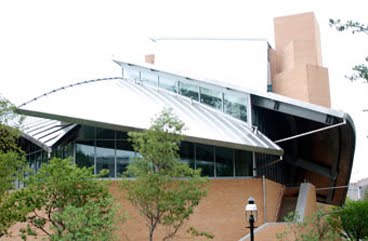
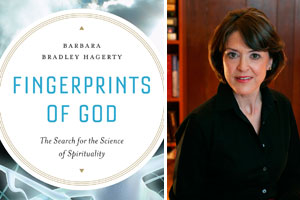
Get inside that Frank Gehry building on Washington Road, the Lewis Library, and also see NPR Reporter Barbara Bradley Hagerty live and in person today. She speaks about her book, Fingerprints of God, the Search for the Science of Spirituality, 4:30 to 6 p.m.

Before she was a religion reporter, she covered the Justice Department, including the Clinton impeachment hearings, the Florida election, and the 9/11 investigation.

Plus, you’ll satisfy your curiosity about the Gehry building. For parking: try to snag a place along Prospect Street or Olden Lane and walk down.

Sunday Morning Musings: 7 Lean Years?

This morning I’m teaching part of the story of Joseph, Genesis 42 to 47. to 4th and 5th graders at my church. What fabulous drama! Joseph, the favorite son, having been sold by his brothers into slavery, fetches up in Egypt, where Pharaoh pays attention to Joseph’s prescient dreams predicting seven years of plenty and seven lean years and accumulates vast stores of grain. When Joseph’s brothers come to him (not recognizing him) to buy grain, Joseph tricks them but forgives them, the point of the story being that it all worked out according to God’s plan to fulfill his promise to Abraham.

The forgiving part of this story is what I am to teach today. But what also stays with me, after reading this drama, is the story of the seven years of plenty and the seven lean years. Because of Joseph’s dreams, Pharaoh has stored plenty of grain and can sell it to keep nearby nations from starving. I’d forgotten the part about how Pharaoh, through Joseph, also buys up the Egyptian livestock, land, and even the Egyptian people themselves, making them slaves.

The very next thing I look at is Glenmede’s emailed economic report from Gordon Fowler, “How High is Up?” (Glenmede has its Princeton office on Chambers Street.) He makes his predictions in a Q&A; format and ends with the conclusion, paraphrased by me, that the world’s central banks are engineering another asset bubble using government debt rather than consumer and financial company debt.

Are we in the first of seven lean years? Are we going to end up selling the equivalent of our land and our livestock? Where is the Joseph of today who will assure the future of our grandchildren?

I dunno. If, as the book of Genesis says, God saw to it that Joseph ended up in Egypt so he could save his people, then maybe I just need to have faith that it will all work out.

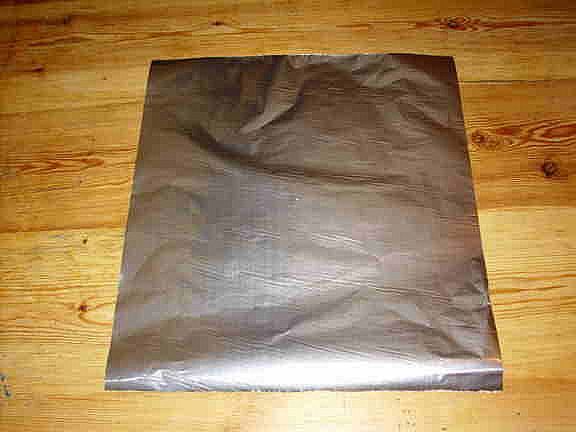
But just in case I’m supposed to be proactive, I’m going to read Fowler’s report more carefully, later. Right now I’m having fun figuring out how to take a piece of heavy duty aluminum foil and mold it into Joseph’s silver cup.

Enthusiasm — Contagious?

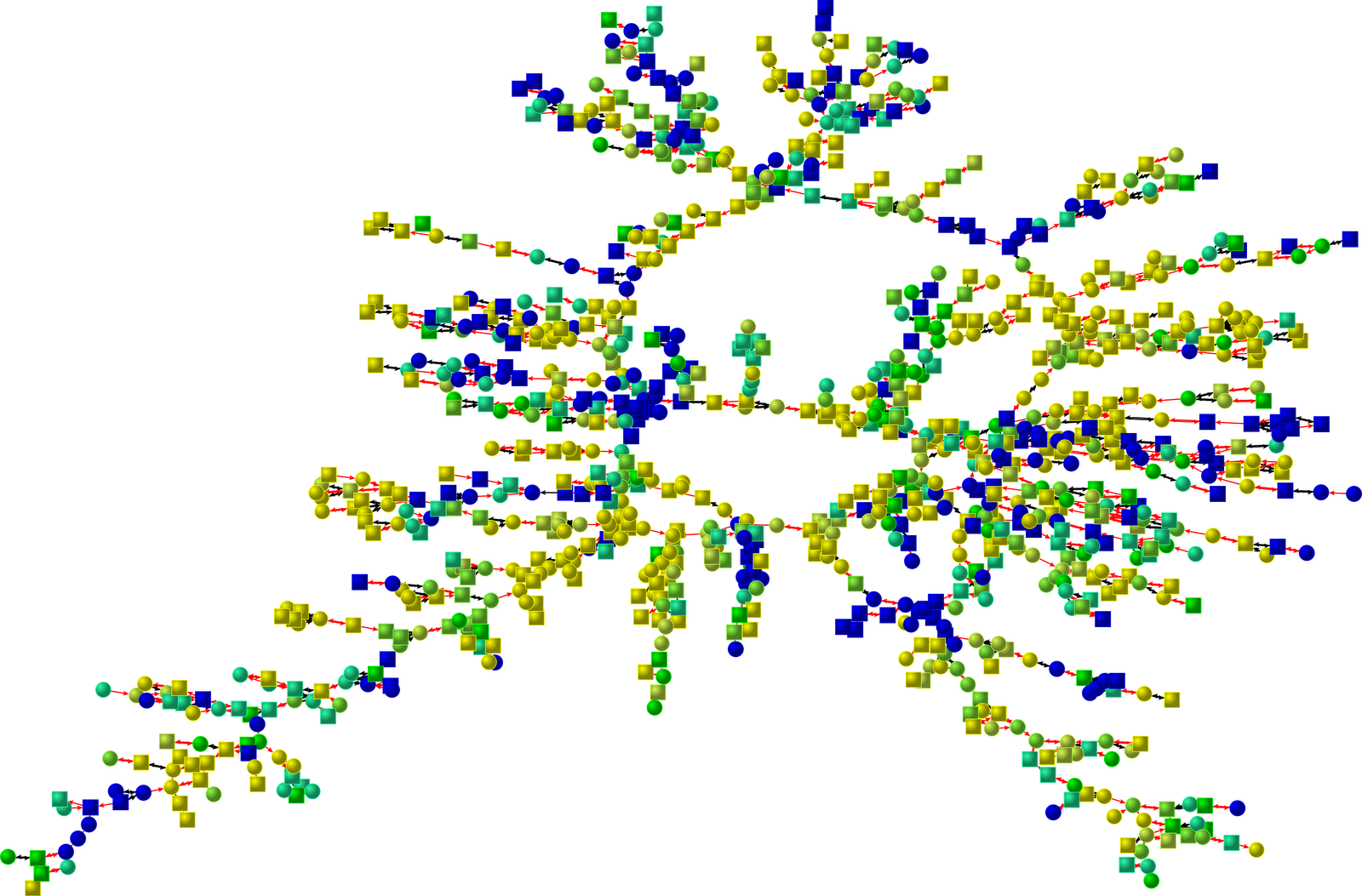
Happiness is contagious say researchers Nicholas Christakis and James Fowler, author of “Connected: The Surprising Power of Our Social Networks and How They Shape Our Lives.” In a scientific survey they analyzed a network of relationships. In the diagram, happy is yellow, sad is blue, and green is, you guessed it, in between. They found that happiness always spreads from person to person, whereas unhappiness only sometimes spreads between persons.
The scientists base much of their work on the spread of obesity, since obesity can be measured more easily than happiness. Net: We are products of our environment, as in “Tell me who your friends are and I will tell you who you are.”

That helps to explain two things about today’s Princeton Chamber Trade Fair.

1. Why people like to attend. By gathering in large enthusiastic groups, the enthusiasm rubs off on them. Any sales message they are trying to impart is more likely to rub off when everybody is having a good time.
2. Why people like to live and work in the Princeton area. Lots of interesting people live in this neck of the woods. According to Christakis and Fowler, how you act is affected, not just by people you know, but by people who know the people you know.

How’s that for a siren call to a trade fair. It’s at the Westin from 11 to 4 with a social media panel at 9:30 and a Tweet-up at noon. I’ll be there most of the day. Follow the tweets at #prcc

Get Paid to Cut BTUs Part II

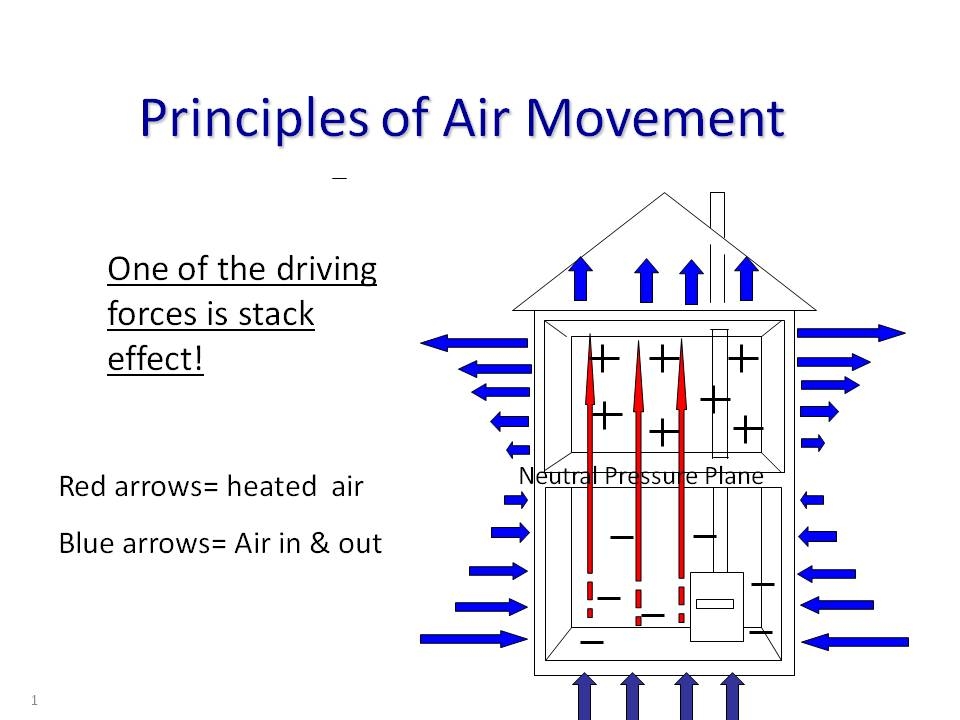
This response to the previous post came from Princeton Air’s Scott Needham, explaining the “stack effect” a physical principal that is counter-intuitive and may explain why cutting your heating bill must involve more than just replacing drafty windows. Says Needham:

To understand stack effect (or buoyancy) you must understand how a fireplace or chimney works. The concept is actually pretty simple, when a fire is lit in the fireplace it starts to burn. As the fire buns it creates heat and this heat rises up the chimney into the air. As the heat rises it takes the concentrated smoke filled air with it, which then gets replaced by fresh oxygen rich air that makes the fire burn more intensely, creating higher heat, and feeds the fire more and more oxygen rich air.

This same concept applies to your home. In the winter, your home is heated by your heating system. The natural tendencies of the heated air are to rise to the highest level of your home. If your basement is heated, and you live in a two story home, that heat is striving to reach the top floor, attic, and ultimately leave your home thought the roof, soffit .and attic venting. This rising heated air has to be replaced from somewhere.

So what happens is that your basement is actually place into a state of slight vacuum. This slight vacuum wants to naturally become equalized and this is done by finding weaknesses in your basement to allow air in. These places are cracks, holes and joints of in your basement floor. Some of these are difficult to see with the naked eye. If you could create a perfect seal in your basement then cold dry winter air & possibly radon would not be a problem for you!