All posts by bfiggefox

Earth Day in School Gardens

On April 22, 2015—Earth Day—Community Park School will celebrate 10 years of its school garden.

Karla Cook, a longtime food journalist, was inspired to lead efforts for school gardens as

an academic tool to connect children to the food on their plates, to each other and to the

world around them. Cook’s work inspired her to co-found the Princeton School Gardens

Cooperative (PSGC), a unique, community-scale non-profit, with Dorothy Mullen, Fran McManus

and Diane Landis Hackett. In addition to funding from PSGC, the Community Park School Garden is supported by

the school district and the school’s PTO. The funding goes for supplies and to pay an

award-winning garden educator Priscilla Hayes, who has been leading gardening and

sustainability efforts since the 1990s. For the celebration, each student will make one “recycled” plastic flower from

yogurt cups, decorate it with colorful cast off fabric and tissue paper, and hang all the flowers on the fence

surrounding the school’s Edible Garden.

(this info from a press release)

Gritty Details: the Gala Scene

For all of us who might be planning fund-raising events, this article in the 4-18-15 New York Times has insights.

“The events that work best are the ones that offer people an insider’s view of the organization or the people it serves.”

Not as effective, “those focused too much on honoring people within the organization…misses an opportunity to increase the number of people who know about the cause.”

In other words, buy a table and fill it with folks who might be donors.

Listen, Then Prescribe.

Barile at hospital

Dr. David Barile’s aim is sky high — to effect a culture change in medical decision making. He speaks on Wednesday, April 15, at 7:30 p.m. at the Nassau Club, for the Princeton Regional Chamber. Barile, a foremost expert in palliative care, has a mobile platform, Goals of Care, to help align what patients need with what doctors prescribe. The platform is powered by a Princeton start-up, V  Read about it here. Sign up for the breakfast here — or just come. Networking at 7:30, breakfast at 8.

Congregation Beth Chaim stages “Memories of Auschwitz on the 70th Anniversary of Liberation Monday” on Monday, April 13, at 7 p.m.

Cantor David Wisnia and his grandson traveled to Poland on the occasion of the 70th anniversary of the Liberation of Auschwitz, and he will share his story.

Maundy Thursday: Airline Miles and Shy Feet

shy feet

In my email on Linked In this morning, chamber colleague Ken Haag published Is Your Business Heartland Secure? 

By following Haag’s link, I reminded myself that Heartland has a shop local card that helps Princeton merchants by eliminating processing fees. Another colleague at the Princeton Regional Chamber of Commerce, Adrienne Rubin represents that division. With the One Princeton card, you can pay for things with your smart phone. Benefit to consumer: one percent of every transaction goes to the consumer’s choice of any of dozens of nonprofit organizations, including the Latin American Legal Defense Fund,  Princeton Senior Resource Center, and Princeton Community Housing

I sure hate to give up airline miles, but frequent flyer seats are getting scarce.

And thanks to Rothstein Hughes, who attends Grant Chapel in Trenton, I learned that on Maundy Thursday (today, when Jesus observed his last Passover meal with his disciples) it’s traditional to — not only wash the feet of the poor — but also hand out alms.

Queen Elizabeth follows that tradition TODAY in Sheffield, England, giving money to 89 people, a number that represents her age.

So today I’ll actually join up to get that One Princeton card. With every transaction, I will lose airline miles — but one percent of the transaction will benefit charity.

No, Queen Elizabeth is not doing the foot washing part — but some of us will. Tonight at 7:30 at Princeton United Methodist Church the youth choir leads the Holy Communion Service along with foot washing.

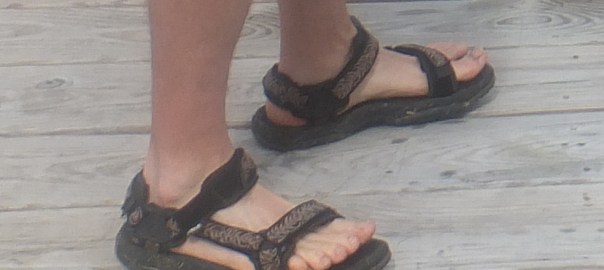
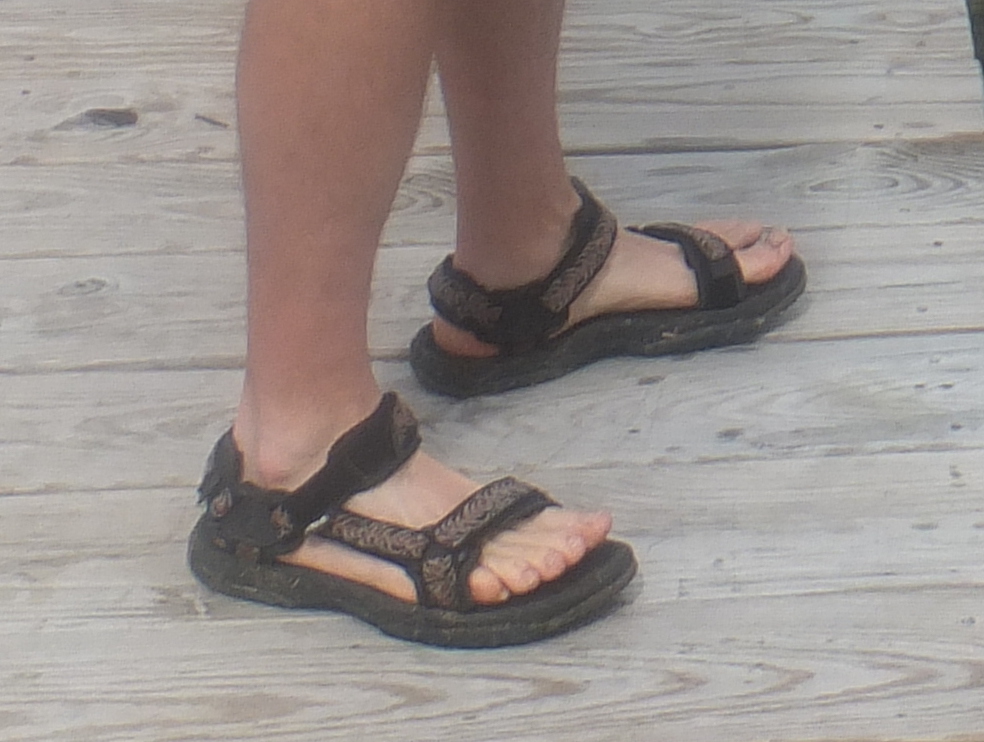
For folks like me, the alternative is hand washing. I have shy feet.

And you?

Behind the Political Bubble: McCarty

“Behind every financial crisis lurks a “political bubble”–policy biases that foster market behaviors leading to financial instability”

“Just as financial bubbles are an unfortunate mix of mistaken beliefs, market imperfections, and greed, political bubbles are the product of rigid ideologies, unresponsive and ineffective government institutions, and special interests”

That’s the description of the new book, published by Princeton University Press, Political Bubbles: Financial Crises and the Failure of American Democracy, co-authored by Nolan McCarty and Howard Rosenthal (both of Princeton University) and Keith T. Poole of the University of Georgia. They “shed important light on the politics that blinds regulators to the economic weaknesses that create the conditions for economic bubbles and recommend simple, focused rules that should help avoid such crises in the future.”

Simple, focused rules? Bring ’em on!

Former PhD student at Princeton, 88-year old Kenneth W. Ford, ran afoul of the feds when he wrote about his work with the hydrogen bomb. The New York Times story here. He worked at Los Alamos and in Princeton from 1950-1952. It seems he explains hard-to-understand concepts too clearly. But Building the H Bomb, a Personal History, comes out in May, no matter what.

Somebody’s Cat? An Einstein Connection….

An emailed cartoon from the New Yorker enlightened me on an area of quantum physics I knew nothing about. I still know nothing about quantum physics, but now I know that theories about somebody’s cat had something to do with it.

Here is the link to the New Yorker cartoon. You might have to page through till you get to the one in the vet’s office, where the female vet tells a bespectacled man, “About your cat, I have good news and bad news.” The cat’s owner’s name, in the cartoon, is Mr. Schrodinger (with an umlaut, spelled Schroedinger in English).

220px-Erwin_Schrödinger
Erwin Schroedinger

I could see nothing funny about the drawing or the comment. Finally I realized that the name was unusual, maybe it meant something. I googled it, and found pages and pages about a quantum physicist named Schroedinger who theorized that a cat could be both dead and alive at the same time. (Now I know why I don’t want to study quantum physics, but here is a link to where someone tries to explain it).

Turns out everyone else knew about this man’s cat. It was referenced in TV shows like the Big Bang and Doctor Who, and lionized in a schrodinger-cat_2641464bGoogle doodle. He even has his own Facebook page. This cat may even be featured  on the Top 20 list of Science Facts that English Majors Should Know.

Why do I bring it up on a blog that focuses on Princeton? The Einstein connection, a connection so important that it’s the subject of Einstein’s Dice and Schroedinger’s Cat, a forthcoming book by Paul Halpern, due out on April 15.

it’s all theoretical of course, or the SPCA would object.

This Huffington Post post, “6 things I wished I had known about cancer” has no real Princeton connection, other than all the people I’ve known who had and have cancer.

talking head wayne cookeWell, that’s not quite true. There IS a Princeton connection — to Wayne Cooke, who wrote “On the Far Side of the Curve: a stage 4 colon cancer survivor’s journey.” Cooke far outlived his expected years and shared his tips in this U.S. 1 article and then in his book (now downloadable for free).

Both sets of tips are valuable. I put them here so I can supply them “just in time” to those who will need it.

In 1989 Bill Gates was the speaker at the Trenton Computer Festival, the oldest such festival in the world. Now the festival turns 40. Read about it here.