All posts by bfiggefox

LEEEP for Emerging Leaders

If you are young, or at least young at heart, you can help launch the Princeton chamber’s new networking organization on Thursday, January 13, 6 to 8 p.m. at the D&R; Greenway Land Trust, One Preservation Place. Cost: $10. Register at http://www.princetonchamber.org

This new group is called “LEEEP and though all the promos don’t necessarily say so, it’s geared for younger folk. I’m not sure what the cut off is, maybe early 40s? “Emerging leaders” is the catch word. So if you feel like you belong in the emerging leader crowd, check it out.

LEEEP will offer social, philanthropic, and professional development activities. Ronit Levy, of RHR International, and attorney Sandy Durst, are the co-chairs, and the board includes David Sears, Pam Weiss, Adam Perle, Scott Jurgens, Megan Johnston, Walter Hedrick, Fred Gomez, and Kari Barrio.

Oh yes, if you’re wondering, the three Es stand for Engage, Exchange, and Excel.


Medieval Play Unfolds Mystery


Ever since 1980, when I saw Bhutanese monks incorporate slapstick with their religious dances, I’ve been interested in how comedy can impart spiritual values. They knew that in the Middle Ages, when stained glass windows served as Biblical texts for illiterate peasants, and when actor/dancers told Bible stories by staging “mystery plays” in front of the cathedrals.


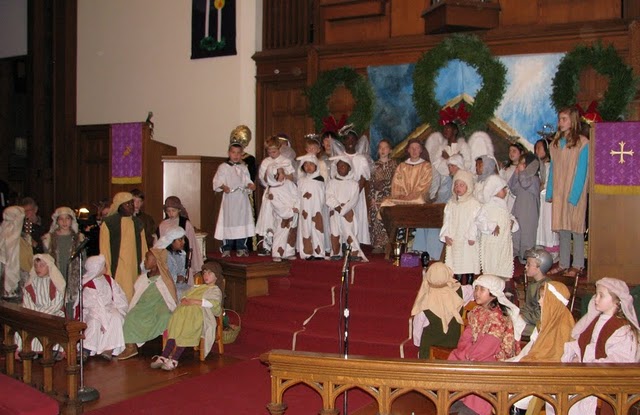
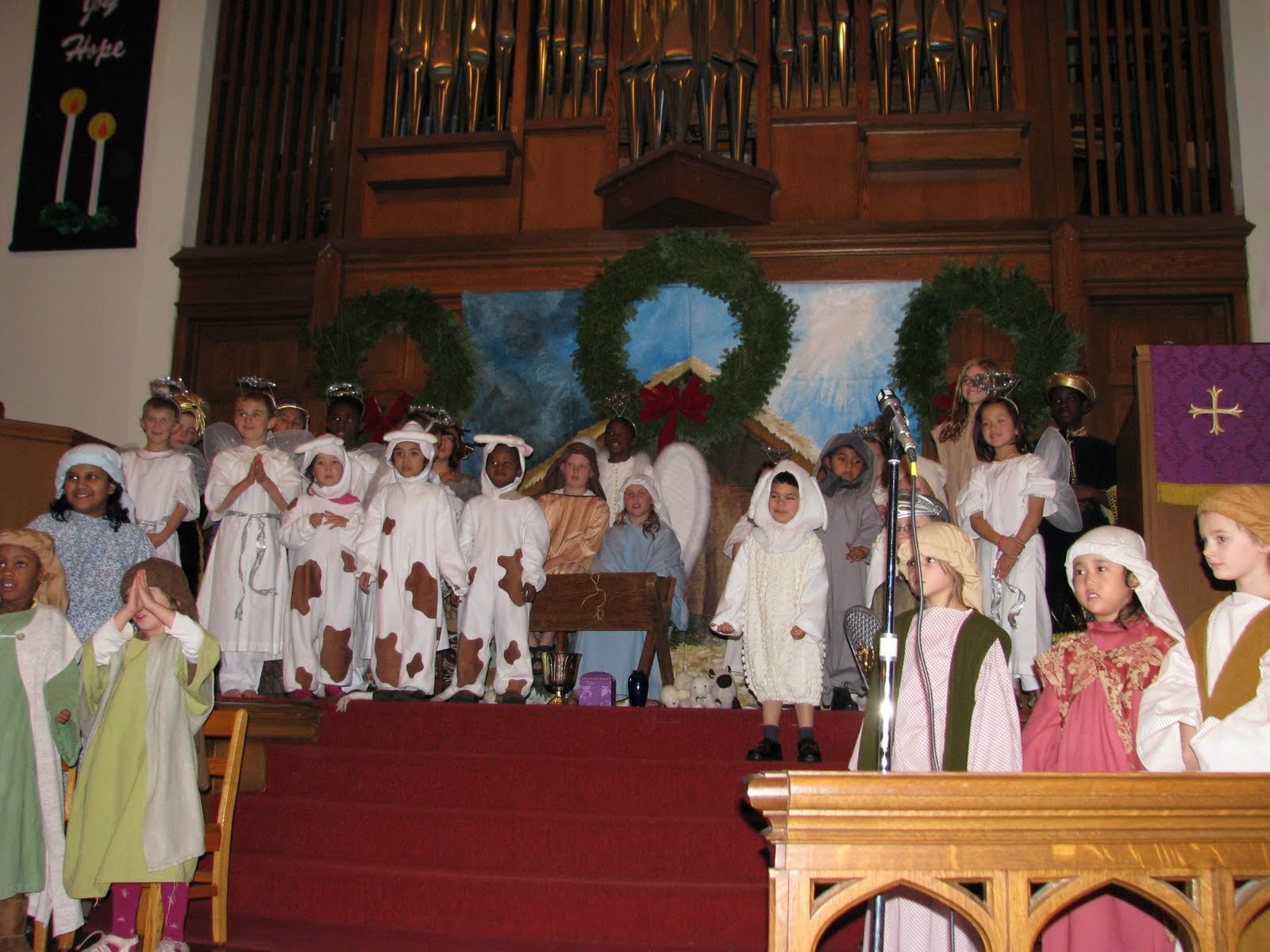
Today’s churches follow suit when they stage Nativity plays (shown here, my church’s annual pageant). Like the medieval mystery plays, they depict Bible stories as tableaux, accompanied by songs.


A Princeton University senior, Phoenix Gonzalez, had that same fascination. For her senior thesis she presents Wakefield Mystery Plays at the University chapel on Friday, January 7, at 8 p.m., and Saturday, January 8, at 3 p.m. The play begins outside the chapel, so dress warmly. It’s free, no tickets needed.


Says Gonzalez: “The goal of this project is to capture some of the medieval aspects of the plays, while also exploring elements of modern life, and in so doing, to probe important questions such as: What is the role of the community as audience and creator in this type of theater? How can religious theater be understood today?”


This could be a wonderful family activity on Saturday afternoon. Actors will be speaking in stanzas but one of the two plays, The Second Shepherd’s Play, opens with buffoonery, involving a thief who steals a sheep and tries to pretend it is his son. When he is discovered, the shepherds punish him by tossing him on a blanket – and then set forth to visit the Christ Child.


Time travel to the early 15th century — and get back in time for dinner.

Titans of Dance Teach

Two titans of dance are represented here next week in master classes. One, amazingly enough, is for those with Parkinson’s Disease. It makes sense, doesn’t it, that dancers — who know how to use the body — are the best teachers of those who have difficulty moving.

On Saturday, January 15, at 2:30 p.m., two dancers from the Mark Morris Dance Group will give a free movement class for those with Parkinson’s Disease and their partners, caregivers, and friends. Space is limited at the PDT studio in Forrestal Village at 116 Rockingham Row, so register now, says Marie Snyder, who organized this class, the first such master class in New Jersey. Here;s a link to a documentary about this therapy.

Bill T. Jones will lecture
and show a video of his 1978 work Continuous Replay, which Princeton University students are scheduled to perform. Then Jones will conduct an open rehearsal. The Tuesday, January 18 lecture and screening will be from 3 to 4:15 p.m. in the James M. Stewart theater at 185 Nassau Street, and the rehearsal will start at 4:45 p.m. in the Hagan Dance Studio in the same building. Both events are free, and no tickets are needed. Master classes “open to the university community” are also offered, in January, on the styles of Balanchine, Fosse, and Robbins.

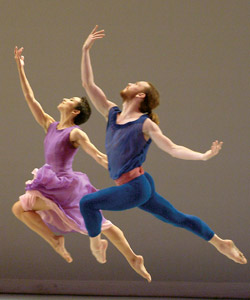
Looking ahead, the students will likely perform the Bill T. Jones work at the Spring Dance Festival, February 18-20 in McCarter’s Berlind Theatre. The Mark Morris Dance Group (pictured) will no doubt be a sellout at McCarter on March 30.


Less than Merry?


A Longest Night Service, to be held at PUMC on Tuesday, December 21, at 7:30 p.m., offers prayer, meditation, and reflection for those for whom the holidays may bring painful memories. “The theme of light in the darkness runs through this service which is being held symbolically on the winter solstice – the longest night of the year,” says Pastor Catherine Williams.

Senior Pastor Jana Purkis-Brash will lead the candlelight services on Christmas Eve at 6 p.m. (especially for families) and at 8 p.m.


Princeton United Methodist Church is at Nassau Street and Vandeventer Avenue. 609-924-2613 or http://www.princetonumc.org

Christmas in Princeton

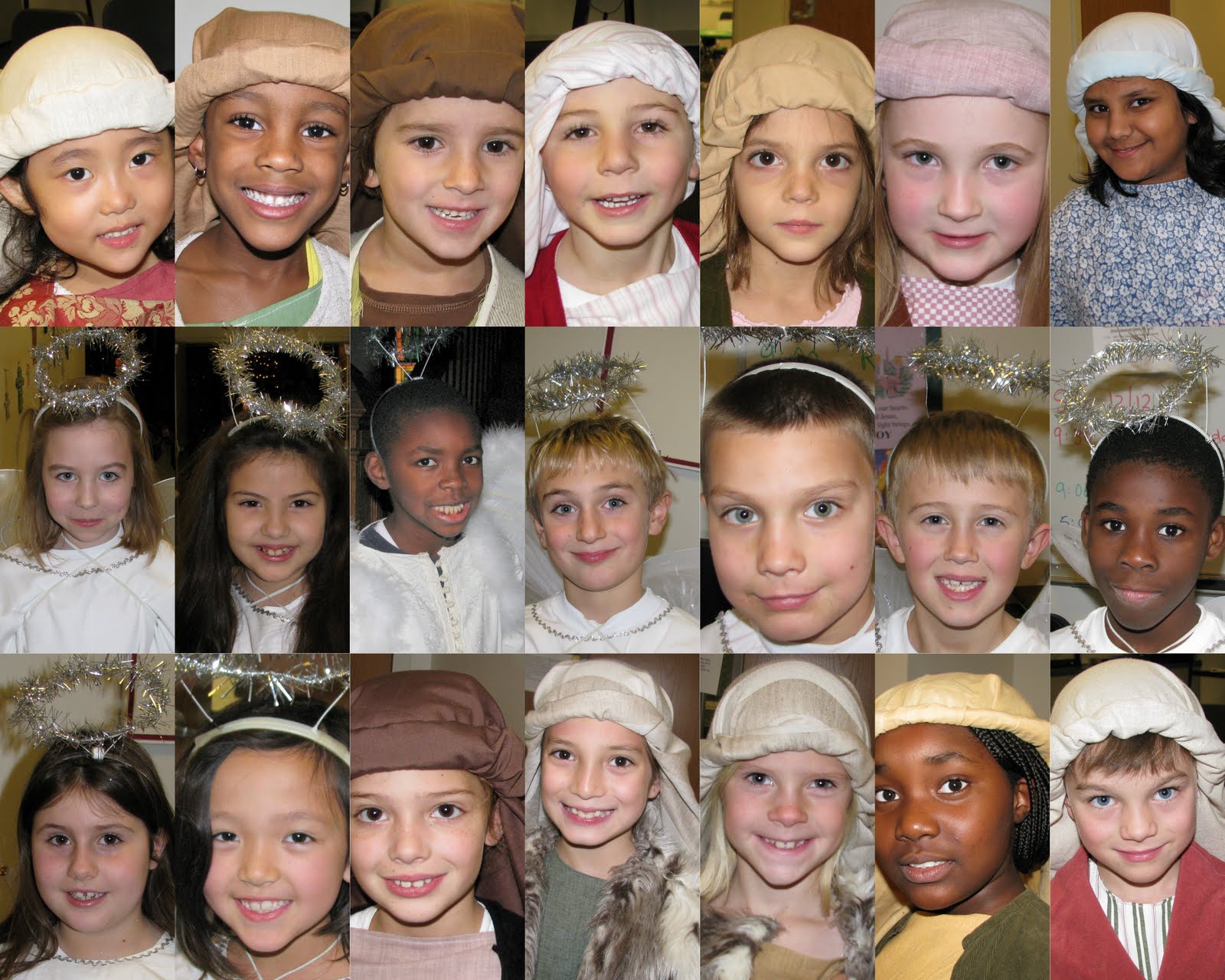
Christmas, for me, begins with the children’s pageant at Christmas United Methodist Church (shown here on December 12.) It’s wonderful when children from age 4 through high school tell the story, “A Gift from the Holy Child.”

Next Sunday evening, musicians, singers, and handbell ringers will present “Christmas Across the Globe.” It will be held at Princeton United Methodist Church, Nassau and Vandeventer, on Sunday, December 17, at 7:30 p.m. In addition to parking in the Park Place lot, additional parking is available in the university lot behind 185 Nassau Street.

A Longest Night Service, to be held at PUMC on Tuesday, December 21, at 7:30 p.m., offers prayer, meditation, and reflection for those for whom the holidays may bring painful memories, “The theme of light in the darkness runs through this service which is being held symbolically on the winter solstice – the longest night of the year,” says Pastor Catherine Williams.

Senior Pastor Jana Purkis-Brash will lead the candlelight services on Christmas Eve at 6 p.m. (especially for families) and at 8 p.m. Joyeux Noel!

TED: Ideas Worth Spreading

This was my second in-person TEDx experience at the Princeton Public Library. It’s not easy to explain TED, which stands for Technology, Entertainment, and Design. Imagine fabulous speakers (mostly men, actually) telling important, even life-changing ideas, and the speeches are so dynamic that they get thousands of hits on YouTube.

Chris Anderson, the curator of TED, says these powerful ideas, from some of the greatest thinkers, need to be shared.

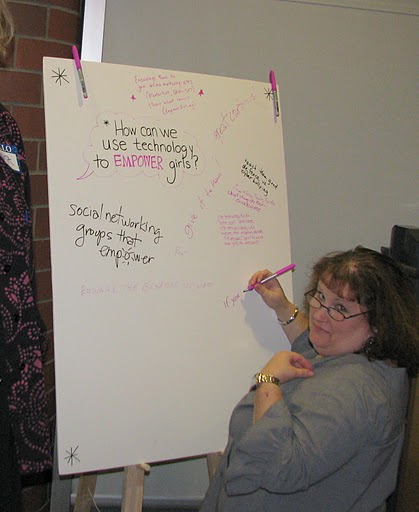
TED talks have acquired a powerful brand, and now mini-TED conferences are licensed around the country. The Princeton Public Library hosted an all-day session last spring, engineered by Janie Hermann (show here) and earlier this month it streamed live video of a TED conference in DC that focused on women.

Of the DC-streamed talks, I was most deeply affected by Elizabeth Lindsey, a former Miss Hawai’i who is the first Polynesian explorer and the first female fellow of the National Geographic Society. She spoke movingly of how, as the elders die, we are losing the richness of our world’s cultures.

The library also had its own live speakers on the theme of Women and Technology (Twitter feed: TEDxNJLibes).

DC-based Jill Foster, of Live Your Talk, offered a powerful keynote.

Holly Landau of Landau Leadership inspired with her tales of My Pink Pizza, workshops for Girl Scouts.

Katie DeVito shared how the group she founded, NJUnemployed, attributes some of it success to social media.

Hilary Morris told of being a mommy blogger.

Melissa Klepacki of Princeton Scoop gave a poignant account of what it’s like to do everything in a virtual world — business and social life — and wake up to realize that some needs can’t be supplied by that world.

Winsome Sarah Donner of Cat Lady Records entertained with acoustic guitar. And by the way, the E in TED is supposed to be Entertainment, not Education, as you might think.

But the best part of it all was, of course, the people. The TED schedule allows for time to really get to know a few of the folks who have been hearing the same things you heard, and it allows for meaningful sharing. On one break, Janie Hermann held a trivia contest, each group had to name itself after a woman we admired. In our group, we all decided that we admired our mothers more than any other woman in the world, and so we called ourselves the Daring Daughters. Click here for photos of the groups. Led by Holly Landau, we had a hi-larious time and actually won the contest.

It was a real upper to meet one member of our group, Bethnolastname, for instance, to whom I gave the soubriquet: She Who is an Activist Beyond Her Means.

May we all use our means for the activation of good.

Nutcrackers for Christmas


I had the delight of seeing American Repertory Ballet’s production of “Nutcracker” on Saturday of Thanksgiving weekend, with my 9 year old granddaughter. I bought tickets for the first row of the balcony at McCarter. We loved it.

Then a friend asked me – which Nutcracker to choose for a newcomer to Princeton who used to teach dance? If you are still deciding whether to see Nutcracker this seasons, here is my assessment of the “small town” and “big city” alternatives.

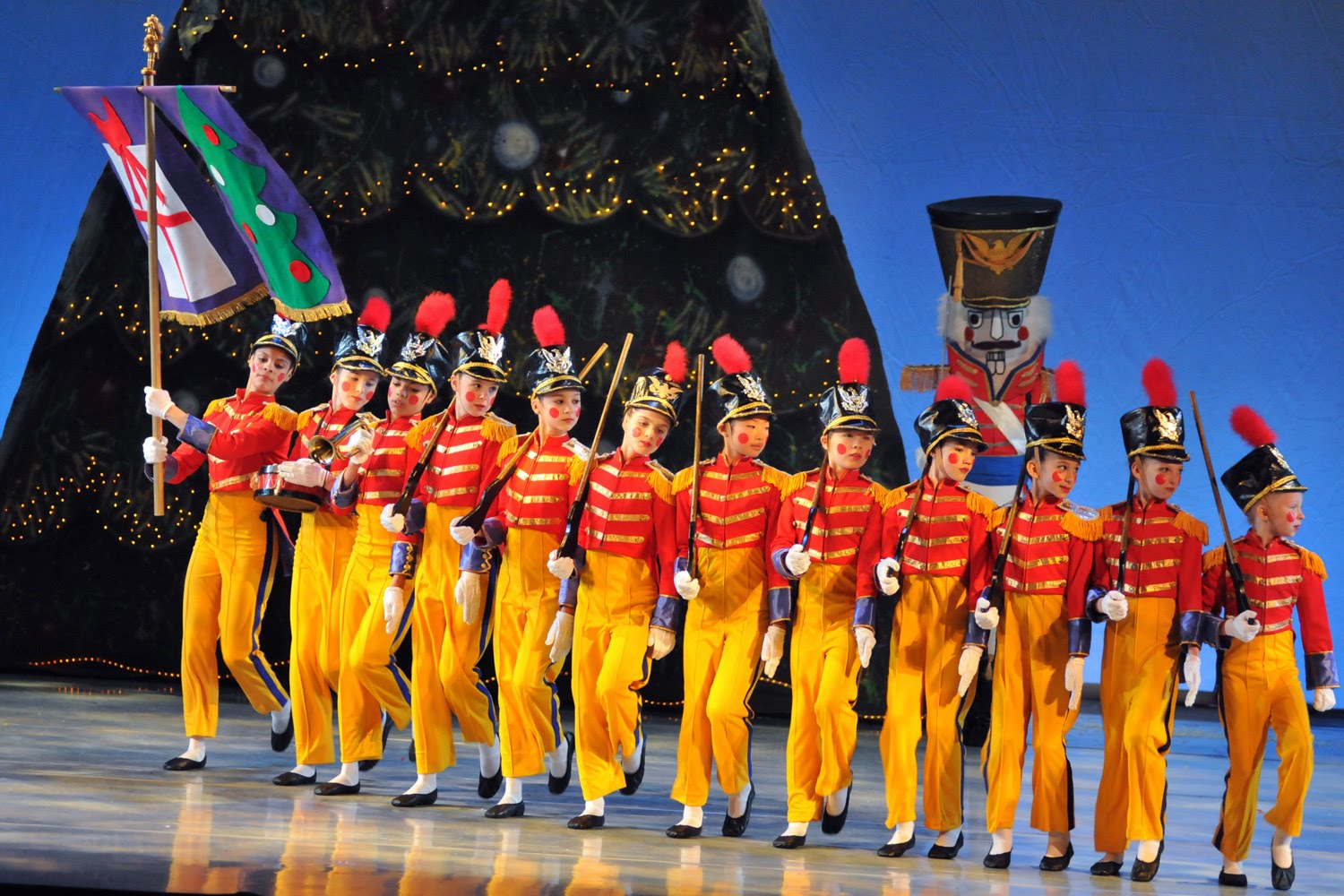
Why you would see American Repertory Ballet: ARB has one more set of performances, at the New Brunswick State Theater, on Saturday and Sunday, December 18 and 19. It is a heart warming and beautiful production with professional dancers in the leading roles, some of them my favorites. This all-new production has choreography by the new director, Douglas Martin, with Audree’ Estey’s 1963 choreography for the party scene plus some welcome updates. Martin (a Really Nice Guy), plays Drosselmeier, and the adult cast, now unified behind him, has a good time on stage and it shows. LOTS of children, and they are appropriately used. (Above, the fabled soldier line, always exciting.)

Before, when ARB positioned itself as one of the nation’s leading companies, the teenage girls augmented the corps of mature professional dancers and often struggled to keep up with them. Under the new structure, the company has a core group of good young professionals and augments with apprentices. It works. The Nutcracker corps consists only of the advanced students, and they are not asked to do anything they can’t do, with a very pleasing and calming result for Flowers and Snow.

For the New Brunswick State Theater tickets are $52 and $32. Parking is essentially free. Unlike at McCarter these performances do have a live orchestra, and the historic theater offers an appropriate dignity to the production.

Why you would choose Pa Ballet:
It’s with full orchestra at the Academy of Music, in itself an experience, a grand and historic opera house, with a professional company doing Balanchine’s version. At the time I wrote this, it had $49 seats in the highest balcony on the side for Friday, December 17, $62 in the center. Add $12-$25 parking plus gas. It runs to December 31, mostly on weekends but it is DAILY after Christmas.

Similarly priced tickets may actually still be available in the “orchestra,” they call it parquet, on the outside side aisles. Watch out for the Academy seats that are partial view.

Why you would choose New York City Ballet: To get a New York experience and of course a fabulous company and orchestra. It runs almost daily through January 2. You can still get seats for as little as $40 in the back of the fourth balcony, but take your binoculars – you’ll be pretty far away. Evening shows are at 6 p.m. so you get home at a decent hour. Be careful about taking young children to any out-of-town production. You run the risk of tiring them out even before they get there. To the ticket price, add $60 round trip for 2 adult tickets on NJ Transit, or pay tunnel tolls and try to find on-street parking.

For a flamenco version, The Alborada Spanish Dance Theatre presents the Spanish version of Nutcracker, El Sueño, at Mercer County Community College’s Kelsey Theatre, 1200 Old Trenton Road, West Windsor, Dec. 21, 7:30 p.m.

For an intriguing view of Nutcrackers nationally, read Alastair McCauley in the New York Times. He is crisscrossing the country to review lots of them. When I was the dance critic for the Trenton Times, I did that on a local scale and — like McCauley — I found a delightful, not boring, array.

Pitch Perfect at Princeton

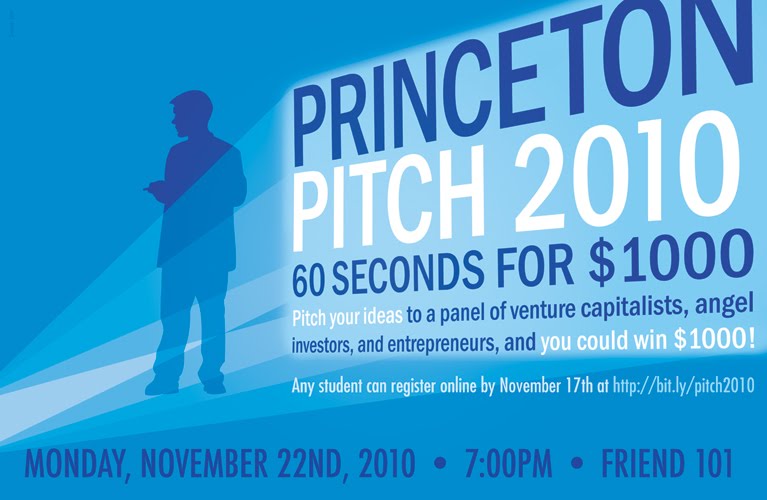
One of the best free shows in the town of Princeton is the chance to see smart people competing, not on the gridiron but at the podium, presenting their business schemes. The Princeton Entrepreneurship Club sponsors, for instance, a fall event, which calls for one-minute pitches in a program called Princeton Pitch. I attended that November 22 event with speech coach Eileen Sinett, of Speaking That Connects. She was so enthusiastic about the students’ presentation skills that I asked her to write a guest post:

Too often, listening to a series of speakers can be a tiring experience. Not the case tonight, though. I just returned from the Princeton Pitch, hosted by the Princeton Entrepreneurship Club, where I heard thirty (30), one-minute presentations in less than an hour (30 seconds between speakers and a 10 minute intermission) and I wasn’t bored one bit! Students vying for a $1,000 prize to seed their business concept delivered their ideas before a panel of judges and an audience of students and curious community folks like myself. The room was full and the ideas were not only intelligent and forward-focused, but also creative and dynamic.

I was particularly pleased by two presentation best practices I rarely see in business presentations. The first is to pique interest at the start. Too often professionals default to mediocre. Tonight instead of hum-drum, ”vanilla” openings there were a diversity of creative beginnings: Imagine, How would you like…..You want to play, but…… Here’s a way to… Thank you for keeping the audience interested.

The second best practice that made me smile was seeing speaker after speaker stay within the one-minute time limit.

I thought, “Now this is a challenge I will bring to my corporate clients.” Many business speakers have trouble limiting their ideas to 5-10 minutes. They are sent to speech coaches to learn to be more persuasive and succinct. They need to get to the point, hook their listeners and give them a reason to listen. These students did just that, without reading PowerPoint slides or hand-written manuscripts. Bravo Princeton Pitch!

by Eileen Sinett

Editor’s notes: The winners of Princeton Pitch were Guanchun Wang and Zhen Xiang, both PhD students in the electrical engineering department, with their proposal for China’s Netflix, aimed at “providing a competitive pricing scheme to challenge piracy in China.” The next event in the Princeton Entrepreneurship Club competition is Super Saturday for the Tiger Launch, set for February 26.

an open letter to Joyce Carol Oates


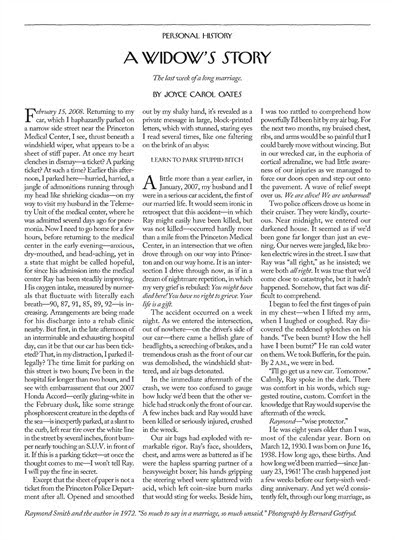
An open letter to Joyce Carol Oates, whose first person account of her husband’s death, at midnight, at Princeton Medical Center was published in the New Yorker in the December 13 issue. The full version will be published by Ecco Press/Harper Collins in February. An article in the Wall Street Journal tells how Oates was unable to write fiction during the months after her husband’s death, but kept a journal, from which this memoir was drawn. It also offers an account of her second marriage, to Princeton neuroscientist Charles Gross.

Thank you for putting into words the depths of despair that you felt — alone in the hospital — having lost your spouse — in the middle of the night in February, 2008.

You rushed to your husband’s bedside and you might have reached him before he died if only the security guard had been notified to expect you. Instead, he was required to make a phone call, taking precious minutes. “At the far end of the corridor, outside my husband’s room, I see something that terrifies me — five or six figures, medical workers, standing quietly outside the open door….Silently she points into the room and, in that instant, I know — I know that, for all my frantic rush, I have come too late….In a trance I enter the room — the room I left only a few hours before in utter naivete, kissing my husband good night…”

That feeling has haunted me for the four years since my mother died, just after I had left the nursing home (leaving at 9 pm, returning at midnight) and of course at night and in the early morning hours I replay every medical and personal detail for that night and the three days previous.

As you wrote, you are still recovering from the regret for feelings assumed, things not done or said. My husband and I have been fortunate in that he has had several almost terminal diseases (cardiac and cancer) which served as dress rehearsals for our losing each other. When he was resuscitated in Princeton ‘s ER some 15 years ago, we DID learn to start appreciating the time we have and although we are Christian we now have a strong sense of Carpe Diem.

Because you bravely wrote about this, I believe you will influence others to take stock, to make changes in time to enjoy their loved ones now.

I also hope it will influence the way the medical staff treats death on the ward.
At least you were given time (I wasn’t, in nursing homes, if a patient dies at night they want the body rolled out before the others wake up) but you certainly were not given the support you could have used. Perhaps your words about being alone will prepare families for what to expect and jumpstart a change in how healthcare providers provide for the family members.

“In this very early stage of widowhood — you might almost call it ‘pre-widowhood,’ for the widow hasn’t yet ‘got it,’ what it will be like to inhabit this free-fall world from which the meaning has been drained — the widow takes comfort in such small tasks, the rituals of the death protocol, through which more experienced others will guide her, as one might guide a doomed animal out of a pen and into a chute by the use of a ten-foot pole….It is not a correct answer to reply, ‘But I don’t want to call anyone. I want to go home, now, and die.'”

Although the memory of a parent or spouse or a child dying lasts and lasts and lasts, people stuff it down. They don’t like to talk about death or read about death. I sometimes try to de-haunt public perceptions of it because my father taught anatomy, and I spent a good bit of time in dissecting rooms, and I believe it’s healthy to look at a body as a body, not the real person. That’s all well and good until the body belongs to someone you love.

The truly haunting part of death is the memories you have, and the lost chance to create more memories. You are so gifted at evoking memories that your own true story will truly help many many people, both now and in the future.

I also suspect that you ‘had” to write this, as difficult as it was, and I hope that it helped you. I know that after reading it I ‘had’ to put down these words, and it has indeed helped. Thank you for bringing the subject up.

Note on February 10, 2011: Here is an excellent review of the book in the online magazine Obit.

Flock Logic: guest post by Nicole Plett


FLOCK LOGIC
Princeton University
Sunday, December 5, 2010
guest post by Nicole Plett

About 60 Homo sapiens of all ages, shapes, and sizes (though mostly tending toward the slender and youthful) were united on Sunday evening in the remarkable, site-specific performance, Flock Logic. The improvised movement event for dancers and non-dancers was developed by the students of the Princeton Atelier’s “Collective Motion” project. The class was co-taught by noted choreographer Susan Marshall, and Naomi Leonard, a gifted professor in the department of Mechanical and Aerospace Engineering. A core group of 12 Atelier students formed the backbone of the event; their numbers were augmented by another 20 volunteer “flockers” and a somewhat larger number of “flock watchers.”

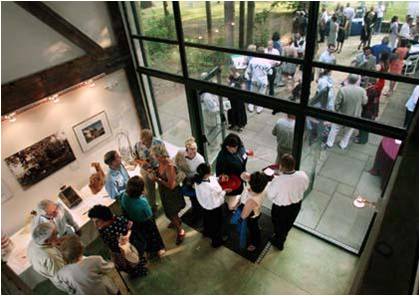
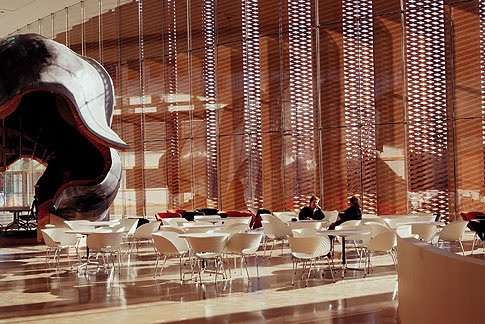
Set within the inspired and soaring spaces of the Carl Icahn Laboratory atrium (designed by Rafael Vinoly, pictured above), Flock Logic unfolds on multiple levels – with the movement action set at ground level and all the vantage points located above. It is accompanied by a small combo with synthesizer generating appropriately atmospheric music.

* * *

Flock Logic begins with the slow, uncomplicated gathering of a dozen individuals at a lounge-like area set with a few upholstered chairs and a café table. As the group gradually gathers and new members arrive, we notice the small greetings and acknowledgments we’d expect from other groups of mammals or fowl. The gathering reminds me of birds roosting at twilight.

We eager spectators are perched single-file along the railing of the lab’s mezzanine level like so many sparrows on the power lines alongside New Jersey’s railroad tracks.

Back on the floor, some of the 12 are sitting, lounging; one stretches flat out on his back. The group is inactive, but it’s a wary inactivity typical of creatures in the wild. Individuals sit, stand, turn, move chairs, and take care of some necessary grooming: a young girl casually undoes and remakes her perky ponytail.

The music begins and the group is set in motion; soon a second flock walks into the performance area and joins the first. I recognize (from my other experiences in nature and the world) that this gathering of individuals of many shapes and sizes defines itself by its cohesive behavior. And there’s a kind of serenity that seems to emanate from each member of the group – Do they find comfort in being part of a flock?

Once the flock is set in motion, the movements are quite pedestrian: walking, jogging, and an occasional sprint. Legs, arms, heads, shoulders and feet move naturally but purposefully. There are a few shared static postures that include a nice asymmetrical lunge.

The group moves with a mind of its own. An individual who appears to be a leader heads off to a corner of the space with a troop of followers. But soon she leads no longer; she has blended back into the group. There’s a resonance to this “improvised” performance because, consciously or unconsciously, we recognize its veracity. Through our accumulated knowledge of the natural world with flocks of all kinds – birds, sheep, fish – the movement seems true to life. Although the natural world requires obedience to nature’s rule, this flock adheres to a few simple rules, based on Professor Leonard’s research, but created by the students.

Minutes into the performance, there’s another group (who originally appeared to be spectators just like us) suddenly moving toward the flock. We see them rouse themselves from their vantage point on a comfy circular landing and hurry down the ramp to ground level. Once they arrive, they blend in seamlessly, no longer a separate entity but an indistinguishable part of the flock. A handful of bona fide spectators remain on the landing to continue to observe the flock from above.

As if to test the parameters of group behavior, Flock Logic introduces some outside motivators and obstacles. At one point, two creatures with small strobe lights cause general alarm; splitting the group and causing some to flee out of sight.

At another point, more café tables (which we view from above) are carried into the staging area, each marked with an arrow indicating which direction the flock must pass by. When the second table is introduced, we arrive at the event’s most dramatic moment (“the egg beater”). In a process not unlike trying to merge into the Holland Tunnel, the flock must navigate the space around the fixed point, but also, in following their trajectory out of the circle, its members must interweave without collisions. Some spontaneously change their trajectory in order to avoid collision.

The evening’s most magical moment comes as we see one individual, then another, raise one arm horizontally and place it on the shoulder of another. One after another the group mimics this gesture; something new springs into being, growing (I imagine) like coral or molecular bonds. And suddenly there’s an elegant, almost rigid structure stretching across the floor. With another unseen impetus of the flock, the structure melts away; the flock is in motion again, moving from one state to another as seamlessly as a formation of birds.

As I watch the flock in movement, I notice a group of five students, three on bicycles, casually traveling along the walkway on the outside of the building. As they pass, they glance at the interior flock in the same way one might pause to watch a formation of birds pass overhead.

Like the best performances, this improvised event rewards its spectators in relation to the qualities they bring to it. I was there to savor each lovely moment of movement and composition – intangible qualities of aesthetic pleasure, some pre-arranged, others generated by happenstance and coincidence. Melding the scientific observation and rigorous research of the 21st century with the 20th century inspirations of Cage, Cunningham, and the Judson Theater, I savor this choreographic feast and its beauties of indeterminacy.

— Nicole Plett