All posts by bfiggefox

Dreams in Progress: NJEN’s Tech Poster Show

Today’s news was a heavy blow: Pfizer is closing the Wyeth research plant on Ridge Road, and 400 jobs will disappear or go north to Connecticut.

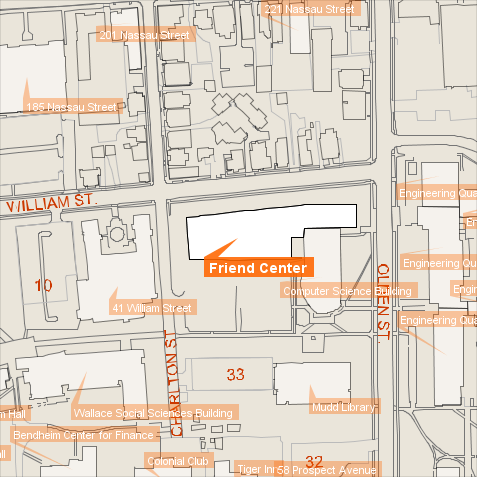
But let’s focus on the good news. New Jersey’s Einstein’s Alley is rich with great technology ideas, and you can preview some of them at the New Jersey Entrepreneurial Network’s annual poster show at Princeton University’s Friend Center. The state’s technology czar, Peter Reczek, executive director of the New Jersey Commission on Science and Technology, will keynote.

Details: It’s Wednesday, November 11, 4:30 to 6:30 p.m. at Princeton University’s Friend Center, (William and Olden Streets). Cost: $45.00 at the door. Appetizers, desserts and beverages will be provided (www.njen.com).

To titillate technological imaginations, here are some of the technology entrepreneurs you will get a chance to speak with.

Five Princeton engineers who have a sensor used in China for the Olympic Games to monitor gas concentration and in Ghana to monitor smoke inhaled by women who dry fish over burning wood.

Sanford A. Roth of Medsonics, with a portable ultrasound diagnostic point of care device to detect, monitor, and status of bone fractures.

Carl Mattocks of CheckMi, with Medicin Arhivo, using algorithms to update Personal Health Records (PHRs).

N. Soundararajan of Nourishing Inc. in East Brunswick, with Reachout, an e-commerce application enabling retailers to make offers to consumers who need to buy “now,” facilitating sales through a duplex negotiation process.

Terry Miglani of Tachus Technologies, a women-owned firm with proprietary software for managing obsolescence in the electronic and medical industries.

Also technology that harnesses energy of ocean waves, regulates temperature of vaccines being shipped, uses nanotech for a biofuel cell that converts the body’s own glucose to power implantable devices, and devises an online gaming and social networking site for advertisers.

Plus, you’ll hear the technology czar, Reczek, of the NJCST. “NJCST has been a key and continuous player, supporter and leader in NJ technology-based economic development since 1985,” says Joe Montemarano, of Princeton University. Governor Tom Kean created this commission, and every newly elected Governor, upon inauguration, has tried to do away with it. Fortunately the state’s technology community rallied in support each time

Just out today: the NJSCST awarded more than $5.6 million through its grants-in-aid program.

Future dates for NJEN: February 3, 2010, a venture fund panel at the Princeton Marriott, at noon. Wednesday, April 7, a lunch at Rider University on corporate and non-profit funding sources. Wednesday, June 2, an angel network roundtable lunch at the Princeton Marriott.

Gallup’s Frank Newport: Size Doesn’t Matter

Pollster Frank Newport believes that two heads – actually, 200 or 1,000 heads – are better than one. “The collective wisdom of people looked at together is very valuable,” said the editor in chief of the Gallup Poll, in a deftly engaging talk at the Princeton Regional Chamber lunch today. “The business leader who relies on his own judgment has a fool for a consultant.”
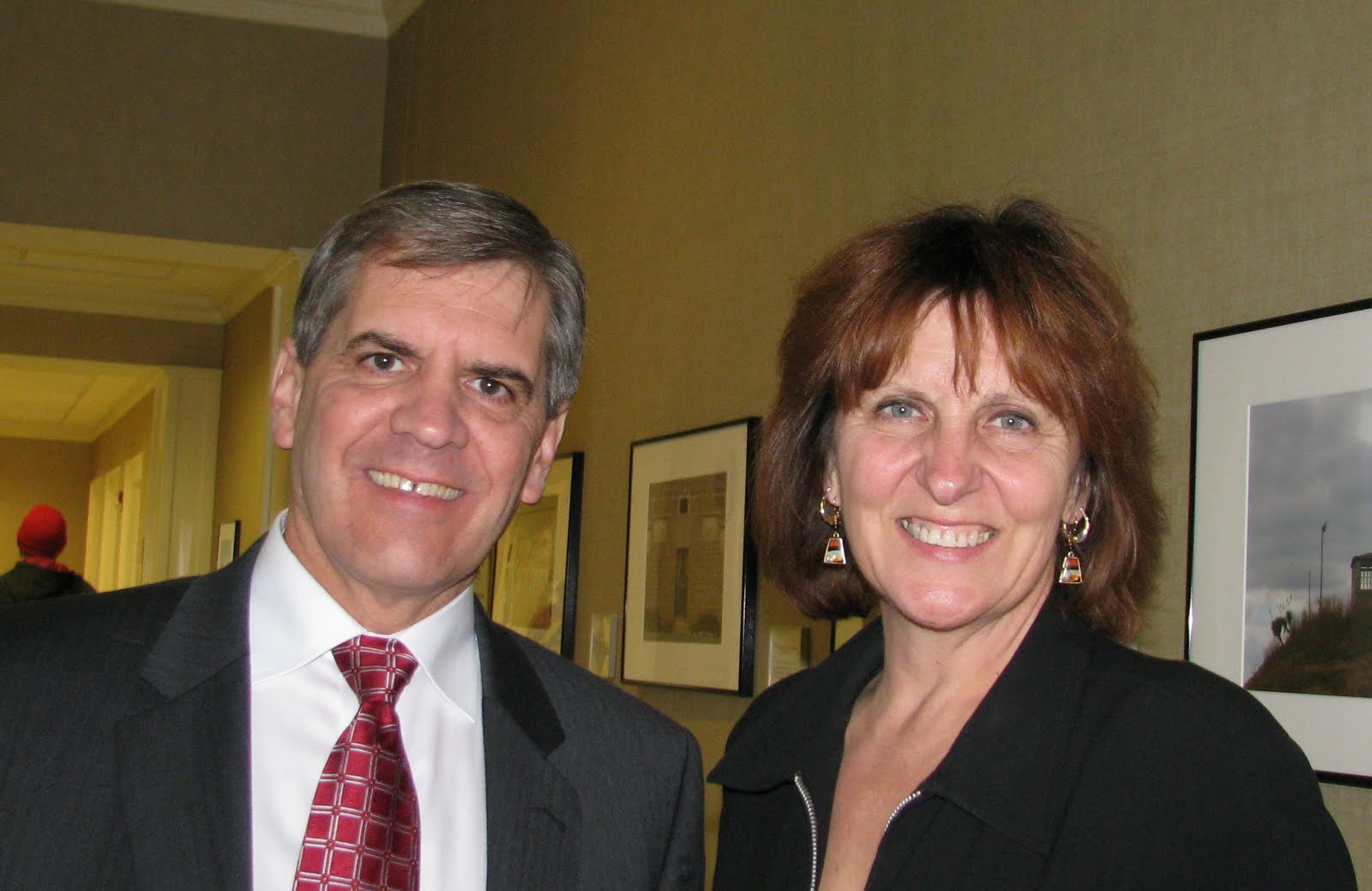
(Above, he is in the center with chamber CEO Peter Crowley, left, and Grant Somerville of Merrill Lynch, right.)
Newport records daily from a recording studio at his Carnegie Center office; the Gallup headquarters moved out of town but used to be on Chamber Street in the building now owned by Henderson Sotheby’s.

How the Gallup Poll began: Founder George Gallup had polled for ad agencies and Hollywood directors until he famously opposed a “mail-in” survey and predicted the outcome of the FDR/Alf Landon presidential race. Still, he had to persuade the general public that, with scientific random sampling, the size of the sample doesn’t matter. A chef doesn’t have to eat all the soup to taste for salt, he used to say. A doctor doesn’t need to take all your blood to test it.

What the public hears about is a small percentage of the Gallup business, which does 95 percent of its work for corporations. It polls 1,000 people daily, including the cellphone population. The four research areas: to understand a marketplace (business specific), to understand an industry (industry specific), to track the economic environment (measuring consumer confidence), and to understand the political environment. Re the economy, as of yesterday, 21 percent of the nation are satisfied with how things are going, yet 80 percent are satisfied with their personal situation.

(I’m stopping here for an urgent aside, sounding the horn for a potential help for the job debacle. Newport said the polls show a slight uptick in people saying that their companies are hiring, but very slight. Meanwhile I’m rooting for a grassroots job creating initiative, Princeton Job Creation Forum, which invites anybody — you ?– to pitch in to help to replace jobs. The group met the day after the election and has some firm plans to jumpstart new and growing businesses. Contact info@pjcf.org — ok back to Gallup, thanks for listening.)
Last year, 2 percent said they had the flu, this year, 2.7 percent have had it.

Those numbers don’t necessarily reflect New Jersey. Nationally, Ronald Reagan is the # 1 favorite among American presidents with JFK # 2 and George Washington ranks near the bottom with only the six percent of the votes. That’s not the New Jersey opinion, which is the third most Catholic state and one of the top 10 Democratic states. New Jersey also ranks above average in ethical optimism, whether a lost wallet would be returned.

As for the Corzine defeat, Newport wasn’t surprised. After all the polls predicted it. He carefully guards his own political opinions. “Not even my wife knows how I vote.” In fact, believing as he does in collective wisdom, “the more I look at the data, the more I question my own opinion.”

Twitter’s Jack Dorsey: Who You Know Still Counts

Posted by PicasaThe digital divide was wide tonight, at a 3 to 5 p.m. NJSBDC networking event at the College of New Jersey, followed by a talk by Jack Dorsey, creator, co-founder, and chairman of Twitter and considered an influential Internet pioneer (pictured, top).

Most folks at the networking either don’t Tweet or are just trying to figure it out. My card stack includes one lender, two executive coaches, two web developers, an attorney, three automotive guys, a logistics company, an interior decorator, and an education franchiser. Of that crowd only event planner Michael D. Young professed to be comfortable with Twitter, and the college students who sat behind me professed to be totally uninterested in Tweeting.

But Kendall Hall was packed, and Dorsey told a compelling story about being given two weeks and one other programmer to build the first model of an update system that works on cell phones. It debuted at the SXSW music festival in Austin in March, 2007. “It was the right place at the right time. And it was the first year at SXSW for the Wall Street Journal and the New York Times. But we failed, technically. “

System failures continued, sometimes for hours, even a whole day. They finally figured out that — though a communications firm — they weren’t communicating well. “We were not talking to each other and our investors, not practicing transparency.” The fixes included:

Lots more communication (blogging, twittering) without worrying about overload (“you filter out what you don’t need.”)

Building instruments to find out how people are using Twitter

Admitting mistakes.

Working in public and sharing the work with anyone interested. For instance, Twitter users invented the use of the @symbol, replies, retweets, hashtags, and even the word ‘tweet’ to stand for ‘updates.” “If we had not said we don’t know what it is good for, we would not be a success today. Tweet by tweet they defined what it meant to them.”

Dorsey says he is still tinkering with the business model, and no, he hasn’t made any money yet. (I asked why teens text rather than Twitter and he didn’t really have a good answer, except that it’s up to each individual and group to decide what is useful.)

When he watched President Obama address Congress he noticed the legislators were looking at their cell phones. Then his own phone buzzed. It was his Congresswoman, twittering her take on the speech. “I’ve never felt closer to my government,” he said.

The hardest part of starting a business? Starting. “It’s important to start as quickly as possible, to get it out on paper and allow others to play with it. If it is a ridiculous idea, it can be closed, and you move on.”

Dorsey had lots of good insights on “real-time communication” but the back story of how TCNJ snagged such a hot speaker has nothing whatsoever to do with social media. How did Dorsey get to TCNJ? He had grown up with the son of TCNJ’s new business dean, William W. Keep (pictured on left with SBDC’s Lorraine Allen).

It always is and ever will be, “Who You Know Counts Most,” world without end amen.

U.S. 1’s 25th Part II: Accidental Spokespeople

Your company has what Rhohit Bhargava calls “accidental spokespeople,” the employees or customers who speak for your brand – often without you knowing it or approving it. Your challenge is to find ways to embrace those individuals.

That’s the gist of Chapter II of Bhargava’s “Personality Not Included.” I’m relating his points to U.S. 1 Newspaper’s silver anniversary, and you can apply the same tips to your own firm.

An example of an “accidental spokesperson” is Jared Fogle, who famously lost weight by eating Subway turkey sandwiches and became – despite lots of resistance from the company’s suits – an advertising icon.

An example of an intentional spokesperson is a company founder, whose personality imbues the company at carefully chosen opportunities. For instance, Wally Amos of Famous Amos cookies or Craig Newmark of Craigslist.

As a newspaper, U.S. 1 is fabulously positioned to showcase its accidental spokespeople, its writers and freelancers. For instance, sometimes staff editors Jamie Saxon and Scott Morgan will write personal columns. You can tell it’s a column, not an article, because it doesn’t have a regular head. Instead it has a “reverse head” (white on black) with the author’s name. You get the undiluted “voice” of Jamie (jazzy, hip, young) and Scott (to-the-point, wry, unabashedly honest). But that “voice” also shows through in the way they caption pictures, write headlines, and even the way they assign stories.

Freelancers get a similar opportunity to write in their own voice. Bart Jackson, Pat Tanner, Simon Saltzman, Elaine Strauss, Richard Skelly – regular readers don’t need the byline to know who’s writing.

This is, after all, a publication that puts a higher priority on words than on design. And the writing doesn’t have to conform to the daily newspaper style. If I think that Second Person Plural will draw the reader into a subject, I use it, just like I’m using it now. I’m talking directly…..to YOU. Is that part of the Barbara Fox voice? Maybe.

Advertisers are among the “intentional” spokespeople. They believe the product works so well for them that they put their money behind it.

U.S. 1 Newspaper’s chief intentional spokesperson is, of course, the founder, Richard K. Rein. Even though you never read a column of his, you can discern his voice, because he set the tone. No business too small or too big to write about. No cow too sacred to gore. No subject too “adult” to write about or photograph. (We’ve been banished from several school lobbies.)

I won’t try to explain Rein’s policies. He’s going to do that himself in the issue of November 11. He also invites the readers, and that means you, to the first of several anniversary celebration events, a rush hour reception on Tuesday, November 24, 5 to 8 p.m., at Tre Piani in Princeton Forrestal Village.

You the reader, after all, are among U.S. 1’s best “accidental spokespersons.” You’re the one who tells your job hunting friend to get the U.S. 1 Directory, or who uses the PrincetonInfo.com website to plan next weekend, or eagerly looks for news of companies that have just come to town. Bhargava says it’s one thing to identify the accidental spokespeople and quite another to figure out what to do with them. “As soon as you identify them, you need to be thinking about ways to embrace them.” Don’t ignore them, he warns. “Embracing them means giving them the content, attention, and access they need to tell a compelling story.”

If you recognize yourself as an accidental spokesperson for U.S. 1, write and say so! What did you like and not like for the past 25 years, and what would you like to see for the next 25? Toss me an e-mail or leave a comment here. You can stay anonymous!

U.S. 1 Newspaper’s 25th: Part I

Starting this week, this month, this year, U.S. 1 Newspaper celebrates its silver anniversary. Amazing, isn’t it, that Princeton’s maverick business/entertainment newspaper could capture the hearts and minds of loyal readers and keep going for 25 years!

I begin to recognize the reasons why as I read “Personality not included: Why Companies Lose Their Authenticity – and How Great Brands Get it Back,” by Rohit Bhargava, a marketing guru with the iconic firm of Ogilvy. I met him at the e-Patient Connections conference in Philadelphia last Monday.

When I read a business book (and I’ll bet you’re the same way), I try to test out the wisdom by applying it to the businesses I know. So in honor of U.S. 1’s silver year I propose to dissect Bhargava’s theories, one by one, and see how they compare with my perception of U.S. 1’s business model. Maybe you’ll want to do the same and apply them to the business where you work.

Caveat: Notice that I said my perception of what U.S. 1 Newspaper is about. I am not the founder, nor related to the founder, Richard K. Rein. Rein is famous for his single-minded vision and after 23 years (I first wrote for him in 1986) I can sometimes guess what he’ll say but by no means all the time. To get his opinion, you’ll have to read his column and/or the Between the Lines column this week. He’ll probably interview himself; he does every year.

Bhargava says that kind of definable personality is the key to creating an inspiring brand: “Personality is not just about what you stand for, but how you choose to communicate it. …Personality is the reason consumers love one product more than another. ….Personality can help you go from good to great.”

How to define personality? That’ll be in Part II. It’s enough, now, to plan to pop a cork and celebrate.

No Tears Over Spilt Milk: Time for Job Creation Action

Everybody knows somebody, several somebodies, who are looking for a job and the often unacknowledged secret is that some of them will never get as good a job as they had before. Meanwhile entrepreneurs, who could create jobs if only they could get start-up funds, are being turned down right and left by risk-averse bankers.

Rather than playing the ostrich — tempting if you aren’t the one who needs the job — a coalition of help-minded people aims to do something about it. The Princeton Job Creation Forum wants to link business innovators (the folks who want to start new businesses) with sources of capital (angel investors, venture capitalists, and risk- bankers).

“The private sector must create the new businesses and jobs that will lead the nation out of the Great Recession’ says David Sandahl, a business consultant in Pennington who is working with the Forum. He’s aiming for a January date when funders can sit face to face with entrepreneurs to get some deals done.

Before that can happen, plans need to be made. To get in on the planning, register for the workshop to be held on Wednesday, November 4, 8:30 to 11:30 a.m., at Princeton University’s Friend Center, the new engineering building on Olden Street.

“Our initial goal is to get a clear picture of what can be done to accelerate innovation that creates new jobs,” says Sandahl. Sandahl and his cohorts, including Karen Jezierny of the Princeton Regional Chamber Foundation and Len Newton, among others, have invited the stakeholders — including representatives from the New Jersey Economic Development Authority — to this session.

“Everyone is agreed that new business formation is the best way to increase the avilaibility of jobs. We want to accelerate the process by tapping the ideas of key stakeholders and get commitment to a solid approach.”

If you have something to add to this discussion — or if you are just plain interested — register for the forum. It’s free. For more info contact info@pjcf.org.

Princeton in e-Patients’ Service

After a 12-hour day at an inspiring and invigorating e-patient conference in Philadelphia, my head is buzzing with e-health thoughts. Then on the train platform bound for home, I get another shot of e-health caffeine, an email invitation from Princeton Living Well to help analyze health menus in Princeton restaurants. PLW, a multifaceted healthy lifestyle project funded by the NIH and founded by Rick Weiss of Viocare, exemplifies the principles espoused today. On PLW’s website members of the community record their own healthy behavior to earn points and collect rewards from local merchants.

Thomas Goetz of Wired magazine (pictured) told the enthusiastic audience that that’s exactly what works. His take-aways:

Pay attention. When you think you are being observed you tend to act differently.
Monitor behavior to change behavior.
Use technology to get a sense of control over your health.

Hearing this, in the margin I had written “PRINCETON LIVING WELL!” in red ink and circled it twice.

Staged by Kevin Kruse of Newtown-based Kru Research, the first-annual e-Patient Connections conference triggered mental references to other Princeton companies, but lots of folks were in there in person as well. Rob Halper revealed how New Brunswick-based Johnson & Johnson uses You Tube, and Tricia Geoghegan, of J&J;’s Ortho McNeil Janssen, discussed her online community for ADHD. Susan Harrow Rago spoke on how Novo Nordisk funded Juvenation.org an online community for Type 1 Diabetes. Ian Kelly of Red Nucleus (at the American Metro Center) was a conference sponsor.

Attendees from Princeton included: consultant Meredith Gould (who Twittered the conference); David Avitabile, of JFK Communications; Lauren Walroth, of Bristol-Myers Squibb; and M. Jane Lewis, of UMDNJ’s School for Public Health. Kruse himself is an ex-Princetonian, from when he worked at AXIOM and Kenexa, so I didn’t have to explain U.S. 1 Newspaper when I asked for a press pass.

On the second day of the conference (Tuesday, October 27) David Reim (founder of the former Simstar, now a consultant with Influence Partners) will be one of the speakers. Also on the roster are Ambre Morely of Novo Nordisk and Marc Monseau of J&J.;

This was an exciting day for those of us who plump for innovation in the e-health field. (Full disclosure: I had a special interest because one of the presenters was my daughter Susannah, who does health research for the Pew Internet & American Life Project.)

That doesn’t keep me from saying that I thought Kruse put it together brilliantly. Another conferee and I were trying to figure out why it worked so well. We finally agreed that Kruse had a unified version of what he wanted to present. He emceed the whole day and his intros and follow-up questions fortified that vision. The lineup included Jay Bernhardt telling how the Centers for Disease Control use social media to influence perceptions about the H1N1 virus. Lee Aase told how the Mayo Clinic leverages You Tube and blogs. Congressman Patrick Murphy stopped by on his way to DC. My personal hero, Dave DeBronkart (known as e-Patient Dave and a survivor of kidney cancer), made a business case for participatory medicine.

In these situations usually the choir preaches to the choir, but this conference had a good mix of social media experts and social media newbies. Kruse recruited his friends and called in markers to offer one-on-one lunchtime coaching in social media platforms.

And there was some great bling. In keeping with the theme of e-patients, each registrant got a free i-Pod and the door prizes were videocams.

A great day. And I got to go to dinner with my daughter.

Jean Baker: Alice Paul vs Woodrow Wilson

Today when I read Sharon Schlegel’s account of meeting the 92-year-old Alice Paul in a nursing home (Schlegel describes her as at first “unresponsive and treated as senile”) I think of my mother Rosalie Yerkes Figge, who retained her feisty opinions until her death at 96. I also remind myself not to subject other people’s mothers and grandmothers to the prejudice of ageism.

Schlegel didn’t. Schlegel is a lifelong admirer of Paul.

Alice Paul is the subject of discussion, not just because the constitutional amendment she promoted is on the table again, but because Goucher College historian Jean H. Baker will speak about her at the Princeton Public Library on Monday, October 26, at 7 p.m. The talk is cosponsored by the Princeton Friends Meeting (namely Ann Yasuhara and Nancy Strong).

Paul’s dedication to the feminist cause was rooted in her upbringing as a Quaker and honed at a Quaker college, Swarthmore, Class of 1905. (She also had 2 graduate degrees from Penn, 2 law degrees from American University, and one from Washington College of Law.)

Clicking around to find info on Jean Baker I hit gold: an excerpt of the Paul chapter in Baker’s “Sisters: the Lives of America’s Suffragettes.” I’ve never been a fan of Woodrow Wilson (not a very comfortable position in this town) but Baker really socks it to him in her description of how Paul outwitted and outmaneuvered the hapless president. At least that’s my interpretation from skimming the excerpt.

My favorite part of the excerpt: On the day before Woodrow Wilson’s presidential inauguration Paul managed to stage a march the likes of which the Capitol had never seen. When Wilson stepped off the train, having been hailed and farewelled from the train station in Princeton, he found no welcoming crowds. All his supporters (men of course) were out harassing the marching suffragettes, who captured the headlines on what should have been his triumphant day.

That was in 1913, and almost 60 years later at the time of the nursing home interview, women had gotten the vote (1920) but the Equal Rights Amendment still had not been passed. Of course we now know that it never passed, but mention of it brought Paul out of a seeming coma. As Schlegel writes, her eyes flashed: “It WILL PASS,” she said. “It will pass because it is right!”

I may have a docile persona, but I was raised to think women are not just equal to, but better than, men. I can still hear my mother saying, with disgust over some ill-advised male’s dumb-cluck move, “Just like a man.” Of course my father was the exception; she devoted her married life to him, a brilliant teacher/researcher who, at home, cooked and did dishes.

Her attitude might have had something to do with her alma mater, Goucher, where she was declared a Goucher Treasure for the Class of ’31, but when I read Baker’s account of suffragette days, I realize that my mother came of age when women were more obstreperous. In contrast, I was a teen in the 1950s, a time when “girls” hoped to emerge from college, not just with a diploma, but with an engagement ring.

And by the time of the next feminist wave, in the early 1970s, I was nursing my third child. Ten years before I’d married into a pre-feminist world where men didn’t change diapers. The prospects of my being able to amend the marriage contract didn’t look good.

I was too late for the first feminist movement and too early for the second. I’ve never been particularly interested in the history of either one, but my appetite is whetted now. And — like you — I hope to goodness we are all still feisty at 92.

Google’s Schmidt: Sugar Daddy for New Ideas

When Stuart Essig, CEO of Integra Life Sciences (Princeton, Class of ’83), spoke at a Princeton University Keller Center lecture earlier this month, he told a compelling story about the company’s growth, one that I’d heard before from founder Rich Caruso, but in even more fascinating detail. One big “Aha” was when he admitted that most technology successes are built on the failures of others, that previous versions of Integra had cratered financially, enabling it to be sold for a very low price and resuscitated.

Back in 1987 (yes, U.S. 1 is that old, it celebrates its 25th birthday next month) Richard K. Rein was writing about the travails of American Biomaterials, which somehow morphed down the line through companies like ABS Life Sciences and Collatech into Integra. As Essig said, when companies fail and go bankrupt, the shareholders never get their money out of it.

But then start-ups are always an investment risk. Technical researchers particularly, are generally poorer than penniless. Grants are available. But if you spend your time writing grants you aren’t doing your research and you might not get the grant anyway – a vicious circle.

I can remember the travails my father had, applying for grant monies for an electronic microscope (partially invented, incidentally, by Bob Hillier’s late father). It was a fabulous help for his cancer research. A half-century later grant money is still tight.

That’s why it was such a welcome surprise when Google CEO Eric Schmidt (Princeton, Class of ’76) and his wife donated $25 million – not for a building, not for a professorship – but for special needs of struggling researchers at Princeton University. According to a U.S. 1 article, it’s to be used as seed money for “special” stuff, like equipment they need but can’t afford to buy.

Nowadays, Integra can buy anything it wants, whether it’s a piece of equipment or another company. But like any tech company in its early stages, it sure could have used some help.

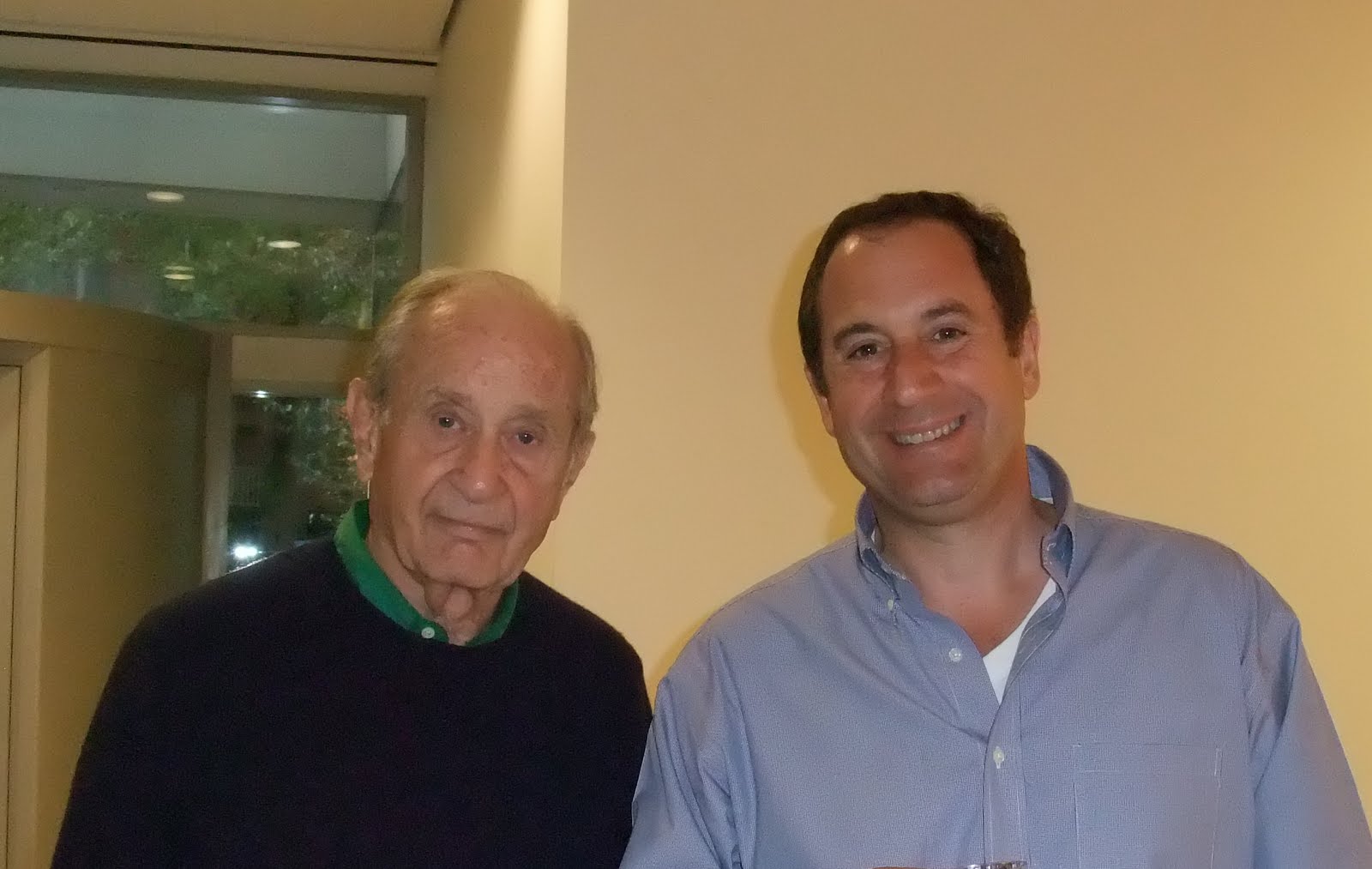
Photo: Stuart Essig, right, is pictured with Leonard L. Kaplan, who has a 20 Nassau Street-based firm, Pharmaceutical Quality Associates. He is starting a new venture based on a class of chemicals that affect the immune system. Kaplan confided to me that day that he aims to convert to an S Corp. and float some stock, indeed, starting all over again. It’s never too late to develop a great new idea.

Suzanne Farrell: Stay Out of Your Comfort Zone

When you work on a new dance you are called upon to make a new world, to make something from nothing, said Suzanne Farrell, speaking after her ballet company performed works by George Balanchine at McCarter earlier this month. In the photo she is flanked, on the left, by New Yorker dance critic Joan Acocella and, on the right, by Simon Morrison, professor of music at Princeton. On the program were Balanchine works set to Mozart, Stravinsky, and Morton Gould. The latter, “Clarinade,” had been set on Farrell when she was just 18.

I’ve tried to transcribe Farrell’s post performance conversation here, or if you can’t see that, try this google doc, but this is not the final version. I’m hoping others — including Acocella, Farrell, or Morrison — can correct or add to this document.

A Princeton connection: Erin Mahoney, who trained at the Princeton Ballet School and with ARB, danced with Farrell’s company in 2004 and was reviewed by John Rockwell in “Clarinade” in 2004.

“I call Mr. B’s ballets ‘worlds.’ At first they feel foreign. You have never been there before,” said Farrell. “It takes a certain amount of inner resources not to fall back on what you have done before, not to paint the choreographer into a corner where you are comfortable. “

Sounds like risk management to me. Entire libraries have been written about that, and here a dancer is saying don’t manage risk. To be creative yourself, to put yourself at the service of a creative person’s ideas, don’t manage risk, take the dangerous chance.

That’s as scary an idea for a writer as it is for a dancer. (You mean I can’t just dish out a new version of Article Template B? I have to start fresh each time? Sounds like lots of work.)

Farrell made her challenge even more difficult: “Dancers need to rehearse different options of how it looks, different options to have in their arsenal of memory. They need to live in the moment, and if something unexpected happens, be ready to take the challenge.”

Live in the moment? That’s another truism that is easier said than done.

Both concepts — taking risks, living in the moment — are crucial to learning how to be creative. Both can be learned by dancing.

Posted by Picasa