Category Archives: Faith and Social Justice

items from Not in Our Town Princeton (http://niotprinceton.org) and Princeton United Methodist Church (http://princetonumc.org)

‘Grit is downstream from longing’

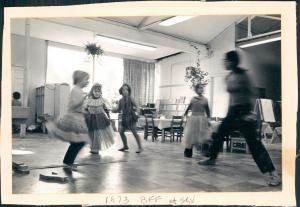
1973 BFF_at_SRV“The G.P.A. ethos takes spirited children and pushes them to be hard working but complaisant.” So said David Brooks in the New York Times in a column I want to keep, hence I’m writing about it now. Read it here and we can compare notes. Brooks says striving for the highest grades is “one of the more destructive elements in American education.”

I’ve been thinking about this since the ’70s when I watched children enrolled at a private progressive school, School in Rose Valley, which encouraged individual enthusiasm. I taught there for a year, as at left. When students transferred to public school. I saw lust for creativity at least temporarily squashed. At least those children didn’t succumb to “high GPA fever” as evidenced by OK but not outstanding grade averages.

Then we moved to  Princeton where some fight tooth and nail for GPA honors. Grade mongering is also rampant in neighboring districts, dare I finger West Windsor-Plainsboro? (As an aside, parents choose this value when they buy a house  according to a column in the Washington Post:  “Forty to fifty years of social-science research tells us what an important context neighborhoods are, so buying a neighborhood is probably one of the most important things you can do for your kid,” says Ann Owens, a sociologist at the University of Southern California.)

But arduous pursuit of grades is not all bad, according to Angela Duckworth, a MacArthur fellow and author of the new book “Grit: the power of passion and perseverance” as quoted by Brooks. People with grit also have a high moral purpose, she says, and “they know in a very very deep way what it is that they want. Everybody’s life is organized around some longing.”

fhjf grading papers with E
Frank H. J. Figge at the dining room table, with a granddaughter working alongside.

That helps explain my own motivation. I grew up with parents who took their work home, who worked all hours of the day and night to Get Things Done. My father taught medical school, did cancer research, and edited anatomy volumes. My mother helped him. They exemplified grit, a passion to succeed that was organized, not around grades, but around what you could accomplish. Drawn in also, to help, my sister and I absorbed the self discipline that, as Brooks points out, can lead to career success.

How do you teach this, or can it be taught? Can it be only absorbed? Brooks says that people with grit have a strong inner desire. “Grit is thus downstream from desire. People need a powerful why if they are going to be able to endure any how.”

Duckworth says that schools could be designed — not to encourage scrabbling for grades but to “elevate and intensify longings.” In a school like that,  Brooks suggests, “you might even deemphasize the G.P.A. mentality, which puts a tether on passionate interests and substitutes other people’s longings for the student’s own.”

When I talk to high school seniors, as an alumna interviewer of a selective college, it’s hard to differentiate between an overprogrammed student who has been coached to be enthusiastic about a cause and one who has a true deep passion for a cause. Then I wonder — isn’t it OK to find your passion later in life? Yes, I decided, if you established your “grit” when you were young.– Barbara Fox


Jim Looney: Science educator extraordinaire

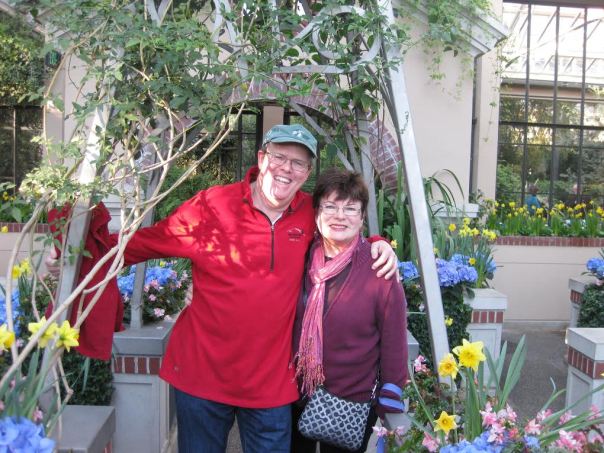
I’m happy to share good this news, offered by Dr. Karen Zumbrunn. Karen – and Jim and Anna Looney -are good friends of mine at Princeton United Methodist church. Congratulations to all involved in this exciting project, and good luck in Wisconsin! 

looney london

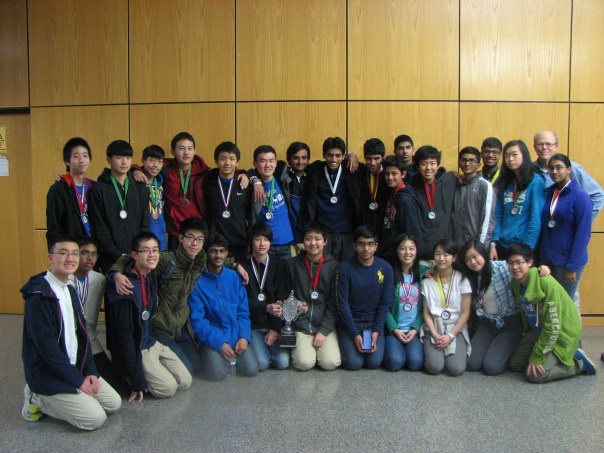
For the second year in a row, the Science Olympiad team at West Windsor-Plainsboro North High School will represent New Jersey at the National Science Olympiad to be held May 19 to 21 at the University of Wisconsin-(Stout campus) in Menomonie, Wisconsin.

The team is coached by Dr. Jim Looney, who has taught in the West Windsor-Plainsboro system since 1999. He was recently named Teacher of the Year by his colleagues at WW-P North.

From a pool of 60-70 students two teams of 18 members each are selected. For the state competition each school can bring only one team to compete. For the nationals 15 members and 7 alternates are selected. During the year the teams went to invitational tournaments in CT, PA, NJ, NY and also prepared at the local public library and in each other’s homes.

The Science Olympiad has 25 events in all aspects of Science.  Some events are tests, such as Disease Detective, and Dynamic Planet. Other events, such as Forensics, Anatomy, Fossils, have a lab component. Still others require building a device, such as a Robot Arm or Protein Modeling. Participants can win individual medals; the team score is based on the total score from all events.

At the national tournament the WW-PN team will meet teams from all over the country and have challenges at a high level of competition. The Science Olympiad provides opportunities to develop leadership skills and learn the value of teamwork.

“As a coach, I am responsible for the tests, team selection, mentoring and organization” says Looney, but he credits physics teacher Regina Celin, biology teacher Holly Crochetiere, and chemistry teacher Kerry Pross, who are indispensable help in organizing, coaching and attending competitions. Looney acknowledges, “Coaching is such a time and labor-intensive job that it would be impossible to do all we do without their help” and assistance of other faculty as well as supportive parents. He himself brings extensive science experience in laboratory work in molecular biology in both commercial, medical  and academic contexts. He holds a Ph.D. in molecular biology and genetics from Columbia University.

Dr. Looney is active at Princeton United Methodist Church. For several years he went with church youth for an Appalachian service project. He has served  as president of the United Methodist Men’s Group. He is married to Dr. Anna Looney, an assistant professor at Robert Wood Johnson Medical School. They have one child, Emily, a family physician who lives in the Pacific Northwest and is completing a fellowship in hospice and palliative care.

Science Olympiad team North

Ghetto confinement then and now

DSCF1711 venice ghetto museum
From 1516 on, Venetian Jews had to live behind high walls on one island named after a copper foundry, “geto.” 

It’s wrong to use the word “ghetto” to signify “all things bad, broke, and black,” according to Mitchell Duneier, author of a book reviewed on April 17 in the New York Times. Khalil Gibran Muhammad reviewed “Ghetto: the Invention of a Place, the History of an Idea,” by Duneier, a Princeton University sociologist who is known for his book on sidewalk life, and who focuses on the black urban experience.

Duneier wrote that “Place-based policing” is one way whites majority historically used space to achieve power over blacks.

Muhammed writes that though “many white people know what it’s like to be poor…the ghetto involves more than restrictions on income; African-Americans, like the Jews of 16th century Venice…have historically had to contend with restrictions on where they could live — restrictions on space and on their very humanity.”

DSCF1701 venice ghetto museum
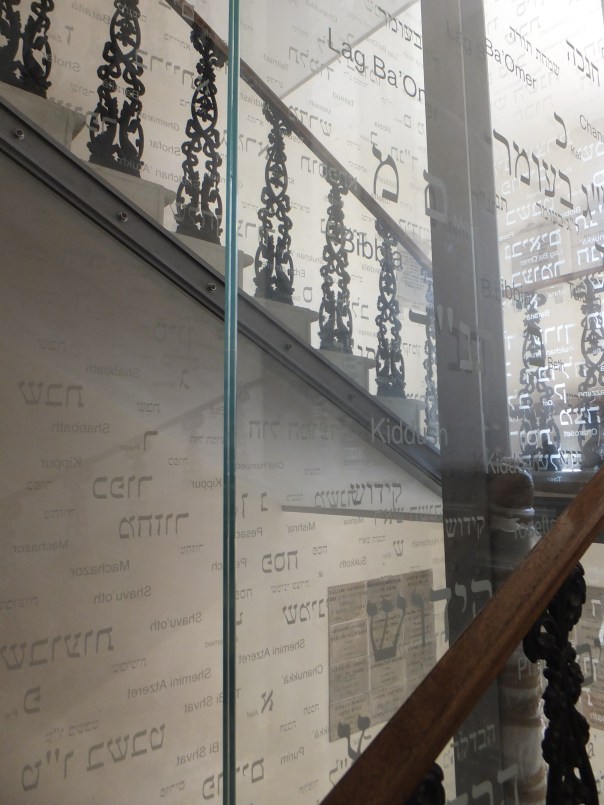
Inside the museum in Venice’s Ghetto Nuovo 


Princeton Prizes for Positive Race Relations

Coming to town — a conference based on a national prize that Princeton University awards, aiming to “promote harmony, understanding, and respect among people of different races by identifying and recognizing high school age students whose efforts have had a significant, positive effect on race relations in their schools or communities.” The Princeton Prize Symposium on Race is Friday and Saturday, April 29 and 30. Mickey Faigan, of Issues Management (based at Princeton Overlook) will open the conference on Friday, and the speakers include Michele Tuck-Ponder, who gives a workshop on 90-second elevator speeches. Saturday’s proceedings are open to the public. 2014 4 prize symposiumI’d also like to point out that Not in Our Town Princeton ––  an interracial, interfaith group united to advance the cause of racial justice in Princeton — gives annual Unity Awards to Princeton High School students who have helped to carry out the NIOT Princeton mission statement:  We are committed to speaking truth about “everyday racism” and other forms of prejudice and discrimination. Where there is conflict we promote reconciliation with open, honest engagement and mutual respect. Our goal is that Princeton will grow as a town where everyone is safe and respected.


Cannabis and Construction: Controversial at the chamber

David Knowlton, head of the Compassionate Care Foundation, will speak at the Princeton Regional Chamber breakfast at the Nassau Club on “Medical Marijuana: Myth vs Reality” on Wednesday, April 20. 

Is cannabis more controversial than Avalon Bay’s construction at the site of the former Princeton Hospital? At the chamber’s Real Estate Business Alliance on April 29 at Springdale Golf Club,  Ron Ladell of AvalonBay Communities will speak and answer what could be some aggressive questions.

UFAR’s African Soiree 3/19

2014 elsie and daniel
Daniel Shungu, founder of UFAR, with Prof Elsie McKee, UFAR supporter and founder of another Congo-based charity, FEBA: Woman, Cradle of Abundance. 

This is an alert about and an invitation to this Saturday’s African Soiree to benefit the United Front Against Riverblindness,  founded by Lawrence resident Daniel Shungu, who has an amazing story — he took early retirement from Merck to “give back” to his home country, the Democratic Republic of Congo.

My church, Princeton United Methodist, sent a mission team to the Congo in 2008. That was the year we had four (count ’em 4!) fundraisers including the “first annual” African Soiree.

2016 3 15 P1010646 geri vasanth at buffet
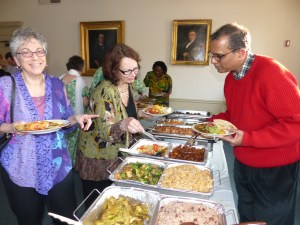
Geri LaPlaca, left, Anne Fikaris and Vasanth Victor enjoy the authentic African buffet at the Soiree

Here, a picture of the bountiful feast — the multi-course home-cooked African and American dinner prepared by volunteers — a major feature of the African Soirée. On Saturday, March 19, it starts 5  p.m.(doors open at 4:30 p.m.) at the  Mackay Campus Center of Princeton Theological Seminary, 64 Mercer St. Princeton NJ. Tickets are $70 per adult and $35 per child at www.riverblindness.org. For free parking, enter from College Road.shankadi mask

At the Soiree you can shop at the “African Market,” bid on exciting auction items, and get an update on the progress of the UFAR mission by Dr. Shungu. If you’ve attended in the past, you know how much fun it is — Thursday is not too late to get tickets. 

OLYMPUS DIGITAL CAMERA
Daniel Shungu, founder of UFAR, with Prof Elsie McKee, UFAR supporter and founder of another Congo-based charity, FEBA: Woman, Cradle of Abundance.

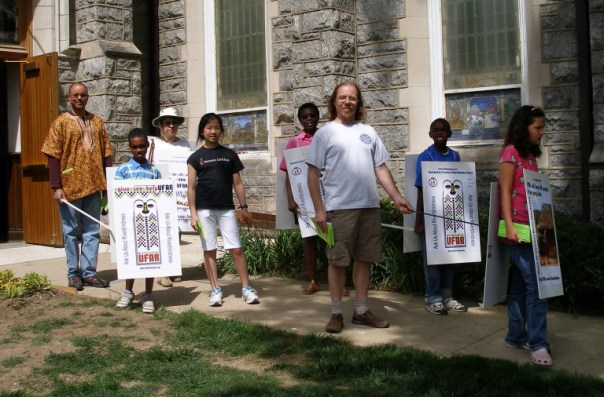
In 2008 to get support for the mission trip, adults and kids from PUMC acted out what it means to be blind in the Congo — where riverblindness ruins two lives, the adult who is blind and the child who must leave school to lead the adult with a pole. This photo shows how we marched through Communiversity with children leading adults to bring the message “$10 saves 7 people from going blind.”

Every year since then UFAR sets up a table at Communiversity in front of the church. Look for them on April 17 on Nassau and Vandeventer at  “the friendly church on the corner.” .

Guest author: Chrystal Schivell

Chrystal Schivell: “Any person’s story can be fascinating, but every black person’s story is an education for me.” Here is an important post from her blog

Chrystal Schivell's avatarwhyalwaysblackandwhite

I’d be more optimistic about achieving a post-racial society if some of my neighbors were black. Recently I visited a town in rural New Jersey. A white couple lives across the street from a black friend of mine, who has just returned from the hospital. The couple promised they’d drop over daily to help her out. Down the street three young black men pulled into their driveway, next door to a white guy mowing his lawn. An integrated community with at least one neighborly neighbor! Do they even bother to notice black and white?

In Princeton, some of us constantly notice black and white because we’re worried. As the value of land increases, along with taxes, black people whose families have resided in Princeton since its early days may be forced to leave. We say that we want to keep Princeton’s diversity, but it’s not certain that, even with white…

View original post 367 more words

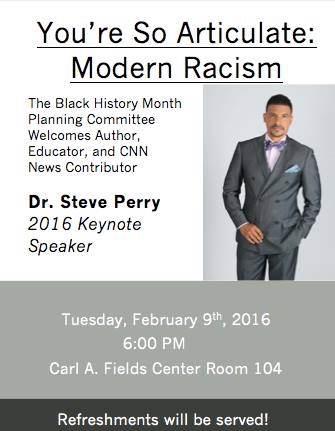
Tonight 2/9: Modern Racism

black history month

Nassau: follow Denison’s tracks

In a New York Times column on why diversity isn’t working in colleges, Frank Bruni points out that even when “diverse” candidates (read black, Latino, economically challenged students) they tend to self segregate. Colleges aren’t doing much about helping students feel comfortable with people different from themselves. Here’s an idea from Denison University:

At Denison University, near Columbus, Ohio, there are special funds available to campus groups that stage events with other, dissimilar groups. Adam Weinberg, the college’s president, told me that he’d attended a Seder at which Jewish students played host to international students from China.

And he said that the school was examining everything from the layout of campus walkways to the architecture of common areas to try to ensure that students’ paths crossed more frequently than they diverged.

“We have a group of students and faculty meeting to think about our quad and how can we make some small changes that would bring back a public square where students might congregate,” he told me.

This could work ‘at home,’ at Princeton University, in more than one way.

An aside: William Bowen, former P.U. president, went to Denison.

#TheGenerationofNow


goldie taylor

Goldie Taylor (above, veteran journalist now editor at The Daily Beast) joins Zelli Imani and Brittany Packnett in a #BlackLivesMatter panel at #TheGenerationofNow program at the Carl Lewis Center on Sunday, December 13, 1:30 to 6 p.m., arranged by redefy. Primarily for teens but open to adults, organizers expect more than 200 people, but you may be able to register here.

If you can come only for part of the afternoon, the panels are from 1:30 to 4:55 p.m. and they are in this order: The first panel, with Donya Nasser and others,  is on interfaith activism — how to advance racial justice between different faith-based communities. Second is #BlackLivesMatter. Third is Haroon Mogul, an expert on Islam, foreign policy, and the Muslim World, on combatting Islamophobia. The fourth panel, with Lina Wu, Caroline Lee and others,  is on marginalization of the Asian experience in mainstream culture.