That’s a quote from the “Rate my professor’ page for Janell Byrne, who quietly retires as director of Mercer Dance Ensemble after, by my count, 36 years at Mercer County Community College. (Her 30th anniversary concert was in 2010).
I’ve attended almost all of these concerts and this stands top of the list. Perhaps I’ll have time to explain why later, but I’m sending this out now because the final performance is today, Sunday, May 22 at 2 p.m. at Kelsey Theatre.
Here is the list of MCCC dancers: Amy Annucci of Ewing, Kayla Johnson of Wrightstown, Caitlin Kazanski of Robbinsville, Diego Montealegre of Lawrence, Terrell Moody of East Windsor, Sabrina Rahman of Lawrenceville, Brianna Rapp of East Windsor, Victoria Smalls of Hamilton Township, and Kourtney Tremaine of Trenton. Alumni and community dancers include Rebecca Brodowski, Nicole Colossi, Maleek Colvin, Jennifer Gladney, Delany Hoffman, Maria Laurenti, Stephanie Maher, Danielle Marchant, Ashley Miller and Taylor Miler.
Few choreographers have had Byrne’s opportunity — and burden — to produce, every year, handfuls of imaginative works on dancers of various body types and abilities. I love to see how she does it, how she makes dancers out of people who never danced before.
I can’t resist calling attention to this 1927 New Yorker article on Isadora Duncan written while she was still alive. It came to me in a David Remnick newsletter with the theme “Bohemians.” If only I had asked my mother, who would have been 28 years old, what she and her mother thought of Isadora then. Janet Flanner wrote:
A Paris couturier recently said woman’s modern freedom in dress is largely due to Isadora. She was the first artist to appear uncinctured, barefooted and free. She arrived like a glorious bounding Minerva in the midst of a cautious corseted decade. The clergy, hearing of (though supposedly without ever seeing) her bare calf, denounced it as violently as if it had been golden…
She has had friends. What she needed was an entire government. She had checkbooks. Her scope called for a national treasury. It is not for nothing that she is hailed by her first name only as queens have been, were they great Catherines or Marie Antoinettes.
As you read it, listen to Chopin and Strauss, then watch one of the videos. Or look at ‘The Revolutionary,” (to Scriabin, 1923) where she used gravity (movement with weight) to foment both a political and an aesthetic revolution.
Imagine watching Isadora dance in chiffon gauze while you, like my grandmother, are laced in a corset.
Have you forgotten about, or have your ever even seen, the giant sculpture jewel of Princeton’s campus, the Richard Serra sculpture? Two New York Times articles in the past two days made me want to go back and ‘walk’ the tunnel again. On May 12 Ken Johnson dubbed Serra the “greatest living sculptor of Minimalist abstraction” and suggested that to view Serra’s work currently at the Gagosian Gallery was “an engulfing experience…Moving through the construction, you become acutely attuned to sight, touch and sound and to your own being in time and space. Consciousness itself becomes an object of consciousness.” Today’s article on San Francisco’s MoMA features a Jason Henry photo (above) of the Serra sculpture at the museum’s entrance.
Serra’s 2010 sculpture, behind the Lewis Library (my photo above), is known as “The Fox and the Hedgehog.” As described on the campus web page,Industrial yet sensual, this massive sculpture invites visitors to walk through its steel curves in order to experience art, space, and environment in a physical way. The title, taken from an Isaiah Berlin essay on Tolstoy, quotes the Greek poet Archilochus: “The fox knows many things, but the hedgehog knows one great thing.” Serra extends this proposition as a question to students—will you be a fox or a hedgehog?
I am not a minimalist. Anyone who has been in my house knows that. But I like to feast my eyes on uncluttered space and put my body between the comforting metal walls of the Serra sculpture. If you haven’t tried it — do, and you can decide if you want to be the Fox or the Hedgehog. For me, that decision has already been made.
“The G.P.A. ethos takes spirited children and pushes them to be hard working but complaisant.” So said David Brooks in the New York Times in a column I want to keep, hence I’m writing about it now. Read it here and we can compare notes. Brooks says striving for the highest grades is “one of the more destructive elements in American education.”
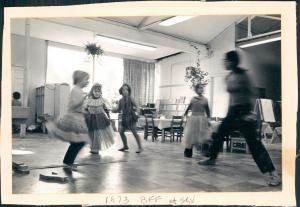
I’ve been thinking about this since the ’70s when I watched children enrolled at a private progressive school, School in Rose Valley, which encouraged individual enthusiasm. I taught there for a year, as at left. When students transferred to public school. I saw lust for creativity at least temporarily squashed. At least those children didn’t succumb to “high GPA fever” as evidenced by OK but not outstanding grade averages.
Then we moved to Princeton where some fight tooth and nail for GPA honors. Grade mongering is also rampant in neighboring districts, dare I finger West Windsor-Plainsboro? (As an aside, parents choose this value when they buy a house according to a column in the Washington Post: “Forty to fifty years of social-science research tells us what an important context neighborhoods are, so buying a neighborhood is probably one of the most important things you can do for your kid,” says Ann Owens, a sociologist at the University of Southern California.)
But arduous pursuit of grades is not all bad, according to Angela Duckworth, a MacArthur fellow and author of the new book “Grit: the power of passion and perseverance” as quoted by Brooks. People with grit also have a high moral purpose, she says, and “they know in a very very deep way what it is that they want. Everybody’s life is organized around some longing.”
Frank H. J. Figge at the dining room table, with a granddaughter working alongside.
That helps explain my own motivation. I grew up with parents who took their work home, who worked all hours of the day and night to Get Things Done. My father taught medical school, did cancer research, and edited anatomy volumes. My mother helped him. They exemplified grit, a passion to succeed that was organized, not around grades, but around what you could accomplish. Drawn in also, to help, my sister and I absorbed the self discipline that, as Brooks points out, can lead to career success.
How do you teach this, or can it be taught? Can it be only absorbed? Brooks says that people with grit have a strong inner desire. “Grit is thus downstream from desire. People need a powerful why if they are going to be able to endure any how.”
Duckworth says that schools could be designed — not to encourage scrabbling for grades but to “elevate and intensify longings.” In a school like that, Brooks suggests, “you might even deemphasize the G.P.A. mentality, which puts a tether on passionate interests and substitutes other people’s longings for the student’s own.”
When I talk to high school seniors, as an alumna interviewer of a selective college, it’s hard to differentiate between an overprogrammed student who has been coached to be enthusiastic about a cause and one who has a true deep passion for a cause. Then I wonder — isn’t it OK to find your passion later in life? Yes, I decided, if you established your “grit” when you were young.– Barbara Fox
From 1516 on, Venetian Jews had to live behind high walls on one island named after a copper foundry, “geto.”
It’s wrong to use the word “ghetto” to signify “all things bad, broke, and black,” according to Mitchell Duneier, author of a book reviewed on April 17 in the New York Times. Khalil Gibran Muhammad reviewed “Ghetto: the Invention of a Place, the History of an Idea,” by Duneier, a Princeton University sociologist who is known for his book on sidewalk life, and who focuses on the black urban experience.
Duneier wrote that “Place-based policing” is one way whites majority historically used space to achieve power over blacks.
Muhammed writes that though “many white people know what it’s like to be poor…the ghetto involves more than restrictions on income; African-Americans, like the Jews of 16th century Venice…have historically had to contend with restrictions on where they could live — restrictions on space and on their very humanity.”
Limon dancer Sarah Stackhouse, left, setting “There Is a Time” on American Repertory Ballet, August 2015
Some of my most exquisite dance memories came from watching Jose Limon’s company perform in 1960, when I was a college student at the American Dance Festival.Some of my most embarrassing moments came, that summer, when I struggled to participate in Limon’s class.
Both came flooding back last August when I watched a former Limon company member, Sarah Stackhouse, on the first day of her teaching the masterwork “There Is a Time” to the American Repertory Ballet. The technique that looks so easy and natural on her body –I began to feel it in my long-ago bones. I’ve been impatient to see the company perform it tonight (Friday, April 8) at McCarter Theatre (tickets here). Do whatever you can to get there, because this piece, based on Ecclesiastes 3, will touch your heart. Here is a video of excerpts from the piece, as performed by the Limon Dance Company.
The April 8 program, titled Masters of American Dance and Music, features the world premiere of Mary Barton’s A Shepherd Singing (And I Still Heard Nothing) with the music –– Beethoven’s Symphony No. 7 – performed live by the Princeton University Orchestra under the direction of Michael Pratt.
ARB is at the State Theater next week, April 15, when the company dances to two iconic Stravinsky scores, Firebird and Rite of Spring, vividly choreographed by Douglas Martin. It’s called Echoes of Russian Ballet.
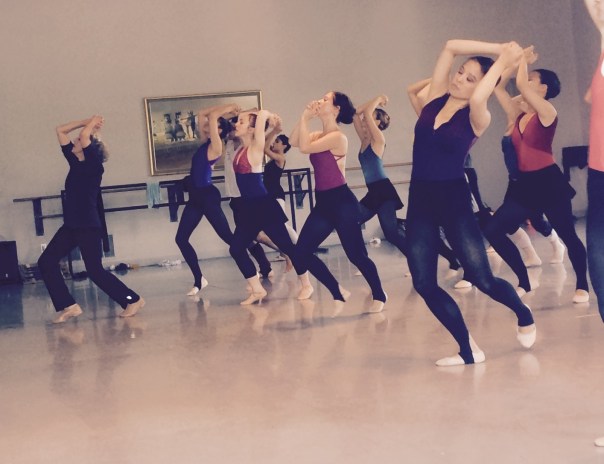
After 35 years at Princeton Ballet School, Mary Pat Robertson has retired. I’m very sad for the dance community but glad for her to have a less compressed schedule
In a comprehensive article by my colleague Anne Levin at Town Topics, Robertson says — and I know this to be true about her — that she loves coaching young dancers and mentions two of her former students among the many. Kraig Patterson (formerly with Mark Morris) and Unity Phelan, Phelan, whose father is entrepreneur John Phelan, was named in a March 1 essay on rising stars at City Ballet by New York Times critic Alastair Macauley. I saw Phelan teach a master class at PBS and was captivated by her energy and fascinated by her feet. More on that at another time.
Meanwhile I hark back to what was, for me, the heyday of modern dance in Central Jersey, the early ’80s, when Robertson launched an innovative company, Teamwork Dance. Teamwork concerts were never dull, The late Geulah Abrahams and Michelle Mathesius had their own companies — and even Mark Morris performed at Trenton’s Mill Hill Playhouse. Grant money was available and — surprise! — just a little bit of dough encouraged a lot of dance.
One of Teamwork’s principals, Janell Byrne, also danced with Abrahams and has had her own company for three decades at Mercer County Community College’s Kelsey Theatre. Her choreography is on the program this weekend at Rider University, which is now the center for innovative dance. “Transforming and manipulating a scenic element…..” sounds intriguing!
John Marshall, son of the founder Sue Simpkins, is cashing out the family stake in Main Street Cafe and Bistro, which has two eateries and a catering kitchen. I remember interviewing Simpkins when she opened in Kingston and talking to her and Marshall over the years, including for an elicited oped page.
As Planet Princeton says here, both the Cafe in Kingston and the Bistro at Princeton Shopping Center are staples here in Princeton, just as flour and cinnamon are staples in a kitchen. The Bistro is our family’s “go to eatery,” the dining equivalent to comfort food. Here’s hoping the ribollita and the chili don’t change.
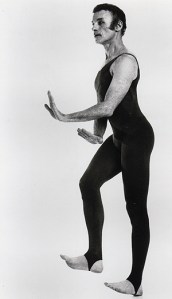
Murray Louis — one of my favorite choreographers — died yesterday, February 1, age 89. Jack Anderson, long time dance critic for the New York Times, wrote the obituary, with this poignant description of a dance will resonate with many who have lost life companions — or who dread losing them. (Stephen Ministers, take note…) To quote:
One of Mr. Louis’s most memorable and moving works was created in 1994 as a memorial to Mr. Nikolais, his longtime collaborator and companion,who had died the previous year at 82. Mr. Louis titled it “Alone.”
In the piece, Mr. Louis never moved far from one spot, making the empty stage around him seem like a vast void. He kept turning from side to side, as if expecting someone to enter, but no one was ever there. Nor was there anyone to touch when he spread his arms wide.
From time to time, as he danced to recorded music by Astor Piazzolla, he clenched his fists, then bent over and drummed them quietly on the floor. Yet he always preserved his decorum and never exploded into rage or grief. Ending the solo, he slumped in dejection.
In Lisbon, Portugal, a delivery boy is featured on the monument for newspaper magnate Eduardo Coelho
I couldn’t help but smile when I saw that Boston Globe reporters, frustrated by delivery problems, volunteered to get out and actually deliver Sunday’s paper themselves. Article here, courtesy of my Twitter feed. In 1986, for my first week at U.S. 1, everyone on the staff (plus the freelancers) loaded up with papers and headed out from Mapleton Road to their delivery routes.
As Rich Rein used to say . . . “When you deliver, you get to know your readers.” Our deliverers are also paid to be reporters — to note when companies come and go. Even when we moved “up” to Roszel Road, cheerful willingness to pitch in on delivery was a condition of employment.
I couldn’t help but be sad when I realized that the Globe fired 600 people who worked for its former delivery service. Yes they hired 600 more but the previous workers were surely living on the margins, some struggling to learn a new language in a new country. You don’t work midnight to eight, putting miles and miles on your car or your feet, unless you really need the money.
Then I remembered how gratifying it was for those of us who wrote the paper to actually deliver a paper that is warmly welcomed by its readers. In virtually all the buildings, I would be greeted by — “Oh good, U.S. 1 is here, thank you!”
 cer County Community College. (Her 30th anniversary concert was in 2010).
 Have you forgotten about, or have your ever even seen, the giant sculpture jewel of Princeton’s campus, the Richard Serra sculpture? Two New York Times articles in the past two days made me want to go back and ‘walk’ the tunnel again.
 “The G.P.A. ethos takes spirited children and pushes them to be hard working but complaisant.” So said David Brooks in the New York Times in a column I want to keep, hence I’m writing about it now.

 After 35 years at Princeton Ballet School, Mary Pat Robertson has retired. I’m very sad for the dance community but glad for her to have a less compressed schedule
 Murray Louis — one of my favorite choreographers — died yesterday, February 1, age 89.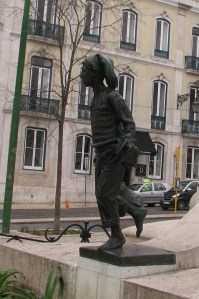

 Princeton Comment