Category Archives: Around Town

Personal posts — some social justice (Not in Our Town), some faith-related (Princeton United Methodist Church), some I-can’t-keep-from-writing-this

Congregation Beth Chaim stages “Memories of Auschwitz on the 70th Anniversary of Liberation Monday” on Monday, April 13, at 7 p.m.

Cantor David Wisnia and his grandson traveled to Poland on the occasion of the 70th anniversary of the Liberation of Auschwitz, and he will share his story.

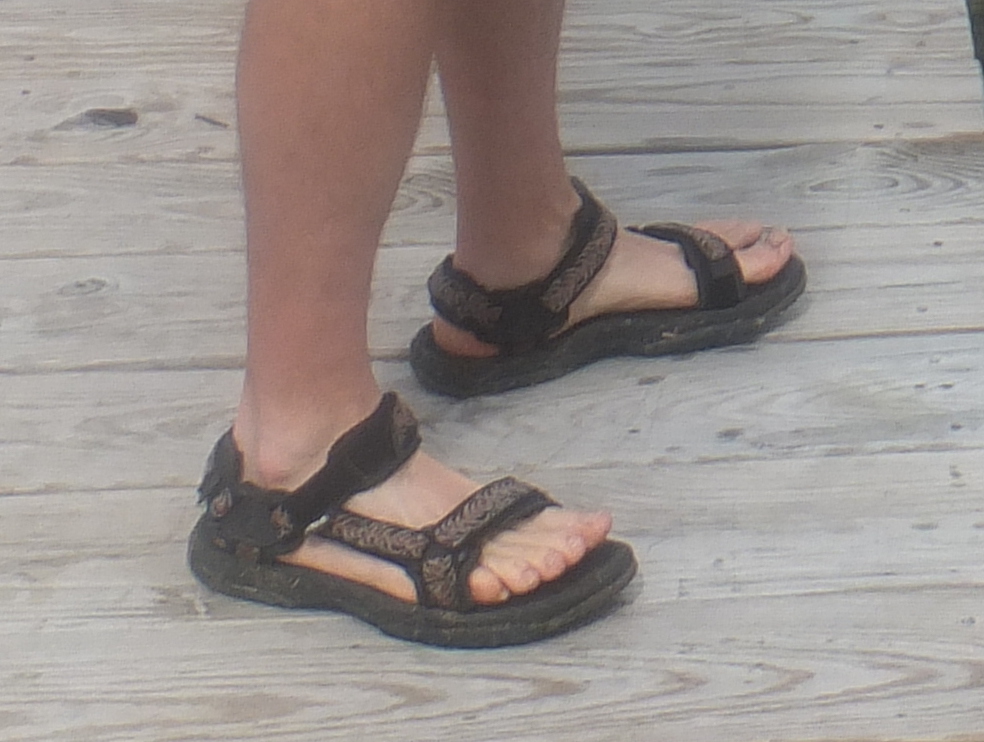
Maundy Thursday: Airline Miles and Shy Feet

shy feet

In my email on Linked In this morning, chamber colleague Ken Haag published Is Your Business Heartland Secure? 

By following Haag’s link, I reminded myself that Heartland has a shop local card that helps Princeton merchants by eliminating processing fees. Another colleague at the Princeton Regional Chamber of Commerce, Adrienne Rubin represents that division. With the One Princeton card, you can pay for things with your smart phone. Benefit to consumer: one percent of every transaction goes to the consumer’s choice of any of dozens of nonprofit organizations, including the Latin American Legal Defense Fund,  Princeton Senior Resource Center, and Princeton Community Housing

I sure hate to give up airline miles, but frequent flyer seats are getting scarce.

And thanks to Rothstein Hughes, who attends Grant Chapel in Trenton, I learned that on Maundy Thursday (today, when Jesus observed his last Passover meal with his disciples) it’s traditional to — not only wash the feet of the poor — but also hand out alms.

Queen Elizabeth follows that tradition TODAY in Sheffield, England, giving money to 89 people, a number that represents her age.

So today I’ll actually join up to get that One Princeton card. With every transaction, I will lose airline miles — but one percent of the transaction will benefit charity.

No, Queen Elizabeth is not doing the foot washing part — but some of us will. Tonight at 7:30 at Princeton United Methodist Church the youth choir leads the Holy Communion Service along with foot washing.

For folks like me, the alternative is hand washing. I have shy feet.

And you?

Somebody’s Cat? An Einstein Connection….

An emailed cartoon from the New Yorker enlightened me on an area of quantum physics I knew nothing about. I still know nothing about quantum physics, but now I know that theories about somebody’s cat had something to do with it.

Here is the link to the New Yorker cartoon. You might have to page through till you get to the one in the vet’s office, where the female vet tells a bespectacled man, “About your cat, I have good news and bad news.” The cat’s owner’s name, in the cartoon, is Mr. Schrodinger (with an umlaut, spelled Schroedinger in English).

220px-Erwin_Schrödinger
Erwin Schroedinger

I could see nothing funny about the drawing or the comment. Finally I realized that the name was unusual, maybe it meant something. I googled it, and found pages and pages about a quantum physicist named Schroedinger who theorized that a cat could be both dead and alive at the same time. (Now I know why I don’t want to study quantum physics, but here is a link to where someone tries to explain it).

Turns out everyone else knew about this man’s cat. It was referenced in TV shows like the Big Bang and Doctor Who, and lionized in a schrodinger-cat_2641464bGoogle doodle. He even has his own Facebook page. This cat may even be featured  on the Top 20 list of Science Facts that English Majors Should Know.

Why do I bring it up on a blog that focuses on Princeton? The Einstein connection, a connection so important that it’s the subject of Einstein’s Dice and Schroedinger’s Cat, a forthcoming book by Paul Halpern, due out on April 15.

it’s all theoretical of course, or the SPCA would object.

This Huffington Post post, “6 things I wished I had known about cancer” has no real Princeton connection, other than all the people I’ve known who had and have cancer.

talking head wayne cookeWell, that’s not quite true. There IS a Princeton connection — to Wayne Cooke, who wrote “On the Far Side of the Curve: a stage 4 colon cancer survivor’s journey.” Cooke far outlived his expected years and shared his tips in this U.S. 1 article and then in his book (now downloadable for free).

Both sets of tips are valuable. I put them here so I can supply them “just in time” to those who will need it.

Sara’s Advice to Future Brides

sara and dan

If you are planning a wedding, know someone who is planning a wedding, or remember your own wedding — read the last installment of Sara planning her wedding in U.S. 1. Fun, poignant, cogent.  Bent Spoon cupcakes instead of a wedding cake and remorse over no video.

John Springrose: “Prototype your imagination”

Sometimes a better chamberspeaker says what they said to a U.S. 1 reporter as published in the previous issue. Not so this time. Diccon Hyatt’s interview with John Springrose was way different from his talk at the Princeton Regional Chamber breakfast this morning. Springrose’s company (formerly inDimension3, now Philadelphia-based Koine) pioneers in 3D printers, more aptly named “rapid prototyping machines.

An IBM-er turned investment banker, Springrose  began with a “then and now” show of how innovation increases productivity, even though jobs are lost along the way. For instance, IBM’s first middle market computer, System 32, cost $40,000 and had only 5k of memory but in 1975 it could replace accounting functions. Checkers were replaced by self checkout and scans, tellers by ATMs, German auto workers by robots, and so on. “Innovation does lead to productivity,” he tells students, “and it forces us to think.” Be an innovator or run the risk of losing your job.

Examples of how a rapid prototyping machine can work: High school student gets an idea for jazzing up the wine drinking experience. Prints a prototype of a new wine holder, gets it manufactured in China, sells several hundred units on ebay for $40 each, total cost of each unit $1.89, accomplished this in less than a month. Product: a wine bottle holder that is lit from underneath, sending colors through a bottle of white wine. Cool. True story.

A plant “goes down” for lack of a part? A 3-D printer could make that part in a snap. A corporation could have a rapid prototype machine in the lobby and greet clients is greeted with a logo or miniature product from their company. Now that’s hospitality.

Three-D printers like toys can cost as little as $700 but, to be reliable, one should cost at least $5,000 for business use. Customers are mostly overseas. Springrose worries that the U.S. is getting left behind.

In addition to plastic, products can be in wood, metal — “anything that will melt.’ His industry today is where IBM’s System 32 computer was in 1975. “You give me the industry, I give you the use,” he offered.  “Prototype your imagination,” he challenges. “If you think about it, you can do it.”

As for the difference between the interview and the talk — the reporter dug into the not-so-successful early stage of Springrose’s company, when it was making cheap printers that were not reliable and got scathing online reviews. That’s why Springrose moved to the high end. More than 700 startups make 3 D printers but just three– including Koine — are working on business-quality tools.

Springrose has a very personal interest in the medical applications for his devices. He looks forward to the day when a rapid prototyping machine can print out a liver or a kidney. That’s because he has lived through a liver transplant. But printable organs won’t happen any time soon. Springrose came without a demo machine because — the day before, he demoed to doctors at Jefferson — and they broke the machine.

Photo: L to R, Grant Somerville (chamber program committee), John Springrose, Peter Crowley (chamber CEO).  
Amazing African Art in Soiree Auction

3 Luba Shankadi mask

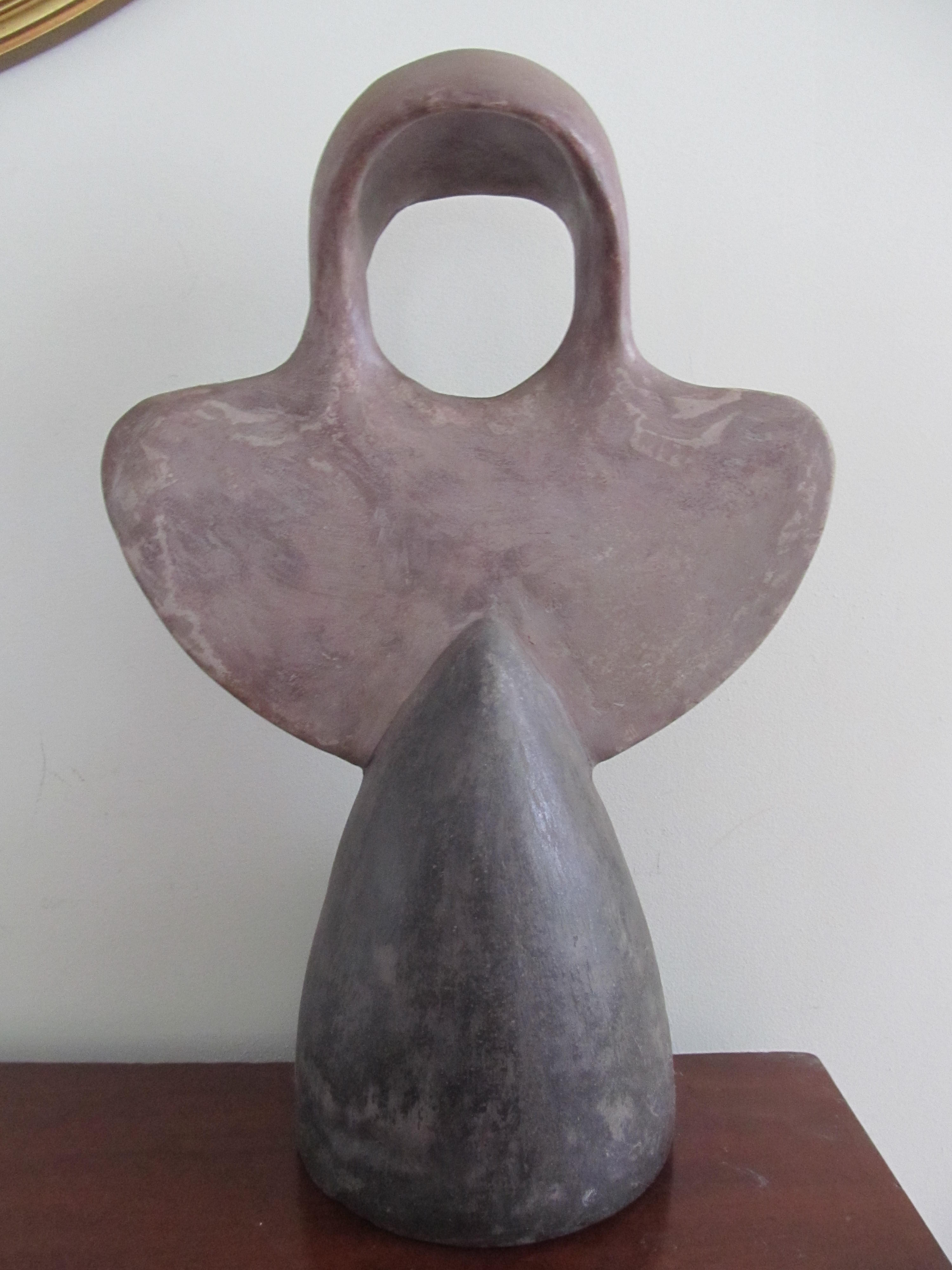
This amazing Luba Shankadi mask will be in a live auction, at the African Soiree to benefit United Front Against Riverblindness. It starts at 5 p.m. on Saturday, March 21 at the Princeton Seminary and includes a buffet of African and international foods, entertainment, and an update from UFAR founder Daniel Shungu.

Anyone may buy items at the African marketplace, from 4:30 on, but you need to be at the dinner to participate in the Kuba art auction. Go to the United Front Against Riverblindness website for $70 tickets.

Other yummy items — this cowry-shell and beaded purse, a whimsica3 cowry shell and bead pursel double-entendre since cowry shells were a form of money. 

Traditional Congolese “Kuba” art was affected by influences from abroad that arrived during the era of colonization, but the individuality and variety of tribal customs has been preserved.

Below left, a modern sculpture. Below right, a museum quality headstand. And the textiles– my photos don’t do them justice so here is a link to a gallery.  Starting prices for the auction range from $100 to $500. If you can’t get there Saturday but want to bid… hmmm, shall I bid for you?

2 Luba Shankadi headrest

10 sculpture

Towers, teapots — and boathouses

Michael Graves in his studio DSC_0043 ret, 13 inches wide, credit Jon Naar, 2011 (1)

You probably read the New York Times  “designer of towers and teapots” obituary on Michael Graves, who died yesterday (3-12-15) at 80.

You probably did not see this excellent video of Grounds for Sculpture’s Tom Moran reminiscing about Graves, taken yesterday by Times of Trenton’s Michael Mancuso. Grounds for Sculpture has a 50-year Graves retrospective running through April 5.  Everybody is talking about their Michael Graves memory.

Early in my tenure at U.S. 1, Rich Rein assigned me to write a cover story on Graves. In the early days, U.S. 1 was a monthly, then biweekly, and cover stories ran at least 5,000 words.

The only way Graves could fit me into his schedule was for me to accompany him on a 6 a.m. Amtrak train to Washington, D.C., so Rein agreed to buy my business class ticket.

Bleary eyed, notebook equipped, I met the courtly Graves on the Princeton Junction platform. Two of the things he said stay with me today. He was telling about his upbringing. “I guess your mom was proud of your drawings and put them on the refrigerator?” I asked. His answer was . . . pause, “No.”

I thought that was a poignant comment and made a mental note to visibly appreciate my own children’s talents more.  At that point in his career, though the Humana building was up, and the Disney hotels were in the works,  no significant buildings carried the Graves signature in Princeton. Just a couple of house designs. It took a long time before a major Graves postmodern design, for the Arts Council of Princeton, would make it to the streets of his home town.

In any case, it was a heady moment for me. Until I joined the staff of U.S. 1 in 1987,  I had been a dance writer. I had interviewed famous dancers, but never an architect, let alone a famous architect.

Then, as  the train pulled into Philadelphia, Graves called my attention to the boathouses along the Schuylkill River. “Each is a different style, each a gem,” said Graves, of the 19th-century designs, noting that he assigned boathouse design to his Princeton classes.

Baltimore is my home town. I  got off in Baltimore and taxied to see my mother.  I made that train trip monthly for more than  a decade. Remembering that morning, I always craned my neck to catch a fleeting glimpse of the Schuylkill boathouses.

Photo by Jon Naar, U.S. 1, January 26, 2011.
That story “Called the Architect for the ’90s, but his work is invisible here,” was published on November 29, 1989, soon after U.S. 1 Newspaper had gone from a monthly to a biweekly. The paper has published many stories on Graves since that time, searchable in the archives.


Danielle Allen: canceled — but — wait!

The Princeton chamber lunch on Thursday with Danielle Allen has been cancelled, due to weather — but you have another chance to hear her.  She will speak at Labyrinth bookstore on Tuesday, March 10,  at 6 p.m. With Melissa Lane she will discuss Lane’s new book the “The Birth of Politics: Eight Greek and Roman Political Ideas and Why They Matter.”

Here is Diccon Hyatt’s interview with Allen in the current issue of U.S. 1  This interview focused on her reading of the Declaration of Independence, whereas I was more interested in her direct declaration of how she advocates for bridging cultural divides, as reported by Not in Our Town Princeton here.

The chamber lunch will not be rescheduled, but Allen will stay in Princeton till June. Perhaps she be persuaded to talk about intercultural dialogue here, before she goes to Harvard.