Category Archives: multicultural

The dollar value of Orange and Black

econimpact_1150

I’m not among those who think Princeton University should pay more taxes. The University is the reason my house is worth more than a house three miles away. The University is a big part of the reason I moved here.

Here is the report citing the dollar value of the university. It was put together by a New York-based consulting firm, Appleseed. Yes, the university paid for it. But that doesn’t make it untrue.

While I’m thinking about the plethora of university events that I could attend if I had the time, many of my favorite events take place at the Carl A. Fields Center for Equality and Cultural Understanding. It’s on the edge of the Engineering Quad at the corner of Prospect and Olden.

As one of the several events that will commemorate the work of Rev. Dr. Martin Luther King Jr, the university will host a free community breakfast on January 16 8:30 to 10 a.m. at the Fields Center. Everyone’s invited.

Insider tip: this even used to be held after lunch in Richardson Auditorium. This year it changed to a breakfast and, for the first time (!), the MLK day is a holiday for university employees.


Is English an impediment?

eileen-flyer

A book only teens could write

Two Princeton high schoolers — Winona Guo and Priya Vulchi — have published an important book that helps classroom teachers engage students  in the often difficult to discuss subjects of race and ethnicity. They had help from experts in the field, but because it is chock full of personal stories of children, teenagers, and young adults, it’s a book that only teens could write. The Classroom Index, on sale for $20, will be discussed on Wednesday, December 14 at 6 p.mlabyrinthpanelat Labyrinth Books (122 Nassau St, Princeton)

The 220 pages, with color illustrations, are organized beautifully for teachers — with intros on how to initiate discussion and clever indexes by tags. You can look for stories by identity (Latina,   Asian, African American) or by topic (economic, interpersonal, aesthetic, residential, familial). Teachers can use this trove of stories to bring new layers of meaning for any subject from physics to phys ed.

I found it fascinating for a different reason.With so many different stories from so many different kinds of people, I can be a voyeur. I can find answers to the hard questions that I might be afraid to ask.

If I were to live in a place where everyone looks like me, it would be hard to be friends with someone different. And even those of us who live in a diverse community — maybe we can’t get up the nerve to talk about sensitive topics with someone of a different background.

Some of these stories are raw and pungent. Some poignant. Some funny. The authors put each story in a useful educational context. As here:

“My substitute teacher caught two girls talking to one another. He automatically thought the Hispanic girl was asking for help from the White girl, but it was actually the other way round.” The comment: “Racial stereotypes and prejudice go hand in hand. Disregarding the dimensionality of members of one race and placing them into constrained boxes can cause harmful psychological effects….the number of Hispanics enrolled in two- or four-year college has more than tripled since 1993.” 

The panel will be moderated by the authors,  Winona Guo and Priya Vulchi, co-founders of  CHOOSE.  They are also members of the Not in Our Town Princeton boardDr. Ruha Benjamin, Not in Our Town’s lead racial literacy presenter will be on the panel, and she wrote the introduction. The panel also includes Superintendent of Schools Steve Cochrane, who supported the project. Also former Princeton High School English, History  Supervisor John Anagbo, and Princeton University Associate Dean Khristina Gonzalez

If you can’t go, buy the book to read and then give to a classroom teacher. The Princeton school have purchased many, but I’m betting there aren’t enough to go round. And then ask –is it being used?

Taking Care of Seniors

buildings-harriet-bryan-house_0

“The rich fragrance of steaming beet borscht wafted into my apartment from Alexandra’s kitchen, awakening memories of my mother’s incomparable version of the famous Russian soup.”

Libby Zinman wrote this evocative account of living in the Harriet Bryan house for U.S. 1 Newspaper’s cover story this week. Describing her apartment there:
 “It had been designed by architects whose esthetic sensibility had brought the outdoors into the apartment’s living quarters, allowing the woods, luxuriantly clothed in the red and golden leaves of autumn under a brilliant blue sky, to become part of my everyday life.”

Zinman had traveled widely and spent much of her professional life in Vietnam. She found wide diversity in her new home. “A milieu like this offered rich opportunities to understand other worlds and foreign cultures, a reality that also gently nudged us all to practice, more thoughtfully, the gentle art of tolerance every single day.”

She also covered how senior housing works in Princeton. In this sidebar, she testifies that “the Harriet Bryan House is one of the outstanding successes of Princeton Community Housing, which offers different programs for seniors unable to afford the increased cost of purchasing homes or renting apartments.” 

That’s Princeton.

New Lens for Racial Literacy

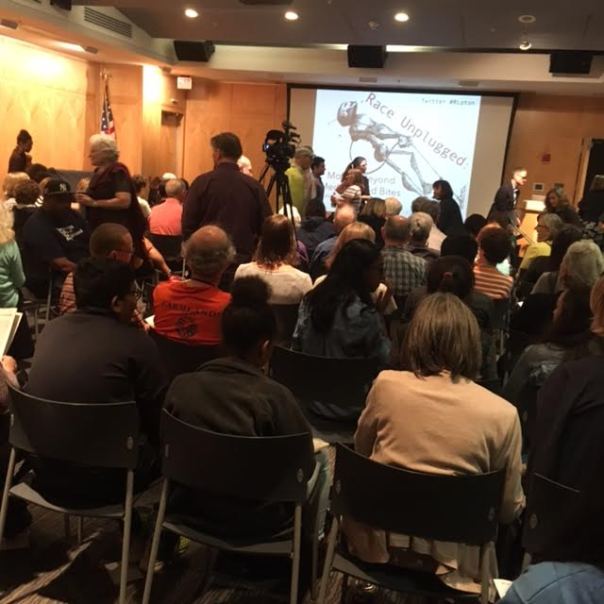
firstSurely Michele Alperin’s superb October 19 cover story in U.S. 1 Newspaper on Ruha Benjamin helped to enhance awareness of the value of Racial Literacy. Benjamin’s first lecture drew an enthusiastic standing-room-only crowd at the Princeton Public Library, and on Tuesday, October 25, at 6:30 p.m. she will facilitate the discussion at the Garden Theatre’s screening of the three-part documentary “Race, the Power of an Illusion.”

This first segment, “The Differences Between Us,” examines the science -including genetics – that challenges the assumption that human beings can be bundled into three or four fundamentally different groups according to their physical traits.

Racial literacy is a much-needed, often neglected skill that — in the 21st century — we all need in order to live and work successfully in a diversifying society. But conversations on race are not easy to have. But as Benjamin said in her lecture,  “Racism doesn’t belong to few bad apples; it is coded in our psyches and institutions. Pretending we don’t see it is not a cure.”

The five-part Racial Literacy series is cosponsored by Not in Our Town Princeton, Princeton Public Library, and the Garden Theatre. It continues with Benjamin’s second lecture at the library on Tuesday, November 1 and film screenings on Monday, November 7 and Tuesday, November 15, all starting at 6:30 p.m. In the coming months, Not in Our Town Princeton will continue its monthly “Continuing Conversations on Race and White Privilege” on first Mondays at 7 p.m. at the library. For details go to niotprinceton.org.For social media, use #Racial Lit and tag partner organizations, @PrincetonPL, #niotprinceton, and @PrincetonGarden

As quoted in Alperin’s article,  Benjamin aims to help people put on a new pair of spectacles and see that “what I’ve learned about this is actually wrong.” Who among us does not need new lenses?

Choose – to tell stories vs racism

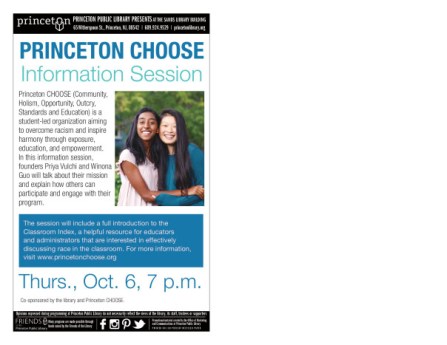
princeton-choosePriya Vulchi and Winona Guo choose to make a difference in overcoming racism. With their cohorts at Princeton CHOOSE, they collected stories, from all over New Jersey, with the goal of inspiring harmony, and compiled them in a classroom guide. I am eager to hear the founders of Princeton CHOOSE present the Classroom Index at the Princeton Public Library on Thursday, October 6, 7 to 8 p.m.

The pair, seniors at Princeton High School, founded Princeton CHOOSE as a student-led organization aiming to overcome racism and inspire harmony through exposure, education, and empowerment. They are fellow board members with me at Not in Our Town Princeton and I am continually amazed at their energy, efficiency, and effectiveness. Deservedly, they have won prestigious awards, including NIOTPrinceton’s Unity Award and the Princeton Prize in Race Relations. 

At the library  Vulchi and Guo will talk about their mission and explain how others can participate and engage with their program, including a full introduction to their Classroom Index a guide that includes statistics, research, and personal anecdotes from people all across New Jersey.

I’m looking forward to buying my copy!

Back to school – in Chinese

A Chinese language immersion school is in an historic building in Kingston. It’s the cover story for U.S. 1 this week.

Master Juba!

juba 1848
A newspaper’s depiction of Juba performing at Vauxhall Gardens in London in 1848. Credit Illustrated London News

With Shuffle Along closing on Broadway (yes, did you hear, Audra Macdonald is pregnant and ticket sales had slumped) I assuaged my disappointment (I meant to see this reincarnation of the historic black musical, but never did) by picking up a book at the Princeton Public Library’s youth section.

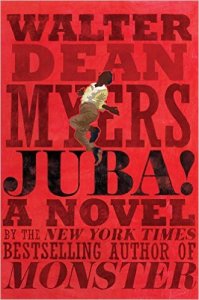
The engrossing and poignant “Juba: A Novel” by Walter Dean Myers is a must-read page-turner for young people interested in dance history and anyone interested in black history. Juba was both the name of a dance and the name of a legendary dancer, William Henry Lane, known as Master Juba, the first black man to dance for white audiences. Read about Juba in the New  York Times Magazine account of Shuffle Along. 

Myers describes how Juba danced for Charles Dickens, who famously wrote about him. In Juba’s (imagined) words, “I let the music take me over and sweep me across the f51m+Xs3h2LL._SX329_BO1,204,203,200_loor. I spun, I moved across the floor on one leg and back on the other, I double-stepped, slid on one leg as I moved backward, switched to a six-beat clog step. I danced faster than I had ever danced, and with more precision than I ever had before, and with more joy in my heart. When the piano player got to the last chorus, I was tired and exhausted, and as happy as I had ever been in my life.”

The dancing part is the fun part. The being black in the 19th century is the hard part, but for youthful readers, Myers makes it OK.


Review: Puerto Rican Soundscapes

Princeton Comment is delighted to welcome Oscar J. Montero, professor emeritus at Lehman College. He reviewed the improvisations staged by Alicia Diaz (a Princeton native) and Hector Coco Barez on May 14 at Hunter College.  

alicia 2

Princeton Comment is delighted to welcome Oscar J. Montero, professor emeritus at Lehman College. He reviewed the improvisations staged by Alicia Diaz (a Princeton native) and Hector Coco Barez on May 14 at Hunter College.

During Puerto Rican Soundscapes, a music colloquium at the Center for Puerto Rican Studies, Alfonso Fuentes tapped a key on the piano to launch into a compelling improvisational riff. Improvisation, he said, is at the core of his musical work.  Iranian scales led to melodic asides echoing the traditional Puerto Rican plena in recurring counterpoints.  In his performance Fuentes underscored the tensions in his work between improvisation and tradition, that is, between the individual’s creative quest and collective forms that belong to no one but are shared and reshaped from one generation to the next.  The work of dancer Alicia Díaz and musician Héctor Coco Barez brought to the “soundscape”of the colloquium its own improvisations.  The dancer and the musician centered their performance on suggestive counterpoints between body and sound, between movement and music, between the visual and the aural.  

In her comments throughout the performance, Alicia Diaz suggests identities that take shape precisely, and perhaps only, through improvisation and dialogue.   Notions about identity as a fortress to be defended have been contrasted to identities as series of ongoing personal and political negotiations. Especially for dwellers in one form or another of exile, national identity as a place of origin is at best a nostalgic narrative; at worst, the troubling memory of violence and loss.   The vibrant collaboration between Barez and Díaz maps out other places in the complex field of our identities, inviting the audience to see in them not the finality of theplace we can name as our origin but the ongoing creation of shared spaces where our own pleasures and anxieties about who we are and where we come from may be performed.

diaz 2016Díaz’s agile, remarkably precise movements are flowing at times, cut sharp at others.  During the question/answer period, a person in the audience mentioned the pioneering work of José Limón, implicit in Díaz’s highly personal choreography.  Yet while fluent in the vocabulary of modern choreography, Díaz dances bomba, steeped in the traditions of Puerto Rico, and riffs on the resonance of such a loaded quotation in her work.  Bomba’s relationship to a Puerto Rican identity may be said to be seamless.  Its roots are found not just in specific locales and well-known historical circumstances but in Puerto Rican families.  Díaz mentioned the teaching of Tata Cepeda, a member of one such family and one of the contemporary heirs of the legacy of bomba.  Yet a folk dance, performed today in various settings, may approach stereotypes that can flatten identity for easy consumption, a process evident to me, a Cuban, as I see dancers in Havana dressed in Brazilian costumes entertaining a new wave of tourists with our famous rumbas.  The physical replies danced by Díaz to Barez’s music demonstrate the possibilities and the limits of an improvisation informed both by the individual’s quest and by powerful traditions.  Their work suggest to me that when words fail us, and their destiny is to do so, the body and its music can help us reconsider other options, help us perhaps to come back around to words and new narratives that might see us through.  In a moment of political uncertainty and economic turmoil, not only for Puerto Rico but for the world we live in, the value of our traditions and their inflection through our own experiences, indeed our own bodies, informs the urgent quest of these Puerto Rican dancers, musicians and writers, a quest valid in its own right and for what it might offer to others now and down the road.

Oscar J. Montero

Professor emeritus, Lehman College, City University of New York

NY NY May 15, 2016

Princeton Prizes for Positive Race Relations

Coming to town — a conference based on a national prize that Princeton University awards, aiming to “promote harmony, understanding, and respect among people of different races by identifying and recognizing high school age students whose efforts have had a significant, positive effect on race relations in their schools or communities.” The Princeton Prize Symposium on Race is Friday and Saturday, April 29 and 30. Mickey Faigan, of Issues Management (based at Princeton Overlook) will open the conference on Friday, and the speakers include Michele Tuck-Ponder, who gives a workshop on 90-second elevator speeches. Saturday’s proceedings are open to the public. 2014 4 prize symposiumI’d also like to point out that Not in Our Town Princeton ––  an interracial, interfaith group united to advance the cause of racial justice in Princeton — gives annual Unity Awards to Princeton High School students who have helped to carry out the NIOT Princeton mission statement:  We are committed to speaking truth about “everyday racism” and other forms of prejudice and discrimination. Where there is conflict we promote reconciliation with open, honest engagement and mutual respect. Our goal is that Princeton will grow as a town where everyone is safe and respected.