Category Archives: Uncategorized

Easter at Nassau & Vandeventer

Ranging from the dramatic to the contemplative, Princeton United Methodist Church offers an unusual variety of services during the week before Easter.

On Maundy Thursday, April 5, at 7:30 p.m. the High School and Middle School choirs and instruments will present the “The Living Last Supper,” by Ruth Ellen Schram. This musical service, directed by Yvonne Macdonald, incorporates the Leonardo DaVinci painting as a model for the set (photo to left). It aims to portray a true picture of the Passover feast that Jesus celebrated with his disciples, and it will be followed by communion served to the congregation in groups of 12, as it was in the Upper Room.
On Good Friday, April 6, there will be a service at noon entitled “At the Foot of the Cross.” At 7:30 p.m., the Chancel Choir, with soloists and a chamber orchestra, will present “The Seven Last Words of Christ” by Theodore Dubois. “This is one of the most powerful and inspirational choral works of the 19thcentury,” says Hyosang Park, music director. “Come and encounter Jesus Christ’s last moments at the cross.”
An Easter Vigil on Saturday, April 7, at 5 p.m. in the chapel, led by Anna Gillette, seminary intern, will be followed by refreshments.
Easter Sunday begins with a sunrise service at 6:30 a.m. on the lawn in front of the church, followed by a continental breakfast. Rev. Jana Purkis-Brash, senior pastor, will preach traditional services of the Resurrection at 9:30 a.m. (with an egg hunt for younger children) and 11 a.m.


 609-924-2613 or visit http://www.princetonumc.org/

Reality Show in Princeton on Passover/Easter weekend

This weekend some entrepreneurs will walk away with a share of the $10,000 pot for the annual TigerLaunch business plan competition. Anyone may attend to watch the competitors sweat through this ordeal and applaud the winners. 
On Friday, join two leading VC’s – Tod Francis of Shasta Ventures and Craig Sherman ’91 of Meritech Capital –  for Entrepreneurship from the Trenches, a Conversation about Building Startups. Set for April 6, at 4:30 p.m. at Robertson Bowl 01, it will be a frank conversation about building successful startups.
Francis has been an investor for 20 years and has backed 25+ consumer companies, including Mint.com, Jamba Juice, PF Changs, Smule, and TaskRabbit. 
Sherman is a longtime entrepreneur who has been CEO of Gaia Interactive and COO of Ancestry.com, which he helped grow form $10 million to $150 million in sales. He is an investor in companies like Zipcar, SurveyMonkey, and Zillow. His firm, Meritech, is an investor in Facebook.
Both are judges of the TigerLaunch business plan competition on Saturday, April 7, 9 a.m. to 6 p.m. in Dodds Auditorium, Room 011 of  Robertson Hall (commonly known as the Woodrow Wilson School. For the final presentation and award ceremony (drum roll) arrive at 3 p.m. Note the change of venue — in previous years this ceremony has been in the Equad. 
Editorial Caveat — I have to say I am personally disappointed that this important and appealing event takes place on one of the important faith weekends — Passover and Easter. It doesn’t directly conflict with Easter but it would be difficult for someone to attend who was planning to go to — or cook for — the first night Seder on Friday.

 Now I’ve said it. 


Youthful entrepreneurs can sign up for the East Coast Startup Summit at Princeton, April 20-22. It’s not clear to me how young you have to be but the program looks good. 

Laboratory Culture: Camaraderie


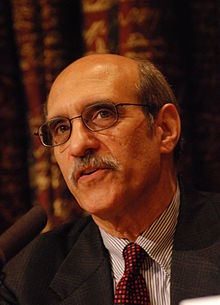
Martin Chalfie, I predict, will be one of the more entertaining Nobel Prize-winning speakers for the Princeton Regional Chamber’s Albert Einstein lecture series. He’s the one who slept through the 2008 Nobel phone call, only to open his computer to find out “Who was the schnook who won this year” and found out he was the schnook who would share the prize for chemistry


But as I read Martin Chalfie’s autobiography, I am swamped with nostalgia for my childhood. He wrote about a lab where everyone was “deeply concerned about science. People talked about experiments at coffee, lunch, and tea and in our coffee room at all hours. And although molecular biology was considered the most important part of biography, people’s interests were more general.”

That sounds so much like my father’s lab in the Bressler building at the University of Maryland medical school — and at the Marine Biology Lab in Woods Hole, Massachusetts. From my little girl’s point of view, that was what grownups did — work hard and talk about their work. This is how big and little discoveries were made. That is how I acquired a work ethic of don’t stop till you drop.

Chalfie tells of lab swim meets and guitar concerts and softball games and I remember how the grownups in my laboratory pantheon also knew how to play.


In a slide show,  Chalfie told  how his wife, also a scientist, allowed him to reference her unpublished work in a seminal paper. She wrote a formal letter striking the bargain that he would make coffee and take out the garbage for a month, plus cook one gourmet dinner. I have mixed feelings about that revelation, as I think of all the momma/poppa lab scientists I knew, my parents among them.  


Chalfie will offer a glimpse into the world of the scientist. The lecture is today, Wednesday, March 14, at 5:30 p.m. at the Woodrow Wilson School’s Dodds Auditorium, Robertson Hall. I predict it will be very crowded and it would be prudent to register here and also to get there early. Expect to have difficulty parking, 
  

Alexis Branagan: On Snark

Hi, my name is Alexis Branagan, and I’m very happy to be sharing my Princeton-based comments here. I met the original Princeton Comment-er, Barbara Figge Fox, in February at an American Repertory Ballet On Pointe EnrichmentSeries event. A few email exchanges later, she invited me to be a guest blogger.

A bit about me: I lived in Princeton for four years in the “orange bubble” of Princeton University, and now I work at the Princeton-based American Repertory Ballet company. It’s rumored that Princeton students never leave the bubble, except to cross the street to Prospect Ave. or Nassau St., but I often ventured all the way to Harrison Street to take class at ARB’s Princeton Ballet School. I graduated in 2011 with a degree in English and “Certificate” (Minor) in dance, but I continue to frequent ARB’s studios. I work as ARB’s Marketing and Development Associate, which affords me free ballet classes and the ability to blog as part of my job, amongst a lot of other things. On freelance bases, I write for Pointe and Dance Magazine and dance for Armitage Gone! Dance and Princeton-based choreographer Susan Tenney.

And now I will finally get to my comment(s). Recently, I’ve been thinking and reading a good deal about dance criticism. I have had conflicted thoughts and feelings about dance reviews lately, and my inward conflict is pretty much summed up by the conversation between Robert Johnson’s “Defense of Snarky Reviews” and Wendy Perron’s blogged response, “A Debate on Snark”

Like Perron, I think many recent reviews published in major papers are over-brimming with craftily-worded jabs. Snark is rearing its sarcastic little head into reviews too often. Perron says, “I’ve seen audience members who enjoy a night out at the ballet and then are appalled two days later when they read a totally dismissive review. I’ve heard one person say, ‘Are the critics trying to destroy the dance world?’” …I might have been that one person.

Johnson resists this thinking. He asks, “Why are artists the only ones who matter? Don’t ticket-buyers deserve consideration, too? When someone slaps a plate of sour hash on the table in front of you, and a smiling publicist assures you it’s filet mignon, are you supposed to masticate dutifully and say thank you? Hell, no!”

I definitely see his point. Assuring readers everything is filet mignon, or, to take this metaphor a step further, a “different”, “unique”, “avante garde” dish that’s just as delicious and well-crafted, would make dance criticism way too airy-fairy. It wouldn’t challenge dance enough for the art form to reach new heights. Presenting an honest opinion is crucial, and, yes Mr.Johnson, the critic should be a “watchdog for the consumer.” At the same time, Perron is spot on when she writes, “I am not asking for critics…to forgo their honesty. But I want them to have some sense of balance, so that one annoying thing about a work doesn’t eclipse whatever is strong about it.”

Yes, I’m conflicted on this topic of snark, but I think I’ve distilled my thoughts a bit, thanks to the dance scholar Sally Banes. In her book Writing Dancing in the Age of Postmodernism, Banes quotes Edwin Denby:

“[A] writer is interesting if he can tell what the dancers did, what they communicated, and how remarkable that was.” Banes goes on to say that critics “can perform” the operations of: description, interpretation, evaluation, and, her addition to Denby’s assertion, contextual explanation.

I think the critic not only “can” but rather has the responsibility to include all of these operations in his review.

To an increasing degree, dance critics are reveling in evaluation and skimping on the rest. Okay, so you were annoyed by that dancer’s hand gestures and you think the choreographer’s use of the music was simplistic…but what happened on stage? Let’s say I like that dancer’s hands and don’t mind straightforward musical interpretation…so I want to know what else I can expect to see! Description would represent the strong and/or memorable parts of the piece, and this should not be eclipsed, to use Perron’s word, by snark. Description is not an account of what looked good and what looked bad. It is, as Banes says, what the work looks and feels like.

There needs to be a few words unfettered by evaluation that give a glimpse into the world the
piece created, whether the reviewer liked that world or not.

“For the critic’s job is to complete the work in the reader’s understanding…and to enrich the experience of the work. This may be done, of course, even for those who have not seen the work,” Banes says. I often think about the readers of a bad review – a review comprised almost totally of evaluation. Their nderstanding is not enhanced; it’s manipulated. A review too heavy on evaluation presents a skewed view of the stage.

Banes compares dance criticism to ethnography. The reviewer, like the ethnographer, must relay a cultural experience – a glimpse into a new world. Of course this will include a fair share of opinion – personal highs, lows, likes, and dislikes. However, if an ethnographer published a paper without describing objectively what he saw and contextualizing the culture he explored, he would not be taken seriously in his field. Should we take dance critics seriously if they don’t describe and contextualize the pieces they critique?

Snark becomes damaging when it is all a reader can glean from a review. Critics, be as sarcastic and cutting as you want, but, for the sake of dance and of dance criticism, please be thorough: Describe; Interpret; Contextualize; Evaluate.

Troubling Issue: Why Genocide, Now?

“The 20th century was supposed to be a period of progress, yet war, famine and genocide became more pronounced in this 100-year segment of history than human civilization has fully recognized,” says Leonard Risch Winogora,, author and historian. On Sunday, March 18, at 4 p.m. at Princeton United Methodist Church at Nassau Street and Vandeventer Avenue in Princeton, Winogora will speak on “Holocaust in Our Time.” Don Brash, PUMC’s resident theologian, will moderate a free lecture-discussion, part of a monthly “Troubling Issues” series. 
With undergraduate and doctoral degrees from the Universityof Chicago, Winogora is a professor at Mercer CountyCommunity College and Burlington County College. He co-authored “Workload and Productivity Bargaining in Higher Education” and has written on such subjects as genocide in Africain post-colonial societies, the application of the ethical reasoning of medieval Jewish philosopher Maimonides in contemporary society, and the marketing of business ethics to the corporate class. He lives in Princetonwith his wife, Robbie, and two daughters.
The free lecture-discussions in the Troubling Issues series continue on May 6 with “Through Our Eyes,” a short film documenting young gay Christian experiences growing up in the churches. The series will start again in September with “Is there ever really a just war?” Parking is free on Sundays. For information call 609-924-2613, email troublingissues@gmail.com, or go to www.princetonumc.org

Saturday: Geeks’ Choice

Two big geek happenings are happening now — one serious (the Trenton Computer Festival), one tongue-in-cheek, mostly for fun, the official Geek Weekend for PiDays 

Tomorrow (Saturday, March 10) at TCF, see Aram Friedman’s portable planetarium at 11:20  and hear Jeff Gomez, of Starlight Runner, give the keynote speech at 2:35 p..m. on “From the Inner City to Pandora: the Power of Story in a Tech-Driven World.” Plus you can soak up all those bargains in the marketplace and attend the many workshops. 

Today through Sunday (and continuing on Albert Einstein’s Actual Birthday, Wednesday, March 14) enjoy all kinds of informative and/or zany activities in downtown Princeton. My favorites are the trolley tours (hourly from 11 a.m . to 4 p.m. on Saturday and led by none other than Pi Day Princess herself, Mimi O,) and the sockless sock hop (because of course Einstein is famous for not wearing socks, 4 to 6 p.m. on Saturday.

 I’ll leave the hop early, though, for the 5 p.m. Saturday Evening Worship Gathering, an informal service at Princeton United Methodist, at Nassau & Vandeventer, where seminary intern Anna Gillette will discuss and lead interactive worship on a topic in the “Courage to Question” series, namely “Can We Be Angry with God?”

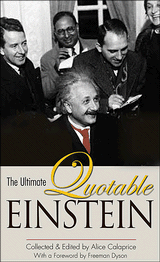
Einstein did have something to say about that, according to the quotes compiled by Alice Calaprice in The New Quotable Einstein.  “I cannot conceive of a God who rewards and punishes his creatures or has a will of his own that we experience in ourselves…”

What does religion have to do with science and technology? Said Einstein, “Science without religion is lame, religion without science is blind.”

So there you have it — everything from dancing sockless and riding on trolleys to exploring the stars — and  exploring the great questions of the universe. It’s all yours to choose, on Saturday.

Meet the Pharmas on March 14

Pfizer, Janssen, and Burrill are among the pharmas represented at BioNJ’s big interactive event for companies involved in diagnostics and personalized medicine on March 14, 2012 at Princeton University. The BioNJ Diagnostics & Personalized Medicine Innovation Summit and Funding Roundtable, a half-day summit meeting, will feature 
G. Steven Burrill Chief Executive Officer, Burrill & Company
Joseph P. Hammang, Ph.D. Senior Director, Worldwide Science Policy, Pfizer Inc.
Paul Kildal-Brandt Global Alliance Leader, Janssen Diagnostics, News alert: apparently Janssen just bought Belgium-based Virco
Aydogan Ozcan, Ph.D. The Scientist’s Top Innovation Award Winner of 2011 Associate Professor, UCLA Electrical Engineering & Bioengineering Department
Register for  $95 if you are not a member of BioNJ. The Carl A. Fields Center is cheek-by-jowl with the engineering complex, on the corner of Prospect and Olden Avenues.

Guest Post: Louis Baszile on Princeton Art Walk

Thanks go to Louis Baszile for this account of the Princeton Art Walk on Thursday, March 1, 2012

The historic town of Princeton came alive last night with the Princeton Art Walk.  My night began at the Arts Council of Princeton.  I used to drop my daughter off there for classes but never stepped inside.  The art was very thought provoking.  They were nice enough to offer food upstairs.  Then I proceeded to the Princeton Library where I saw art on various floors.  I was knocked over with the tile art in one conference room and a sculpture of a goose.  

At this point I was became part of a group of 8 people that proceeded to Small World Coffee shop where we gazed at art while hearing a band.  I saw a sculpture of a flying woman, which appeared to be made of saran wrap.  

We walked to the Firestone Library and we hear music from a bookstore that was part of the Art Walk.  At the Library, we saw incredible art on 1st floor and the most amazing children’s play area, part of the Cotsen Children’s Library.  It was a combination of FAO Schwartz and Disney toontown.  Just when I was ready to depart, I was given a tour of the coin and rare books area on the 2nd floor (editor’s note, probably the Milberg Gallery).   This exhibit is due to open March 3 but I was given a preview.  Amazing coins from colonial and even Roman times. I starred in a glass case to read parts of a letter written and signed by George Washington.  I found it very relaxing but the best was yet to come.

  I proceeded to the Art Museum.  The historic artwork brought back memories of my trip to France.  Many pieces were over 500 years old.  Food and wine was provided as I ended the night with good friends I had met there watching a live musical performance.  I felt I had stepped back in time and experienced 100s of years of Princeton History.  

Drupal: Open Source for the Web

Ben Bakelaar is scheduled to make a presentation for Drupal users on Thursday, March 1, from 7 to 9 p.m. in room 112 at Princeton University’s Friend Center on Olden Avenue. He is overseeing the Princeton Public Library transition to Drupal. “Drupal is good,” he says. “The community of developers and users are all very supportive and interactive. If you have any questions, you can always find an answer.”  For the article in U.S. 1 Newspaper, published February 29,
http://princetoninfo.com/index.php?option=com_us1more&Itemid;=6&key;=2-29-12drupal

Finance to Farming: McConaughy

Many of us are aware of the issues surrounding where our food comes from — how safe and wholesome it is, the devastating effects the industrialized food system has on the environment, the brutal treatment of livestock, and the demise of family farming.


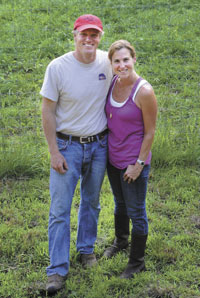
But few among us who have read “Fast Food Nation” or “Omnivore’s Dilemma” or viewed the movie “Food Inc.” have so completely altered the direction of our lives as Robin and Jon McConaughy of Hopewell. The McConaughys have shaken off their high-powered, high-income careers to launch a pioneering 10-year project, now in its eighth year, to bring the movement to eat local, natural, sustainable, farm-to-table, and humanely-grown food to a new level.


So wrote Pat Tanner in the July 11, 2011 issue of U.S. 1 Newspaper (photo from that issue). 

Now meet Jon and Robin McConaughy “live” when Jon McConaughy speaks at the Princeton Regional Chamber lunch on Thursday, March 1. Reservations are recommended and save money as well. His topic: Finance to Farming: Using Corporate Tactics to Build a Successful Agricultural Business 

And here is the latest of Pat Tanner’s work for U.S. 1, on the website at princetoninfo.com