Category Archives: Uncategorized

Summer Line-Up

The chance to attend a free concert one of the many things I like about Princeton. During the year, student and faculty concerts are often free at Princeton University and Westminster Choir College, but the summer chamber concerts — well, they’re special. When we first arrived they were held at the Graduate College and you’d pray against rain. Then the indomitable Barbara Sand moved the concerts to Richardson Auditorium where weather was not a factor — but, sometimes, space was.

Now firmly ensconced at Richardson, where the acoustics are fabulous, the space problem has been sort of solved by an ticket distribution system. If you are a patron of these concerts (you gave money) you get tickets automatically. Everyone else lines up. The box office opens at 6:30, seating begins at 7:30 p.m., and the concerts start at 8.

I’m sending this post because in several hours it will be time to start lining up. We generally park in town, go get our tickets, then repair to Zorba’s for a pre-concert supper. It saves the second trip to town and all that rushing around. Every year I promise myself to make a patron donation and every year I forget.

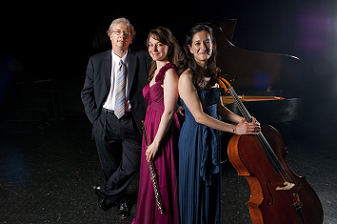
Tonight’s concert — a flute/cello/piano Dolce Suono trio , pictured — promises to be especially delightful. They’ll play a piece written for them by Grammy-winning composer Richard Danielpour, a reflection on his Persian-Jewish heritage, plus works by George Gershwin and Ned Rorem and excerpts from Leonard Bernstein’s ‘West Side Story.’

The next dates are Thursday, July 14, with the Voxare Quartet (Barber, Harrison, Shostakovich), and Tuesday, July 26, with the Linden Quartet (Mozart, Ravel, and Schumann).

So maybe I’ll see you in line?

Smog and Spotted Owls


And here I thought Thursday’s Princeton Regional Chamber lunch might be calm and uncontroversial. Bob Martin, commissioner of the New Jersey Department of Environmental Protection, is slated to speak on how he has been making New Jersey more business friendly under the Republican administration.

Martin (Boston College, ’79 with an MBA from George Washington) has been a partner at the world’s largest tech consulting company, Accenture, where he focused on energy and utility companies. He came to his office promising to apply business principles to the job.

Meanwhile, on the Democratic side, Lisa Jackson (undergraduate degree from Tulane, master’s from Princeton), the federal EPA administrator, is making headlines by her determination to unwarm the globe with firm regulations on everything from smog to mercury. See today’s New York Times, “EPA Chief Stands Firm as Tough Rules Loom.”

Jackson used to have Martin’s state job. Are she and Martin going toe to toe?

I haven’t been following it, frankly. The only thing I have a definite hard-nosed opinion about is fracking, and I strongly oppose fracking. So I’ll be interested to hear what Martin says.

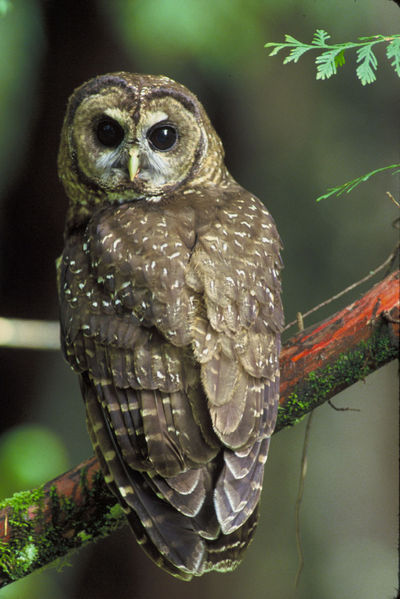
(I took blogger’s license to use a photo of the Northern Spotted Owl form the Resource Clearinghouse website. I don’t know if Jackson’s regulations or Martin’s purported business friendliness involve such controversial characters as the Spotted Owl, protected for the past decade, but pictures of owls are cuter than pictures of smog.)

After the Fireworks


After the exciting fireworks, comes the nitty gritty of just what does our freedom mean? President Obama has called for a national discussion on the thorny topic of immigration. Tonight (Tuesday, July 5) the Princeton Public Library will host just such a discussion at 6:30 p.m. Join the conversation to help come up with a bipartisan recommendation to the White House.

“We will hear from representatives of the major social sectors (education, health care, public safety, faith-based, business and public policy). The results will be transmitted to the White House,” says Maria (Charo) Juego of the Latin American Legal Defense Fund.

Pre-registration is requested (E-mail info@LALDEF.org) but at this late date, just show up. The event is co-sponsored by the Latin American Legal Defense Fund, YWCA Princeton, the Princeton Public Library, and Not in Our Town Princeton.

Insider at Inside Job


Tonight, Thursday June 30, at 6:30 p.m., the Princeton Public Library will screen Inside Job , the Oscar winning documentary about the financial crisis.

It will feature two men, real people playing themselves, with connections to Princeton. One — you might guess — is Ben Bernanke , formerly of Rocky Hill.

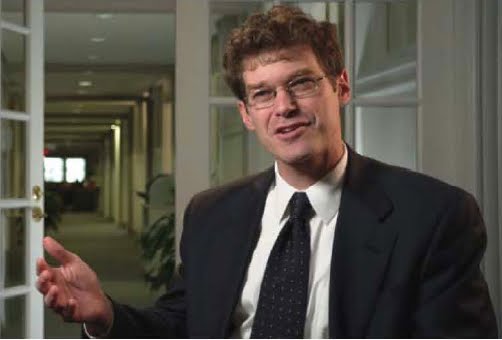
A more tenuous connection is (drum roll), my son-in-law, Eric Halperin, then the director of litigation at the Center for Responsible Lending, now working at the U.S. Department of Justice as Special Council for Fair Lending. As pictured. Bask in the light when you can, is my motto.

Not My ‘Vette, His ‘Vette


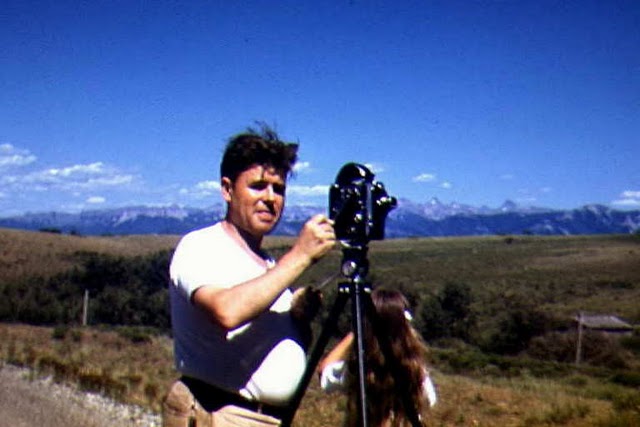
Today I wore a locket that has a columbine in it, my Colorado-born father’s favorite flower. That’s about the extent of today’s celebrations about my father, who died 40 years ago. I’ve never felt I could write about him, though here’s a photo taken when I was eight, courtesy of my sister who is curating the family album.

But here are two rememberings that I like. This morning on NPR Jennifer Grant talked about what was like to have Cary Grant as a father. She has just published her memoir, “Good Stuff.”

And in this week’s U.S. 1, my ex-boss wrote about his father, whose memorial service was just a couple of weeks ago. It was quintessential Richard K. Rein, clear-headed, self deprecating, heart-warming, memorable. When you read it here, you’ll see the reason for my headline.

Both Rich Rein and Jennifer Grant came to the same conclusion: take time to just play games with your parents. The movie star and his daughter played backgammon and Trivial Pursuit. The publisher played pool with his dad eight days before he died. You don’t need to get all sentimental about a parent, their message is. Just spend time.

From Duke to Princeton

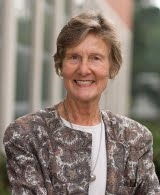
Nan Keohane, former president of Wellesley and Duke, is one of the nicest people you might hope to meet, so to compare her with Machiavelli seems odd. But she and that Renaissance power broker share an accomplishment: They are among the few practicing leaders who wrote books about leadership. Her latest book, Thinking About Leadership, was recently published by Princeton University Press. As an academic political theorist with practical experience in leadership, she has some startling insights, such as on gender-based leadership qualities.

Keohane (pronounced “Ko-han”) will speak at the Princeton Regional Chamber breakfast on Wednesday, June 15, at 7:30 a.m. at the Nassau Club on “How Can We Produce Leaders?” And as the U.S. 1 reporter who interviewed her says, “When Nan Keohane speaks about leadership, people tend to listen.” Reserve ahead, or the club can usually accommodate last-minute walk-ins. (Disclosure: As a Duke alumna and parent I am an unabashed fan of Nan Keohane.)

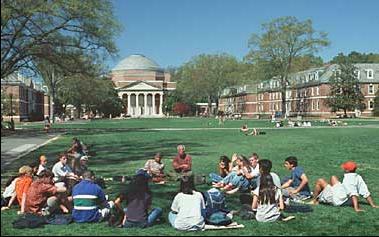
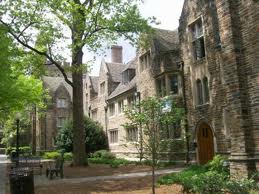
Among her paradigm-changes at Duke were to close East Campus to upperclassmen so that the entire freshman class could be housed there. (East Campus, built in 1925, formerly housed the Women’s College. With its Georgian architecture (below) it offers quiet, calming ambiance, compared to the main West Campus, built in collegiate Gothic style, like Princeton.)

She wanted the freshman to be able to form cohort living groups and move with their groups to the “favored” West Campus. So that there would be enough space for them, she uprooted the fraternities from their hallowed spots on West. I wasn’t following the student newspaper, the Duke Chronicle, at that time, but I can just imagine the ruckus it caused. Keohane achieved her purpose — to significantly improve the social ambiance for non-Greeks.

Another notable accomplishment: the Duke-Durham Neighborhood Initiative, in which Duke reached out successfully to the neighborhood associations around the campus and considerably improved both town-gown relations and the conditions of schools, clinics and community centers in the surrounding area. In April, at a reunion, I took a tour that showed these fabulous improvements. Durham of my day was a town you avoided, and but today it has been named as one of the 10 best places to live.

After 11 years at Duke, leaving it in much better shape than she found it, Keohane and her political scientist husband were recruited in 2005 to Princeton University, where she is the Laurance S. Rockefeller Distinguished Visiting Professor of Public Affairs. A graduate of Wellesley with a PhD from Yale, she has served on such corporate boards as IBM, State Street Boston, and Harvard.

Though Keohane’s book covers a broad spectrum of past and present leaders, she — like Machiavelli — focuses most of her attention on just a few: Margaret Thatcher, Nelson Mandela, Abraham Lincoln, Lyndon Johnson, Queen Elizabeth I, and Franklin Roosevelt. How can we in Princeton grow leaders like these? I’ll be eager to hear.

Adding Heft

It was always a surprise to see Jackie Gleason dance, with his unlikely body, so light on his feet. With apologies to the fine Mercer Dance Ensemble women, with their years of training, Maleek Colvin was the one to watch on June 4. He’s not a dancer yet, but his movement added ballast to six of the 10 dances on the Kelsey Theater program that continues Sunday, June 5, at 2 p.m.

In choreography by MDE director Janell Byrne, he found his way through the lyrical rise and fall of a Humphrey-Weidman based “Not So Baroque,” and an upbeat “Shenandoah” with its accented gestures. He came into his own in “With a Blue Note” with its combo of relaxed but not limp swings and weight. How to explain weightedness? In ballet and some styles of modern, dancers try to keep their energy moving upward. In Graham, the dancer sends energy into the earth and draws energy from the earth. This piece is halfway up, halfway down, and a turn has some heft to it. Colvin’s got heft.

Jennifer Gladney choreographed a memorable “The Road Narrows” for four trained dancers (Ian Conley, Han Koon Ooi, and Kaitlyn Seitz, and Brianne Scott). I like how she starts with a three-against-one pattern, and moves back between different configurations.

Ooi was successful with “Seven Drums” to a Thai vocal narrative-like score. Alicia Ackerman, Rebecca Brodowski, Conley Colvin, Gladney, Maria Laurenti, Stephanie Maher, and Scott – they created a cohesive community. Tifani Maldonado,

Also on the program were a confection for five women dancers by Emily Byrne, a solo by Seitz, and Byrne’s “Jig and Reel Stew,” (for Gladney, Leondi, Scott, Seitz, and Trisha Wolf), Brigadoon gone quirky.

Continuing Conversations on Race

“Conversation about the relationships among diversity, privilege and power” is the topic for the “Continuing Conversations on Race”, cosponsored by Not in Our Town, to be held at the Princeton Public Library on Monday, June 6, 7:30 to 9 p.m. This topic was inspired by the talk that Melissa Harris Perry gave about Bayard Rustin at the Public Library in November 2010.

Ann Yasuhara and LeRhonda Greats will lead the discussion based on a couple of posts in the Nation by Harris Perry, including the one entitled Cornel West v. Barack Obama.

To continue, read the Not in Our Town blog post.

Not in Our Town is an interracial, interfaith social action group in Princeton committed to speak truth about ‘everyday racism’ and other forms of prejudice and discrimination, with the hope that Princeton will become a town in which the ideals of friendship, community and pride in diversity will prevail.

All are welcome to this forum, which provides a safe and friendly atmosphere to talk about issues of relevance to our community and nation.

The TedX Adventure on June 1

If you’ve gone to one, you know that TedX events are mind blowing. If you haven’t, one’s happening here in Princeton, on Wednesday, June 1. Last year’s event stuck in my mind for weeks. It’s different from the usual “listen and learn” or “listen and eat” or “snack and network” event. It has all those elements — fabulous speakers laced with entertainment and food — but the length of the event, about six hours, offers a real bonding experience with the other attendees. Maybe I can compare it to a retreat.

Last year’s was in the Princeton Public Library community room. This year, though organized by the library, it’ll be at the Nassau Inn, offering more privacy for the attendees. Cost: $45 or $35 for Princeton Chamber members. That includes dinner. According to eventbrite, almost all of the tickets are gone, but you can email Janie Hermann (at jhermann@princetonlibrary.org) to get one of the last tickets or see how she can fit you in (see the first comment below).

For those of us working for social change, two of the speakers will be particularly inspiring, Todd Shea and Maria Eusebe.

Robert Kurzban, founder of PLEEP, the Penn Laboratory for Experimental Evolutionary Psychology, will tell us why change is so difficult. He is the author of Why Everyone (Else) Is a Hypocrite: Evolution and the Modular Mind, published by Princeton University Press, which suggests that “In clear language, full of wit and rich in examples, Kurzban explains the roots and implications of our inconsistent minds, and why it is perfectly natural to believe that everyone else is a hypocrite.”

Here’s the lineup , including a cameo talks (they call them Lightning Talks) by Ed Tseng, author of Game, Set, Life, and Dale Caldwell, author of School to Work Success. Plus an ever-so-charming female juggler, Jen Slaw.

The TED motto is “Ideas Worth Spreading.” This could be called “Event Worth Going To.”

Our Ballet Company, Our Town

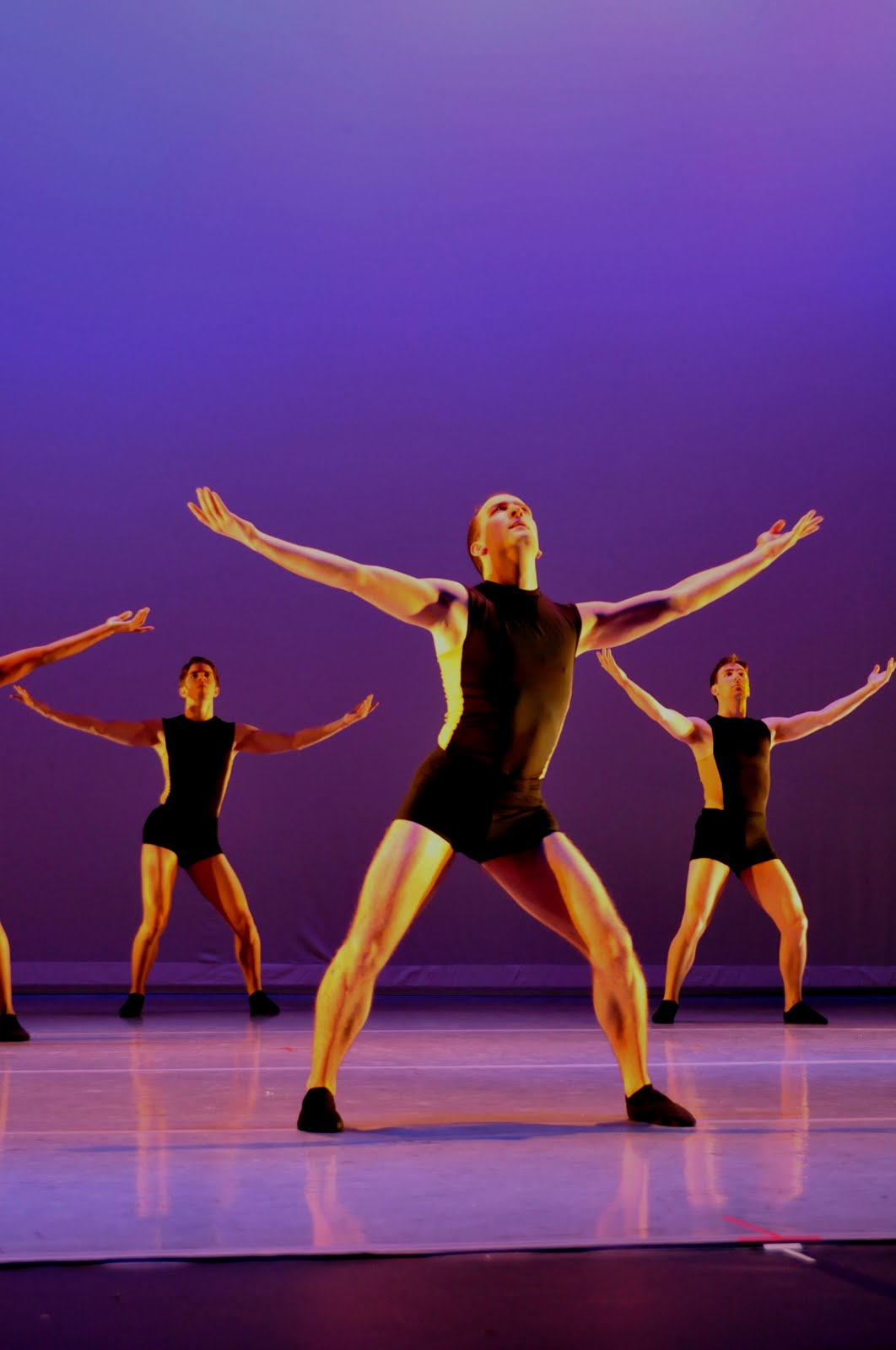
At my first good look at what Douglas Martin can do with American Repertory Ballet, I was impressed. On Sunday, May 22, at Rutgers’ Mason Gross theater, the men looked fabulous, and that’s the litmus test for a regional company. Patrick Corbin’s new “Follia,” showcasing their technique, is a knockout. To Vivaldi-era music, six men in Corbin’s idea for muscle-man costumes (tabard-style black rectangle bibs over longish shorts and pointy black shoes) looked gorgeous in Victoria Miller’s side lighting. With just a hint of hips, Corbin has put sexy in a classical ballet box.

It’s paired with “Eight Jelly Rolls,” a hark-back to Twyla Tharp’s all-woman company of the ‘70s that also happens to have black bibs and bare backs for costumes. Six women pretend they don’t care to (hurray!) live music (Jonathan Benjamin and Vince Giordano’s Nighthawks). I searched for a Jennifer Way or a Katie Glasner (they staged this version), and the one who came closest to Tharp’s tossed-off insouciance, who almost made me believe that she was making it up as she went along, was Michelle de Fremery. When de Fremery turns from left to right, her energy field turns with her.

At the opposite end of the emotional spectrum, Michael Crawford and Alexander Dutko had a poignant, compelling excerpt from Randy James’ new “The Heart is a Lonely Hunter” (with a score by Philip Glass).

As for Martin’s new “Ephemeral Possessions,” for six couples, I say a hearty “Nice Going.” Martin rang several deft and pleasing changes on the standard classical ballet for couples. Using a tried-and-true score, Samuel Barber’s Adagio for Strings, he took City Ballet-style black and white costumes and made the tops blue, with a backdrop to match. Into unison movement – classical but not filled with clichés’ — he dropped a couple of aha! moments (a dragged foot here, a rocking exit there), and he used space well, varying the number of dancers but starting and ending with two. A smiler.

The best was first; Philip Jerry’s “Our Town” opened the program. I’m a sometime student of Thornton Wilder’s work (my current favorite re-read is his picaresque novel Heaven’s My Destination) and I can’t believe I didn’t get to see this ballet in 1994 when Septime Webre was the director. Webre had recruited Martin and his wife Mary Barton from the Joffrey Ballet, and two former Joffrey dancers, the late Philip Jerry and his partner, Corbin, were also living in Princeton. (Philip Jerry’s brother, Chip Jerry, has his law practice with his wife Marilyn, on Poor Farm Road in Princeton.) Jerry spent his last years going back to school and graduating from Princeton University and as ARB’s ballet master. Corbin had danced four years with Joffrey but by the time he moved he had begun his starring career with Paul Taylor’s company.

Jerry revised the “Our Town” he had done for a non-professional company (this, according to Mary Pat Robertson, the school’s director) by resetting it for Martin and Barton, who staged this version.

In other homey coincidences, Stephen Campanella dances the paperboy, and in 1994 he was George and Emily’s little boy (played here by Giovanni DiMauro). And, of course, the play had premiered at McCarter in 1938. Wilder was at that point eking out his living by teaching at Lawrenceville School.

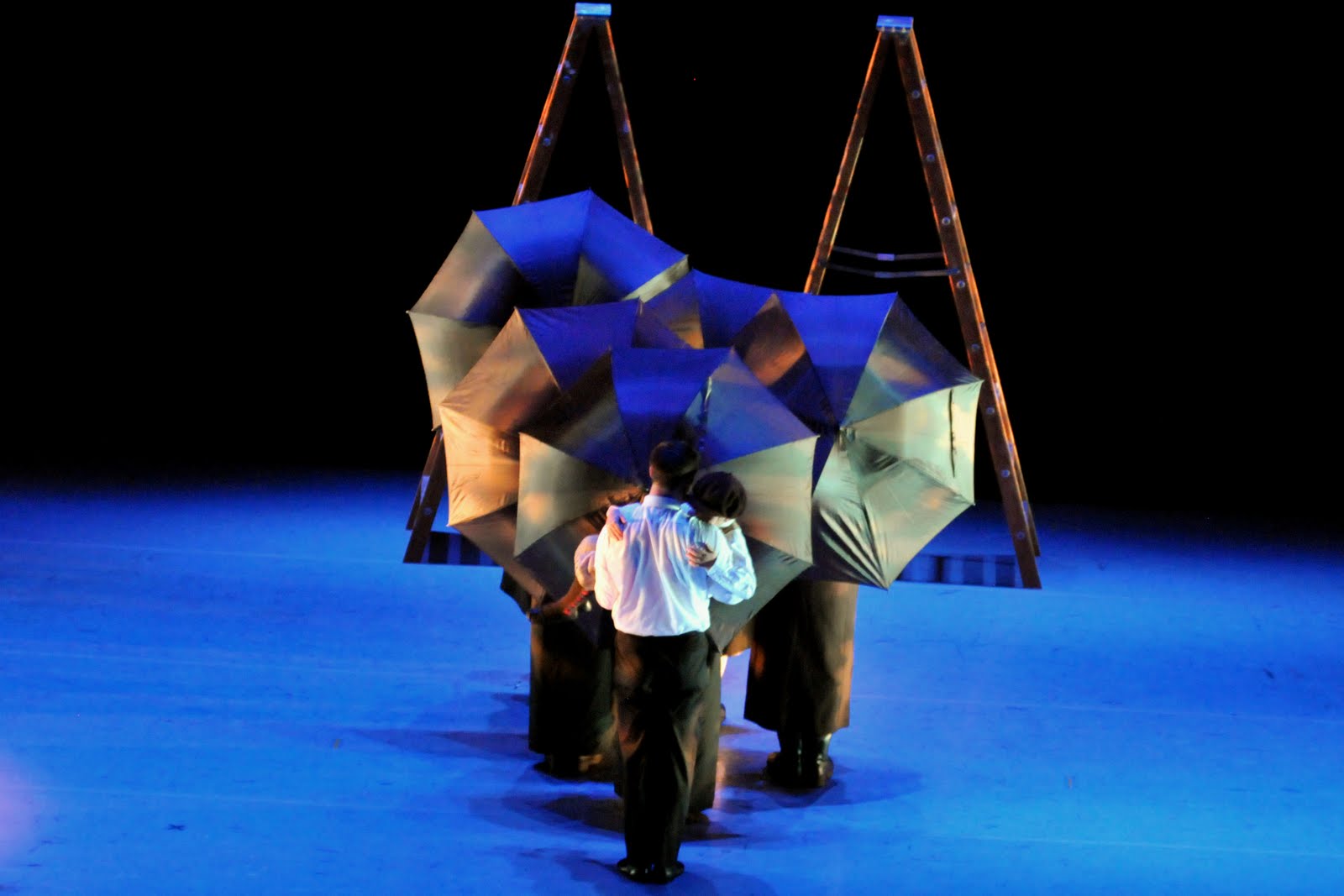
Having in mind Wilder’s low-key tone, I was at first put off by the grandiose music, Aaron Copland’s “Fanfare for the Common Man,” which bursts forth after a bent-over man drags the first of the two ladders across the stage. But the music does work, matched by hugely expansive, symmetrical movement as the dancers present themselves. ”Here we are. Here’s our town. Here we circle.” (Oh, the Paul Taylor effect!). Appalachian Spring meet Grover’s Corner.

Then we see Emily (Brittany Fridenstine at this performance) grow up. She has a sweet aubade – very alls-right-with-the-world – followed by some story-telling and the moment when she and George give each other The Look, and the stage turns rose pink. In their first pas de deux, joyful and youthful, with breath-filled suspensions, they are mostly apart.

Evil interrupts in the form of the drunken choir master and foreboding accents. By this time the music has progressed to Copland’s “The Red Pony.” When George (Marc St. Pierre, alternating with Joshua Kurtzberg) offers to carry Emily’s books, they have a more mature duet with partnered turns and lifts, but it is interrupted by George’s shenanigans with his buddies. Aw shucks. Their making up and The Kiss is followed by comic wringing of hands by the stakeholders.

I saw Nureyev’s “Romeo and Juliet” last month and am pondering the comparison of youthful love, elder dismay, and soon death, but at this point in Jerry’s piece there is no foreboding. Instead we, as parents, can identify with the on-stage parents (Audra Johnson and Michael Crawford, Samantha Gullace and Edward Urwin) and, as former teenagers, with the groom’s sister (Karen Leslie Muscato) and the bride’s delighted friends (Shaye Fiere, Jennifer Gladney, and Kara Harvey).

The short marriage of Emily and George finds its own rhythm and plays out at the back of the stage, not to music but to the relentless sound of rain on the downstage umbrella. Joy becomes concern, becomes pain, and soon George must tell his little son that Emily is dead.

We’ve been thinking of the graveyard scene since the rain started, and it begins with one dancer’s entrance ritual with a folding chair, followed by others until the cemetery is populated and a new grave dug. The forward lunge, used by the ladder-bearer at the opening, is now the theme of the umbrella procession. Emily escapes from the cortege to approach her chair and the Copland rhythms begin again.

Wilder’s script effectively captures the disconnect between the living and the dead, how none of us really appreciate life until it is too late, but I think Jerry’s choreography is more evocative, and I would like to see this again and again to figure out how he does it.

The dead, in their chairs, sway ever so slightly back and forth, while Emily desperately tries not to join them. She tugs against the invisible reins until finally one of the graveyard characters gives her permission to re-visit.

How she seems to dance with each member of her family, but then falls away as their movement reveals they don’t know she is there – well, it’s a wonder, made more poignant by the fact that Jerry lived for only two years after it premiered.

Emily succumbs to the back and forth, back and forth, and when George flings himself on the floor beside her, your heart breaks.

Photos by George Jones

Patrick Corbin’s troupe, Corbin Dances, opens a three-night season at the Joyce Theater on June 8.

Future dance events, from press releases:

May 22, 2011 (Princeton, NJ) – DanceVision and The Parkinson Alliance are thrilled to offer on Thursdays to June 9th (with possibility to extend through June 23) special dance classes for people with Parkinson’s Disease. People with Parkinson’s disease, their caregivers, partners and friends can participate in a specialized Princeton Dance for Parkinson’s at PDT Studio @ Forrestal Village, 116 Rockingham Row, Princeton, NJ. Classes are $10 per person. If caregiver or spouse or partner participates it is only an additional $5. To register, interested participants should call (609) 514-1600 Pre-registration is suggested.

West Windsor, N.J. – The Mercer Dance Ensemble presents “Poetry in Motion” at Mercer County Community College’s Kelsey Theatre. Performances will be held Saturday, June 4 at 7:30 p.m. and Sunday, June 5 at 2 p.m. Under the direction of instructor Janell Byrne, fifteen dancers will present a show that incorporates a variety of dance styles as it celebrates the body in motion. The ensemble features the college’s dance students and community dancers. Kelsey Theatre is located on the college’s West Windsor campus, 1200 Old Trenton Road.

In addition to choreography by Byrne, two dance alumni will contribute choreography. Jennifer Gladney, a dancer with the American Repertory Ballet Theatre, will choreograph two pieces, and Han Koon Oi is choreographing a piece with Asian influences. Among the dance styles are modern, classical and jazz. Tickets are $14 for adults, $12 for seniors, and $10 for students. Tickets may be purchased online, in person at the Kelsey Theatre box office, or by phone at 609-570-3333.