Category Archives: Uncategorized

U.S. 1’s 25th Part II: Accidental Spokespeople

Your company has what Rhohit Bhargava calls “accidental spokespeople,” the employees or customers who speak for your brand – often without you knowing it or approving it. Your challenge is to find ways to embrace those individuals.

That’s the gist of Chapter II of Bhargava’s “Personality Not Included.” I’m relating his points to U.S. 1 Newspaper’s silver anniversary, and you can apply the same tips to your own firm.

An example of an “accidental spokesperson” is Jared Fogle, who famously lost weight by eating Subway turkey sandwiches and became – despite lots of resistance from the company’s suits – an advertising icon.

An example of an intentional spokesperson is a company founder, whose personality imbues the company at carefully chosen opportunities. For instance, Wally Amos of Famous Amos cookies or Craig Newmark of Craigslist.

As a newspaper, U.S. 1 is fabulously positioned to showcase its accidental spokespeople, its writers and freelancers. For instance, sometimes staff editors Jamie Saxon and Scott Morgan will write personal columns. You can tell it’s a column, not an article, because it doesn’t have a regular head. Instead it has a “reverse head” (white on black) with the author’s name. You get the undiluted “voice” of Jamie (jazzy, hip, young) and Scott (to-the-point, wry, unabashedly honest). But that “voice” also shows through in the way they caption pictures, write headlines, and even the way they assign stories.

Freelancers get a similar opportunity to write in their own voice. Bart Jackson, Pat Tanner, Simon Saltzman, Elaine Strauss, Richard Skelly – regular readers don’t need the byline to know who’s writing.

This is, after all, a publication that puts a higher priority on words than on design. And the writing doesn’t have to conform to the daily newspaper style. If I think that Second Person Plural will draw the reader into a subject, I use it, just like I’m using it now. I’m talking directly…..to YOU. Is that part of the Barbara Fox voice? Maybe.

Advertisers are among the “intentional” spokespeople. They believe the product works so well for them that they put their money behind it.

U.S. 1 Newspaper’s chief intentional spokesperson is, of course, the founder, Richard K. Rein. Even though you never read a column of his, you can discern his voice, because he set the tone. No business too small or too big to write about. No cow too sacred to gore. No subject too “adult” to write about or photograph. (We’ve been banished from several school lobbies.)

I won’t try to explain Rein’s policies. He’s going to do that himself in the issue of November 11. He also invites the readers, and that means you, to the first of several anniversary celebration events, a rush hour reception on Tuesday, November 24, 5 to 8 p.m., at Tre Piani in Princeton Forrestal Village.

You the reader, after all, are among U.S. 1’s best “accidental spokespersons.” You’re the one who tells your job hunting friend to get the U.S. 1 Directory, or who uses the PrincetonInfo.com website to plan next weekend, or eagerly looks for news of companies that have just come to town. Bhargava says it’s one thing to identify the accidental spokespeople and quite another to figure out what to do with them. “As soon as you identify them, you need to be thinking about ways to embrace them.” Don’t ignore them, he warns. “Embracing them means giving them the content, attention, and access they need to tell a compelling story.”

If you recognize yourself as an accidental spokesperson for U.S. 1, write and say so! What did you like and not like for the past 25 years, and what would you like to see for the next 25? Toss me an e-mail or leave a comment here. You can stay anonymous!

No Tears Over Spilt Milk: Time for Job Creation Action

Everybody knows somebody, several somebodies, who are looking for a job and the often unacknowledged secret is that some of them will never get as good a job as they had before. Meanwhile entrepreneurs, who could create jobs if only they could get start-up funds, are being turned down right and left by risk-averse bankers.

Rather than playing the ostrich — tempting if you aren’t the one who needs the job — a coalition of help-minded people aims to do something about it. The Princeton Job Creation Forum wants to link business innovators (the folks who want to start new businesses) with sources of capital (angel investors, venture capitalists, and risk- bankers).

“The private sector must create the new businesses and jobs that will lead the nation out of the Great Recession’ says David Sandahl, a business consultant in Pennington who is working with the Forum. He’s aiming for a January date when funders can sit face to face with entrepreneurs to get some deals done.

Before that can happen, plans need to be made. To get in on the planning, register for the workshop to be held on Wednesday, November 4, 8:30 to 11:30 a.m., at Princeton University’s Friend Center, the new engineering building on Olden Street.

“Our initial goal is to get a clear picture of what can be done to accelerate innovation that creates new jobs,” says Sandahl. Sandahl and his cohorts, including Karen Jezierny of the Princeton Regional Chamber Foundation and Len Newton, among others, have invited the stakeholders — including representatives from the New Jersey Economic Development Authority — to this session.

“Everyone is agreed that new business formation is the best way to increase the avilaibility of jobs. We want to accelerate the process by tapping the ideas of key stakeholders and get commitment to a solid approach.”

If you have something to add to this discussion — or if you are just plain interested — register for the forum. It’s free. For more info contact info@pjcf.org.

Princeton in e-Patients’ Service

After a 12-hour day at an inspiring and invigorating e-patient conference in Philadelphia, my head is buzzing with e-health thoughts. Then on the train platform bound for home, I get another shot of e-health caffeine, an email invitation from Princeton Living Well to help analyze health menus in Princeton restaurants. PLW, a multifaceted healthy lifestyle project funded by the NIH and founded by Rick Weiss of Viocare, exemplifies the principles espoused today. On PLW’s website members of the community record their own healthy behavior to earn points and collect rewards from local merchants.

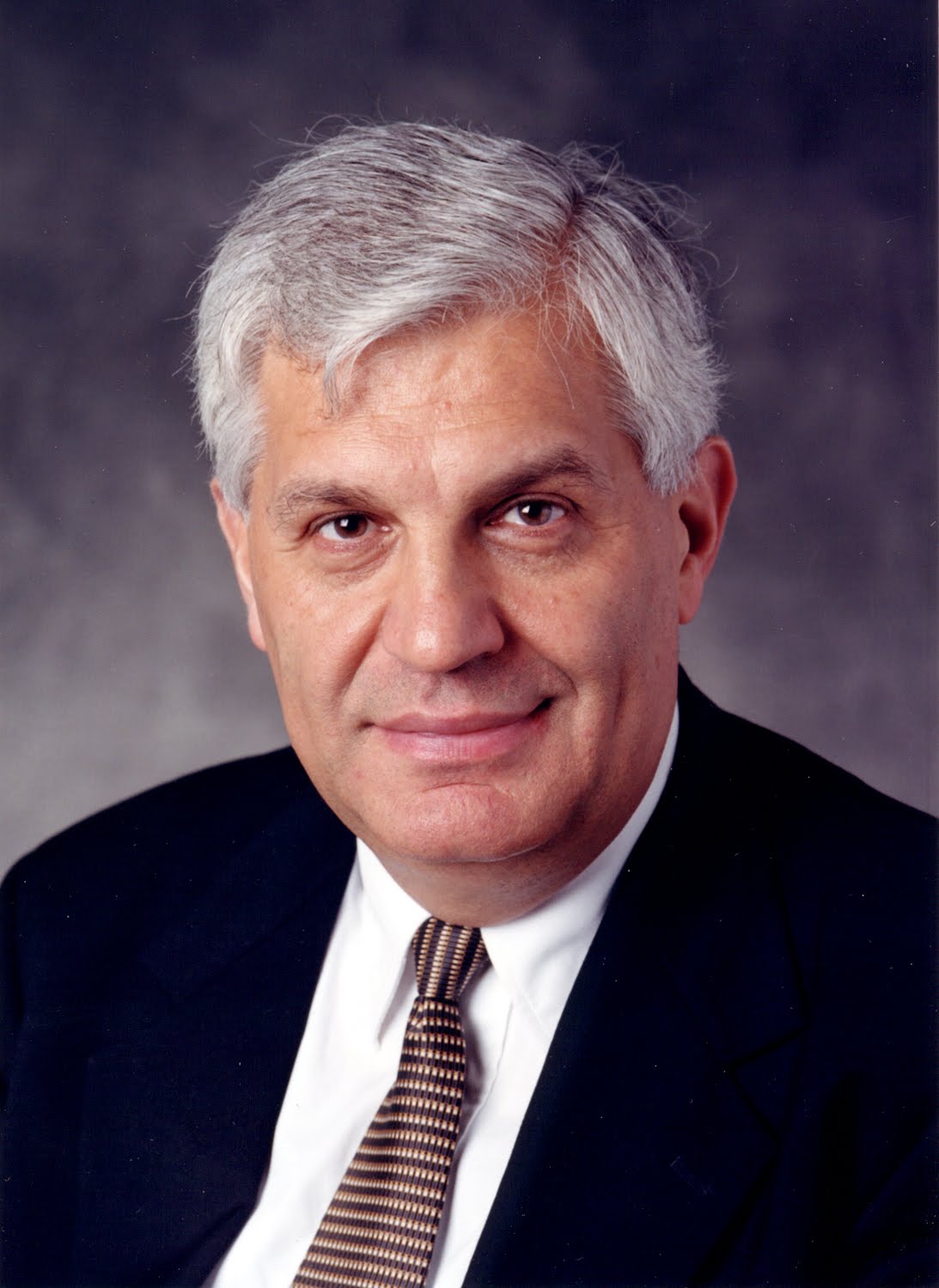
Thomas Goetz of Wired magazine (pictured) told the enthusiastic audience that that’s exactly what works. His take-aways:

Pay attention. When you think you are being observed you tend to act differently.
Monitor behavior to change behavior.
Use technology to get a sense of control over your health.

Hearing this, in the margin I had written “PRINCETON LIVING WELL!” in red ink and circled it twice.

Staged by Kevin Kruse of Newtown-based Kru Research, the first-annual e-Patient Connections conference triggered mental references to other Princeton companies, but lots of folks were in there in person as well. Rob Halper revealed how New Brunswick-based Johnson & Johnson uses You Tube, and Tricia Geoghegan, of J&J;’s Ortho McNeil Janssen, discussed her online community for ADHD. Susan Harrow Rago spoke on how Novo Nordisk funded Juvenation.org an online community for Type 1 Diabetes. Ian Kelly of Red Nucleus (at the American Metro Center) was a conference sponsor.

Attendees from Princeton included: consultant Meredith Gould (who Twittered the conference); David Avitabile, of JFK Communications; Lauren Walroth, of Bristol-Myers Squibb; and M. Jane Lewis, of UMDNJ’s School for Public Health. Kruse himself is an ex-Princetonian, from when he worked at AXIOM and Kenexa, so I didn’t have to explain U.S. 1 Newspaper when I asked for a press pass.

On the second day of the conference (Tuesday, October 27) David Reim (founder of the former Simstar, now a consultant with Influence Partners) will be one of the speakers. Also on the roster are Ambre Morely of Novo Nordisk and Marc Monseau of J&J.;

This was an exciting day for those of us who plump for innovation in the e-health field. (Full disclosure: I had a special interest because one of the presenters was my daughter Susannah, who does health research for the Pew Internet & American Life Project.)

That doesn’t keep me from saying that I thought Kruse put it together brilliantly. Another conferee and I were trying to figure out why it worked so well. We finally agreed that Kruse had a unified version of what he wanted to present. He emceed the whole day and his intros and follow-up questions fortified that vision. The lineup included Jay Bernhardt telling how the Centers for Disease Control use social media to influence perceptions about the H1N1 virus. Lee Aase told how the Mayo Clinic leverages You Tube and blogs. Congressman Patrick Murphy stopped by on his way to DC. My personal hero, Dave DeBronkart (known as e-Patient Dave and a survivor of kidney cancer), made a business case for participatory medicine.

In these situations usually the choir preaches to the choir, but this conference had a good mix of social media experts and social media newbies. Kruse recruited his friends and called in markers to offer one-on-one lunchtime coaching in social media platforms.

And there was some great bling. In keeping with the theme of e-patients, each registrant got a free i-Pod and the door prizes were videocams.

A great day. And I got to go to dinner with my daughter.

Jean Baker: Alice Paul vs Woodrow Wilson

Today when I read Sharon Schlegel’s account of meeting the 92-year-old Alice Paul in a nursing home (Schlegel describes her as at first “unresponsive and treated as senile”) I think of my mother Rosalie Yerkes Figge, who retained her feisty opinions until her death at 96. I also remind myself not to subject other people’s mothers and grandmothers to the prejudice of ageism.

Schlegel didn’t. Schlegel is a lifelong admirer of Paul.

Alice Paul is the subject of discussion, not just because the constitutional amendment she promoted is on the table again, but because Goucher College historian Jean H. Baker will speak about her at the Princeton Public Library on Monday, October 26, at 7 p.m. The talk is cosponsored by the Princeton Friends Meeting (namely Ann Yasuhara and Nancy Strong).

Paul’s dedication to the feminist cause was rooted in her upbringing as a Quaker and honed at a Quaker college, Swarthmore, Class of 1905. (She also had 2 graduate degrees from Penn, 2 law degrees from American University, and one from Washington College of Law.)

Clicking around to find info on Jean Baker I hit gold: an excerpt of the Paul chapter in Baker’s “Sisters: the Lives of America’s Suffragettes.” I’ve never been a fan of Woodrow Wilson (not a very comfortable position in this town) but Baker really socks it to him in her description of how Paul outwitted and outmaneuvered the hapless president. At least that’s my interpretation from skimming the excerpt.

My favorite part of the excerpt: On the day before Woodrow Wilson’s presidential inauguration Paul managed to stage a march the likes of which the Capitol had never seen. When Wilson stepped off the train, having been hailed and farewelled from the train station in Princeton, he found no welcoming crowds. All his supporters (men of course) were out harassing the marching suffragettes, who captured the headlines on what should have been his triumphant day.

That was in 1913, and almost 60 years later at the time of the nursing home interview, women had gotten the vote (1920) but the Equal Rights Amendment still had not been passed. Of course we now know that it never passed, but mention of it brought Paul out of a seeming coma. As Schlegel writes, her eyes flashed: “It WILL PASS,” she said. “It will pass because it is right!”

I may have a docile persona, but I was raised to think women are not just equal to, but better than, men. I can still hear my mother saying, with disgust over some ill-advised male’s dumb-cluck move, “Just like a man.” Of course my father was the exception; she devoted her married life to him, a brilliant teacher/researcher who, at home, cooked and did dishes.

Her attitude might have had something to do with her alma mater, Goucher, where she was declared a Goucher Treasure for the Class of ’31, but when I read Baker’s account of suffragette days, I realize that my mother came of age when women were more obstreperous. In contrast, I was a teen in the 1950s, a time when “girls” hoped to emerge from college, not just with a diploma, but with an engagement ring.

And by the time of the next feminist wave, in the early 1970s, I was nursing my third child. Ten years before I’d married into a pre-feminist world where men didn’t change diapers. The prospects of my being able to amend the marriage contract didn’t look good.

I was too late for the first feminist movement and too early for the second. I’ve never been particularly interested in the history of either one, but my appetite is whetted now. And — like you — I hope to goodness we are all still feisty at 92.

Google’s Schmidt: Sugar Daddy for New Ideas

When Stuart Essig, CEO of Integra Life Sciences (Princeton, Class of ’83), spoke at a Princeton University Keller Center lecture earlier this month, he told a compelling story about the company’s growth, one that I’d heard before from founder Rich Caruso, but in even more fascinating detail. One big “Aha” was when he admitted that most technology successes are built on the failures of others, that previous versions of Integra had cratered financially, enabling it to be sold for a very low price and resuscitated.

Back in 1987 (yes, U.S. 1 is that old, it celebrates its 25th birthday next month) Richard K. Rein was writing about the travails of American Biomaterials, which somehow morphed down the line through companies like ABS Life Sciences and Collatech into Integra. As Essig said, when companies fail and go bankrupt, the shareholders never get their money out of it.

But then start-ups are always an investment risk. Technical researchers particularly, are generally poorer than penniless. Grants are available. But if you spend your time writing grants you aren’t doing your research and you might not get the grant anyway – a vicious circle.

I can remember the travails my father had, applying for grant monies for an electronic microscope (partially invented, incidentally, by Bob Hillier’s late father). It was a fabulous help for his cancer research. A half-century later grant money is still tight.

That’s why it was such a welcome surprise when Google CEO Eric Schmidt (Princeton, Class of ’76) and his wife donated $25 million – not for a building, not for a professorship – but for special needs of struggling researchers at Princeton University. According to a U.S. 1 article, it’s to be used as seed money for “special” stuff, like equipment they need but can’t afford to buy.

Nowadays, Integra can buy anything it wants, whether it’s a piece of equipment or another company. But like any tech company in its early stages, it sure could have used some help.

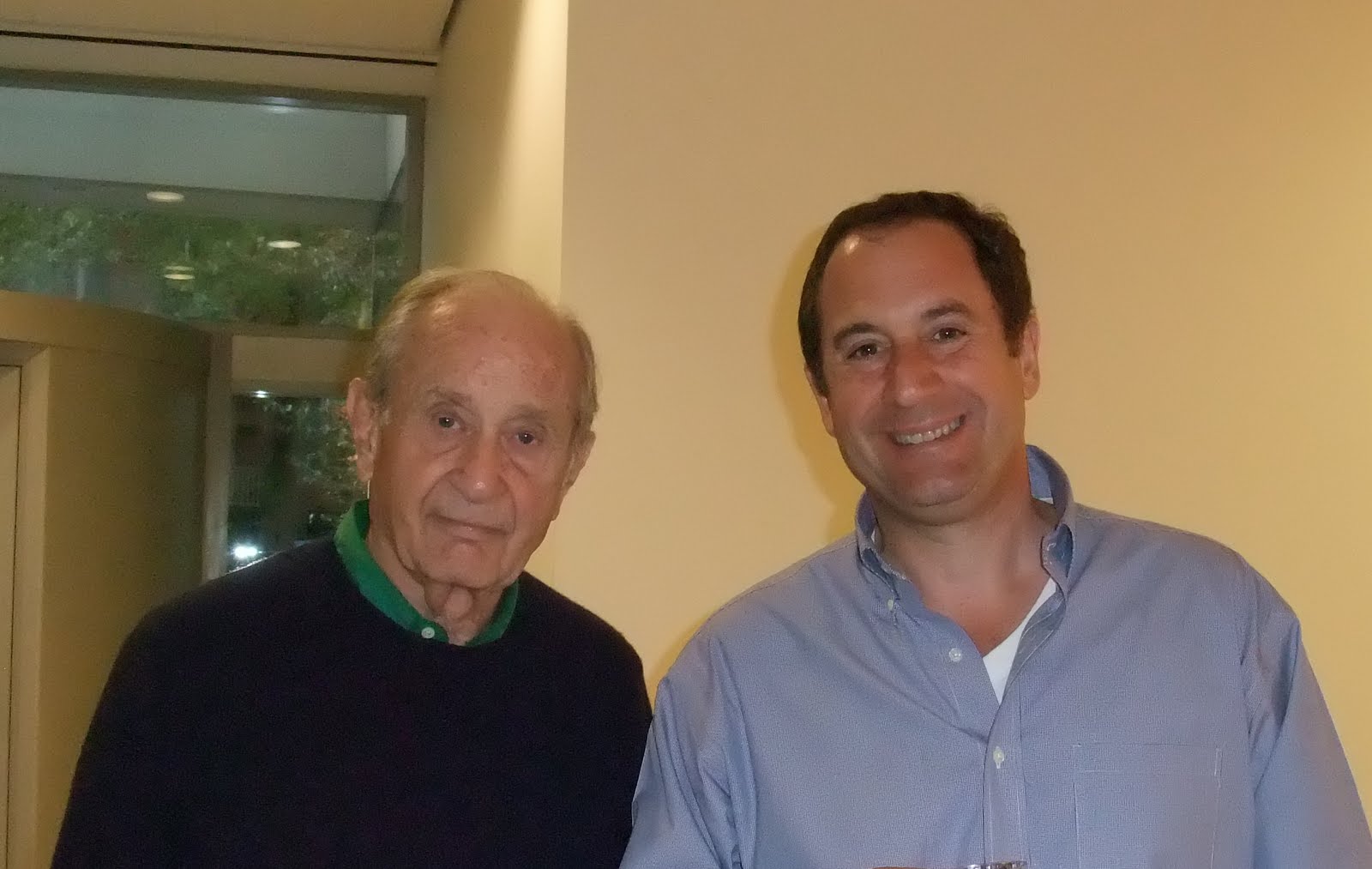
Photo: Stuart Essig, right, is pictured with Leonard L. Kaplan, who has a 20 Nassau Street-based firm, Pharmaceutical Quality Associates. He is starting a new venture based on a class of chemicals that affect the immune system. Kaplan confided to me that day that he aims to convert to an S Corp. and float some stock, indeed, starting all over again. It’s never too late to develop a great new idea.

Local Man in the News: Bob Hillier

As accustomed I am to seeing Princeton residents show up in the news, it still gives me a little jolt when I casually read a Small Business column in the New York Times (Thursday, October 8) and lo! it was about Bob Hillier, aka J. Robert Hillier, the president elect of the Princeton Regional Chamber of Commerce, publisher of the online Obit magazine, part owner of Town Topics and Princeton Magazine, part time teacher of architecture at Princeton University.

Frankly I didn’t recognize Hillier in the NYT photo, with him sitting on a curving stair and the photographer, Laura Pedrick, towering above him.
Columnist Brent Bowers used the chance to re-interview Hillier to announce that he will quit writing the column in December. He had Hillier tell about his many projects, so many that one wonders how he does them all, and Bowers doesn’t even include the chamber presidency, which starts in January. (Full disclosure, I am a member of that board.)

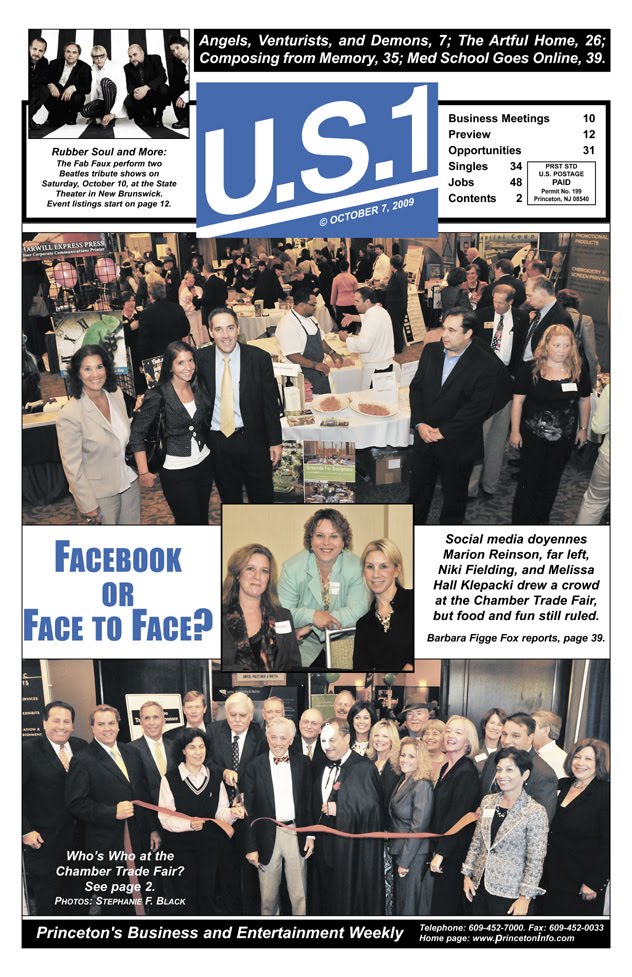
In case you can’t get access to that NYT page (too bad, you’ll miss that picture, but he’s on the cover of U.S. 1 Newspaper this week bottom photo, center, taken at the ribbon cutting of the chamber trade fair), here are the money numbers you might be curious about:
Merger of his architecture firm with RMJM was a $30 million deal.
New firm, J. Robert Hillier on Witherspoon Street, landed 12 projects in first six weeks.
Obit has 100,000 hits a month but “winning over advertisers is not easy.”
Town Topics has circulation of 13,000, and he described it as a “gold mine” with a return of 26 percent.
Princeton Magazine has increased ad revenue by 40 percent, and he expects the 34,000 circulation to grow to 50,000 in five years. A “home run” claims Hillier.
I guess architects are really good at multitasking.
But I question Bowers ‘ conclusion that Hillier is prospering, not in spite of, but because of, the recession. The RMJM deal didn’t have anything to do with the recession except give Hillier the chance to add an admirable, but money-losing online project, Obit. The one enterprise affected by the recession would have been the acquisition of Princeton Magazine, no doubt at a fire sale price.

Still, it’s fun to see Bowers to go back to his sources and find out where they are, what they are doing. Usually we business reporters have to pursue new subjects. Talking to sources that we like, then writing about it — it’s not something that we often get to do. And Hillier’s enthusiasm and verve are infectious. “It’s all about having fun,” he said. Yes.

Melissa Harris-Lacewell on White Privilege & the Nobel Prize

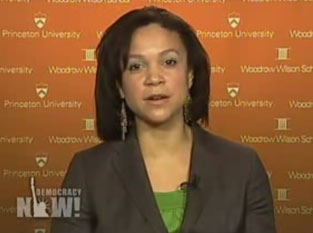
It’s Saturday night, time for sleep, but I just discovered — through a Twitter feed — a column written for The Nation’s blog by my neighbor, Melissa Harris-Lacewell, associate professor of politics and African-American studies at Princeton. Apparently she had been taken to task for indulging in some Nobel prize humor.
Her response included a reference to Tim Wise, author of White Like Me, which the anti-bias group I belong to, Not In Out Town, had used as the basis for its White Privilege workshops at the Princeton Public Library last spring. (A continuing discussion starts at the library on Monday, November 2, 7:30 to 9, and the library has several copies of the book). I perked up.
She compared what she called with the “Affirmative Action Dilemma” (the fear that others may think African Americans do not deserve the privileges they receive) with the dilemma that some believe white people have, the White Privilege dilemma, so well explained by Price. I recommend the full text of her blog but here is an excerpt, in italics.
White privilege is the bundle of unearned advantages accessible to white people in America. White privilege is not equivalent to racial prejudice. All whites share certain element of racial privilege regardless of their political or racial views. This does not mean that life is perfect for all white people. I was raised by a single, white mother, so I certainly know that white American face real barriers and struggles based on class, opportunity, gender, education, sexuality, and other cross-cutting identities. But white privilege exists and has powerful consequences. This does not mean that race is more important than socioeconomic class. It does mean that in the United States there is a preferential option for whiteness, and this preference means racial privilege produces a certain wage of whiteness.
Simply put, not everything that white people have was earned by merit. Some was, some was not. Some of the wealth, access, prizes, goodies, and political power currently held by white people are ill gotten gains from centuries of accumulated white privilege. Knowing this makes me a lot more relaxed about having to prove that I “deserve” every success, acknowledgement, or position I have. …

I encourage my friends and readers to calm down a little about having to prove Obama deserved the Nobel Peace Prize. Maybe he did, maybe he didn’t. The point is that he has it now….
Rather than give into the racial anxiety to prove the President’s worthiness let’s celebrate that President Obama responded to the prize with humility and grace.
“I will accept this award as a call to action, a call for all nations and all peoples to confront the common challenges of the 21st century. These challenges won’t all be met during my presidency, or even my lifetime. But I know these challenges can be met so long as it’s recognized that they will not be met by one person or one nation alone.”
I watched that Rose Garden speech on Friday, and I agree.
I also am intrigued by the fact that Harris-Lacewell sat next to Wise on a plane last month. How did I know? She had Tweeted that they talked their way across the continent. If her reference to Wise’s book was the result of such propinquity, this would indeed be a case where a personal encounter trumped a social media or virtual encounter.

Bridge Doctor Mistras Floats IPO

In August I recognized a license plate, ‘MISTRAS,’ in the McCaffrey’s parking lot and figured it had to belong to Sotirios Vahaviolos, who has a company on Clarksville Road, Mistras Holdings. Indeed it was, and we had a chat. I hadn’t spoken to him since U.S. 1 did a cover story on his company in 2002.

Vahaviolos was excited about floating his long-awaited IPO to raise money to go into alternative energy solutions. He had immigrated from Greece (and, as I remember, it was from the town of Mistras) and gone to Fairleigh Dickinson (Class of 1970), then earned a PhD in EE from Columbia and worked at Bell Labs. In 1978 he founded Physical Acoustics, which “listens” to faults in bridge infrastructure. It has grown to be a global company with many parts, under the Mistras umbrella, to do “nondestructive” testing, meaning that plants don’t have to be shut down.

He had hoped to do the IPO last fall but the market deepsixed that idea. Sure enough, the offering took place, a year later, last Thursday (NYSE:MG). It fell below the $12.50 offering price but as of two days later is up past $12.60. At least some of his employees are part owners, so congrats to them as well. I think I remember him saying that he has company gatherings in his hometown olive grove, lucky them! May Mistras have the success that another employee-owned firm, Greg Olsen’s Sensors Unlimited, has had. With 68 offices in 15 countries, Mistras has such useful technology that one would think it would do well.

Adirondack Dory on Carnegie Lake

She’s called Buttercup, partly referring to her bright yellow color, partly to the Gilbert & Sullivan character who rows out in her bumboat to sell “stuff and tobaccy” (and perhaps more?) to the sailors on HMS Pinafore. She’s an Adirondack Dory from the Adirondack Guideboat workshop of Steve Kaulback, pictured delivering it to us yesterday. The man who designed the boat dropped it off enroute from Ferrisburg, Vermont to the Annapolis Sailboat Show, which starts today. Thanks, Steve!

By chance, also yesterday, I fetched up next to John Guthrie of IsisGlobal (a competitive intelligence firm in Pennington) at Princeton University’s Keller Center lecture featuring Stuart Essig, CEO of Integra Life Sciences. We enjoyed comparing notes on “messing around in boats” as Rattie so famously said in Wind in the Willows. Turns out Guthrie makes regular treks to a private Adirondack lake and also has a lightweight boat, though from a different maker.

Buttercup is perfect for us. We like to row, but ordinary rowboats are heavy to heft, and the Adirondack Dory is like a canoe with oarlocks. It’s light (80 pounds, Kevlar and graphite, we can lift it off the trailer) and is painstakingly crafted, with cherry wood gunnels fold-down cane seatbacks. Look for her on Carnegie Lake!

Fort Knox for Paper, Inside Story

Docusafe is a good name for the Princeton-based archival storage company owned by Bohren’s, profiled in U.S. 1 Newspaper. It’s such a good name in fact that two companies are using it, revealing an interesting story that didn’t make it into the September 30 edition (on the newstand through today and then available on the web).

Intellectual property mavens take note: Just about the time the Froehlich family opened Docusafe, an entrepreneur in Madison, Wisconsin, opened the same kind of company under that name and also opened one in Phoenix, Arizona. (INCORRECT STATEMENT: ICANN, which assigns web pages, was confused and assigned the same URL, http://www.docusafe.com/, to all three locations. It turns out, thanks to somebody who read this and commented, that ICANN did not do that. The Wisconsin/Arizona folks always had www.docusafe.net. See comments below.)

You’d think there would have been a court battle, but in this case reason, courtesy – and practicality – prevailed.

After the ensuing confusion, the two firms worked it out. The Froehlichs had legal rights to the name.

Each markets their own company, and when a customer from the wrong location lands at their door, why of course, they provide the referral.

It helps that document storage is a business that doesn’t travel well.

Postscript: Dan O’Neill of Iron Mountain (Docusafe’s giant competitor, boxes pictured above) wrote me note: “Nice profile of DocuSafe, and thanks for working so hard to tell a complete story. They sound like a great company. One error…we have more than 60 million computer back-up tapes, not 16 million as stated below. ” So corrected.
And Docusafe would point out that, unlike its competitors, it uses boxes that are stapled, not pasted. In the unlikely event of water damage, stapled boxes don’t fall apart.