NPR Reporter Barbara Bradley Hagerty Today
This morning I’m teaching part of the story of Joseph, Genesis 42 to 47. to 4th and 5th graders at my church. What fabulous drama! Joseph, the favorite son, having been sold by his brothers into slavery, fetches up in Egypt, where Pharaoh pays attention to Joseph’s prescient dreams predicting seven years of plenty and seven lean years and accumulates vast stores of grain. When Joseph’s brothers come to him (not recognizing him) to buy grain, Joseph tricks them but forgives them, the point of the story being that it all worked out according to God’s plan to fulfill his promise to Abraham.
The forgiving part of this story is what I am to teach today. But what also stays with me, after reading this drama, is the story of the seven years of plenty and the seven lean years. Because of Joseph’s dreams, Pharaoh has stored plenty of grain and can sell it to keep nearby nations from starving. I’d forgotten the part about how Pharaoh, through Joseph, also buys up the Egyptian livestock, land, and even the Egyptian people themselves, making them slaves.
The very next thing I look at is Glenmede’s emailed economic report from Gordon Fowler, “How High is Up?” (Glenmede has its Princeton office on Chambers Street.) He makes his predictions in a Q&A; format and ends with the conclusion, paraphrased by me, that the world’s central banks are engineering another asset bubble using government debt rather than consumer and financial company debt.
Are we in the first of seven lean years? Are we going to end up selling the equivalent of our land and our livestock? Where is the Joseph of today who will assure the future of our grandchildren?
I dunno. If, as the book of Genesis says, God saw to it that Joseph ended up in Egypt so he could save his people, then maybe I just need to have faith that it will all work out.
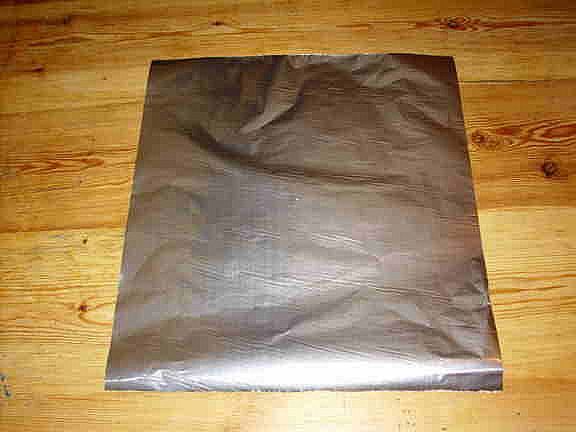
But just in case I’m supposed to be proactive, I’m going to read Fowler’s report more carefully, later. Right now I’m having fun figuring out how to take a piece of heavy duty aluminum foil and mold it into Joseph’s silver cup.
“Presence” is a slippery thing to define. Participants in Eileen Sinett’s Speaking4Biz workshop last month described it, alternatively, as a posture, a sense of confidence, an aura, an energy, a “look,” many ways of attracting approval. We agreed that celebrities – those who have been adored by the masses for a long time – accumulate a kind of electric field around themselves, so that you somehow “know” when they pass by.
But I always thought that “presence” required a regal look or at least erect posture.
Then I went with a young friend, photographer Stephanie F Black, to hear Sufjan Stevens, an eclectic singer-song writer whose folk/rock sometimes has a spiritual tinge and often has symphonic proportions. He played a small club in Philly, the first night of a two week tour with a group called Cryptacize, and no, even if I had posted this blog right away you couldn’t have gotten tickets because the tour sold out instantly; he has a cult following.
Self-effacing is not too strong a word for Stevens. His own group is a regular at big venues like the Brooklyn Academy of Music, but in the chapel at Princeton Theological Seminary last spring, he had “played in” with the Welcome Wagon, a group led by Rev. Thomas Vito Aiuto, a seminary alum who records on Stevens’ “Asthmatic Kitty” record label, and Stevens just blended in with the woodwork.
In Philly at Johnny Brenda’s, Stevens had two brass, two guitar, two keyboards, a singer, and dozens of footpedals all crammed onto the tiny stage. Stevens’ “presence” electrified the 150 screaming fans, waving and yelling for all they were worth.
He went from a deeply affecting Appalachian-style solo ballads, with banjo, to rhythmically dense blow-outs with Stravinsky-like orgiastic dissonance, all held together by an intricate and persistently driving rhythm. Stevens has a stupendous musical intelligence, and his musicians were amazing, especially the trumpet player and the drummer. I’m now a total fan.
Yet his “presence” embodied, not regal, but reticence. Far from being erect, his body was an S curve, and he had a Tony Perkins-like vulnerability.
I felt like going backstage to give him a Pilates lesson in how to stand tall. But, if “the body doesn’t lie.” as Martha Graham used to say, maybe his humble stance is part and parcel of his music, his charm. Sufjan Stevens has a presence (shall I say a quiet spirituality?) all his own.
Photo by Stephanie F. Black
The general public isn’t yet awake to energy saving possibilities for the home. When the public does wake up, the government subsidies will cut its whoppingly big subsidies. That was the message of Princeton Air’s Scott Needham at the Princeton Chamber breakfast on September 23 at the Nassau Club. “They are trying to compel people to take action and change the market. The current subsidies are approved only through December 31. So decide whether you are going to do something and do it soon – or decide to do nothing.”
One of his case studies: Homeowners added 50 percent more space but were able to reduce the heating plant by 60 percent and reduce their bill by 60 percent.
Here’s how it works: Get a Building Performance Institute certified contractor to do a $125 Comprehensive Home Assessment, refundable when the work is done. If your projects effect at least a 25 percent heat energy savings, you will get 50 percent of the cost back as a rebate check, up to $10,000. That’s in addition to $1,500 in federal tax credits and $1,000 in free air sealing paid for by the NJ Clean Energy Program.
Needham’s test used to cost much more than $125 but he reduced the cost to meet state requirements. His upscale test both an infrared tester and a blower door to create a vacuum and chart the leaks more accurately than the infrared equipment alone.
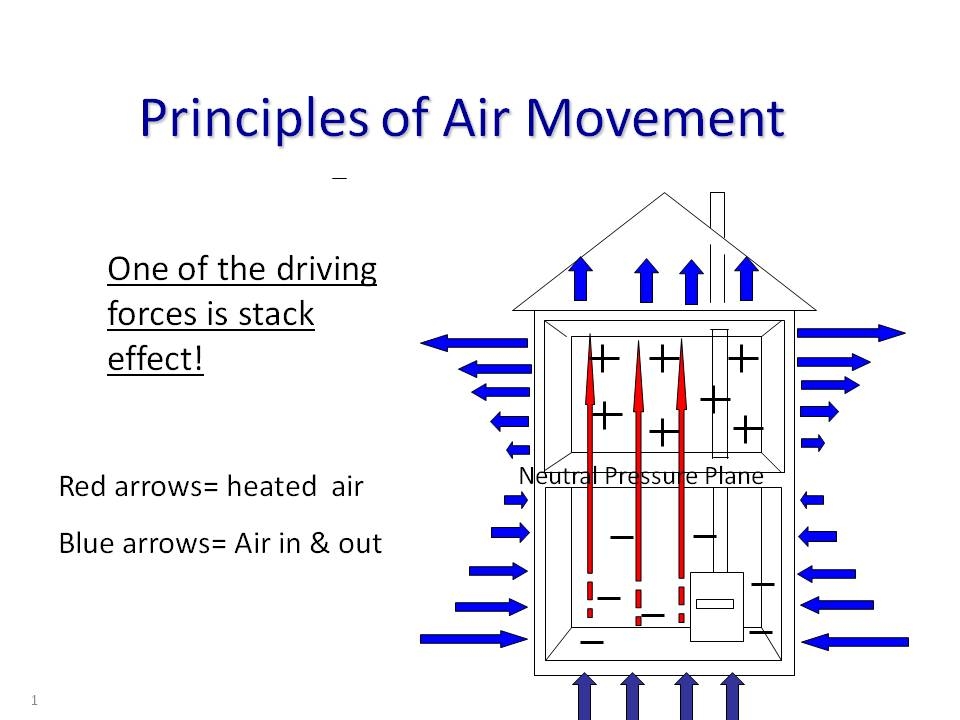
Among his favorite remedies: replacing fiberglass with cellulose (newspapers shredded and infused with fire-retardant boric acid), which is also excellent for noise reduction. And sealing the basement where the sill plate hits the rim joist to prevent cold air from infiltrating and moving through the house, which also helps in the summer to keep the cold air in. Plus, of course, sealing those leaky ducts.
Get the low tech stuff done first, he advises. Of course if you decide to replace your furnace or hot water heater with a more efficient model, he won’t object and that’s where you might qualify for the subsidies. You might even choose to install solar panels to heat your water.
Other ways to get on the sustainable energy bandwagon: Attend one of the two conferences in October. On Friday, October 16, 8 a.m. to 2:30 p.m. at Princeton University’s Woodrow Wilson School is a Policy Research Institute conference: Where Are We Growing? Planning for New Jersey’s Next 20 Years” featuring a host of eminent speakers. Register
The very next day Sustainable Princeton partners with We Are BOOST (Building Open Opportunity Structures Together) on a conference “Filtering the Green Noise: A Symposium, Part 1: on Saturday, October 17, 9:30 a.m. to 12:30 p.m. at the Suzanne Patterson Center at 45 North Stockton Street Princeton. Though admission is free, RSVPs are encouraged. Call 206-202-2883 or E-mail localwisdom@weareboost.org.
I haven’t quite decided what that “one thing” would be for me, but Boggs says his first affirmation was “I am unafraid.” Fear can hold us back, he said, quoting Anna Quindlen, who – though a very successful journalist – admits she is still afraid the fraud police will come and catch her out. “Write down your doubts, fold them up, put them in your pocket and get on with your life. Cultivate the opportunity to be less afraid – or unafraid.”
The entertaining actor and talk show star shared a bunch of tips on how to achieve success and overcome adversity, drawn from his book “Got What It Takes: Successful People How They Made It to the Top.”
When I bought it I realized “He’s written the People magazine version of ‘Bartlett’s Familiar Quotations,’ originally collected by John Bartlett (1820 to 1905). If you were a speech writer, or a preacher, or any kind of mass media writer who needs quickie 21st century anecdotes, this is the book for you. Nothing is really new here. Almost all the quotes are standard self-help fare.
The difference is the glitz factor: Boggs quotes movie stars (Brooke Shields and Renee Zellweger), sports figures (Joe Torre and Jeff Lurie), entrepreneurs (Craig Newmark and Donald Trump), TV celebrities (Bill O’Reilly and Matt Lauer), fashion designers (Joseph Aboud and Diane von Furstenberg) and a dozen more, and he sets their aphorisms in the context of their oh-so-famous lives.
Just like the 18th-century quotation quoter said, “I have gathered a posie of other men’s flowers, and nothing but the thread that binds them is mine own.”
Now if I can just figure out what is the ONE thing above all others that I need to remind myself about this morning. Maybe it’s Don’t Blog Before Breakfast.
Zimmerman had an opportunity to share his faith this summer at an alternative-style worship service at Princeton United Methodist Church. For a service in the contemplative style, he sat at the altar with several of his very evocative paintings and contributed two deeply spiritual songs, one familiar (“The King of Love My Shepherd Is,” which he says he has loved since he was a little boy) and one of his own (“Scarcely Born”). The title and the concept are oddly comforting. “It’s about how freeing it is to allow the evolutionary concept of vast stretches of time,” says Zimmerman. “I am savoring the belief that our development has only scarcely begun.”
The son of a Methodist preacher who “fell through the cracks,” as his bio puts it, Zimmerman lets his life experience infuse his songs. His singing has been described as deeply resonant, and “backed by skillful guitar, it surprises an audience with smooth, subtle, but intense emotion,” according to one writer.
He’s been edging to the spiritual and philosophical side. Thanks to a choir director who taught that “the foundation of all music is silence.” Zimmerman says he is working toward a music that focuses on the “place between the notes.” The song “Silence is a Golden Mountain” is one of my favorites on his new CD “Cosmic Patriots.”
“The lion’s share of songs I’ve written had their genesis in quiet times I’ve spent in the morning with a book on my lap,” says Dan. “There’s something about The Space Between that draws me back, the space between words on a page, and in music, the space between notes. In painting it’s more difficult to express: perhaps it’s the fluid, mysterious space between the painting and the open heart of the viewer.”
“It’s a hoot,” says my friend about this Sunday’s fundraiser at Katmandu. On September 20, the nightclub on the Delaware River in Trenton hosts a benefit for Gift for Life, the organ donation organization in Philadelphia that helps to match and support donor families and organ and tissue recipient. The organization serves a wide area of Pennsylvania, New Jersey, and Delaware, and this event, named after a liver recipient and run by a Ewing-based group, is called Papa Carl’s Jam for Life.
In particular, this shindig’s take will go toward building the Gift of Life Family House, to provide a place to stay for distraught families when their loved ones are under the knife. The fifth annual event is open bar, and open menu, $20 at the door, total amount tax deductible. Papa Carl is a musician himself, and though Lisa Bouchelle is the headliner for the day, at least two dozen other bands are turning out to support him.
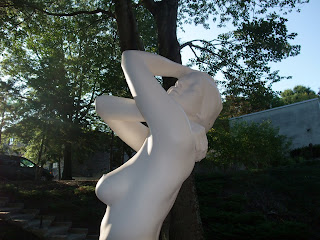
Out back, behind where Win and Hildegard Straube have their offices in their eponymous office center, is a monumental statue of a woman by Carole Feuerman. This sculpture of a woman bathing was chosen for the Beijing Olympics and is one of the outdoor and indoor works in the Straube Foundation’s new sculpture garden.
Art isn’t the only topic on display here. An exhibit named “Poets, Playwrights and Pen-Persons” is on display through October, starting Friday, September 18th, from 4 to 7 p.m. at 108 and 112 West Franklin Avenue, with a reception for published authors. Curated by John A. Tredrea, of the Hopewell Valley News, the exhibit includes works by Albert M. Stark, Barbara Anne Sher, Janet Purcell, Leonore Obed, Robert W. Adler, Sierra Adler, Vivian E. Greenberg, Win Straube and others. Call 609-737-3322 for info.
In this intriguing art-rich environment, the Straubes had hosted a “meet and greet” wine and cheese reception for officials from Capital Health System and the Pennington community on Monday, September 14. Capital Health’s CEO Al Maghazehe (pronounced MAG a see) told how the hospital expects to complete its new building on 195 acres in Hopewell by 2011.
The Straube Foundation hosts the art in the garden for free, and 100 percent of the sales receipts go to the artist. Some is on permanent display, including this copy of Feuerman’s “Olympic Swimmer,” which is on tour with the Olympic Fine Art Exhibition before permanent installation in Beijing. Another copy of this statue, this one in lifelike color, is now in a New York gallery (Jim Kempner Fine Art Gallery, 501 W 23rd St)
With works in bronze, wood, metal, marble, and other stone carvings by both local and globally well known artists, it’s a delightful walk through, a family destination. Sculptures by some of the same artists are on display at Grounds for Sculpture – but this sculpture garden requires no tickets. Just visit and enjoy.