All posts by bfiggefox

The $2 Billion Mouse


I’ve always had a soft spot in my heart for Medarex (just bought by Bristol-Myers Squibb for nearly double the stock price) because Medarex has a transgenic mouse that can produce therapeutic antibodies that mirror a human’s antibodies. .

Mice are my favorite critters anyway, because I literally grew up in the Frank H.J. Figge mouse lab. The lab had 5,000 mice, who owed their existence to my father’s cancer research efforts, and my late mother, Rosalie Yerkes Figge, ran the breeding colony. My sister and I helped out in the family business with such age-appropriate tasks as filing records and filling glass bowls with cedar shavings (at five years old), transferring mice by their tails to clean bowls (age seven), and separating and marking the adolescent mice (age 10).

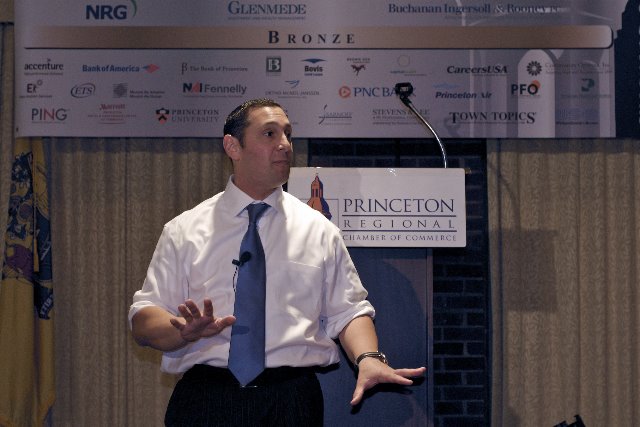
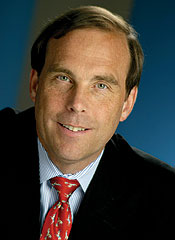
So when Donald Drakeman (left) started Medarex as a monoclonal antibody company in 1987 and 10 years later bought Genpharm with its transgenic HuMAb mouse, developed by Nils Lonberg, I was personally and professionally intrigued. Given the cost and time needed to administer clinical trials to humans, the Medarex mouse can help bring important drugs to market quickly and cheaply. I thought Drakeman was pretty smart to wend his way through some nasty patent disputes and emerge, owning the mouse.

Drakeman and his wife, Lisa Drakeman, have been on the cover of U.S. 1 at least three times, starting in 1987 when it was a pop-and-mom shop with offices at 20 Nassau Street. She came to Medarex as SVP of business development and moved on to be CEO of Genmab. He is no longer with Medarex but she is still at Genmab, based in Denmark but with an office here in Princeton.

Yesterday Bristol-Myers Squibb bought Medarex for what amounts to $2.1 billion, and this morning the stock of both companies shot up, with Medarex nearly doubling to $15 plus.

What does this do for GenMab? Nothing, GenMab claims. Medarex has sold most of its GenMab stock, earned in return for granting 16 prepaid licenses to use the special mouse for drug development. Medarex still owns 5 percent of GenMab, says GenMab’s PR person, Lucy McNiece. Of the 16 licenses, 13 have been used.

And now, of course, I kick myself for not having bought Medarex stock. Before I left my job at U.S. 1 in 2008, it would have been a conflict of interest for me to own it and also report on it. After that, naysaying from a stock broker (who shall remain nameless) deterred me.

But as my doc brother in law says, the Retro Spectroscope is never wrong. And congratulations to the prescient Medarex stockholders, the Drakeman family, and New Jersey’s biotech community. A rising tide raises all boats.
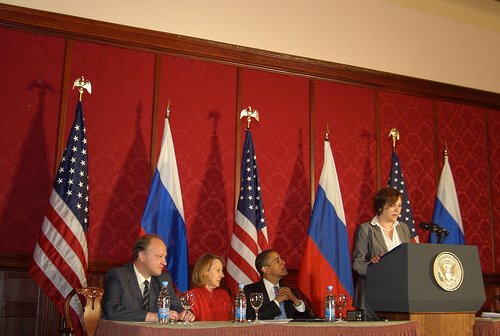
From Russia to Princeton


Esther Dyson’s Flickr account shows a July 7 photo of her sitting next to President Obama at the speaker’s table for a meeting in Russia. Her next appearance — a rare one, in her hometown — is Thursday, July 9, at the Princeton Chamber lunch, 11:30 a.m., at the Forrestal Marriott.

It’s hard to describe Esther Dyson, because she has so many interests, but here is a bio cadged from several sources:

Esther Dyson is a journalist and commentator on emerging digital technology, a founding member of the digerati, an entrepreneur, and a philanthropist. She has been highly influential for the past 20 years on the basis of her insights into online/information technology markets and their social impact worldwide, including the emerging markets of Central and Eastern Europe and Asia. In 1994 she wrote a seminal essay on intellectual property for Wired magazine and three years alter wrote Release 2.0: A Design for Living in the Digital Age.

Born in Switzerland in 1951, she grew up in Princeton, where her father, physicist Freeman Dyson, is at the Institute for Advanced Study. She majored in economics at Harvard, worked as a reporter at Forbes, then did investment research and bought a company, renaming it EDventure Holdings.

In 2004 she sold it to CNET Networks, the US-based interactive media companym and now operates as an independent investor and writer under the reclaimed name. An active investor as well as an analyst/observer, she participated in the sale of Flickr to Yahoo! and of Medstory to Microsoft, and her other investments included Del.icio.us, BrightMail, and Orbitz. Her primary activity is investing in startups and guiding many of them as a board member, including 23andMe (US), Airship Ventures (US), Evernote (US), Boxbe (US), Eventful.com (US), Meetup Inc. (US), NewspaperDirect (Canada), CVO Group (Hungary), Voxiva (US) and Yandex (Russia).

She is also active in public affairs and was founding chairman of ICANN, the domain name policy agency, from 1998 to 2000. She currently sits on the board of the Sunlight Foundation, which advocates transparency in government.. She is one of 10 initial volunteers in Harvard’s personal genome project. She has serves as a trustee of, and helped fund, such emerging organizations as Glasses for Humanity, Bridges.org, the National Endowment for Democracy, and the Eurasia Foundation (which co-hosted the 7-7-09 Civil Society Summit in Moscow). . She is also a board member of the Long Now Foundation, a trustee of the Santa Fe Institute, and hosts the Flight School in Aspen.

She is a close follower of the post-Soviet transition of Eastern Europe and is amember of the Bulgarian President’s IT Advisory Council. Last year she trained as the backup astronaut for Charles Simonyi’s Space Adventures trip aboard the Soyuz. In January she received the Aenna Burda award, for women in the media who successfully implement their extraordinary visions.

Here is the link to Michele Alperin’s article in U.S. 1 on July 8.


Those at the luncheon will have a chance to get Dyson’s take on their particular interests. She will speak briefly on “How can you weave together Silicon Valley, genomes, Russia, and space into a single talk” and then take questions.


Princeton’s Esther Dyson on July 9


Bogus privacy concerns keep us from having access to our own healthcare records, said Esther Dyson in the Huffington Post last month. As Quicken was to our money (it unlocked our financial records) we need the technology to get a look-see at our doctors’ records. That’s the message from a new advocacy group, www.healthdatarights.org.

Dyson, a Princeton native, speaks at the Princeton Chamber this Thursday, July 9, at an 11:30 lunch at the Princeton Forrestal Marriott on (take a breath) “How can you weave together Silicon Valley, genomes, Russia, and space into a single talk?” She’s in great demand among the digerati for her forecasting expertise, but she is also known for being able to explain puzzling technology to the non-techies of the world.
“Good health (not just healthcare) starts with individuals managing their own health and understand the impact of their own conditions and behavior,” writes Dyson. I can think of several Princeton-based companies that have staked their future on that proposition, among them, Princeton Living Well.
We need to be able to control our own data, and if the banks can figure out how to do it, the “privacy” excuse is a sham. If we can access our bank accounts online, why not our vaccination records?

Racial Profiling — It Happens Here

When I asked white friends to attend Not in Our Town’s workshop, presented and co-sponsored by the Princeton Public Library in April, on “Exploring White Privilege”, the answer was sometimes “I’m not privileged, I came up from nothing, I don’t believe in that concept.” Some replied, and it was a good answer, that the white privilege concept wrongly implies that all white people are alike (they aren’t) and that it visited the sins of the fathers on the sons.

I didn’t have a good answer then, I do now. Donald Roscoe Brown, a lawyer who lives in Ewing, wrote an oped published in today’s Times of Trenton (Thursday, June 18, page A-15). Brown’s words were kind to the Lawrence police officer who stopped him “after seeing me for all of five seconds” because he “might not have been wearing his seat belt.” Brown said he was “perhaps poorly trained.”

I too have been stopped for suspicion of not wearing my seat belt, but under much more controlled circumstances, i.e. a seat belt checking station. Brown was simply driving through Brunswick Circle, enroute from Trenton Municipal Court, where he was working on a case involving an unconstitutional stop and search.

To my white friends who don’t acknowledge their white privilege – you will never have to go through the jeopardizing experience of “Driving While Black.”

As a member of Princeton United Methodist Church, I belong to Not in Our Town, a faith congregation-based social action group. It offers continuing opportunities to combat racism and bias in Princeton. For information, comment here or E-mail niot-princeton@gmail.com.

Stimpson: Road Guide to Happiness

Everyone, no mattter how rich or powerful or seemingly well adjusted, is insecure, said Rev. Peter K. Stimpson, speaking to the Princeton Chamber on Wednesday at the Nassau Club. Stimpson heads the Trinity Counseling Service, pens advertorials for Town Topics, and has just written a book of short essays, “Map to Happiness.” (The counseling service, by the way, has its gala on July 11 at Bedens Brook.)

At that moment, I didn’t feel insecure. Who me? I had just unearthed my summer seersucker jacket, paired it with cream slacks, a red tee, and snazzy red shoes. I wasn’t insecure. I was hot stuff.

Then afterward Linda Kibrick (who is herself a counselor at Crossroads for Health and Wellness) commented how nice I look and I found myself (no, no, don’t do it, aargh you did it) responding negatively, confiding that the blue and white seersucker jacket didn’t really go with cream pants, that the pants should really be white.

Caught in insecurity.

Stimpson says that when we let insecurity take over, we are giving power to other people. Your employer does not define your worth. If you get a bad grade or a less than ideal rating or even if you are laid off, that’s a bad outcome but you, yourself, are good and have good qualities. Forgive yourself for mistakes.”

“Take back the power,” he says, telling of a 7th grader, a notoriously bad baseball player, who – one day — made a miraculous catch that won the game. He ran home to tell his father, and his father’s only response was, “Did you get a hit?” The boy was shattered. “Don’t give the power to other people,” says Stimpson.

And, “Reach for things that will last. What you attain doesn’t go with you to the next life. What you decide to become does go with you. How you interact is how you grow.”

I’m still going to try to lose three pounds so I can fit into the white pants that go with that jacket. But I’ll forgive myself if I don’t make it.

Enough About Me: Michael Goldberg

It is Never About You, said Michael Goldberg, giving the Pool Rules of Networking to a Princeton Chamber audience on June 4. “It is always about them until they make it about you.” An adjunct professor at Rutgers who makes his living as a conference speaker, he has an online newsletter and blog, Building Blocks to Success. (Photo by Stephanie F. Black)

Having read the article in U.S. 1 Newspaper, I came to the lunch figuring I knew the tips he would give, but no, there were lots more. For openers, instead of “what do you do,” try “Do you like what you do?” or “What about it do you love, and what don’t you like.”

Goldberg said he likes about one-third of the people he meets. What about the rest?

Say: “It was great hearing about your business, but I’m going to let you go. I don’t want to waste your time.”

If you like the person but can’t help them, say, “Who are you looking to meet?” and then try to introduce them (and introduce them with passion, tee them up.)

If you like the person and CAN help them, say, “Tell me how I can help you. Who’s a good client for you?”

And then plan to follow up. “It sounds as though we have a lot to talk about.” Exchange cards and ask permission to jot a note on the back of their card, or use an index card.

When it’s “all about them” and you have helped them all you can, you might hear someone say, “Enough about me.” That’s your cue.

Jogging Our Memories

I’m not one to bring up the subject of memory, painful as it is to my age group. But Ed Cooke, dubbed the Grandmaster of Memory and a columnist for the London Times, has co-founded a business that supposedly improves your memory, and he’s giving a public lecture on Wednesday, June 17, 8 p.m., at Betts Auditorium (the architecture department at Princeton University), Room N-101. Last year Cooke’s book “Remember, Remember” was published by Penguin and he is somewhat of a celebrity in memory circles. He and Princeton grad student Greg Detre have founded Memrise.com, “an online learning platform that helps you memorize words, facts and relationships inhumanly fast,” according to Detre.

Before I forget, Rev. Peter Stimson, director of Trinity Counseling Service, will speak on “A Map to Happiness: Straightforward Advice on Everyday Issues,” at the Princeton Chamber’s Nassau Club breakfast just 12 hours earlier, Wednesday, June 17, at 8 a.m. Networking begins at 7:30 and if you don’t want to get charged an extra $5, preregister at 609-924-1776 or http://www.princetonchamber.org

And be sure to keep July 9 free on your calendar. Esther Dyson is coming to town and will speak at the Princeton Chamber lunch.


This Morning, Contact Your Legislator

(This entry is an expanded version of what was posted on June 4).

This recession is a great time to be an entrepreneur, said Larry Chaityn, chapter president of an angel group (Keiretsu Forum NY Tri-State) because investors need somewhere to put their money.

“We have great deal flow,” he said, “because the Fortune 100 will be frozen for 18 months. You have an 18 month window.”

So many were eager to hear that message that the Forrestal Marriott had to set up extra tables for the New Jersey Entrepreneur Network meeting yesterday. Eighty people registered and another 2 dozen paid at the door for “A Gathering of Angels,” a round table with 7 angel funding groups.

It took about 45 minutes for each and every one of the attendees to introduce themselves, and, for me, that was really the best part of the program.

Such variety. Such inspiring stories, delivered in the 10 seconds allowed for each person. It was a good mix between entrepreneurs seeking funding (in some cases, seeking employees), investors seeking opportunities, and professional providers seeking clients.

Just two of the stories for now. I was thrilled to meet Daniel Kogan, CEO of Health World Web in Manhattan. He was standing around looking lonesome and my motherly instincts kicked in. A short chat about what he does in the e-health area (social networks for patient communities) and then, hmm, I thought, this is right down Esther Dyson’s alley. So I made a pitch for July 9, when the Princeton Chamber has inveigled Esther Dyson to speak. Turns out, yes, he had heard of Esther – in fact she is one of his advisors. What a great coincidence.

We sat together at lunch and on my other side was Sri P. Srivastava, founder of Clintech Research. I’d interviewed him for U.S. 1 but we’d never met, and he was eager to tell (and I was eager to hear of his success).

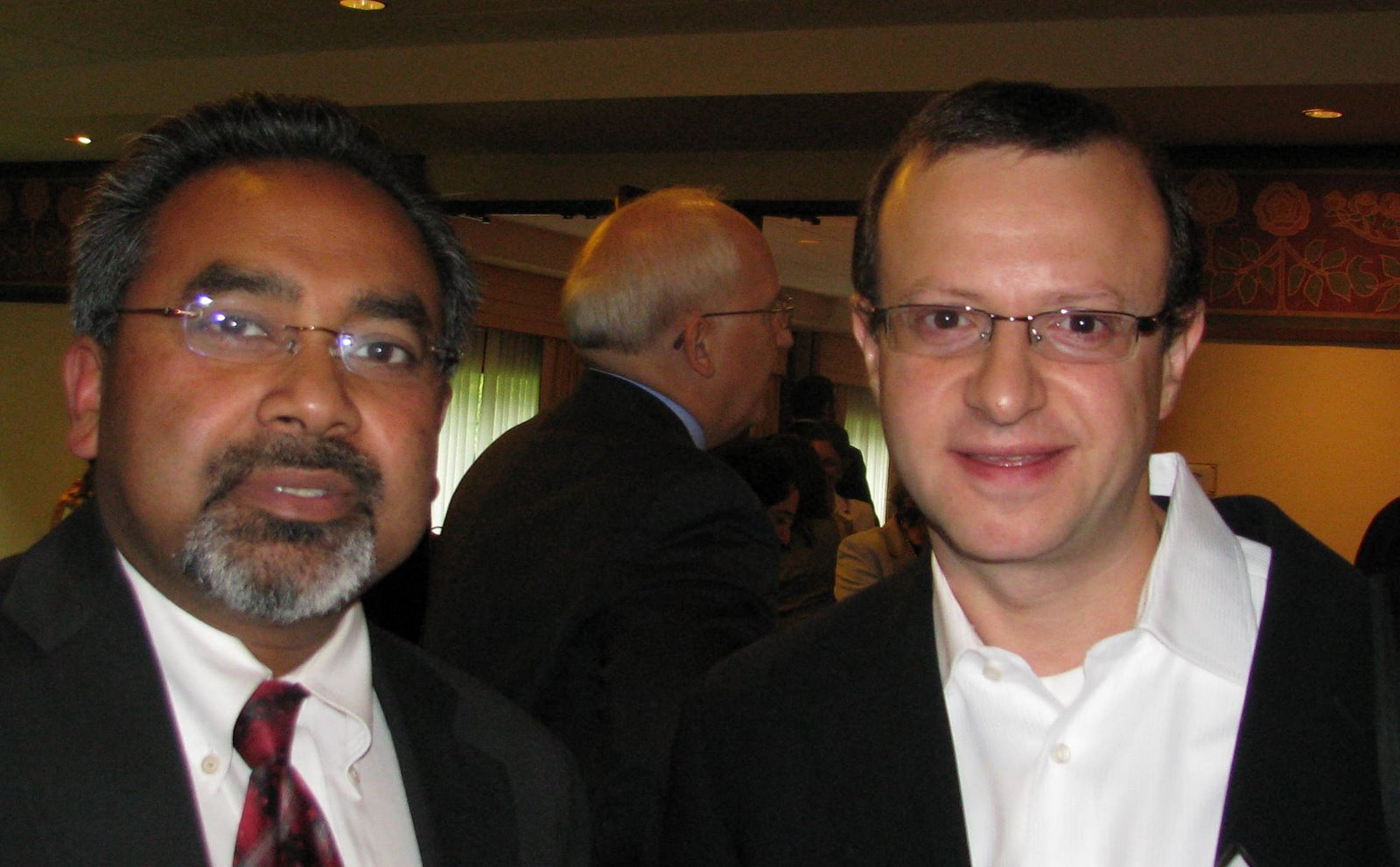
In the photo above, Srivastava is on the left, Kogan on the right. I snapped some candids that may help jog memories. Here is the link to the photos. (E-mail me or comment if you don’t want your photo or name used or if you weren’t IDed and want to be).

Lunch attendees were encouraged to contact their state legislators regarding A-3883 ACS, which expands New Jersey programs to encourage investments in small technology companies. According to the New Jersey Technology Council (http://www.njtc.org/) this bill was up for a vote on June 4, and it would increase state funding for tech businesses from $10 million to $15 million. In this recession, you ask? It doesn’t cost the state that much, because young tech businesses get to sell off their tax losses. (Apparently the bill did pass the committee, here is the link.)

Here are the angel speakers and their links:

Loren D. Danzis of Delaware Crossing Investor Group.

Joan Zief of Golden Seeds (female entrepreneurs).

Mario M. Casabona and Katherine O’Neill of JumpStart NJ Angel Network (mostly, but not all, in NJ, uses http://www.angelsoft.net for applications).

Larry Chaityn of Keiretsu Forum NY Tri-State

Christopher Starr of Mid-Atlantic Angel Group Funds.

David Twersky of Robin Hood Ventures and

Ellen Sandles of Tri-State Private Investors Network, the longest running and the only one who will “do” retail.

Other gleanings: If you meet one angel, you can connect with several, because they work together. A good place to meet them is at private airports, because — as risk takers — they are often pilots. If your business requires execution, don’t apply for angel money until you have some sales. And the oldie but goodie, angels invest where others fear to tread.

Once a reporter, always a reporter

In case you missed the NYT business section on Monday, a bunch of Star Ledger journalists are doing just what Richard Bilotti, ex publisher of the Times of Trenton, predicted would happen: Having lost their jobs, they couldn’t stop being reporters, so they set up shop in a library and started a website, www.newjerseynewsroom.com.

Bilotti forecasted this at a Princeton Chamber meeting last spring and I thought “It’ll never work, what will they live on.” But what it’s doing, it’s keeping their brand alive. As “star reporters” they keep current with their sources and their readers. (They are also looking for real jobs, as are most of the experienced staffers at the Times of Trenton, a sister paper of the Star Ledger.)
Support them! Go online and click on any ads you see. As for the print editions of any of the newspapers around here (including the Times of Trenton and of course my own favorite, U.S. 1) it helps to mention, to an advertiser, that you saw it in print. Can’t hurt, might help.

Hire a savvy woman to get the EMR show on the road

 I think the Obama administration should tap Laverne H. Council to manage the transition to digital health records, also known as electronic medical records ( EMRs). 

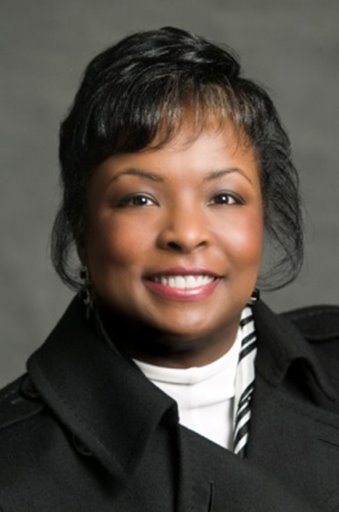
On November 14 I heard Council, CIO of Johnson & Johnson, speak at the New Jersey Technology Council‘s lunch. Based on that savvy but witty speech, I believe she has the smarts and people skills to inspire diverse groups – IT and medical – to come to agreement quickly.

Council came to J&J; by way of Ernst & Young and Dell. In a startlingly short time period she standardized all the IT departments in J&J;’s entrepreneurial culture. That included more than 200 operating companies and more than 3,500 information management employees with a budget of $1.6 billion. To whip or cajole everyone into line was an amazing feat. 

 “If you don’t standardize, you can’t digitize,” she said. We had to sell it as cost savings. If we digitize, we can innovate.” 

Council is a long-time supporter of the idea that government should provide the standards for digitizing drug development. At the lunch, she pointed to the Vista software that the Veterans Administration developed. (For an account of a hospital that successfully used this software see Laura Landro’s article in the Wall Street Journal).

 Council noted that the government has already spent a lot of money on this software. Unlike privately developed software, it doesn’t require lots of tweaking. Said Council: “Sellers of software don’t want you to pick it up and use it.” 

It won’t be easy to stamp out errors, as the medical community eliminates paper, but then Gutenberg had his problems too. I found an amusing account of an early printer’s error on the blog e-patients.net. It seems that an errant typesetter left the word “not” out of the Seventh Commandment. All the Bibles from that press run read “Thou Shalt Commit Adultery” and the edition became known as “The Wicked Bible.” 

Disclosure: I don’t know Laverne Council, have never interviewed her, have never even talked to her. This year the NJTC named her CIO of the year. I do try to follow the digital health record scene because I am interested in the progress of a Princeton-based personal health record firm, Zweena Health.