U.S. 1 adds more tributes to Michael Graves.
And Richard K. Rein gives a shoutout to the African Soiree to benefit riverblindness.
U.S. 1 adds more tributes to Michael Graves.
And Richard K. Rein gives a shoutout to the African Soiree to benefit riverblindness.

This amazing Luba Shankadi mask will be in a live auction, at the African Soiree to benefit United Front Against Riverblindness. It starts at 5 p.m. on Saturday, March 21 at the Princeton Seminary and includes a buffet of African and international foods, entertainment, and an update from UFAR founder Daniel Shungu.
Anyone may buy items at the African marketplace, from 4:30 on, but you need to be at the dinner to participate in the Kuba art auction. Go to the United Front Against Riverblindness website for $70 tickets.
Other yummy items — this cowry-shell and beaded purse, a whimsica l double-entendre since cowry shells were a form of money.
Traditional Congolese “Kuba” art was affected by influences from abroad that arrived during the era of colonization, but the individuality and variety of tribal customs has been preserved.
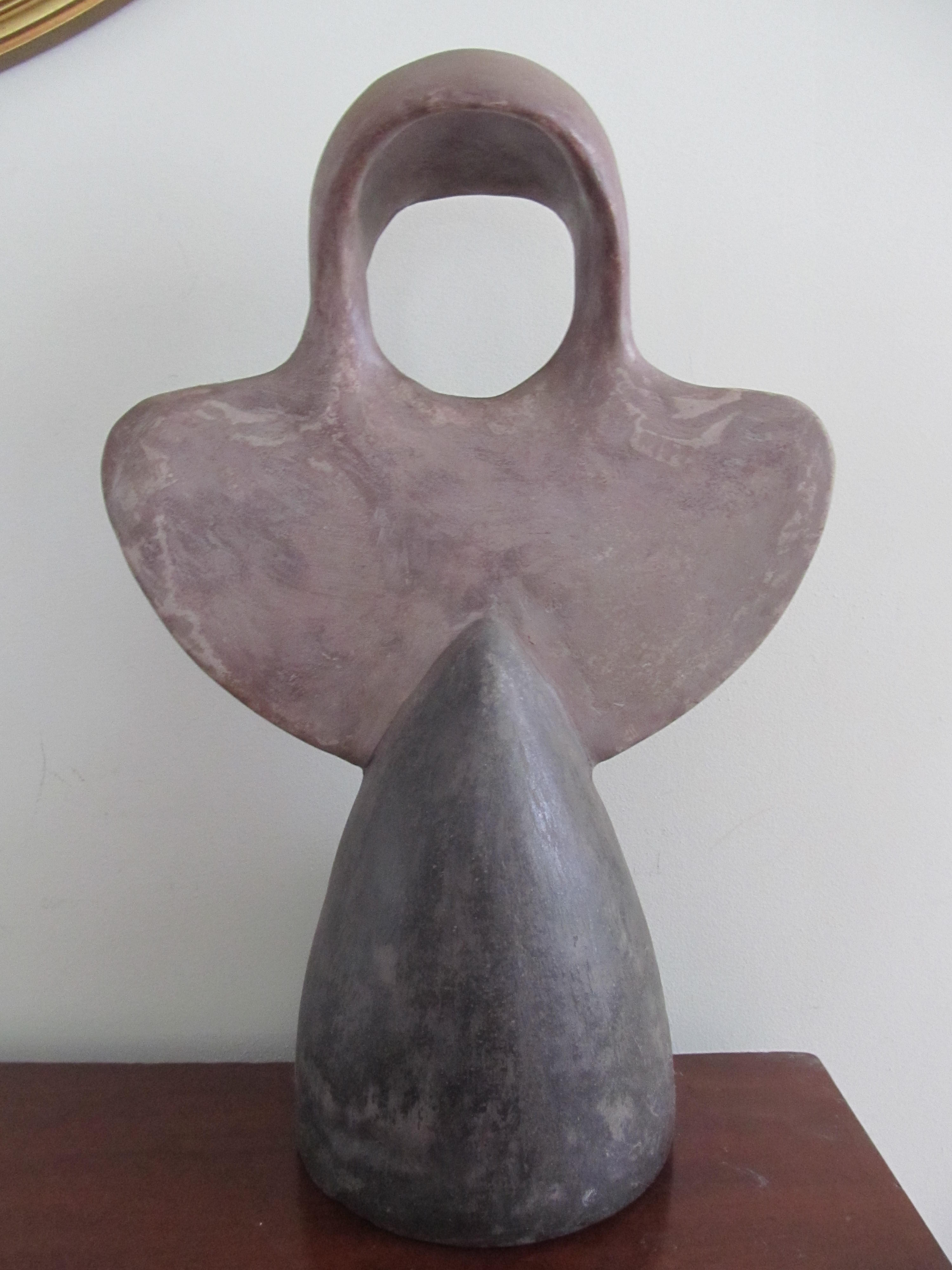
Below left, a modern sculpture. Below right, a museum quality headstand. And the textiles– my photos don’t do them justice so here is a link to a gallery. Starting prices for the auction range from $100 to $500. If you can’t get there Saturday but want to bid… hmmm, shall I bid for you?


You probably read the New York Times “designer of towers and teapots” obituary on Michael Graves, who died yesterday (3-12-15) at 80.
You probably did not see this excellent video of Grounds for Sculpture’s Tom Moran reminiscing about Graves, taken yesterday by Times of Trenton’s Michael Mancuso. Grounds for Sculpture has a 50-year Graves retrospective running through April 5. Everybody is talking about their Michael Graves memory.
Early in my tenure at U.S. 1, Rich Rein assigned me to write a cover story on Graves. In the early days, U.S. 1 was a monthly, then biweekly, and cover stories ran at least 5,000 words.
The only way Graves could fit me into his schedule was for me to accompany him on a 6 a.m. Amtrak train to Washington, D.C., so Rein agreed to buy my business class ticket.
Bleary eyed, notebook equipped, I met the courtly Graves on the Princeton Junction platform. Two of the things he said stay with me today. He was telling about his upbringing. “I guess your mom was proud of your drawings and put them on the refrigerator?” I asked. His answer was . . . pause, “No.”
I thought that was a poignant comment and made a mental note to visibly appreciate my own children’s talents more. At that point in his career, though the Humana building was up, and the Disney hotels were in the works, no significant buildings carried the Graves signature in Princeton. Just a couple of house designs. It took a long time before a major Graves postmodern design, for the Arts Council of Princeton, would make it to the streets of his home town.
In any case, it was a heady moment for me. Until I joined the staff of U.S. 1 in 1987, I had been a dance writer. I had interviewed famous dancers, but never an architect, let alone a famous architect.
Then, as the train pulled into Philadelphia, Graves called my attention to the boathouses along the Schuylkill River. “Each is a different style, each a gem,” said Graves, of the 19th-century designs, noting that he assigned boathouse design to his Princeton classes.
Baltimore is my home town. I got off in Baltimore and taxied to see my mother. I made that train trip monthly for more than a decade. Remembering that morning, I always craned my neck to catch a fleeting glimpse of the Schuylkill boathouses.
Photo by Jon Naar, U.S. 1, January 26, 2011.
That story “Called the Architect for the ’90s, but his work is invisible here,” was published on November 29, 1989, soon after U.S. 1 Newspaper had gone from a monthly to a biweekly. The paper has published many stories on Graves since that time, searchable in the archives.
Randy Now, a Cranbury mailman by day and a musician/DJ by night,
“seems to have brilliantly blundered into his role as promoter, persuading emerging bands to stop in Trenton en route between New York and Philadelphia.”
 Kate Newell retells the story in this week’s U.S. 1 Newspaper when she reports on the New Jersey Film Festival, which opens Saturday, January 31. In the film, “Riot on the Dance Floor: The Story of Randy Now and City Gardens,” she recounts, “director Steve Tozzi reopens the doors of the legendary City Gardens in Trenton, letting out all the grit and glory trucked in by the remarkable club promoter Randy Now.” Click here for her story. Also here’s an interview with former City Gardens bartender Jon Stewart
Randy Now now presents musicians at his new venue, the Man Cave in Bordentown.


Many of my friends know I collect buttons, and often they say “I have my mother’s buttons in a jar — would you look at them/” Now is your chance. Along with members of the New Jersey State Button Society, I will host a talk and hands-on demonstration, “Treasures in Your Button Box,” on Monday, January 19, 1 to 3 p.m., at Princeton United Methodist Church, Nassau Street at Vandeventer Avenue.
If you can attend, please tell me, so I can save you a seat! You may comment below or call 609-921-2774 or email duncanesque@yahoo.com. For parking information, go to http://www.PrincetonUMC.org. There will be a donation box.
You’ll see 19th century buttons made from china, shell and ivory, and also those made recently from modern materials — including rubber, plastic, celluloid, glass, and metal. You will learn how to find and care for buttons that cost 25 cents, $25, or $250. If you bring your button box, the NJSBS collectors will tell you about them. And everyone will go home with new treasures.
Something I did NOT expect: The Garden Theatre presents a LIVE dance-theater performance by DV8 Physical Theatre on Wednesday, January 14, at 7:30 p.m., repeating Sunday, January 25, 12:30 p.m. This National Theatre production is billed as for adults, read about it here.
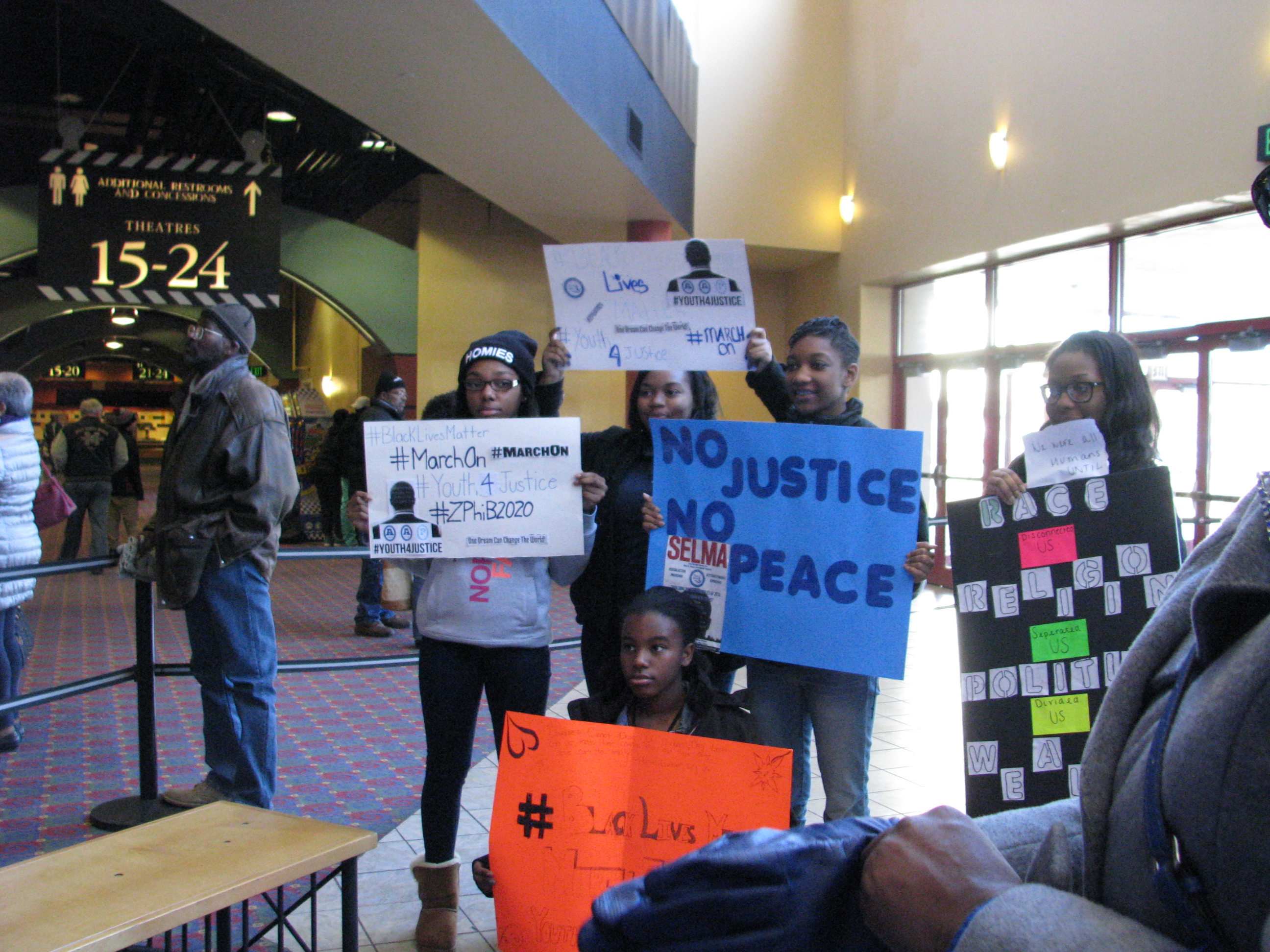
Current films at the Garden are Selma, which I saw in company with some youthful demonstrators at another theater on Saturday . Loved the script and the acting, and (though I am squeamish about it) the onscreen violence was handled well.

Also the movie about Alan Turing. Thanks to Princeton University Press who sent the Very Big Book that inspires the film. Spouse is plowing through it, likes it, and promises to provide a mini-review. Turing was surely a hero to my late cousin Ann.

Emily Mann, celebrating her 25th year as artistic director of McCarter Theatre, regaled an enthusiastic lunch audience at the Princeton Regional Chamber of Commerce last week with the toils and tales of creative endeavors. In her case, it was her production of Shakespeare’s Antony & Cleopatra — how her collaborators — scenic, costume, music, choreography — combined their ideas to come up with an experience that the New York Times reviewer labeled “beautifully bold.”
Revealing the secret of the very sensual movement sequence that opens the play, with Nicole Ari Parker and Esau Pritchett having a tumble under the sheets, except there are no sheets, she said it was choreographer Peter Pucci’s idea to have the actors (each happily married) go through the indoctrination for new dancers that Pilobolus uses. Pilobolus dancers are required to grasp each other in places where you aren’t supposed to grasp, so to start them off they must do an exercise where they touch — with the top of their heads — every part of the other person’s body. Makes sense, because skull skin doesn’t many nerves. The result was that Parker represented, as one reviewer said, the embodiment of physical love and desire.
After she finished, anyone who hadn’t seen the play was wishing they had seen the play.
During the Q&A she talked about how she is doing a documentary play on Gloria Steinem, and how she got started doing social justice documentaries or “theatre of testimony”. She was born to to the cloth, to mix religion metaphors. Her father was an eminent professor of American history at the University of Chicago, and the late John Hope Franklin,a pioneer in African American history, was his best friend.
Mann had such a compelling voice and podium presence that I was wishing I could see her on stage as an actress.
My photo shows Emily Mann, left, with Melissa Tenzer, founder and CEO of CareersUSA Princeton and president of the Princeton Regional Chamber of Commerce Foundation, which awarded $35,000 to four nonprofits that day.
Art All Day — Saturday, November 8 — is an energizing, collaborative way to support artists — and Trenton. Especially wonderful is the A-Team exhibit at the Trenton Area Soup Kitchen.

It was a great evening, the Martha Graham Dance Company’s return to McCarter tonight. Gorgeous dancing, with three works of Martha’s (Errand into the Maze, Diversion of Angels, Cave of the Heart, and one new work (the compelling Lamentation Variations, shown above), and an unusually full house. Other than Bill Lockwood, who programs the series, nobody could have been more pleased than Marvin Preston. Preston, a turn-around management consultant, responded to a call to turn-around the Graham company in 2001, when it was in the throes of every kind of despair. Preston took the job knowing nothing about dance, stayed six years, and put the company back on his feet. Needless to say, he knows plenty about dance now. And he had every reason to be pleased and proud tonight.
 Enjoy a terrific jazz afternoon and support United Front Against Riverblindness. Together with another worthy charity for Congo, Woman Cradle of Abundance, UFAR presents its second annual benefit concert with 4-Time Grammy Nominee Karrin Allyson.
When: Sunday, November 9 at 3:00 PM
Reception with the artist will follow. Doors open at 2:30 PM.
Where: Solley Theatre, Arts Council of Princeton
Corner of Paul Robeson Place and Witherspoon St. in Princeton
Tickets are $70, $30 for students. Click here or call 609-924-2613.
UFAR, founded by Daniel Shungu of Lawrenceville, works to stamp out riverblindness in the Democratic Republic of Congo, where one-third of the 60 million people are at risk for getting it. It starts with a rash and leads to sight loss, forcing children to leave school to care for parents.
Woman, Cradle of Abundance, also known as FEBA, aims to change the dismal future for many women in the DRC, known as one of the world’s most dangerous places to be a woman. Founded in 1999 by an ecumenical group of Congolese women, it supports a sewing school where girls learn a marketable trade. It also provides medical care and support for women and children living with HIV / AIDS, counseling for survivors of rape and forced prostitution, and school fees for orphans. The US partner is raising funds to help the Congo project build a Women’s Center.
 Help both causes by enjoing a jazz afternoon with Karrin (shown here with her partner Bill McLaughlin). She is described as “always globetrotting and delighting audiences all over the world with her unique and personal style — straight from the heart.”
 Princeton Comment