Category Archives: Around Town

Personal posts — some social justice (Not in Our Town), some faith-related (Princeton United Methodist Church), some I-can’t-keep-from-writing-this

Animals Do It: Stretch after Sleeping

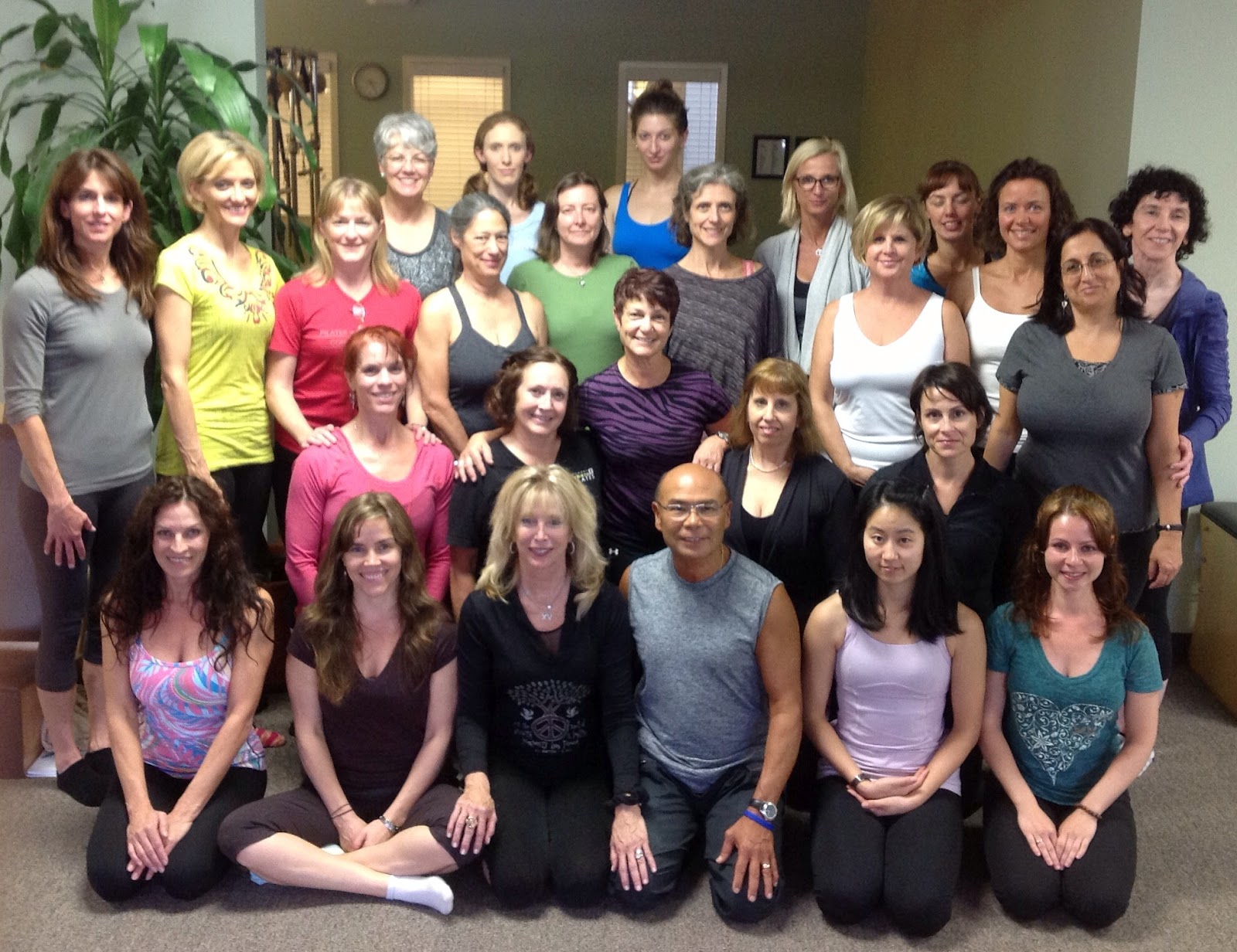
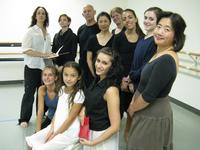
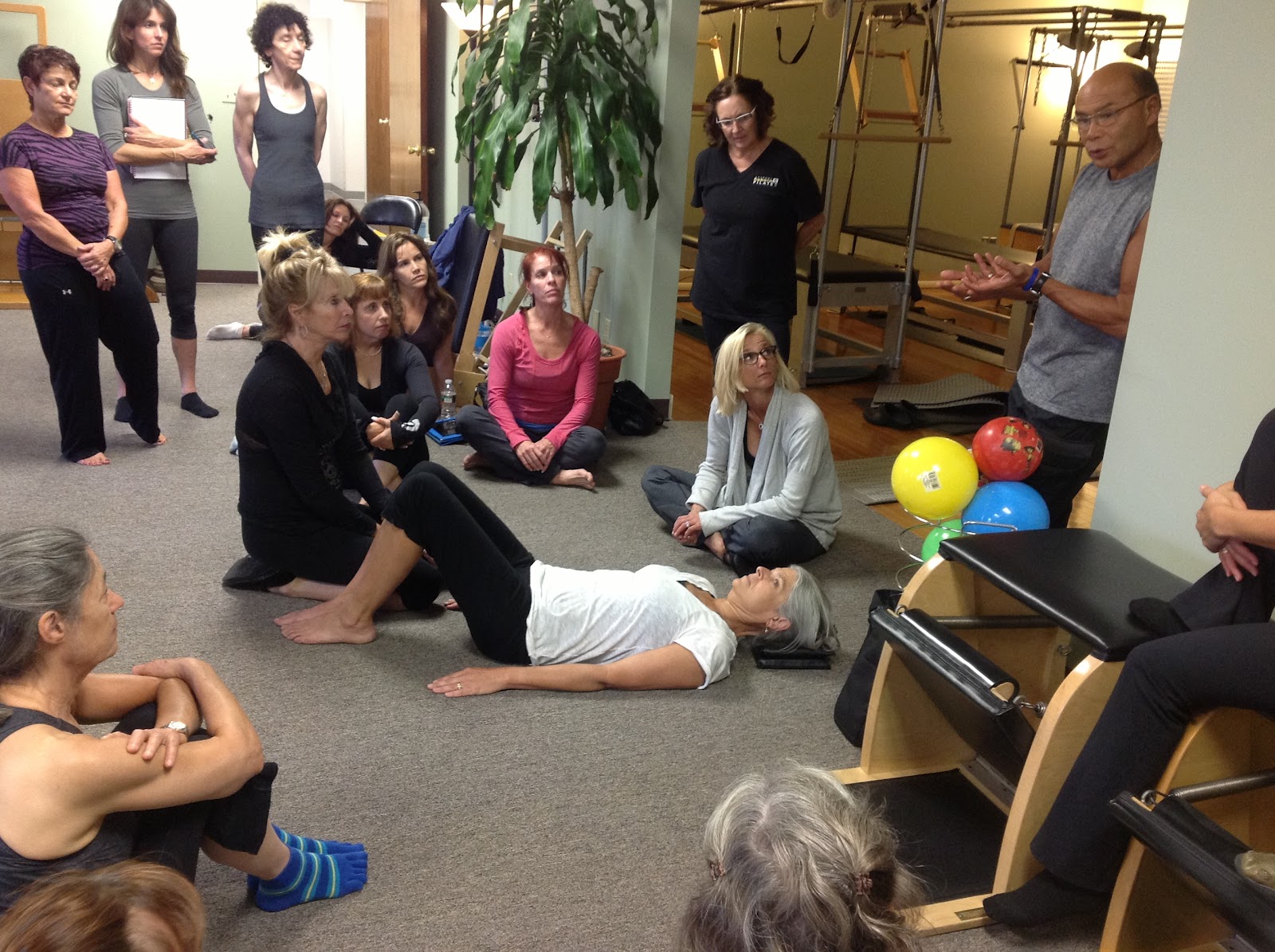
Trish Garland, who premiered the role of Judy, the “tall, gawky, and quirky dancer,” in Chorus Line, taught a workshop for Pilates instructors on how to work with aging clients at Anthony Rabara’s Pilates studio last weekend. Garland has a studio in California, and Rabara’s studio is in Research Park, but both are committed to teaching the authentic Pilates method as they learned it at the original New York studio from Romana Kryzanowski


Though Garland’s body looks like it hasn’t changed a bit — she’s still tall and skinny — she claims that, in her early ’60s, she is feeling the effects of aging, and so she is focusing on what to do about it. (In the group photo, she and Rabara are in front row center; she’s the blonde.) 

I was one of the “aging clients” in respectful attendance at the workshop and was reprimanded — yet again — for my habit of standing with hands behind my back, stomach out, not standing tall. (I know better. Anyone hereby has my permission to remind me about it. What’s that expression…it takes a village to change an aging person’s habits?)


The take-away from the Pilates workshop that we all can use is that, to protect your back and the rest of your aging bones, stretch like a cat before you get out of bed. We’re talking a serious stretch and here are some of the ways she suggested.

Knees up, roll back and forth to massage your back. Cross your ankles and hold your toes. Pull your feet to your  bottom. Shrug your shoulders to your ears. Turn your head from side to side (unless you have vertigo). Bend your forearms, hands up, open and close your hands and circle them. With knees up, flex and point your feet. Roll over to sit on the edge of your bed and pound your toes, rat a tat tat, against the floor. All this before you get out of bed. 

I won’t go into medical history about why I need this, but, trust me, this kind of wake-up stretching is good for all of us. As Joseph Pilates used to say — animals do it. So it must be good for us. 


Does it Take a Village to use an iPad?


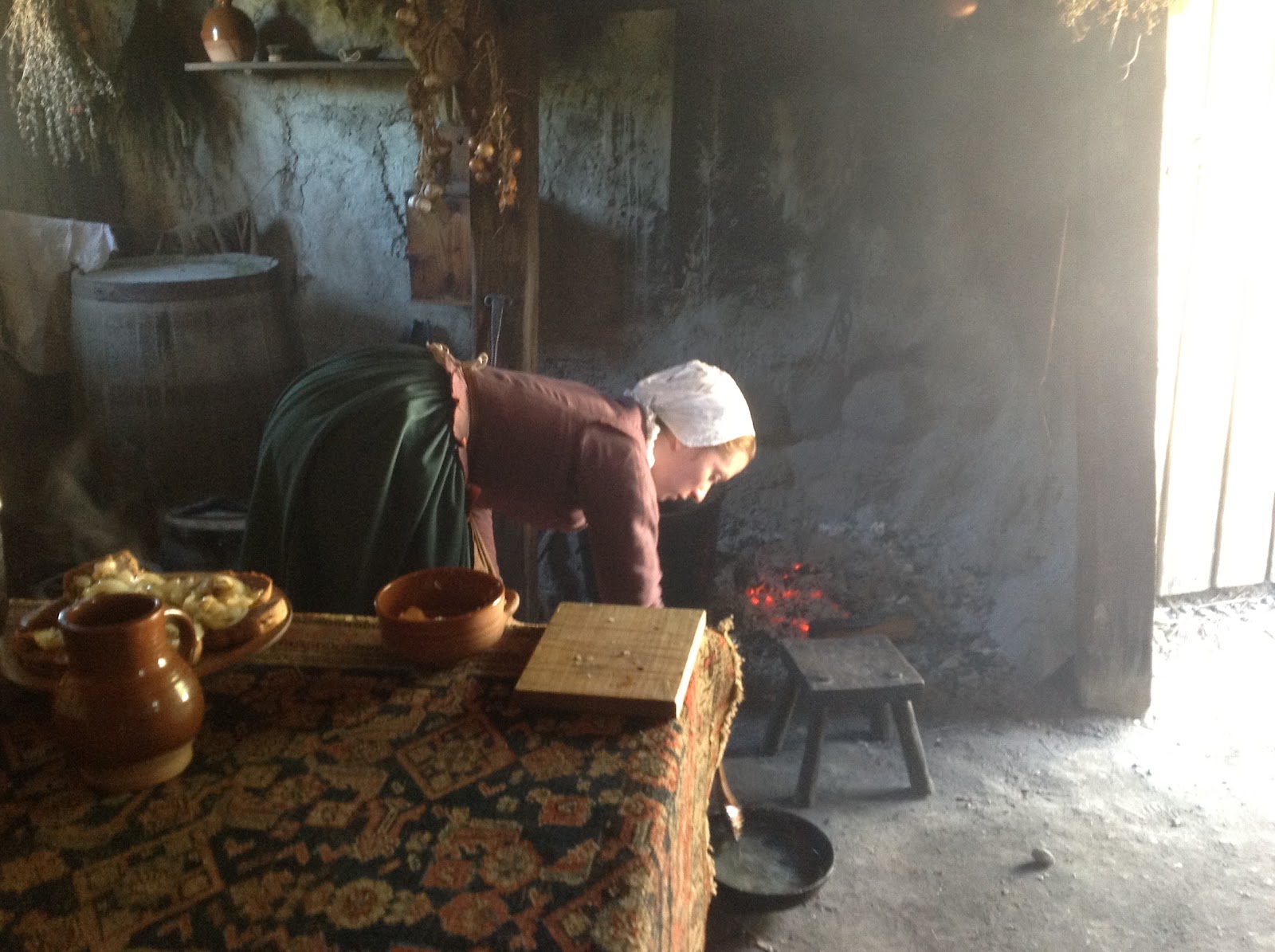
I’m not quite ready to for the challenges of being a woman in 1627 (as in this photo taken at Plimouth Plantation, the recreated Pilgrim village). But sometimes I resent having to cope with the techno challenges of 2012.

Take my iPad. Yes, I’m lucky to have it. I had no idea how wonderfully useful it would be. I bought it at Creative Computing (across from the Princeton Airport on 206). But I did not trek to Bridgewater (the closest real Apple store) to get the freely given advice and tutoring. I thought I’d be OK by just bumbling through, watching some how-to videos, and calling Apple Care (the subscription help desk) if I got stuck.

 When a casual acquaintance clued me in that I had never learned to turn my new iPad3 completely OFF,  which was why my battery was always running down, I realized it was time to go to a class and tried to register for the $10 2-hour class at Princeton Senior Resource Center.

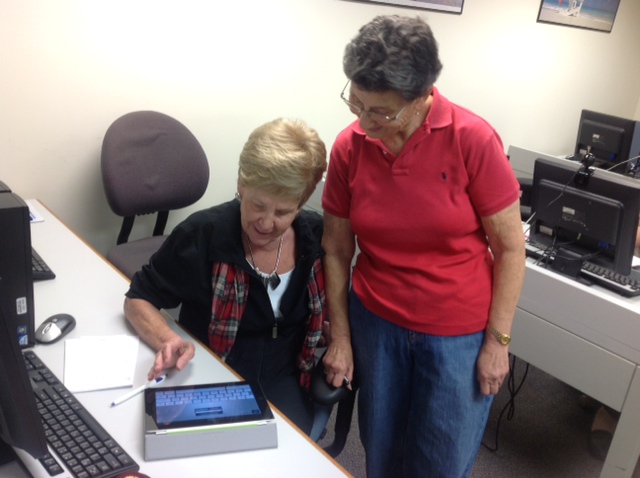
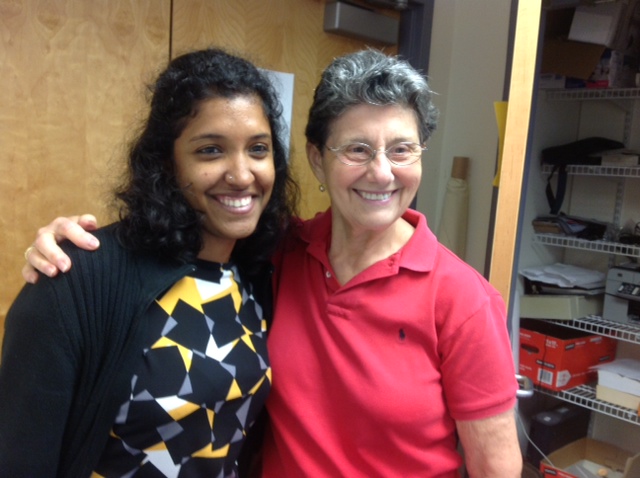
It was closed. Sold out. A month later, today there was an opening — and an eye opener. Thanks to Barbara Essig (in the red shirt) and Archana Swaminathan I learned lots of great stuff, like how to tell when my apps need upgrading and that it was time to switch to IOS6. (Have you switched yet?) Well, the new software sabotaged my email, fixable only after lengthy conversations with Apple Care. And my real software problem (my iPad won’t talk to my Windows XP) will never be solved.

Surely there are hundreds if not thousands of other iPad buyers — those who aren’t getting training in the workplace and aren’t paying for $40 classes in stores — who are bumbling along, asking friends for tips and never really conquering the knowledge gap. I tell myself — you’re not cooking over a wood fire, you are not subject to the whims of the weather — only  to the whims of incompatible software. Be thankful. Enjoy the photo (shown here) that your iPad can take. Take Essig’s next class. And keep on comparing notes and asking your friends for tips. Apparently “it takes a village” to survive the techno challenges of 2012.

(High marks for the re-enactors at Plimouth village. They impersonate real people, so they answer your questions as “Priscilla Alden” or “Mistress Brewster.” One leaves thankful to be living in our time.)

Button-ing a Portrait

I’ve already encouraged everyone to attend the New Jersey State Button Show in Titusville on Saturday, and a new button project has come to light. Helene Plank has fashioned a self portrait of herself with buttons and beads, all of which were hand-sewed to the stretched artist canvass, all with donated items. No new buttons or beads!

The piece won the top awards at Lawrence Library’s annual “Trashed Art 2012” show, which required artwork be made of at least of 75% recycled items. It is still on view, through June 2, at the library, but now it is part of the Lawrence Arts Council show. The library is located on Darrah Lane, off Route 1 (2751 Route 1, Lawrence 08648.)


Perhaps I’ll see you on Saturday in Titusville?  

Buttons and Brews on the Delaware

Buttons of all kinds attract me — new or old, fancy or plain. Each one has a story. For instance — slogans like Can’t Bust ’em, Bread Winner, and I Crow over all — do they sound like posters or flags? 


They adorn work clothes buttons, says Brad Upp, a button collector who speaks at the New Jersey State Button Society spring show on Saturday, May 12, at 1:30 p.m. The show goes from 9 a.m. to 4 p.m. at the Union Fire Company fire hall, 1396 River Road (Route 29) in Titusville. Door fee is $2, and coffee and lunch items will be available. 


Buttons are not the only activity on the Delaware River that day. On the Pennsylvania side of the Delaware is the second annual brewfest staged by the Friends of Washington Crossing Park, to be held rain or shine with live bands and food. Location: behind the Thompson Neely House. No one under 21 will be admitted. 


Button expert Upp says that the two-piece metal buttons (such as the one above) were made for men’s work clothes during the early part of the 20th Century. Makers displayed pride in their product with their slogans, which include Iron King, Strong as a Lion, Boss Mechanic, and Can’t Ripum. 


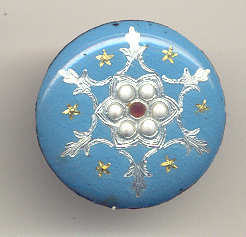
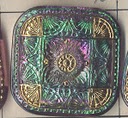
To get an idea about what the NJSBS show involves, see Sharon Schlegel’s Times of Trenton column from last year — but ignore the photo added to the online version, it’s of the pin-on political button. The buttons in this show are sew-on clothing buttons, such as the modern Czech glass (shown at left), or the antique enamel buttton, shown at right. Both are on the sale website of Annie Frazier of South Jersey. 


Frazier and more than a dozen other dealers will have sale tables for antique and modern buttons at the show. The show is held twice a year for New Jersey and tri-state button enthusiasts who enjoy the artwork and history of buttons, including their manufacture and design.Throughout the day there will be a variety of activities, including the judging of button trays entered into competition, and a button raffle. 


The show’s traditional location is the Union Fire Company, located at the intersection of Route 29 and Park Lake Avenue in Titusville, opposite the Delaware River and D and R Canal State Park (within easy access to the canal park), a half mile north of Washington Crossing State Park in Hopewell Township, and some five miles south of Lambertville and New Hope, PA. 

Why Not “Oriental?”

Someone who attends Not in Our Town events wrote me to ask why the use of the term Oriental is considered a racial slur.
   I was reading in the Trenton Times recently that it is no longer accepted to say that someone is Oriental or call someone Oriental.  I don’t understand. If they appear to be from eastern Asia, what’s the problem?


 Who has an opinion? 


Persusing what is known as The Racial Slur Database does not help, as the term Oriental is not listed there. 
An online encyclopedia, About.com, compares the use of Oriental to the term Negro and says it is outdated. 


A listserv dealing with Asian concerns provides no conclusive evidence, other than to say that other Asians use the term for anyone who looks Chinese. Could it be that the term is too inclusive — used by whites who don’t know how to discern nationalities by their appearances? 


Yes, says May  M. Ngai, author of Impossible Subjects: Illegal Aliens and the Making of Modern America, who suggests that it’s not a slur but it implies ‘outsider.” “It’s a Eurocentric name for us, which is why it’s wrong. You should call people by what (they) call themselves, not how they are situated in relation to yourself.”

Bottom line: don’t say “Oriental.” If you know the ethnic background (Chinese American, Korean, etc.) say that, otherwise say “Asian” or “Asian American.” People are not carpets. 
 

Tenney Takes It To New York

For the past several years I’ve been intrigued to watch the progress of Susan Tenney’s evening length dance, set to the music of Georges Delerue.  Delerue is well-known for such scores as Francois Truffaut’s Jules and  Jim, and he won an Oscar for “A Little Romance.” Enamored with his music, Tenney has based “Je me souviens…I remember” on his work. 

Every time I see “Je me souviens” it taps hidden emotions, in part because it focuses on a young girl, Cynthia Yank, who grows into a woman, Samantha Gullace. It’s hard to explain, but I have tried to write about it here, and here are the choreographer’s notes, and here is an article by Valerie Sudol.

Tenney has shown parts of this piece on various unprepossessing stages, including in the Princeton Ballet School studio (with dancers and watchers within arms reach of each other) and on the green at Palmer Square.   Now she is making the Big Leap to show it in New York, this Saturday (October 29) at 7:30 p.m.  

Try to get there if you can. It’s not often that a Princeton choreographer can gather the resources to present in Manhattan.  I’m looking forward to seeing the piece on a real stage at the Florence Gould Hall, 55 East 59th Street, between Park and Madison. The cast includes Gary Echternacht, Yoshie Driscoll, Alexandra Fredas, Anya Kalishnikova, Naoko Cojerian, Kelly Meir, Alexis Branagan, and Pam Pisani.

Tickets are $25 ($75 includes the patron reception), or $15 for students with an ID.  They are available on line or at the door. 

Tenney worked closely with the composer’s daughter, Claire Delerue, who offers an appreciation for the program notes. An excerpt: 

Great choreographers who use music from various sources other than the ballet repertoire  acknowledge the beauty and intensity of the emotions which such music conjures; creating dance around it, they give it renewed life and meaning. 

Therefore it is wonderful to know that Georges Delerue’s film music, which has made such a powerful impression on film lovers over the years, will also now create new emotional connections for audiences through it being danced to.
   
I thank Susan Tenney for having tapped into her superb creativity and found new, singular ways of making people vibrate to the sound of these beloved pieces of music.

Photo: Tenney, far left, with the company.
Post script: Another Princeton choreography takes her work to The City, but this time, Philadelphia. From Marie Snyder: I will be showing a new work  blending modern and Latin style dancing on Sunday at 9:30.  I think this is the first time a modern choreographer was invited to the Philly salsa fest…  so excited!!http://philadelphiasalsafest.com/cart/index.php?main_page=page&id;=13&chapter;=0

Caldwell: Evangelist for Success

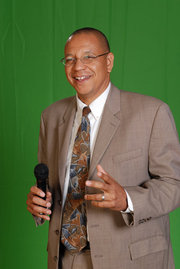
He comes from three generations of Methodist preachers, and his father was an international leader in the areas of civil rights and social justice, but Dale Caldwell has turned his considerable talents of persuasion to improving the world in ostensibly secular ways. A graduate of Princeton, Wharton, and a Harvard executive program,  Dale Caldwell has been a senior manager at Deloitte, executive director of the Newark Alliance, deputy commissioner of the NJ Department of Community Affairs, a Certified Financial Planner, and CEO of 10 organizations, mostly recently Strategic Influence LLC. 


At the Princeton Regional Chamber breakfast on Wednesday, October 19,  at 7:30 a.m. at the Nassau Club, Caldwell will reveal his “Intelligent Influence” secrets on recognizing how people make decisions and what influences their decisions. “Influence is not purchased or assumed, it is bestowed,” says Caldwell. “Understanding how one is influenced, how to influence others, how to influence an organization, and how to influence outcomes is to understand how to create success.” 
In the career education arena, Caldwell wrote “School to Work Success” (now in paperback and Kindle), and founded the Residential After-School Program, Take-Your-Community-To-Work-Day, and School-to-Work Day. In the volunteer world, he was president of the New Brunswick Board of Education, Crossroads Theatre Company, and the eastern section of the United States Tennis Association. His love of tennis resulted in his latest book, Tennis in New York City: the Most Important Sport in the Most Important City in the World.  

If you missed the chance to see Dale Caldwell weave his speech magic at the Princeton Public Library’s TED X event, come to the chamber’s breakfast on Wednesday. It’s the chamber event where everyone gets to introduce themselves, and walk-ins are welcome. 


Next up: Chris Kuenne of Rosetta on Thursday, November 3. 

Sister Citizen: Harris-Perry

Melissa Harris-Perrydoesn’t like the book or movie “The Help,” and that’s an understatement. It wasn’t the topic of her talk at the Princeton Public Library today, but somebody asked that question and set her off on one of her always provocative, often funny, riffs on racial politics.
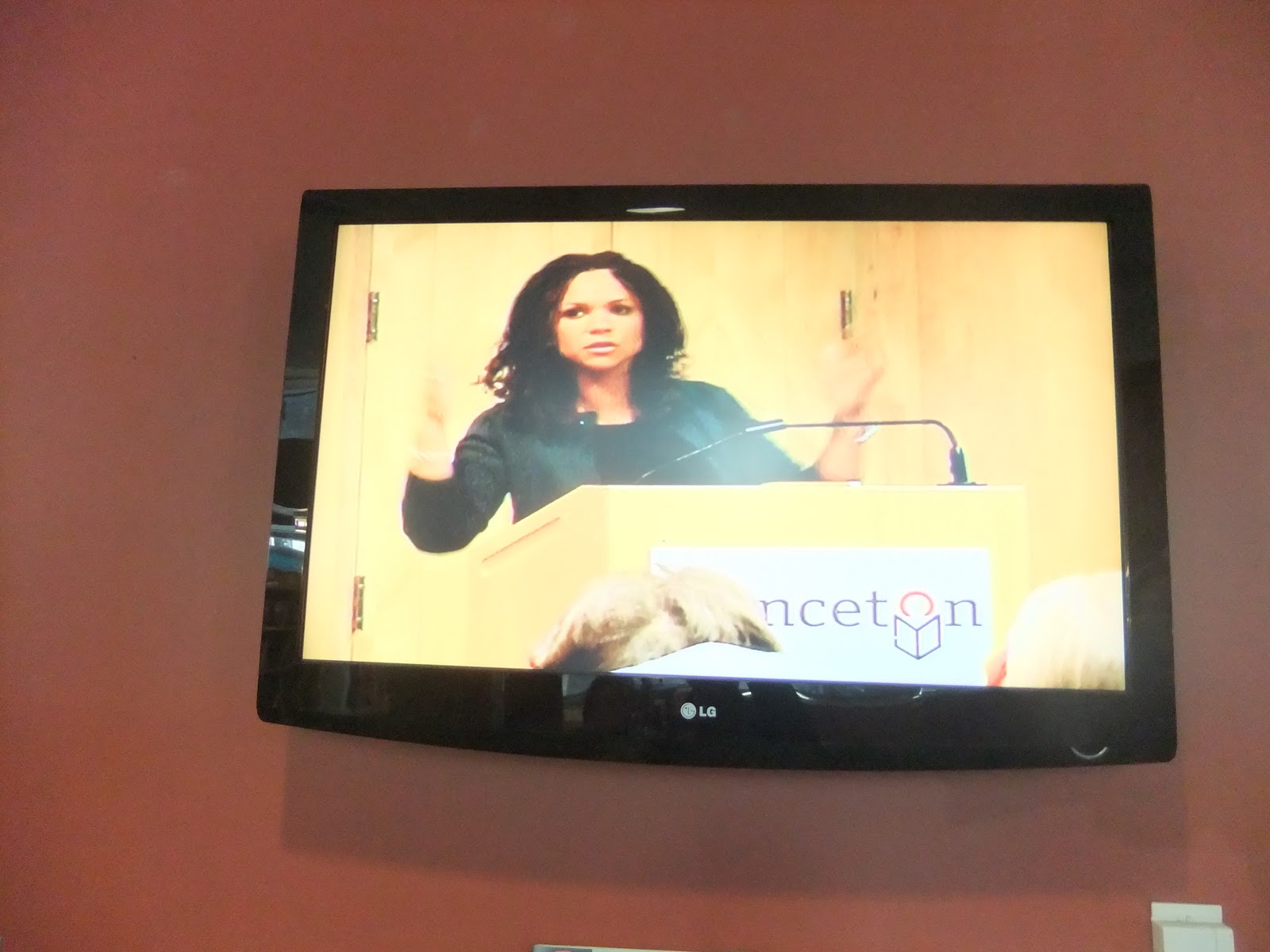
She returned to Princeton today (October16, as shown on the screen in the lobby) to talk about and sign her book, “SisterCitizen: For Colored Girls Who’ve Considered Politics When Being Strong Isn’t Enough.”
She listed three familiar stereotypes. The first is The Mammy as in HattieMcDaniel (and, there’s that “The Help” book again.) The second is The Jezebel. The third is the Angry Black Woman, as in Sapphire.
A current stereotype is “Strong Black Woman,” but Harris-Perry questions whether that should be today’s acknowledged goal. 
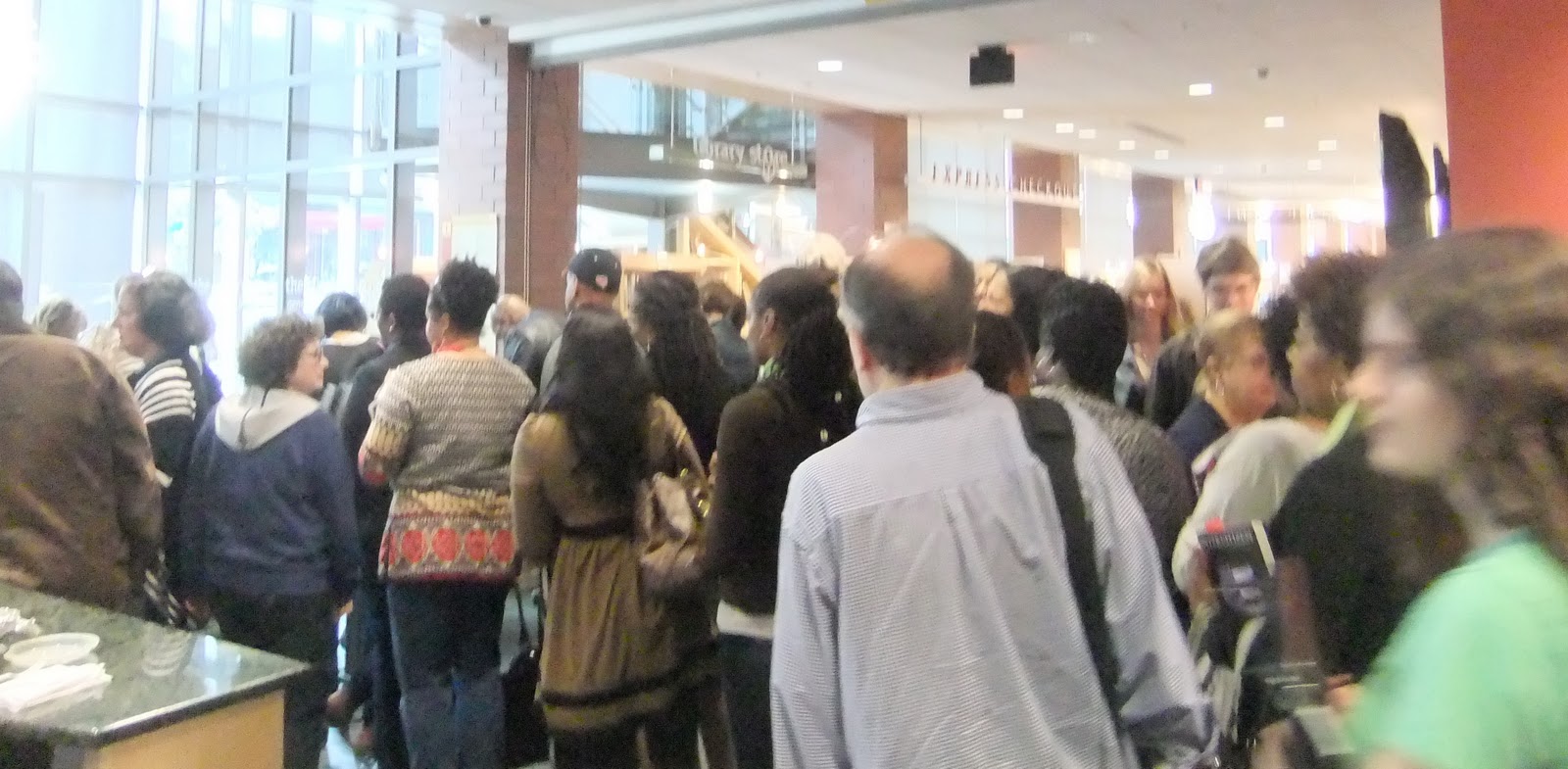
She got an uncomfortable laugh from the packed room at the library when she noted that, if “strong” is the compliment for a black woman, the highest compliment for a white woman is “thin.” In the book she says that the goal of strength contributes to “pervasive experiences of shame for black women… a shame management strategy that has both emotional and political implications for black women.” It leads to “political anorexia.”
Skimming the book (a long, long line to get it signed) brings me to comments about Michelle Obama, a graduate of Princeton and Harvard Law, who decided not to take an active role in her husband’s administration in order to focus on being Mom in Chief. “She subverts a deep, powerful, and old public discourse on black women as bad mothers….Black single motherhood is blamed for social ills ranging from crime to drugs to urban disorder…”
“Michele Obama’s insistence on focusing on her children is also a sound repudiation of the Mammy role. Mammy…ensures order in the white world by ignoring her own family and community. Calling on Michelle Obama to take a more active policy role while her children are still young is in a way requesting that she use her role as First Lady to serve as the national Mammy. Michelle refused.”
The Mammy stereotype in “The Help” enrages Harris-Perry. From the viewpoint of the white author, at no time in any black servant’s life, does the servant not utterly adore the white children she cared for. Nor does the author acknowledge the difficulties and consequent feelings that the black servant might have regarding her ability to care for her own children and husband.

Worst: by making up a disempowering history (the white author gets the money and the job and leaves her co-authors behind in Jim Crow Mississippi), the real history fades.
 The real history is that, when Medgar Evers was killed, those same black domestics in Jackson– had actually organized on their own behalf. ”By telling the story this way, it either suggests that there weren’t real women who did real things or it allows us to ignore how much more dangerous, complex, and personal those stories were than this fictional one we’re getting.

The line for “Sister Citizen” booksigning stretched from the library’s front door to the library’s back door.  The initial chapter is available at Amazon.

Button, Button — They’ve got ’em in Titusville

Brighten up a gloomy weekend by visiting a button show — yes, a button show. Bet you didn’t know that folks collect buttons like they collect stamps, postcards, coins, and matchbooks. But I venture that buttons are prettier than any of these. You can choose Victorian black glass buttons, or metal picture buttons (think Aesop’s fables), or uniform buttons, or china buttons, or plastic buttons, or celluloid buttons, or horn, or ivory, or …. any of dozens of categories.

Some cost a lot of money, some don’t, but all are fun to look at.

Today (Saturday, September 10, 9 to 4 p.m.) the New Jersey Button Society puts its best buttons forward in a show in Titusville (at the Union Firehouse, 1396 River Road, at the intersection of Route 29 and Park Lake Avenue, Titusville 08560). Admission $2.

What will you see? At 1:30 a glassblowing demonstration is scheduled, subject to the weather of course. The chief attraction however is cards and cards and cards of buttons. Dealers from all over the East Coast set up their tables and button-eers peruse their wares, looking for just the right button to add to their collection — or to enter in the next contest. (Image courtesy of the National Button Society.)

Winners of the contests will be on display at 1:30 p.m. Among the contests — Alternative Energy: buttons that picture windmills, water mills, and the sun. Who said that button collecting was old fashioned?

It’s a little tricky to get there, because Route 29 (River road) is flooded in parts, so take Exit 3 at Scotch Road, then turn left on 546, and right on Route 29. Pass It’s Nuts (it’s a restaurant) and a stand of trees and the Union Firehouse will be on your right.

Escape from 10th anniversary broadcasts and travel back in history, through the history of buttons. I’ll see you there!

Chunk of Trenton History on the Block


I happened to browse by the Princeton Regional Chamber website today, and under “News,” subhead “Member News” came across a seemingly insignificant item, “A-A Empire Antiques, Please follow this link to see upcoming auction. Absentmindedly I turned the digital page to see what Gene Pascucci of Empire Antiques was up to.

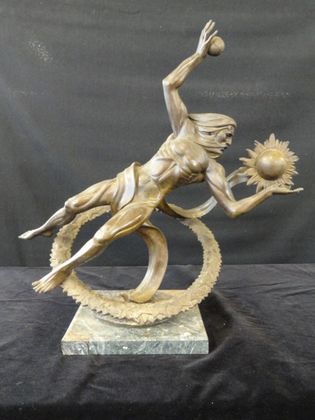
Lo, a huge auction of Laslo Ispanky figures. Now I’ve been out of town lately and have not read the papers everyday, but I sure hadn’t heard about this. It’s huge, nearly 300 bronze figurines, porcelain figures, paintings, and artifacts — the estate sale of Ispanky who died last summer.

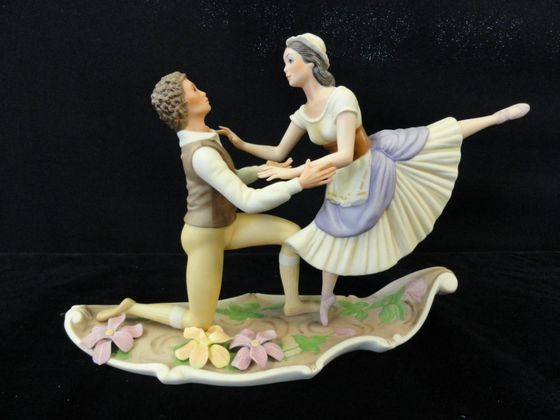
Laslo Ispanky was a world renowned sculptor. He emigrated from Hungary, studied and taught at Cranbrook Academy of Art, and moved here to be the Master Sculptor at Cybis Porcelain, later starting his own firm. As you can see from the pictures, his work runs the gamut from powerful religious bronzes, to innocuously pretty figurines, to protest art.

A giant chunk of this area’s history will go on the block on Thursday, so I’m passing it on to you in case you are a collector (or gift shopping). Viewing day is tomorrow. It’s sure to be exciting.

Another art event, that same day, is the sale at Cranbury Art Gallery, 28 Palmer Square East, 6 to 8 p.m. Part of the proceeds will go to HiTops, a 22-year-old organization dedicated to promoting adolescent health and well being. Among the artists featured: Sydney Neuwirth, Joseph Dawley, Victoria Salvano, and Kathleen Maguire Morolda, the owner of the gallery (kmmorolda@hotmail.com).