Category Archives: Business

Princeton Regional Chamber Events, useful tips from U.S. 1 Newspaper

Making Music and Money

Just off Alexander Road, escaping most notice, is a prosperous commodities hedge fund, Caxton, founded in 1983. I thought of it when reading “Is Music the Key to Success” in the arts section of the New York Times, yet another tribute to how music lessons seem to promote intelligence. Caxton’s co-founder, Bruce Kovner, was quoted on the importance of music to developing mental acuity.

I’ve never interviewed Kovner, though I have followed the progress of Caxton with eagerness and amazement. Such hedge funds are like a forbidden mystery to me. How do they make so much money so quickly?

His name came up in the pages of U.S. 1 on March 8, 2006, when he donated his valuable music manuscript collection to Juilliard. It was a paparazzi-like opportunity to summarize his biography, excerpted from a book. He had been hired by Helmut Weymar to be a trader at Commodities Corporation but had moved to Manhattan after founding the firm. But U.S. 1 Newspaper doesn’t care where you live, only where the business is located.

The link to the U.S. 1 article is here but, since the story is way down on the page, here is the gist of the Kovner part.

excerpt from U.S. 1:

. . .As a collector of rare books and manuscripts, Kovner named his company after the English printer. It grew from incubator space at Commodities Corp. on Mount Lucas Road to its own quarters on Morgan Lane and Enterprise Drive before moving to Alexander Road.

As told by Jack Schwager in his “Market Wizards” book, Kovner was a harpsichord-playing taxi driver when he began trading commodities in 1977 by borrowing $3,000 on his credit card. He did have a blue collar background, but he also graduated cum laude from Harvard (Class of 1966), pursued a PhD at Harvard, managed political campaigns (thinking he might eventually be a candidate himself), hobnobbed with such celebrities as Henry Kissinger and Pat Moynihan, and served as consultant for various government agencies.

Kovner joined Commodities Corp. in 1977 and settled in Princeton with his wife, Sarah, a craftsperson who made violas; they have three children. He left in 1983 with $7.6 million to found his own company. According to the New York Times the family is living in New York on Fifth Avenue at 94th Street. Forbes magazine says Kovner is worth $2.5 billion, and with $10.8 billion under management last year, Caxton is the seventh largest hedge fund company.

Within three years the manuscripts will have their own climate-controlled room at Juilliard, which hopes to make some of them available on the Internet. Kovner is chairman of the board at Juilliard.

Note that these figures are from 2006. Kovner has relinquished the CEO’s job. I am still waiting for my excuse to interview Kovner.

From Rosetta to Rosemark: Chris Kuenne

10-16 Cover & Front (1-8).indd

It’s a think tank, it’s an incubator, it’s a place where the guys hang out, bounce ideas off each other, and cook up innovation. We’re not talking about 20-somethings with a coffee cup in one hand and a beer in the other in a grungy basement. This 4,000-square-foot penthouse suite at 90 Nassau Street overlooks Princeton University’s FitzRandolph Gates and Nassau Hall, and its occupants lunch at tony restaurants like Agricola. They are successful middle-aged entrepreneurs who have made a good amount of money.

At the helm of this consortium, Rosemark Capital, is Chris Kuenne, who recently sold the company he founded, Rosetta. Kuenne is also involved in DisruptiveLA, founded by childhood buddy James C.E. Burke, son of the former CEO of J&J. They hope that Rosetta’s scientific marketing techniques (personality-based segmention)  can lift independent films from the morass of inefficient marketing.

Click here for the rest of this story,  published in U.S. 1 Newspaper on October 16, 2013.

Mercer Makes — amazing technology

10-2 Cover & Front (1-9).indd

I’m pleased with how this week’s cover story turned out. To preview the Mercer Makes seminar on Friday, I tried to relate the leading edge technologies of the 19th century with those of today. Had you heard of AT&T’s pole farm? . And the Sarnoff museum is now open.

Here’s how it all got put together.

Epigenesis: when something goes wrong

glatt book

Epigenesis is all over the news. On Monday I heard about it on NPR’s Morning Edition. that scientists are excited about epigenesis with a small letter e. It describes a way to turn off a gene that might trigger a disease. Susan Kay Murphy, of Duke University, is studying how a mother’s environmental exposures and nutrition during pregnancy may be causing epigenetic changes in babies.

If you were around Princeton 10 years ago, the word “Epigenesis,” with a big letter describing the company, will trigger different memories. It was a the name of a company founded by Jonathan Nyce to cure asthma.

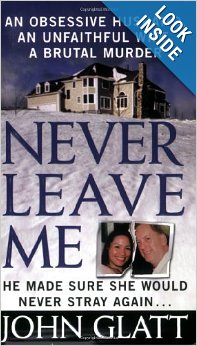
And then you may remember Jonathan Nyce. Despite the best efforts of arguably the best criminal attorney in town, Robin Lord, he was convicted of murdering his Filipino wife who was having an affair. Judge Bill Matheisus sentenced him to”passion provocation murder,” eight years, eligible for parole in five. I covered the trial. The New York Times wrote about it. A tabloid writer published a book about it (shown above).

Meanwhile Epigenesis, the company, attracted the venture capital support of Jan Leschly of Care Capital. The company downsized to half its space and 10 employees, let go of its core technology and started working on a drug that could be brought to market faster. I lost track of the company. The firm is no longer in Care Capital’s portfolio and the website (www.epigene) is defunct.

In 2010, after five years, Nyce came out of prison and proceeded to publish his own book about the trial, to explain his claim to innocence. A person is innocent until proven guilty, and one doesn’t criticize a book unless one has read it. But let’s just say the reviews aren’t good.

The word epigenesis comes from the Greek epi (over, above, outer) and genetics. Epigenetics can be described as the study of changes in gene expression or cellular phenotype, caused by mechanisms other than changes in the underlying DNA sequence. Growth disrupted, derailed.

That also describes Jonathan Nyce. Talent gone wrong.

The Pluses of Google Plus: @LynetteRadio

lynette
Lynette Young screens her home page, Purple Stripe Productions.

 Just after graduating from high school, Lynette Young ran a project with 40 network engineers, all many years her senior. “I’m a geek by heart, a marketer by necessity,” admitted Young. She demonstrated both at the September 19 joint meeting of the IEEE and NJ CAMA when she taught about about Google Plus. After 2 1/2 years, she said, it is tipping into the mainstream, is bigger than Twitter, and is the second business social networking site.

Facebook is good to connect with people you already know, but  Google Plus takes you to the rest, she said. Then she gave chapter and verse on how to do it. Own your page,” admonished Young. If you are a bricks and mortar business, capitalize on Google’s attention to “local.” For instance, if  you have a restaurant  be aware that Google now owns Zagat, so your reviews are live on Google Plus

The “hangout” and the “HOA” are new and exciting tools. You gather up to 10 friends or clients, tape your conversation live (hangout) then post it on YouTube (hangouts on air). That’s convenient because Google owns YouTube. It sounds like a marketing bonanza.

If you have a restaurant, Google now owns Zagat, so your reviews are live on Google Plus. “Own your page,” admonished Young. Bricks and mortar businesses should capitalize on Google’s attention to “local.”

I must admit I am still slightly paranoid about Google knowing everything about me. Somehow I had a “slip and fall,” and I fell onto the Google Plus platform. Now I’m in a lot of “circles” though I don’t have any “circles” of my own.  I’ll look into this. If you get notified that you are in one of my circles, you might start receiving Princeton Comment in a different way. (As always, you may unsubscribe and I won’t hold it against you 🙂

A second chance to hear Young is at the PC Users Group at the Lawrence Library on Tuesday, September 24, at 7 p.m.  She will tell more about how to put together hangouts and HOAs. “Set up the webcam, invite nine people, record it, port it, done.”

But the real problem with talking heads  is — are they interesting? Present company excluded,  I think talkers are more likely to be boring than writers.

Wishing It Were August Again?

October-2nd-Save-the-Date-Website-644x1024

Wednesday morning I’m looking forward to hearing from James Steward, the Gee-Whiz-How-Does-He-Do-It director of the Princeton University Art Museum. In his short tenure he has partnered with all kinds of organizations to bring new audiences to one of the best kept secrets on campus. He’s at the Princeton Chamber breakfast ($25 for members at the door).

Thursday I’m going to learn how to wrestle with Google Plus, when NJ CAMA (stands for advertising and marketing etc.) hosts Lynette Young on the university campus. If you have added me to your Google Plus circle, I have not added you. I don’t embrace what I can’t understand.

Friday it’s off to Rider University to see the opening concert of American Repertory Ballet and its gorgeous young dancers (it repeats Saturday). Also on Friday, Philadanco comes to TCNJ. And the next day, Saturday, September 21, dancers dance for world peace at the Princeton YWCA.

What drives all this activity? Volunteers, of course. Volunteers in general, and some specifically, will be honored in a gala, staged by Volunteer Connect, on Wednesday, October 2, at Grounds for Sculpture, as you see at the top of the post. Volunteer Connect helps non-profits get skilled help, and helps professionals develop their skills.

Somewhere in between I’m talking to Folks That Know about technical innovations in Mercer County. I’m writing a preview for the October 4 “Mercer Makes” seminar. That’s only three Fridays away — perhaps pencil it in.

Septembers are always busy, but does this one seem more so?

What Your Parents Did — It Sometimes Matters

Clara Lippert Glenn, the female CEO of one of Forrestal Village’s prestigious firms, The Oxford Princeton Programme (TOPP), was interviewed for the Corner Office column of the New York Times on Sunday. TOPP, a global training resource for energy professionals.  After founding the Princeton Energy Group in 1992, she merged it with an Oxford-based firm, and now runs more than 200 public courses around the world.

She was profiled by Anna Cunningham in U.S. 1 Newspaper in June.  “Lippert Glenn, a liberal arts language major, has parlayed her love of other cultures into a long, successful career in learning and development for energy professionals all over the world . . . Today the one-time languages major may have forgotten much of her French, allowed her Russian to get rusty and let her Spanish slide, but she is fluent in the international terminology of energy power… “

The New York Times interview revealed that her husband’s death, when he was 56 and she was 48, changed her views on work-life balance. “. . . a well-adjusted, well-rounded employee, in the end, is going to stay with you longer and produce better work. It’s not worth it to push people to where they’re putting in 12-hour days. And I’m going to force you to take your vacation, and I don’t want to get e-mails from you while you’re on vacation.”

However, the NYT did not indicate how this language arts major got into the energy industry, starting as a trader, in the first place.  That’s because U.S. 1 reporters are required to ask “What did your parents do?” Answer:  her father had various positions in the oil refining sector, including starting a company that manufactured additives for use in refineries’ catalytic conversion units.

My conclusions: Rarely does the apple fall a big distance from the tree. And  — talent will out, no matter what your major!

Guest Post: Mobile Strategy at J&J

This post on the talk by Charles Masarik is by Karen L. Johnson. An alumna of J&J, she led a cross-functional team to create and deliver the first assessments and audits of eBusiness, Privacy and Internet Security.

masarik

One hundred-forty strong (and undeterred by vacations or the beckoning Jersey shore), Princeton Regional Chamber members gathered on Thursday at the Forrestal Marriott, where they

• witnessed the acceptance of a $500,000 check from the chamber’s foundation, a landmark event benefitting nonprofits,

• welcomed 11 new members, evidence of the vitality of the Chamber and

• heard a stimulating perspective on mobility for business by a 26-year veteran of the IT industry, Charles (Chuck) Masarik.
Masarik is the Senior IT Manager for Global HR Solutions at Johnson & Johnson. He oversaw development of the integrated workflow and service delivery platform and technology solutions that enable the J&J Enterprise Employee Service Center to service and support 120,000+
employees and is the process of developing their mobile strategy. He is the IT lead for the J&J Corporate EBS mobility strategy and has been the domain lead for Global HR Enterprise Architecture, representing more than $35 billion in asset value. Yet he still keeps his tech edge: he’s currently developing an HR app to enable HR documents (docs) to be scanned and forwarded to the HR data system and eliminate manual processes.

Customer-focused as he is, Masarik opened his talk “Mobile Business Case & Strategy” by polling the audience: How many mobile devices did they have on them? Most persons in the room had several, and he then pulled out three of his own.

So what’s Mobility and why is it important? Broadening the discussion from the room to the world or moving up the scale, Masarik noted there are 6 billion mobile subscriptions globally – 86% of the world’s population. If PC growth was exponentially fast, mobile phone is growing faster still…and it’s estimated that in 2015, 183 billion apps are to be downloaded for your customers, employees, family, friends…and Mobility must be part of your business strategy.

Mobility is everywhere – and the mobile phone? That one device is always on, always connected, always with your audience at every marketing touch point, giving immediacy,
interactivity, personalized communication, and Social Media integration.

Masarik advised, Look at the focus areas – business value, user experience, technology, and Governance – to determine your mobile maturity: Are you Informal, Tactical, Coordinated or Strategic? Use a cross-functional team to evaluate and prioritize your digital assets and set your
mobile strategy and direction.

Moving to Market Imperatives, Masarik stressed optimizing your content for the unique mobile environment, using Mobility to engage audiences around your brand, and integrating Mobility into your marketing mix.

But beware! No fire-and-forget here! The J&J IT leader reminded us of the increasingly sophisticated mobile users. What’s required is an analytical, customer-savvy, targeted,
strategically-integrated, continually-updated approach where user expectations on the digital experience rule. All the while, you’ve got customer data to protect throughout, so strong security and Governance are critical, both themes to which Masarak repeatedly returned. In other words, missteps here ean losses that can’t be calculated in dollars and cents.

One last note. What was discussed concerning outwardly-facing mobility also applies to inwardly-facing mobility. The days of BYOD (Bring Your Own Device) may be fading, but where it applies, one possibility is to route devices through Blackberry. Masarik gave a nod to Blackberry,
where, he finds, security is infinitely easier than on other mobile devices.

And as he finished the Q&A, on the Cloud and Blackberries, he put his (apparently beloved) Blackberry
and several other devices back in various pockets, still wondering how he acquired so many.

Photo: Chuck Masarik of J&J and Peter Crowley, chamber CEO

Billionaire Bezos, now News Mogul, is from Princeton

weymouth2

The National Public Radio Morning Edition story on how the Amazon founder bought the Washington Post, fails to mention that Jeff Bezos is a Princeton alumnus, Class of 1986. He delivered the Class Day address in 2010.

The Washington Post story adds that detail to the Bezos biography. The New York Times sidebar implies it, saying “After Princeton”

Might it seem like a lucky coincidence that the New York Times just happened to print a big piece on the Post editor, Katharine Weymouth, on the day before? The reporter defended it, saying that she had been assigned the story a while ago but “didn’t get around to it” till July.  I believe her. (Memo to self and other reporters: Don’t Drag Your Feet on the Good Story.) But it certainly was nice for Weymouth to get her spot in the sun before the storm broke.

And in the Snarky Section, that article drew darts for announcing what Weymouth wore to get her photo taken, and that she was able to wear a sleeveless dress thanks to her workout schedule. I say, Good for her! And I would want to know those details.


Photo of Katharine Weymouth by Matt Roth for NYTimes

Credit Triage: CFPB

AT LAST. Finally. It’s about time.

For 30 years my credit report has been falsely comingled with the credit report of a deadbeat, and all attempts to permanently remedy this situation have been futile. “Your only alternative is to sue the credit bureaus for their mistake,” I was told, after hours, days, weeks, of aggravation.

Of course I never did. It wasn’t worth it, just for the privilege of opening a credit account in my own name. It was pretty easy to get my husband to show up to help me buy the cell phone contract — a contract that my supposedly lousy credit record would not let me buy. All because the credit bureaus confused my records with another Barbara whose Social Security was almost exactly like mine, one digit off. To escape dunning phone calls and emails, I have to send caveat notices to each credit bureau every three months.

Now. At last. Finally. Another woman got revenge. Today’s New York Times article An $18 million Lesson in Handling Credit Report Errors by Tara Siegel Bernard, tells of a 57-year-old nurse who won $18 million in punitive damages in federal court. And the article explains all about how these mistakes happen (mistaken identity must be fixed with human hands).

News You Can Use: The recently created Consumer Financial Protection Bureau offers all kinds of helpful information plus a complaint platform that might help fix whatever egregious mistake that has harmed you financially. The CFPB, just two years old, is one area of government that is actually working. It offers major help to student loan borrowers. And in two years it has returned $430 million into the pockets of wronged consumers.

I plan to use the CFPB complaint desk to refresh my 30-year-battle with the credit bureaus. I don’t think I’ll get $18 million, but perhaps, finally, I’ll get satisfaction… No more telephone calls or court summonses for my dead beat doppelganger.