Category Archives: Business

Princeton Regional Chamber Events, useful tips from U.S. 1 Newspaper

Finance guru  William J. B. “Bill” Brady III  will speak Tuesday, December 9, 4:30 p.m. at the Friend Center. He is vice chairman, Credit Suisse Chairman, Global Technology Group. This Beckwith lecture is co-sponsored by the Bendheim Center and the Keller Center. A reception follows.

Brady was a hockey star at Princeton (Class of ’87). He has a low social media profile but was in the news for paying $26 million for two condos in the West Village. In that pink-colored building, Palazzo Chupi,  Richard Gere had been an owner.  Pink? Some say the building is red.


Sobin: Turning on a Dime

Kudos to David Sobin, who must surely get this year’s prize for turning on a dime to meet a new business need. To the product line of his broadband operations firm, BAMNet, he added Replay Locker, which lets high school football teams video replays like the pros.  Here is Diccon Hyatt’s story in U.S. 1 this week.

The Future of Work: November 12

America is in the throes of a demographic overhaul. By mid-century, the population of the United States will be majority non-white and our median age will edge above 40-both unprecedented milestones. The November 12 conference,  The Future of Work, will look at the nature of work in this technology driven, hyperconnected, global world.

Keynotes: Paul Taylor, author of The Next America,  star political reporter, and Pew Research executive and Carl Van Horn, Director of the Heldrich Center for Workforce Development.

Register for $65 today at www.einsteinsalley.org.  Earlybird rate goes through October 31. It is cosponsored by Einstein’s Alley and, among others, the Princeton Regional Chamber. Registration includes copies of Taylor’s book, The Next America, and Van Horn’s book, Working Scared (Or Not at All): The Lost Decade, Great Recession, and Restoring the Shattered American Dream.

Entrepreneurs & TV, Entrepreneurs and…

2014 nov 6 eyeballSee/hear Wim Sweldens, co-founder and CEO of Kiswe Mobile, which offers multiple-camera streaming of sporting events  for those watching games on their mobile devices. The talk, sponsored by the Keller Center, is on Thursday, November 6, at 4:45 in Princeton University’s Carl A. Fields Center on the corner of Olden and Prospect. Sweldens is the Belgian computer scientist who founded the Bell Labs skunkworks,  Alcatel-Lucent Ventures. He is now Entrepreneur of the Year at Columbia. It’s free. Topic: “Entrepreneurship and the Interplay with TV, Mobile, and Social.” 

long room

2014 10 hilliersBob and Barbara Hillier welcomed visitors today to the ribbon cutting for Copperwood, the beautiful new senior apartments off Bunn Drive.2014 oct room


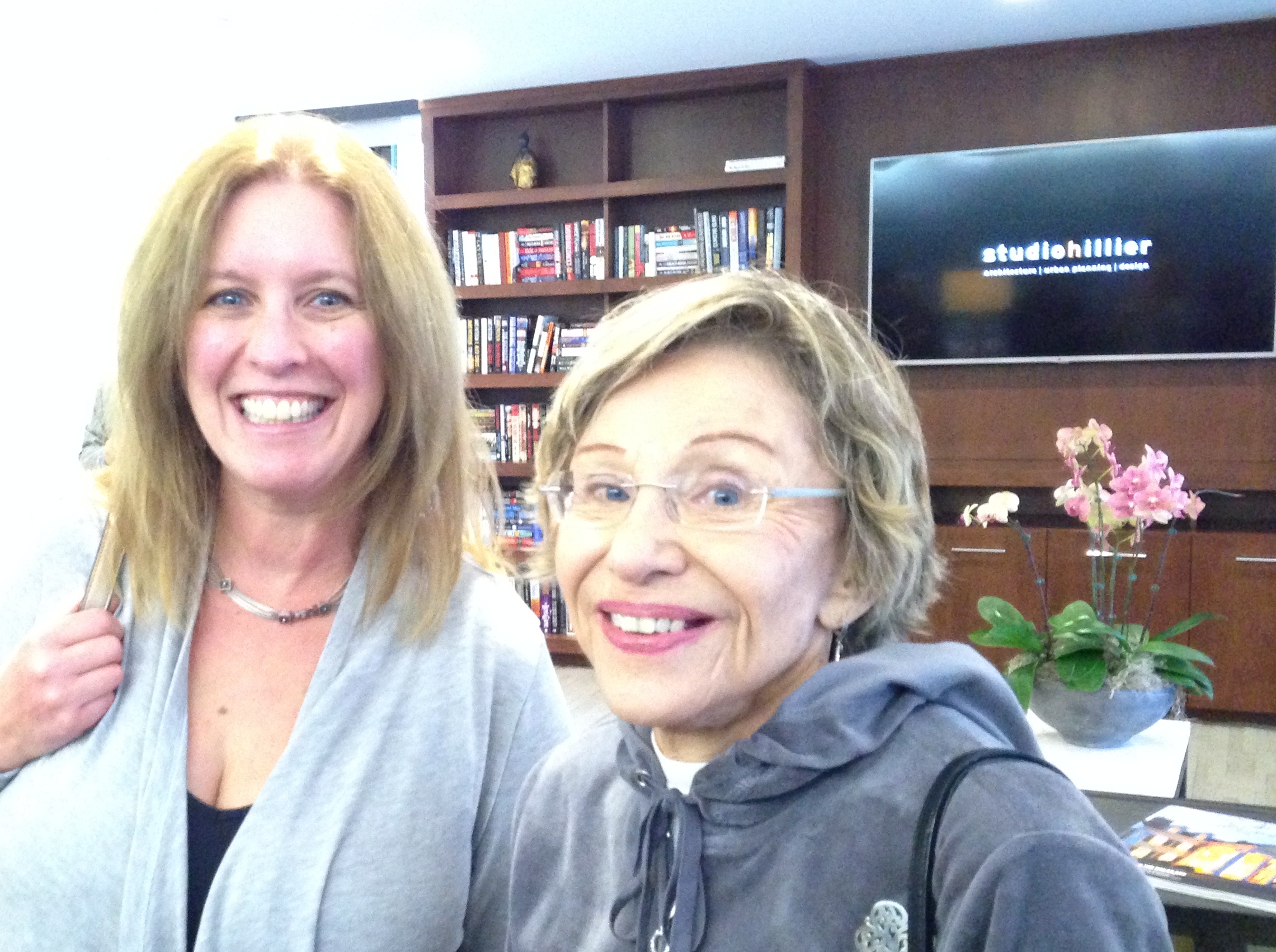
You’ll find much better photos on the website, but here is a cellphone snap of the wall-to-wall view (thanks, Victor Murray, for showing me how to use the panorama on my iPhone). I went with a chamber buddy, 2014 oct marionMarion Reinson (tothepoint.com), shown here with Phyllis Spiegel. Champagne flowed.

Surveillance Knights: Doctorow and Felten

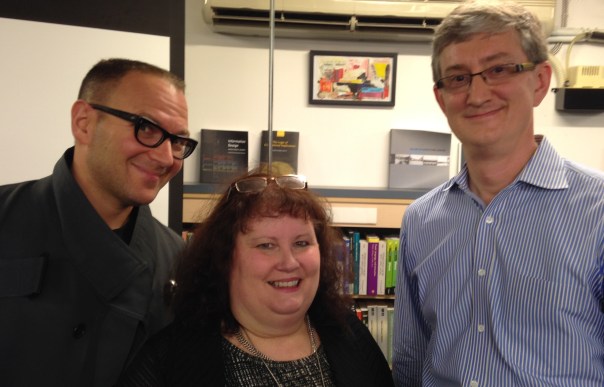
doctorow hermann felten

Liberation can turn into surveillance, they warned. Two anti-surveillance knights of the internet, science fiction author Cory Doctorow and Princeton University tech guru Ed Felten, spoke at Labyrinth Bookstore today, co-sponsored by the Princeton Public Library.

The Internet is the nervous system of the 21st century, said Felten. Just as language helped cave men collaborate, the Internet helps us organize at lower costs. It transcends what a single person can do. It is a mistake to try to control the Internet and fit it into something small, said Felten. “It was architected to let people try things and discover what worked.” If over controlled and regulated, we will lose that freedom.

YouTube needs to be free from regulation. Every minute, 96 hours of video are uploaded onto YouTube, most of it personal, says Doctorow, and that’s OK. Each of the seemingly banal interactions  — like the ubiquitous cute cat videos — is important. “Relationships are built up on these little moments,” said Doctorow.

What these like-minded experts said can be found in their writings, but Felten used a homey example to explain his objection. When the Keurig coffee maker patent expired, you could buy private label pods. Then Keurig engineered its new coffee makers so only its own pods worked. “That’s like patenting shoelaces, so you need European rights to tie your shoelaces in Germany.”

Doctorow cited software that can deactivate engines if the car is stolen. It might be sold to vendors of subprime car loans. Wireless pacemakers can be hijacked. For instance, one demo showed a pacemaker hooked up to a strip of bacon — and it fried the bacon.

As efficient and valuable as the Internet is, the Doctorow/Felten meeting demonstrates that nothing beats personal networking. PPL’s Janie Hermann (between Doctorow, on the left, and Felten) encountered Doctorow at a library convention over two years ago and learned that he was a buddy of Felten’s. Since that meeting several attempts were made to bring the two together for a conversation in Princeton, but schedules never matched. Three weeks ago Hermann learned that not only did Doctorow have a new book coming out but that he would be in the area for New York City Comic Con. She zoomed in on the rare opportunity and with very little notice was able to connect Doctorow and Felten at last, but the library’s community room was not available. Dorothea von Moltke from Labyrinth Books stepped in to offer her space for what turned out to be a standing room only event.


 

The Pinking of Princeton: Salary Gap?

Maria Klawe was named dean of engineering at Princeton University — soon after Princeton had its first female president.  Unafraid to be ‘different‘ (she doodled and knitted at faculty meetings), she left after three years to be president at Harvey Mudd and to raise a feminist ruckus when appropriate.

Now, as reported in the New York Times today, she contends that because she (typical woman?) did not negotiate her salary, she was paid $50k less than she should have been. Wow.

The article “Microsoft Chief Sets of a Furor on Women’s Pay” is on the controversial statement by Satya Nadella that women “who do not ask for more money … would be rewarded in the long run when their god work was recognized.” His mea culpa refers to some other HR axioms that you may or may not agree with.

Meanwhile, if you want to see what this woman looks like, just go to the Friend Center, to the big room with the portraits of the deans, painted in oils by distinguished artists. All except one. Klawe’s is a watercolor, and it is a self portrait. Below.

klawe DSCF1695


Giving Away $5 Million Per Year

rita allen christopherson

Money is always fun to talk about, to hear about. Big money is even more fun to hear about — especially when it is dispensed locally and you know a nonprofit that is getting some.

And I’m always fascinated by the person giving away the money. In this case, speaking at the Princeton Regional Chamber breakfast on  Wednesday, September 17, it’s Elizabeth Christopherson, CEO of the Rita Allen Foundation and former head of New Jersey Network.

I interviewed Christopherson two years ago for U.S. 1, asking her what it was like to go from a nonprofit that needed foundation money, to leading the foundation that actually gave the money. She had just moved into her office on Nassau Street, over Hamilton Jewelers.  At that time she revealed that “— despite her genteel women’s club demeanor, she is going hell-bent-for-leather on effecting transformative change.” (My words, not hers.)

She heads one of the larger foundations in New Jersey. The monies for it came from Rita Allen’s first husband, Charles Allen, known as ‘the Shy Midas of Wall Street,’ founder of Allen & Company, the prominent boutique firm that is famously averse to publicity.  That’s a story in itself.

Now the  $140 million foundation grants more than $5 million per year. Previous grantees have been Isles Inc. and Stony Brook Millstone Watershed Association.

Looking at the current web page for the foundation, it seems to me that Christopherson has realigned its focus. And she has planted it firmly in the 21st century. For instance, the website offers a social media guide for nonprofits, a downloadable PDF.

I’m eager to hear how Christopherson has settled into the job. Two years ago she admitted that what sounds easy — giving away money — is not easy. “There are not enough funds, and we try to be as strategic as we can be,” she said.  “It is very difficult to say no when you care — and we do care.” 

Here’s a religion story rife with irony. Millions of dollars from Jewish donors — intended to strengthen the bonds of the Jewish community — is now going to benefit the Wilberforce School, which bills itself as “a distinctively Christian school.”

Funds were being raised for a new Jewish Community Campus on Clarksville Road. When the funds dried up (story here) the property owner had to recoup his loss.  The Christian school counts this as “providence of God.”

‘What have you done for the world today?’

They had a party for Len Newton on Friday. There was a prayer. There was a military presentation of the American flag to Ruby, his widow. There were pictures, and speeches, and food, and memories of Len, who died at the age of 88 on July 19.

Most of all there was respect. Jim Floyd told of how Len helped to create Princeton’s first integrated neighborhood. Len marched in Washington for the “I Have a Dream” speech and again for its 50th anniversary.

Len was a stickler for accuracy and challenged lazy assumptions. In the ’80s and ’90s when U.S. 1 Newspaper staged forums, Len was first at the mike, asking the most challenging question. To an article about Opinion Research (the founder of Response Analysis, Len had pioneered at Opinion Research) he wrote an exquisitely measured letter, partly in praise, partly in correction.

Old age didn’t stop him from his passion for identifying a problem and trying mightily to correct it. When the recession hit, he enlisted the resources of the MIT Club (he had been the president) to create jobs in New Jersey. He talked and urged and bent ears to get people to join him in this effort. He enlisted competent people who helped stage an innovative job fair.

Len’s decline was swift — two months. As late as last year, he wrote urging me to note the passing of a pillar of his church, Witherspoon Presbyterian, the first church in Princeton to have significant racial diversity. As late as February of this year, Len was writing notes to Rich Rein at U.S. 1 Newspaper

An example of how he was amazingly active, even to the end: He astounded me and everyone else by showing up for a breakfast at Jasna Polana, where I was one of the keynote speakers. He didn’t tell me he was coming. He just hopped on a bus and got out at the corner of the vast golf course. Never mind that the entrance was a mile down another road. Somehow he made his way through the back entrance of the estate and found his way to the clubhouse for the gala occasion. In the pouring rain.

When Len Newton wanted to accomplish something, he didn’t take negative answers. His granddaughter summed his philosophy in a poignant speech at the wake, saying — whenever she saw him, he would always ask, “What have you done for the world today?”