Category Archives: multicultural

Suspension? or Restorative Justice

lecture2

Guest post by Eileen Sinett for the website Not in Our Town Princeton. 

On April 12, 2018, at John Witherspoon Middle School, Dr. Anne Gregory of Rutgers University shared her research on restorative justice.  Restorative justice is an alternative method of treating students who are perceived to be defiant, disrespectful, and insubordinate. Instead of punishment in the form of suspension, restorative justice focuses on social and emotional learning as an attempt to improve and correct student behavior.  Rather than “exiling” a student through suspension, restorative justice helps students understand their thoughts and behavior, the harm it may cost others, and the healing that’s necessary to remain in school and to learn. The students confront their mistakes, are held accountable and are more likely to remain in school to graduate.

Dr. Gregory shared data showing that students with repeated suspensions are 20% less likely to graduate from high school or go to college and 3 times more likely to get in trouble with the police. Traditional disciplinary methods involving suspension and other punitive measures tend to support the “school to prison pipeline.”

The two groups most at risk for repeated school suspension are Black males and students with disabilities, both male and female.  In one study, teachers were asked to observe a video of a preschool class and determine which children were more likely become troublemakers.  The teachers wore glasses with eye-tracking software, allowing researchers to track eye movements.  The study showed that the observers tracked Black children more than White children, even though no disruptive behavior was demonstrated by any of the children. The experiment revealed implicit racial bias on the part of the teacher/observers.

There is evidence that restorative justice programs are helping students stay in school and become more active and engaged learners.  Developing social awareness, relationship skills, responsible decision-making, self-awareness (including implicit bias), and self-management (regulating emotions) for both staff and students are keys to the success of restorative justice.

Interventions involve Community Building Circles, where students and staff share vulnerabilities and have their voice heard. More intensive interventions involve restorative dialogue and re-entry circles. The goals are similar, to build trust and community, be supported emotionally and socially, make informed decisions, stay in the school system, and become better students.

Like all new initiatives, restorative justice programs have their problems. However, having committed leadership, staff training and prioritizing relationships over rules, and self-management over suspension are critical to success.

Reported by Eileen Sinett for the website Not in Our Town Princeton. 

Puerto Rico: Colloquium March 9

almas poster

Bali on $300 a day: Insider Tour

Now edited — I have removed the itinerary from Princeton Comment as of 8-28-17

THIS JUST IN –  last minute chance to go to Bali on an insider tour led by Kathleen Winn.  A friend who went on this tour last year is “wildly enthusiastic” and she lives in Princeton, hence my excuse for putting it up on Princeton Comment.  It’s a last minute chance, if interested contact KathyWin1@verizon.net 

balis below: 
From my friend: I’m sure you recall how wildly enthusiastic I was about my trip last August/September.  A very similar trip is going this year, again with Indonesia expert / private guide ( with no personal profit -only a love of the the country). Several people just had to drop out for medical reasons, opening up their spaces. The trip costs ~$2,700 including local flights (Bali-Flores round trip), the boat trip – all but airfare , which is about $1,100 right now. Most such trips are double or more, without the personal home visits and connections that are part of Kathy Winn’s trip.
What I found most meaningful were Buddhist Hindi and other ceremonies/visits. It brought far greater understanding of people with different traditions, cultures and religions.

Youth Talk about Race: Saturday morning

see me
The See Me Hear Me youth 

Two important discussions, among youth, take place Saturday morning. The local one welcomes all but requires reservations. Anyone can just show up to the national event.

On April 29, the Minority Student Achievement Network (MSAN) and PULSE youth organizations of Princeton High School will bring together students, parents, teachers, school staff, community partners and organizations for a day of discussions on current topics impacting our schools and community. In addition to hearing from guest motivational speaker Jonice Arthur, participants will have opportunities to dialogue in small groups, hear from a student-led panel, and enjoy lunch while engaging and encouraging our future leaders.

The event will take place from 9 am to 1 pm at Princeton High School 151 Moore Street Princeton, NJ 08541. RSVP required.


naacp
Cornell William Brooks, keynote for Princeton Prize in Race Relations

Also on Saturday morning, April 29, 7:45 a.m. to 12:30 p.m., the Princeton Prize in Race Relations invitest the community to its symposium. Held in Dodds Auditorium, Robertson Hall, it begins with a continental breakfast and the program starts at 8:30 a.m. The Princeton Prize in Race Relations (PPRR) recognizes and rewards high school students who have had a significant positive impact through volunteerism on race relations in their schools or communities.

The prize winners participate in four panels, followed by an 11 a.m. keynote address, “A Woke Democracy,” by Cornell William Brooks, president of the NAACP. Members of the community are warmly invited to attend. No registration is needed.


Einstein’s Seder

An account of Albert Einstein celebrating the Passover in Princeton, in New Jersey Monthly

einstein seder
Illustration by Dave Whamond for NJ Monthly 


Sexism on the Hill

Subtle sexism is so precarious because it is thought-provoking — for the targets. Management and psychology researchers Dr. Eden King and Dr. Kristen Jones have found that implicit biases can actually be more harmful than outright discrimination for several reasons, including: the higher frequency with which they occur, the lack of clear legal recourse, and the amount of time women spend analyzing these perceived slights.

A former Congressional staffer writes about sexism in the Athena Talks blog on Medium. 

This quote has interesting parallels to racism.

To be clear, this concern over sexism in the workplace was not part of my experience.

Book Review: Simona L. Brickers

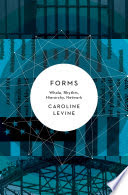
levineSimona L. Brickers, my colleague on the board at Not in Our Town Princeton, reviewed this book by Caroline Levine. Thank you, Simona, for drawing my attention to Forms: Whole, Rhythms, Hierarchy, Networks (192 pages, $19.95, Princeton University Press).

Levine’s book is a fascinating journey through Forms, defined as the “fluid overlap of social and cultural order, patterns, and shape that open up to the “generalizable understanding of political power” (Chapter 1).  It brings together, nicely outlined, literary work by Charlotte Brontë, Charles Dickens, Jacques Derrida, and Ralph Waldo Emerson along with many others. It weaves the literary examples into accounts of lived examples of institutionalized, systemic, freedoms and constraints that influence social collaboration and chaos.

In relating the act of punishment to rhythm, Levine highlights African music as repetitive, cyclical, polyrhythmic and dialogic and expressing pleasures that produce a participatory and embodied collective singing.  Rhythms turned out to be the repressive form used against African captives by slave masters to impose solidarity, control, and subjugations through chain gang songs (Chapter 3).

Levine’s central concern, as reflected in her title (Forms: Whole, Rhythm, Hierarchy, Network), was to present a platform to explore the phenomenon called “path dependency.”  Path dependence is learned helplessness depicted as a systematic composition that constricts diversity (race and gender) with barriers that prohibit reversal because of social and organizational cost.  The mechanism of sex is a device that produces hierarchical distinction (Chapter 4). The implicit disconnect in the various forms creates constraints and differences. Various forms overlap and intersect. They travel and influence political policies in particular historical contexts (Chapter 1). 

Nevertheless, the whole theoretical concept is misleading when it is carefully examined to reveal the social advantages that differ according to the traditional rhythms of the hierarchical color-coded network . Levine quotes Derrida’s work because the desire for bounded wholeness has grave political consequences (Chapter 2). Levine addressed the underpinning of social order, pattern, and shape by examining the dysfunction of forms. She also studied how the web translates into “literature as landmarks,” depicted as advanced transgression.  “Repetitive temporal patterns impose constraints across social life…standard repetition, durations, and arcs of development organize our experiences of everything from sleep and sex to governments and the global economy (Chapter 3).

 Levine writes brilliantly. Each word captures an essence of social order, patterns, and shapes (norms) that have become invisible, taken for granted without acknowledgement of the transhistorical or macro-environmental influences on society and the policies governing our daily routines.  The reader learns that we are not authentic — but domesticated, trained to behave, believe, and act according to a socialized outline that serves some differently than others , with no regard to how overlapping forms influence injustice.

Her masterful last chapter discusses The Wire (2002-2008),  the David Simon HBO series. This conventional cop drama exploration of the ways that social experience is structured within African American communities (Chapter 5).  The Wire rendered radically unpredictable and overlapping social forms. Levine ends the book by leading readers to contemplate the unsettled, unexpected and bewildering effects of an ideologically coherent society with power lodged in the hands of a few.  The challenge is self-reflective, aiming to push the reader to seek beyond what is controlled by a few — the societal whole, rhythms, hierarchies, and networks that influence social order, patterns, and shape individual and collective Forms.

Levine asked this question on page 18: “Which form do we wish to see governing social life, then and which forms of protect or resistance actually succeed at dismantling unjust, entrenched arrangements?”

The book is a masterpiece. It offers an opportunity to read, reread, and discuss the forms that are accepted as “unchangeable.”

Simona L. Brickers

Discrimination x three: Princeton stories

taylor
Keeanga-Yamahtta Taylor, photo by Denise Applewhite

Thanks to Planet Princeton’s Princeton Wire newsletter for the news roundup that alerted me to an article on housing discrimination research at Princeton University by Keeanga-Yamahtta Taylor, assistant professor of African American studies and author of From #blacklivesmatter to Black Liberation. She has a fascinating biography.

“Putting the blame on the individual suggests that racism can be overcome by education alone,” said Taylor. She is quoted in the article as reminding us that throughout history racism has been used as a way for the powerful to control others for material gain — and it is still used that way.

Another amazing but grim story from the Planet Princeton lineup is about the wrongfully imprisoned Princeton alumnus from Iran. 

If first aired on the Moth Radio Hour, which if you didn’t know about, you want to.

Less grim but still unsettling is the Daily Princeton article on research showing that, at the tender age of six, kids think boys are smarter than girls.

Race discrimination, nationality discrimination, gender discrimination — does this go on  forever?  Parents, start with your two year olds, they have to be carefully taught.

They sold a thousand tickets —

— to the Estonian Philharmonic Chamber Choir tonight.’

estonianIt’s in the Princeton University Concert series usually held in Alexander Hall, but, ever-so-appropriately, the venue for the choir is the Princeton University Chapel.

After years of enjoying Janell Byrne’s choreography to the work of Arvo Part “the uncrowned king of Estonian music,” I’m looking forward to hearing his choral work in that Gothic cathedral space.

Here is the program.

Though the ‘regular’ tickets are sold out, there are ‘obstructed view’ seats available and who cares about the view? But the snow will discourage some, and concert series director Marna Seltzer suggests “likely you will be able to move to a better seat.”

With its riches of Westminster Choir College and the American Boychoir, Princeton is a singer’s town. Next weekend we’ll welcome 800 singers from all over the world for a choral festival, “Sing ‘n Joy Princeton.” Trinity Church hosts a “Friendship Concert”  on Friday night, February 17, and Princeton United Methodist Church hosts a concert on Sunday, February 19, at 3 p.m. It’s free!

3 p.m.  – Friendship Concert – Princeton United Methodist Church
• ChildrenSong of New Jersey (Haddonfield, NJ, USA)
• Paduan Suara El-Shaddai Universitas Sumatera Utara (Sumatera Utara, Indonesia)
• Liberty North High School Choir (Liberty, MO, USA)
• Shanghai Jiao Tong University Choir (Shanghai, China)
• Vassar College Majors (Poughkeepsie, NY, USA)

Take part in the joy!


“I am not your Negro’

imgad

I Am  Not Your Negro , an Academy Award-nominated film by Raoul Peck, is an up-to-the-minute examination of race in America through the eyes of James Baldwin. It will be in some theaters on February 3. The trailer  reveals it to be a succinct and powerful summary of a time that some of us lived through but did not experience.

The Garden Theatre notes that major cities get it first, but that it will come here “by the end of the month.” What a great resource!