Category Archives: Technology & Innovation

For all my techie friends — in the Einstein Alley groups, NJEN, the Keller Center, and the E-Quad — event notices, items from U.S. 1 Newspaper and the NYT

Smart bridges? John Romanowich, founder of SightLogix and co-founder of what used to be called the Einstein Alley Entrepreneur Group, had a big win recently, as told by Gabrielle Erhardt of his company:

She shared a security management case study on how the firm’s smart thermal video has improved security, better manages traffic, and reduced operating costs for the New York State Bridge Authority.

“The NYSBA presented SightLogix with a complex security puzzle. The Authority required a solution capable of detecting trespassers, keeping traffic moving smoothly, and maintaining detection accuracy over large open areas and in the water environment of five bridges spanning the Hudson River. Prior approaches using fencing with vibration devices resulted in high costs and excessive alarms.

“Major change was necessary. A consultant recommended a smart thermal video system, and a year and a half later, the Authority relies on that technology 24/7, not only for security on all five bridges but also for traffic monitoring.”
Big win!

Buying Your First iPad. My friend Stephanie took me to buy my first Apple product. We went to the Bridgewater store to see the array and get great advice but I bought it at Creative Computing, out of loyalty to the “buy local” effort. The price is the same everywhere.

Now it’s my turn to pay it forward. Here is the advice I’m giving to my cousin, who is on the verge of the purchase. If you think i’m wrong, please raise your hand. I am not an expert. These tips are only “My Best Guess” and I’d welcome your correction.

Prepare. Read the tip sheet from Doug Dixon who IS the real expert, as printed in U.S. 1. Dixon gives his “what gadgets to buy for Christmas talk” tonight (Wednesday, December 4) at the Princeton Public Library.

Find your passwords. Be sure to bring all your IDs and passwords with you. Do you have any kind of Apple ID, for iTunes or anything else? Also any ID you have for your phone bill. You will need these and you don’t want to end up with duplicate IDs.

Here are some things to think about.

Your iPad or tablet can have any of these talents:

Connectivity: Wifi or always on (like a phone). When you have the always on, you can choose to use it (and pay a monthly connectivity fee, like your phone) or not use it. When you buy it with JUST Wifi you can never add the phone network. I bought mine with just WIFI and now I wish I had paid more to have the capability for always on.

Color: Fabulous versus very good. The latest iPad and all the Samsung tablets have LCD color. This might matter if you show off your pictures on your iPad.

Storage. I got the max storage and after 1000s of photos I run out of space and have to take them out of active use and put them “in the cloud.” More storage, more money.

Picture taking ability: the iPad can take excellent pictures in some situations, especially low light, but is a miserable camera in other situations (lots of light). However it’s great for storing and editing pictures.

Apple technology. I think it’s great but it can be tricky to synch things, like pictures, from an Apple product to a PC. I’m still working on that one. Some PC programs look slightly different on an Apple product, Picasa albums for instance shows up as “web albums.” You can get tablets that are NOT Apple based if you don’t like Apple. Only Apple has the dictation program Siri.

Size: they make a mini now.

Age and price : they continue to make the old iPad 2 and they no longer make my iPad 3. The iPad 2 is much cheaper than the new version. If you get the latest version, it takes longer to go obsolete.

Then, the accessories. I am fond of my bulky rubber waffle weave case because it is very protective. I have dropped it and it was unharmed. The standard slim case folds over the screen and sits up on a table. Not necessary if you are using it in your lap. They also sell carriers. I fit mine in my big pocketbook.

You must get Apple Care (24/7 help line for 2 years). They give you 3 months of it. You want it.

You want a screen cover (thin film) and make them put it on.

I bought a $15 keyboard on Amazon that works just as well as the $75 keyboards. I rarely if ever use it, maybe I will take it on a trip where I have real work today. Otherwise I sit at my PC or poke away at the screen keyboard. AND if you get an Apple product you can dictate your manuscript with Siri. I have tried it and it works great. I dictate emails now.

Lessons:
Princeton Senior Resource Center has good intro courses, beginner and intermediate, for low cost. Creative Computing charges a heftier price but maybe they are good too. I don’t know. Also available at the library. Definitely worth taking! I had mine for a month before I knew how to turn it really OFF off. I couldn’t figure out why it was using so much power.

Also the guys at Verizon in Princeton Shopping Center are wonderful at helping. Even though you might not have bought your iPad there, if you have a phone from them or a Verizon contract they happily give you tips.

For the best and straight scoop on any kind of gadget, consult Doug Dixon’s latest tip sheet in U.S. 1 or his website, Manifest Technology.

Chris Kuenne speaks Monday, November 18 at the Princeton Tech meetup . The topic: the Growth Playbook: 5 Cornerstones to Live By. Highly recommended… Kuenne’s latest venture: Rosemark Capital.

How to Identify White Space

A startup is not a company? No, says David Teten, Partner at ff Venture Capital; Founder and Chairman, Harvard Business School Alumni Angels of Greater New York. He speaks Thursday, November 14, at 4:30 p.m. at the Friend Center Convocation Room (113) for the Keller Center.

He will address the importance of market research in starting a business, identifying proper audiences for your product, and ways to reach out to particular people. After conducting research on best practices for deal origination, David found that venture capitalists only invest in one out of every one hundred startups that present pitches to them. Entrepreneurs should be nimble, listening to the market and acting according to the data they collect. A startup is not a company; rather, it is a group of people in search of a business model on which they can build a company.

Creative Minds at the Keller Center

The Creative Mind: Innovation, Design and Entrepreneurship Lecture Series

Thurs, Nov 7th 4:30pm

Building Entrepreneurial Ecosystems: A Panel Discussion with Trey Bowles; Co-Founder and CEO of Dallas Entrepreneur Center, Michael Goldberg; Co-Founder and managing Partner of Bridge Investment Fund, LP, and Waine Tam; Co-Founder of Learn CS101. Computer Science Building Room 105

Future dates:

Saturday, November 9, at 1 p.m.

Thursday, November 14 at 4:30 p.m.

and Tuesday, November 19 at 12:30 p.m.

Thanks to Savraj Singh for this memo about a November 14 workshop.

“Angel Investing 101” for entrepreneurs, early-stage investors and service providers.
Date: Thursday, 11/14/13
Time: 6:30 pm – 9:00 pm
Location: TigerLabs, 252 Nassau Street – Second Floor, Princeton

Panelists:
David Teten, Partner with ff Venture Capital and Founder and Chairman of the Harvard Business School Alumni Angels of Greater New York
Jason Glickman, Founder and Chairman, Tremor Video
Gina Tedesco, investor and founder of three successful start-ups
Allon Bloch, CEO of mysupermarket.com
Ari Raban, CEO of phone.com
Aaron Price, Entrepreneur At Large at DFJ Gotham Ventures

Registration is available at: http://www.theharvardclubofprinceton.org/article.html?aid=164

From Rosetta to Rosemark: Chris Kuenne

10-16 Cover & Front (1-8).indd

It’s a think tank, it’s an incubator, it’s a place where the guys hang out, bounce ideas off each other, and cook up innovation. We’re not talking about 20-somethings with a coffee cup in one hand and a beer in the other in a grungy basement. This 4,000-square-foot penthouse suite at 90 Nassau Street overlooks Princeton University’s FitzRandolph Gates and Nassau Hall, and its occupants lunch at tony restaurants like Agricola. They are successful middle-aged entrepreneurs who have made a good amount of money.

At the helm of this consortium, Rosemark Capital, is Chris Kuenne, who recently sold the company he founded, Rosetta. Kuenne is also involved in DisruptiveLA, founded by childhood buddy James C.E. Burke, son of the former CEO of J&J. They hope that Rosetta’s scientific marketing techniques (personality-based segmention)  can lift independent films from the morass of inefficient marketing.

Click here for the rest of this story,  published in U.S. 1 Newspaper on October 16, 2013.

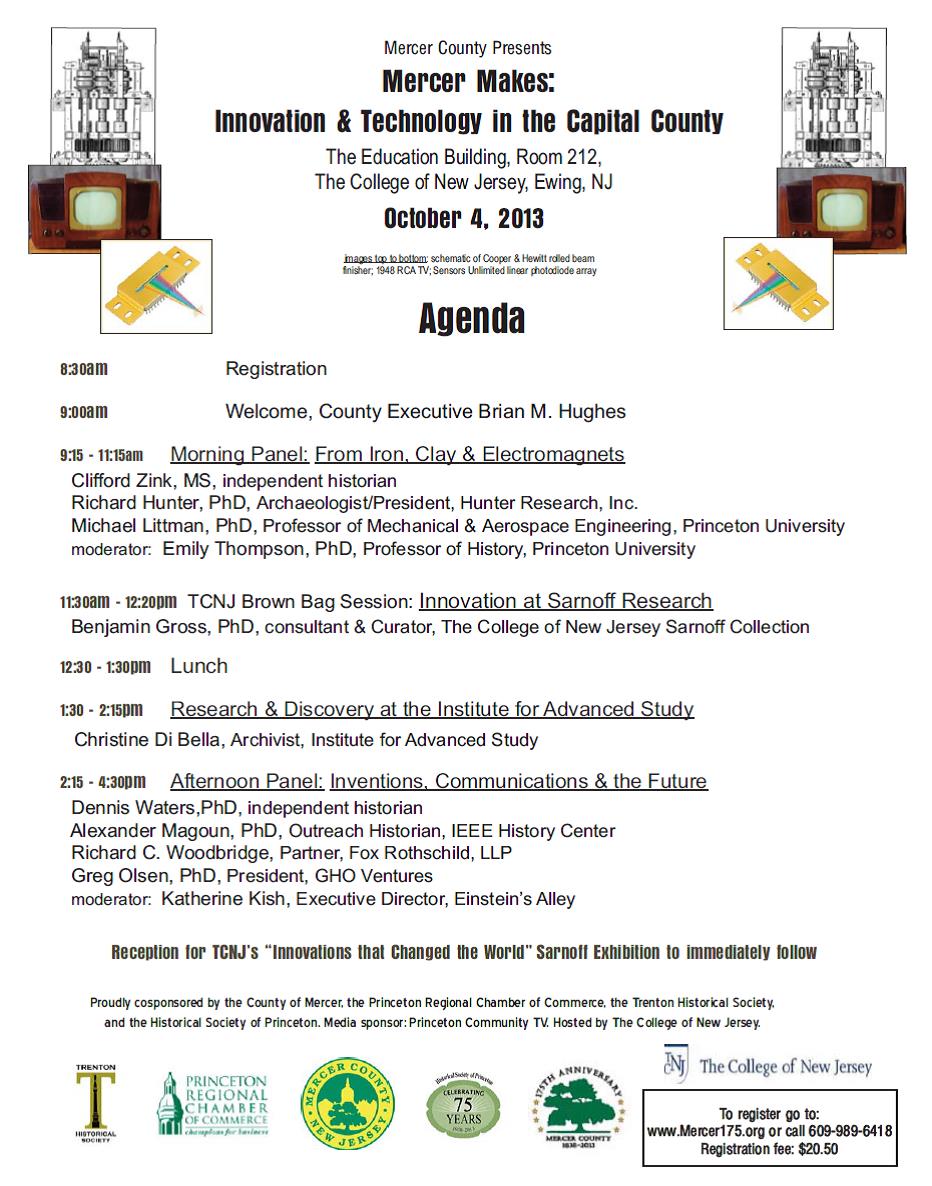
Mercer Makes — amazing technology

10-2 Cover & Front (1-9).indd

I’m pleased with how this week’s cover story turned out. To preview the Mercer Makes seminar on Friday, I tried to relate the leading edge technologies of the 19th century with those of today. Had you heard of AT&T’s pole farm? . And the Sarnoff museum is now open.

Here’s how it all got put together.

Epigenesis: when something goes wrong

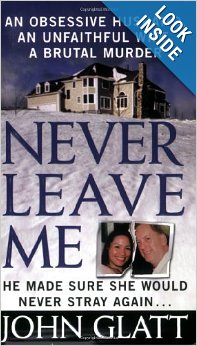
glatt book

Epigenesis is all over the news. On Monday I heard about it on NPR’s Morning Edition. that scientists are excited about epigenesis with a small letter e. It describes a way to turn off a gene that might trigger a disease. Susan Kay Murphy, of Duke University, is studying how a mother’s environmental exposures and nutrition during pregnancy may be causing epigenetic changes in babies.

If you were around Princeton 10 years ago, the word “Epigenesis,” with a big letter describing the company, will trigger different memories. It was a the name of a company founded by Jonathan Nyce to cure asthma.

And then you may remember Jonathan Nyce. Despite the best efforts of arguably the best criminal attorney in town, Robin Lord, he was convicted of murdering his Filipino wife who was having an affair. Judge Bill Matheisus sentenced him to”passion provocation murder,” eight years, eligible for parole in five. I covered the trial. The New York Times wrote about it. A tabloid writer published a book about it (shown above).

Meanwhile Epigenesis, the company, attracted the venture capital support of Jan Leschly of Care Capital. The company downsized to half its space and 10 employees, let go of its core technology and started working on a drug that could be brought to market faster. I lost track of the company. The firm is no longer in Care Capital’s portfolio and the website (www.epigene) is defunct.

In 2010, after five years, Nyce came out of prison and proceeded to publish his own book about the trial, to explain his claim to innocence. A person is innocent until proven guilty, and one doesn’t criticize a book unless one has read it. But let’s just say the reviews aren’t good.

The word epigenesis comes from the Greek epi (over, above, outer) and genetics. Epigenetics can be described as the study of changes in gene expression or cellular phenotype, caused by mechanisms other than changes in the underlying DNA sequence. Growth disrupted, derailed.

That also describes Jonathan Nyce. Talent gone wrong.