Princeton Comment is delighted to welcome Oscar J. Montero, professor emeritus at Lehman College. He reviewed the improvisations staged by Alicia Diaz (a Princeton native) and Hector Coco Barez on May 14 at Hunter College.

Princeton Comment is delighted to welcome Oscar J. Montero, professor emeritus at Lehman College. He reviewed the improvisations staged by Alicia Diaz (a Princeton native) and Hector Coco Barez on May 14 at Hunter College.
During Puerto Rican Soundscapes, a music colloquium at the Center for Puerto Rican Studies, Alfonso Fuentes tapped a key on the piano to launch into a compelling improvisational riff. Improvisation, he said, is at the core of his musical work. Iranian scales led to melodic asides echoing the traditional Puerto Rican plena in recurring counterpoints. In his performance Fuentes underscored the tensions in his work between improvisation and tradition, that is, between the individual’s creative quest and collective forms that belong to no one but are shared and reshaped from one generation to the next. The work of dancer Alicia Díaz and musician Héctor Coco Barez brought to the “soundscape”of the colloquium its own improvisations. The dancer and the musician centered their performance on suggestive counterpoints between body and sound, between movement and music, between the visual and the aural.
In her comments throughout the performance, Alicia Diaz suggests identities that take shape precisely, and perhaps only, through improvisation and dialogue. Notions about identity as a fortress to be defended have been contrasted to identities as series of ongoing personal and political negotiations. Especially for dwellers in one form or another of exile, national identity as a place of origin is at best a nostalgic narrative; at worst, the troubling memory of violence and loss. The vibrant collaboration between Barez and Díaz maps out other places in the complex field of our identities, inviting the audience to see in them not the finality of theplace we can name as our origin but the ongoing creation of shared spaces where our own pleasures and anxieties about who we are and where we come from may be performed.
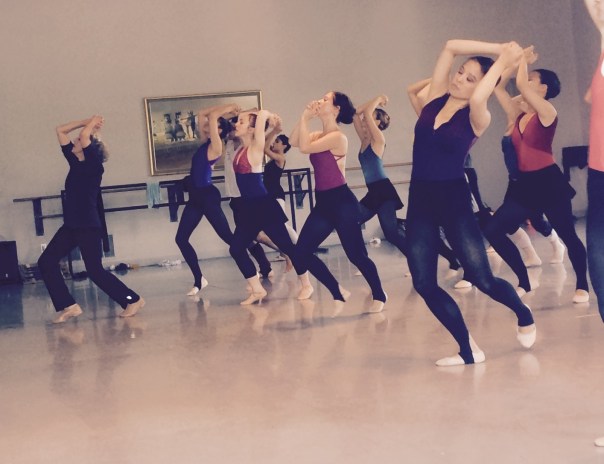
 Díaz’s agile, remarkably precise movements are flowing at times, cut sharp at others. During the question/answer period, a person in the audience mentioned the pioneering work of José Limón, implicit in Díaz’s highly personal choreography. Yet while fluent in the vocabulary of modern choreography, Díaz dances bomba, steeped in the traditions of Puerto Rico, and riffs on the resonance of such a loaded quotation in her work. Bomba’s relationship to a Puerto Rican identity may be said to be seamless. Its roots are found not just in specific locales and well-known historical circumstances but in Puerto Rican families. Díaz mentioned the teaching of Tata Cepeda, a member of one such family and one of the contemporary heirs of the legacy of bomba. Yet a folk dance, performed today in various settings, may approach stereotypes that can flatten identity for easy consumption, a process evident to me, a Cuban, as I see dancers in Havana dressed in Brazilian costumes entertaining a new wave of tourists with our famous rumbas. The physical replies danced by Díaz to Barez’s music demonstrate the possibilities and the limits of an improvisation informed both by the individual’s quest and by powerful traditions. Their work suggest to me that when words fail us, and their destiny is to do so, the body and its music can help us reconsider other options, help us perhaps to come back around to words and new narratives that might see us through. In a moment of political uncertainty and economic turmoil, not only for Puerto Rico but for the world we live in, the value of our traditions and their inflection through our own experiences, indeed our own bodies, informs the urgent quest of these Puerto Rican dancers, musicians and writers, a quest valid in its own right and for what it might offer to others now and down the road.
Oscar J. Montero
Professor emeritus, Lehman College, City University of New York
NY NY May 15, 2016

 Have you forgotten about, or have your ever even seen, the giant sculpture jewel of Princeton’s campus, the Richard Serra sculpture? Two New York Times articles in the past two days made me want to go back and ‘walk’ the tunnel again.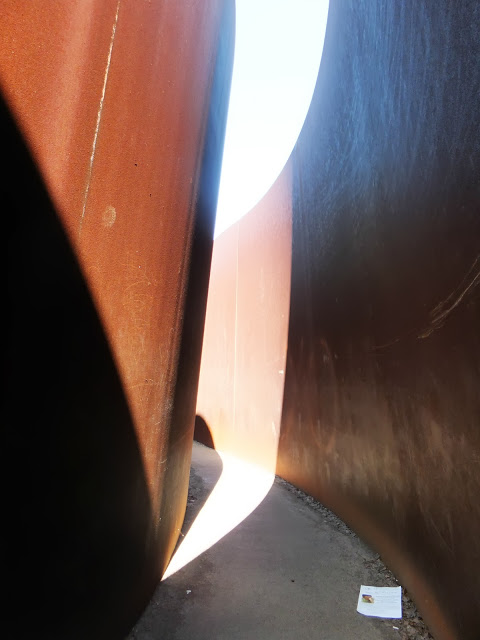

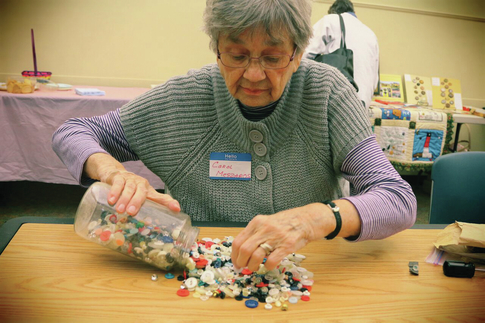
 “I like the challenge of doing something odd or different or pretty or unusual– it’s the joy of actually making things,” says Nancy DuBois. Though she rarely makes multiples, she accepted the commission to design and craft 30 NJSBS Diamond Anniversary buttons to be delivered on May 7. The base is a size medium Pinna Nobilis shell with an inserted metal shank. The main design of a goldfinch sitting on a red oak branch with leaves and acorns has been scrimshawed in 24-carat metallic gold. (Scrimshaw is the age-old art of scratching or carving line designs into the surface of natural materials, then rubbing pigment into the indentations.) The tiny violet was flameworked, done by melting colored glass in a hot flame produced by a torch and shaped it to the desired configuration. The goldfinch, branch, leaves and acorns was surface tinted with a yellow, brown and green paint and then sealed. A Swarovski Crystal recognizes the anniversary. Each button back includes an engraved design number, log number, date, signature with Nancy’s seal design, and the words “New Jersey State Button Society 75 years 1941-2016.” Another Swarovski Crystal finishes the button.

 Puerto Rican Soundscapes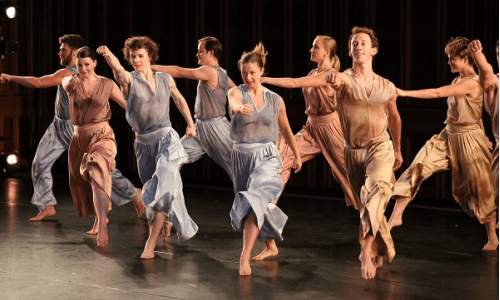



 Princeton Comment