Category Archives: Healthcare

Entertaining Engineer: Prud’homme


IMG_4626
Gathered to hear Bob Prud’homme speak at the Princeton Chamber breakfast was a contingent from Princeton United Methodist Church. In this quickie snap, from left: Bruce Henry, Barbara Fox, Prudhomme in back, Jamileh Gerber in front, Dana Dreibelbis in back, Daniel Shungu in front. Also attending from Princeton UMC: Ed Sproles and Doug Fullman.

Scientific “war stories” were on the agenda today, as Bob Prud’homme entertained members of the Princeton Regional Chamber at the Nassau Club. Some of the twists and turns of his 40-year career at Princeton University revealed good news, some not so good.

In the disheartening category was the realization that, since virtually no drugs are manufactured in the United States, the U.S. stands to lose significant intellectual capital re drug development.

Why? A therapy doesn’t leap from lab to assembly line. It undergoes translation from research to retail in a “pilot” manufacturing plant, where veteran managers and supervisors can keep close tabs on quality control. Until recently the major pharmas built those pilot plants in the U.S., supervised by U.S. managers. If all the pilot plants move overseas, technical managers in the other countries will acquire that extremely valuable expertise.

On the heartening side, Prud’homme says he often finds himself working with research scientists in Asia whom he knows – because they were his students and collaborators at Princeton. Surely this answers any chauvinistic assertions that U.S. schools should limit the number of students from abroad.

IMG_4615In the good news category, Prud’homme and his collaborators get money from the Bill and Melinda Gates Foundation to develop drugs for global health. (UFAR founder Daniel Shungu, seen chatting with Prud’homme before the breakfast, is also the recipient of Gates funds.) What can sell in a blister pack at CVS won’t work for a third world country, which needs drugs to be packaged in jars that will last for six months in a hot damp climate. Princeton’s engineering quad leads the industry in meeting the need for these opportunities in drug delivery.

Only inexpensive drugs can be brought to poor countries. In contrast, cancer therapies are so costly that they can’t be used in the Third World. Prud’homme worries that cancer therapies will even be too expensive for OUR country’s insurance capacity, and that our healthcare business plans are in danger. Either our healthcare insurance will topple, or it will be outrageously unequally distributed, or the people will make decisions about what gets covered and who doesn’t.

One fix would be to deny $60,000 immunotherapy if it won’t prolong life by at last a year. Another way is to adopt the single-payer system used in Australia and make the hard decisions. “I worry about the future of our healthcare system,” says Prud’homme, “and that we will have an unjust society. What problems are we willing to live with?”

Prud’homme memorably described the ins and outs of nanotechnology in clear terms. The challenge for using nano in injectable drugs is that the drug might disperse too quickly, before it reaches the target site. The difficulty with using nano molecules in oral therapies is that many molecules are hydrophobic. They do not live comfortably in water.

His lab, successful in conquering both challenges, has been selected as the “academic lab of choice” by the major pharmas. The story behind that reinforces MY conviction that our town is ever so fortunate to have this university and these research labs at our doorstep.

Many complain that because the university has “deep pockets” it should pay more in lieu of taxes. Exactly because Princeton University has those deep pockets, it can afford to offer generous terms to potential partners. Someone asked how scientists can get molecules through the patent process without revealing secrets to competitors. The answer, says Prud’homme, lies in the university’s motto “Princeton in the Nation’s Service.”

Nobody has approved this metaphor, but here’s how I would explain it. You have five pirates at your door for Trick or Treat, almost identically costumed. One has a face mask, Pirate X. When a big pharma (BASF, GSK, Pfizer, Merck – all Princeton collaborators) wants to secretly develop a molecule, Princeton sends all five to the patent office, revealing the identity of four, leaving one unidentified. This gives the big pharma lead time to develop Molecule X. (Somebody please comment if this comparison doesn’t work.)

Princeton University came late to the entrepreneurial market becauase. as Prud’homme acknowledged, research suitable for the commercial market used to be scorned by the academics. Princeton was one of the most hoity-toity of universities in condemning research that results in a salable product.  He credits the philosophy of John Ritter  (in charge of technology licensing) and the success of two researchers – Steve Forrest and Edward C. Taylor – with changing the university’s attitudes about the inviolable sanctity of basic research. Forrest (now at the University of Michigan) channeled his research on organic light -emitting diodes (OLEDs) into a start-up, Universal Display Corporation that leads the market for displays for smart phones and has revenues of more than $300 million. Taylor developed the cancer-fighting drug, Alimta, and the proceeds from that virtually paid for the university’s new chemistry building.

With its generous endowment, the university does not have to nickel-and-dime its collaborators, and its scientists and engineers can be “in the nation’s service.”

Labs inside the Ivory Tower

Robert_Prudhomme-orig-300x300Find out what’s going on at Princeton University’s e-quad. What research projects will spawn the next billion dollar company? What, exactly, can we expect from nano technology? Hear Professor Robert Prud’homme’s entertaining stories on Wednesday, November 14, 8 a.m. at the Nassau Club. Plus, it’s a yummy breakfast! See you there — Click here for details.

Epi First, Epi Fast, No Exceptions.

food allergy
Illustration from FARE conference

Here is daunting but necessary information about food allergies – and this is for everybody, not just those with the allergies, or their parents or siblings, but also for anybody who has contact with food, and anyone in the classroom, and anyone in contact with the public. Everybody.

This account of the three-day convention for FARE, a national organization devoted to food allergy research and education, comes from Susannah Fox. (Yes, my daughter).

If you don’t know anyone with anaphylactic allergies (for whom mistakes can be fatal) at least dip into this post. You will understand why you get pretzels, not peanuts, on the plane. You will be more careful at the buffet, so you don’t accidentally drip tuna salad on another ingredient.  You will learn something about kissing that you didn’t know.

.

Sustaining an unsustainable life: where was Paul’s POLST form?


Many Princeton people will remember Paul Scharf. He pushed carts at McCaffrey’s, he came to the HUB, a Saturday night social activity at Princeton United Methodist Church, he attended services there.

In Richard K. Rein’s U.S. 1 Newspaper column this week is an account of an end-of-life experience that should NOT be happening. Paul could have been encouraged to sign an Advanced Care Directive (available at Princeton Senior Resource Center) or, better, to sign a POLST form.  It could have prevented his medical team at a nursing home from having to sustain his unsustainable life. A POLST form (Practitioner Orders for Life Sustaining Treatment) is not required by law, but in New Jersey it is strongly recommended. 

Paul can no longer talk to tell what he wants.


New at the hospital 3/8

hospital house organ for blogpost On Thursday March 8 the Princeton Regional Chamber hosts Lori Gustave for its membership lunch at the Forrestal Marriott  Gustave is VP of business development at Penn Medicine, which has taken over (officially, merged with) University Medical Center. If you think you might be sick in the next couple of years, you might want to hear how about how Penn Medicine uses an
“advanced care strategy” and organizes it around the patient’s disease or condition.

As for me, for the next few months, I will not focus hospitals, medical care, nursing facilities. Somebody can tell me what she said.

brea film
Journalist Jennifer Brea couldn’t get any doctor to explain why all her systems seemed to be collapsing. She used the Internet to diagnose her own disease, Myalgic Encephalomyelitis, better known as chronic fatigue syndrome. Her documentary, “Unrest,” starts out with shots of the University Medical Center at Princeton in Plainsboro. shows on WHYY and WNET at 10 a.m. tonight, January 8. It premiered at the Garden Theater with her husband, Princeton Politics professor Omar Wasow and Imani Perry doing the commentary.
Here is the Princeton Alumni Weekly story. 
And here is commentary from Susannah Fox,   focusing on how people with rare diseases can find help on the Internet.

What if the government just gave everyone money?

8-9 Cover & Front (1-8).indd

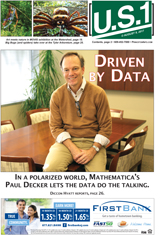
The Guaranteed Minimum Income plan, or Universal Basic Income, is not new. It was researched by a Princeton company, Mathematica Policy Research (MPR), back in 1969. It’s the subject of Diccon Hyatt’s excellent cover story “Driven by Data” in this week’s U.S. 1 Newspaper.

Led by Paul Decker, MPR is a company I’m proud to have in Princeton.

Cross your fingers: health news

Today’s healthcare news:

I’ll start with Juliet Eilperin’s coverage of the healthcare bill in the Washington Post, “From hospitals, doctors, and patients, a last gasp of opposition to the Senate health-care bill,” A Daily Princetonian alumna, the Post’s senior national affairs correspondent, she tells of how hospitals have mounted unusual lobbying efforts. ‘While McConnell had been pressing for a vote on the measure before the end of June, the delay gave opponents more time to marshal their arguments and make their case to lawmakers. This final lobbying push represents opponents’ best chance of derailing McConnell’s final drive to passage, which continues to look uncertain.’

Today the CEO of Incyte, Herve Hoppenot, speaks at the Princeton Regional chamber lunch. Look for me in a striped jacket. At age six I ‘worked’ in my parents’ cancer research lab and 70 years later I have a vested interest in new cancer cures.


Funding the Innovation Makers

Techies play in a high stakes intramural tournament every February at one of the state’s best – free — networking opportunities. On February 15. at Princeton Innovation Forum  (PrincetonIF) the Andlinger Center for Energy and the Environment, they gave away $30,000 in one afternoon. All the teams were from Princeton University with Princeton profs as advisors or main participants. Sponsored by the Keller Center,  PrincetonIF focuses on commercializing technology developed at Princeton University.

Diccon Hyatt made it the cover story in this week’s issue of U.S. 1.  It reads best in hard copy, so grab one today from a newsbox before it gets replaced tomorrow. Or read it here.

With angels, venture capitalists, lawyers, and supporters watching, each team made a three-minute pitch. Then that power crowd emptied out into the crowded lobby, mobbed the wine bar, and the noise level rose as those-in-the-know and those-with-money interviewed the presenters and each other.

My favorite moment was introducing Chris Owens of Oppenheimer Nexus to Lou Wagman and Joe Montemarano (photo top right). More on that in another post.  Also (apparently I can’t control random order) are photos of second prize winner  Niraj Jha, professor of electrical engineering, who is working on Internet security; first prize winner Robert Pagels presenting his technology for manufacturing microparticles for delivering biologic drugs; Pagels and his team get their pictures taken, and U.S. 1’s Diccon Hyatt interviews Joe Montemarano.

Read the story here to learn about exciting technology and get on the Keller Center’s mailing list here. Always something exciting going on at the Equad.


Not a New York State of Mind

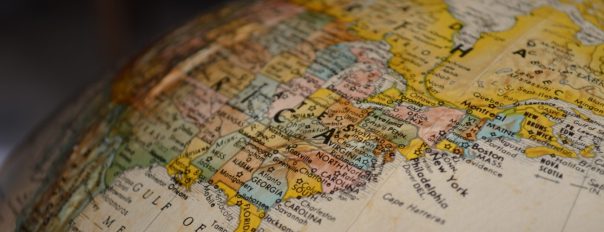
america_globe-e1486391774844-1300x500
Image from Columbia Journalism Review post “Beyond the Parachute: Newsrooms rethink centralized model” Feb 26, 2017, Jean Friedman-Rudovsky

Geographic diversity is connected to something crucial re what journalists need: audience trust in their work. The Columbia Journalism Review takes a hard look at how coastal newsrooms ignore middle america in this article.

When reporters “parachute in” to cover a story, they are likely to miss the nuances.

“Often people outside of these major city bubbles see themselves depicted in print and on television in a sensationalized way, without any nuance,” says a journalist who lives in South Carolina.“The thought is ‘well, if they’re getting depictions of us wrong, what else are they getting wrong?’

We in Princeton recognize that everybody thinks New York is better.Where do we go when we are really sick? What newspaper do we need when we really want the truth? Here is the Saul Steinberg cartoon about that self-effacing city, followed by two journal items inveighing against New York-centric viewpoints.

steinberg_view_9th_ave_03291976
Saul Steinberg “Ninth Avenue” cover for the New Yorker, March 29, 1976

 Journal item #1 : I lived outside the New York sphere when I worked as a freelance dance writer in Philadelphia and then Pittsburgh. For dance critics, even those big cities are considered boondocks.  A New York critic’s move to Philadelphia drew condolence letters.

To survive, vampires need blood; dance critics need to see and review dance, and New York is the best place to do it.

Back then, to qualify as a voting member of the Dance Critics Association, you had to have had a review published in a print newspaper during the previous year. Features (advance stories based on a critic’s experience with previous performances) didn’t count.

Fine for New Yorkers and big city papers, but in the boondocks, few newspapers would print reviews. I brought this up so often that I got to be known, somewhat affectionately, as the “lady from Philadelphia” even when I lived in Pittsburgh.

Journal item #2: Reporters treasure good sources. Reporters from small papers — from areas unknown to the “big city guys” — particularly treasure sources that respond with the same attention and respect that they might give to a Washington Post or New York Times reporter.

How I ran across this CJR story was because I follow the path of a former assistant managing editor of the Wall Street Journal, Richard Tofel, who always made himself available when I was a reporter at U.S. 1 Newspaper. (We weren’t a boondocks paper — we delivered to the Dow Jones building on Route 1 North, but it was still gratifying to always get a return call.)

Tofel is now president of the Pulitzer Prize-wining nonprofit newsroom, ProPublica. It’s expanding to Chicago. Not exactly the boondocks, but at least it’s not New York. ProPublica offers a new model for investigative journalism. Whether that comes from New York or the boondocks, we need that now.

To Pro Publica, you can contribute information. You can also contribute money.  And if you care about the future of journalism, subscribe to the Columbia Journalism Review.