Category Archives: Uncategorized

Meeting Fords and Firestones at Old Nassau

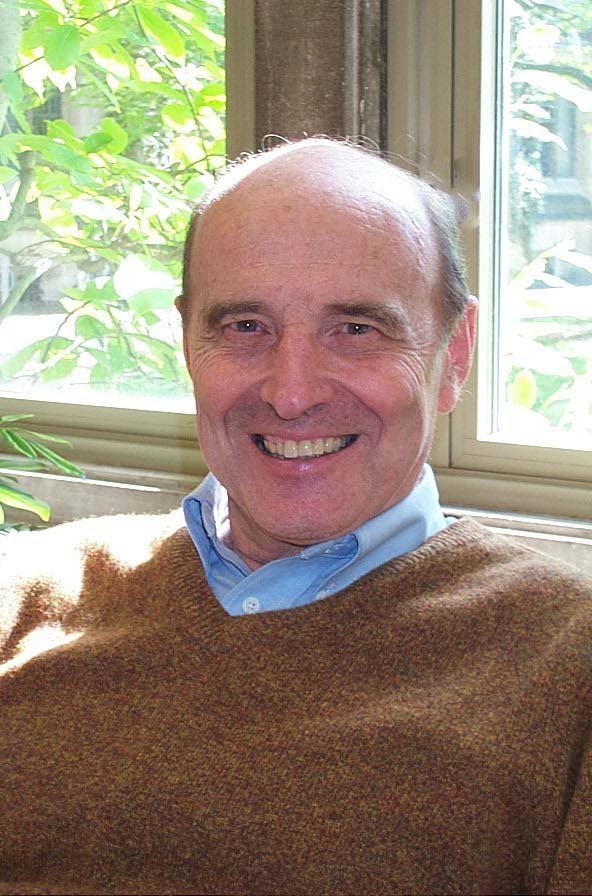
William Clay Ford Jr. had a bit of a head start when he started working at Ford Motor Company in 1979. His father, William Clay Ford Sr., was the youngest child of Edsel Ford, and the youngest grandchild of Ford Motor Company founder Henry Ford.

Bill Jr’s dad went to Yale, but his grandfather on his mother Martha’s side was a Princeton man, Harvey Samuel Firestone Jr. Yes, that Firestone, the tire company magnate with his name on the university library. So Bill chose Princeton, graduating in 1979, then earning an MBA from MIT’s Sloan.

All this is preface to the reminder that Ford returns to his tiger roots for a Keller Center lecture on Tuesday, February 15, at 4:30 p.m. at the Friend Center on Olden Avenue. (It’s a free event; anyone may attend, and there’s a reception afterward.) As the executive chairman of the company now run by CEO Alan Mullaly, he will be enthusiastic about Ford’s efforts to bring hybrid and electric-powered vehicles to market.

But if you manage to engage him in conversation in the reception afterward, here are other potential conversational gambits: fly fishing, tennis, the Detroit Lions (he is vice chairman of the team), eBay (he’s on the board), Tae Kwan Do (he’s a black belt), and the future of Detroit (he’s a city booster). You could also look in the audience for a younger version of Bill; I can’t confirm it but his freshman son Will may be in the audience. Often the Keller Center attracts parents of current students.

Another place to find father and son might be at the Hobie Baker rink. According to the New York Times, dad’s team is a champion in the over-50 pond league, and Will Ford just finished his first hockey season for the Tigers. Maybe dad will bring his skates.

Full disclosure: My family has always driven Ford cars and one of my children works there.
Masters of Teaching: Reynolds Price — and Who?


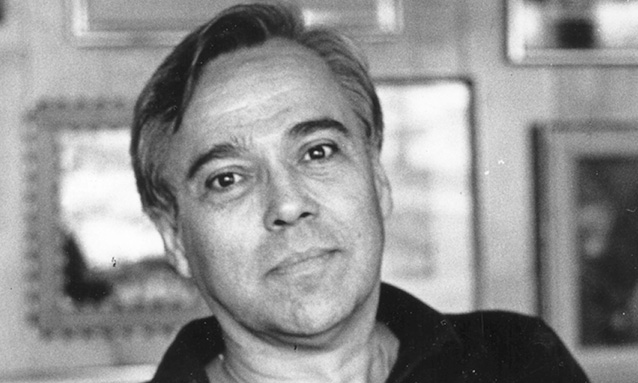
Today’s Chronicle, the Duke student newspaper, published the latest in a series on Reynolds Price, the celebrated writer of fiction, poetry, memoirs, essays and plays who taught at Duke for more than 50 years and died in January. Novelist Anne Tyler (my classmate) was among his early students, and James Taylor among his good friends.

Devoted to the institution, Price earned the devotion of his students.
He saw teaching as “not just imparting knowledge or information but as an engagement with a complete human being,” said one student. Even after he was paralyzed by malignant cancer in 1984, he kept on teaching and writing, now with a more spiritual bent. Like many, I am awed by his account of his physical and spiritual journey as detailed in A Whole New Life. And I have warm memories of returning to Duke in 2009 with my college buddies to celebrate Price’s 50th anniversary of teaching at Duke and the viewing of a documentary by Wil Weldon, the first personal assistant that Price hired after his paralysis.

What impelled me to write about Price, in a post crammed with links to lore about him, was the program for the children’s choir festival that I attended on Saturday. It honored Helen Kemp, a master teacher of children, who — in her 90s — directed her own compositions and eloquently spoke of how the choristers who came will carry their God songs and scriptures in their hearts for the rest of their lives.

The printed program had tips for master teachers that struck home. See if they help you to recall your master teachers this Valentine’s Day. If you are a teacher yourself, perhaps you will be challenged to take a closer look at the faces in front of you. Reading them, I was challenged. Here are some of them,

* “Teach each child, not only ‘the class.’ Honor each child with eye contact and by being near each child with your presence,” (Peter Jennings News, 4-4-1991).

* “Simplicity . . . a real artist [teacher] makes you feel you can do it…not impressive but transforming,” Erik Routley.

* “We are all meant to shine as children do . . . And as we let our light shine, we give other people permission to do the same,” Nelson Mandela.

* It is not enough to wire the world if you short-circuit the soul,” Tom Brokaw.

Wil Weldon has made another Reynolds Price documentary, entitled Pass it On. Remembering our own teachers, we can all reach out with a phone call, or send a card, or make a promise to ourselves to “Pass It On.”

For My Non-Twittering Friends


Get Twitter Buttons

I hope you won’t think it’s a boast, but in the past 10 minutes I have followed links from my Twitter feeds to two mind-blowing blog posts. Since you don’t Twitter, I’ll share them with you this way.

* An account of a day in a networked life, showing how social media and current tools helped Eugene Eric Kim get work done quickly and easily. When one friend asked a question, he referred her by Twitter to someone who could answer the question. When his cohorts needed to consort, they collaborated on a Google doc. And so on.

* A post on “Be Each Other’s Health Care,” or “Play like you mean it; Life depends upon it.” by Cynthia Wynton Henry, of the Interplay community. Just my kind of gal and I would never have known of her or her organization except through Twitter.

My favorites from among her advice on that post:

Forgive like a 7 year old. When someone can’t be nice, let them be.

And

Bring soup, hold hands. When things get real bad, showing up for 5 minutes or more, counts.

If you believe that social media only wastes time that could be spent more productively (you know who you are!) read the first one. If you are beset with cares, health and otherwise, read the second. And then play like you mean it, as earnestly as the adorable little guy on the uke in Henry’s blog.

We may not be that cute but we can still play like we mean it.

Pilates: Tiger’s Training Can Be Yours

Tiger Woods and Annika Sorenstam improve their game by doing Pilates to reduce strain and their lower back and shoulders.

Learn their secrets with a four-session course sponsored by the Anthony Rabara Pilates Studio of Princeton, which offers four one-hour sessions starting Thursday, February 17, at 6:30 p.m. After 30 minutes learning Pilates techniques with a super-qualified Rabara instructor, Joe Porter, a Class A PGA golf instructor at Windsor Greens Golf Center, will translate that into drills to improve your swing. There will be between 3 and 7 other students. Cost: $120.

Full disclosure: I’ve been studying at this studio for two decades. I’m not a paid shill but I am an enthusiastic proponent.

I believe the Pilates principles — flexibility, balance, and core strength — are as vital to my longevity as they are to an athlete’s success. But I warn anybody who will listen: Be sure your instructor has valid credentials and is not the graduate of a weekend course. Your body is a terrible thing to waste.

Tignor: Longer View of Egyptian History


Wikileaks had only an indirect effect on the revolt in Egypt, says Robert Tignor, the author of “Egypt: A Short History,” published last year by Princeton University Press. It was the Tunisian uprising that spurred the Egyptians to action. “The Egyptians are a very very proud people,” says Tignor. “They regard themselves as at the cutting edge of the Arab world – intellectually, academically, and politically. Much to their chagrin and dismay, they find that Tunisia is leading a revolt against one of their dictators. They were quite amazed that the Tunisians could do it.”

Tignor is on deadline to revise his book, so it can be issued in paperback in September. The book is billed as “an indispensable key to Egypt in all its layers–ancient and modern, Greek and Roman, and Christian and Islamic, a sweeping, colorful, and concise narrative history of Egypt from the beginning of human settlement in the Nile River valley 5000 years ago to the present day.”

The university has a number of “old Egypt hands,” including the former ambassador to Egypt, Daniel C. Kurtzer, widely quoted at this juncture. Tignor is a graduate of the College of Wooster in Ohio, with a PhD from Yale. He and his wife, Marion, lived in Egypt several years, and their three children went to school there. He is an emeritus professor in Princeton University’s history department and writes about modern Egyptian history.

“It’s extremely exciting,” he said in a phone chat just before Mubarak stepped down. “One can only hope that the final results will be beneficial.”

Egypt doesn’t have a good record of peaceful transitions, he pointed out. “Napoleon suppreseed rebellion rather brutally,” he said. In 1919 a rebellion was put down by British troops, and another was put down by the Egyptian army in 1952. “They got the French out, they got some of the Egyptian rulers out in 1882 only to have it supplanted by British, which they thought was worse. In 1919, they got to achieve independence, but the British were going to control foreign policy and stage a large army. In 1952 they got rid of the British and the corrupt old regime.”

Tignor expressed concern about the future of the Egyptian-Israeli peace accord, the anchor of American foreign policy in the Middle East. He predicted that a new government would want to abide with the peace accord but not as rigorously as Mubarak did. “They could be much tougher to deal with than Mubarak and company were.”

Celebrate Children Singing


Princeton knows about children who sing. The American Boychoir School is here. Westminster Choir College trains children’s choir directors. And the town attracts visiting choristers.

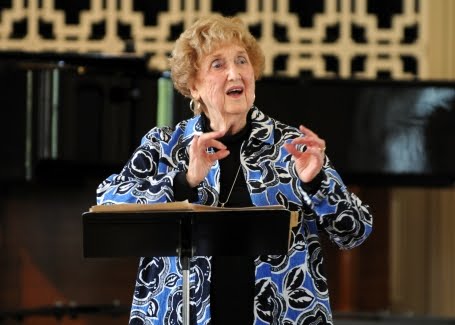
Five youth choirs, including the American Boychoir School Training Choir, will participate in a winter children’s choir festival on Saturday, February 12, at Princeton United Methodist Church, located at Nassau Street and Vandeventer Avenue. Helen Kemp (shown here) is known worldwide as a director, composer, and teacher, and she will direct a free concert, entitled “Celebrate This Happy Holy Day,” at 2 p.m. For information call 609-924-2613 or the church website, www.princetonumc.org. Parking is available in Princeton University Lot 10, off of Williams Street, or in the Park Place lot.

Kemp, professor emerita at Westminster Choir College, has been training singers, teachers and conductors in the art of choral singing for more than 70 years. She is known for her ability to train both volunteer and professional choir directors.

Yvonne Macdonald, who is in charge of the festival, directs two of the choirs participating – the Princeton United Methodist church Upper Elementary Choir and the Schola Choir of Westmisnter Choir College. Choirs coming from New York are from Christ Church United Methodist and Park Avenue Christian Church.

It’s a big weekend for singing children. The following day, Sunday, February 13, an elite group from the Princeton Girlchoir will present “A Girl’s Life: Choral Music For and About Girls of the World” at the Princeton Public Library at 3 p.m. Kelly Ann Nelson Westgate conducts this free concert of diverse music — some written by female composers, some on the subjects of love and marriage. Featured is Vivaldi’s Gloria in D Major, which was written when the composer was working at an orphanage for girls. This concert is also free.

What happens to a child who sings in church. Says one expert: “A predominant number of church workers come out of church choirs. They know scripture, because they sing it.”

Bluesman Lucky Peterson on February 25


He grew up in his father’s nightclub in Buffalo, New York, and at age six he was performing on the Ed Sullivan show. Lucky Peterson, now 46, along with Tamara Peterson, will bring a combo of blues, Delta, roots, and soul music to the Black History Month concert on Friday, February 25, at 7:30 p.m.

The concert will be held at the Princeton Regional Schools Performing Arts Center at Princeton High School, at the corner of Walnut Lane and Franklin Avenue. The Princeton High School Studio Band will open the program. For $10 tickets ($5 for students and seniors) call Mr Highland at 609.806.4280.

Discovered by blues legend Willie Dixon at the age of three, Lucky released
his first record at five and has played behind Little Milton, Bobby “Blue”
Bland and Kenny Neal. He plays everything from the organ and a duolian resonator to the piano and acoustic or electric guitars.

Among his critically acclaimed albums are Black Midnight Sun (2003) and You Can Always Turn Around (2010), billed as “an uplifting portrait of the struggles and salvation of a man with faith.”

In interviews, I always ask, “What did your parents do?” Sometimes the answer is significant, sometimes not. Peterson would have answered, “My father ran a nightclub, the Governor’s Inn. Willy Dixon saw me perform there when I was five and took me under his wing.” As in the business world, it’s often who you know that counts.

A version of this post is also at Not In Our Town Princeton.

DeVito: Town Hall for the Jobless


The article below, by Scott Morgan, was published in the February 9 edition of U.S. 1 Newspaper.

You would think that with all the yelling, all the speeches about what’s best for unemployed Americans, and all the editorializing, people would actually be talking with each other.

Katie DeVito, who is intimately familiar with the realities of unemployment, finds the opposite to be true. Lawmakers are doing what they can about the state’s near-10-percent unemployment rate, she says, but the people who need the situation changed on their behalf usually have no real idea what those lawmakers are doing; much less how it will help them.

But there is plenty being done in New Jersey to get people back to work, and DeVito wants to make sure people know it. DeVito, the founder and president of NJ Unemployed, a jobs and career counseling and advocacy group based in Hamilton, has engineered a first in New Jersey. On Tuesday, February 15, NJ Unemployed will host a town hall meeting that puts the general public in the same room with state legislators in an attempt to let unemployed people know what is being done on their behalf.

To continue

House Auction in Einstein’s Neighborhood


Selling a house involves drama that is usually revealed in bits and pieces — the late-night calls an agent takes from her anxious seller, the tension of waiting to see if the buyer’s bid gets accepted, the terse notes back and forth when a mortgage doesn’t come through.

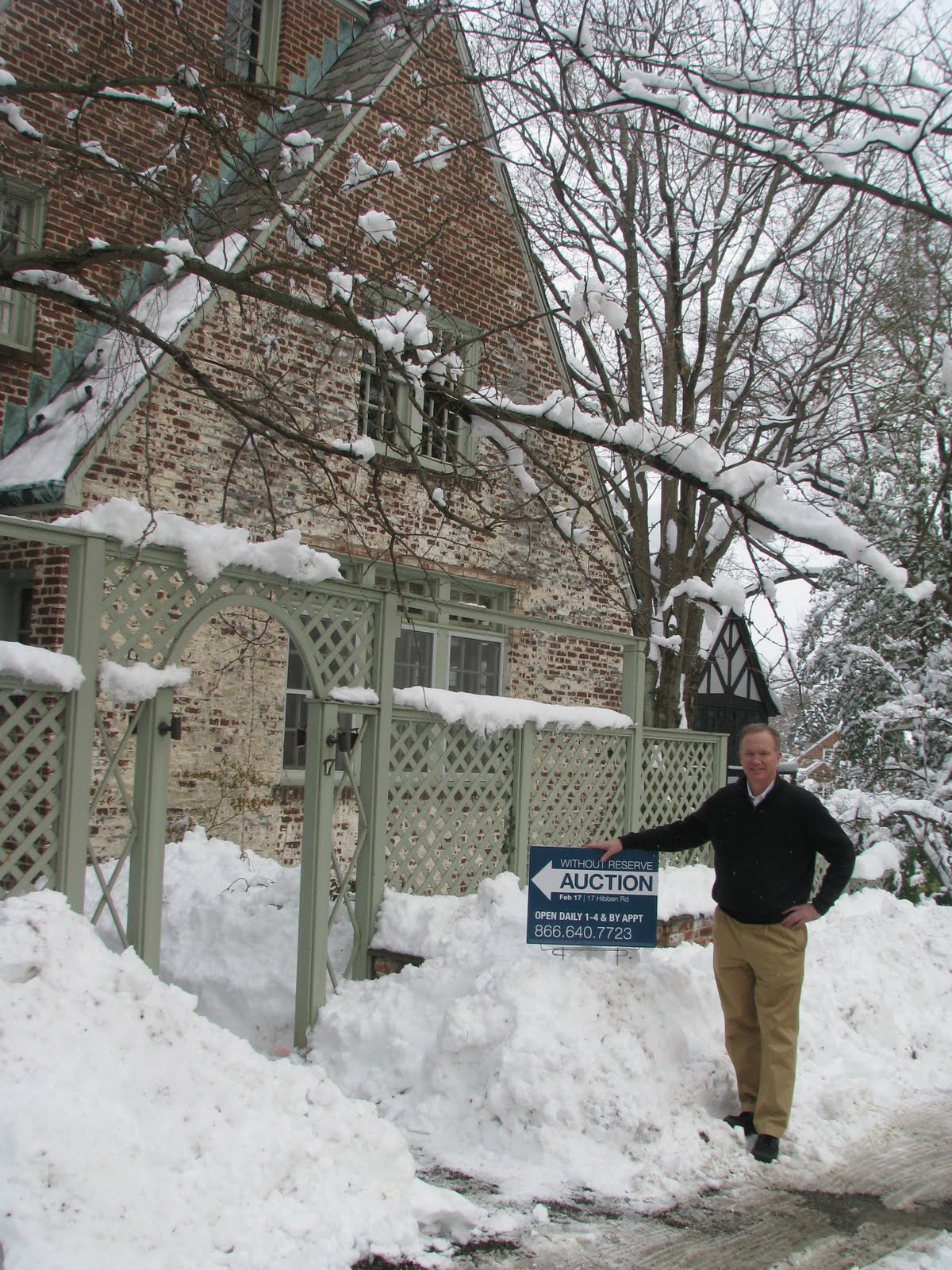
But at an auction, the drama crescendos quickly and is all over within an hour. That’s how it is expected to unfold on Thursday, February 17, when 17 Hibben Road, a 1927. Rolf Bauhan-designed Colonial Tudor, will be auctioned “without reserve,” meaning with no minimum bid. It could go for much less than its original listing price of $4.2 million. Drama is guaranteed.

But at least it will sell. Remember the Glass House on Canal Road in Griggstown? It too was auctioned, with less happy consequences.

This article is in the February 9 edition of U.S. 1 Newspaper. To continue, click here. Pictured, Concierge Auction‘s Tom Banner at 17 Hibben.

Conflicts Solvable in Christian Ways?

When a group wants more powers to govern themselves – as in South Sudan and Kosovo — can Christian principles help understand these conflicts and their possible resolution? Anne-Marie Gardner PhD will speak on “Resolving Self-Determination Conflicts” at a breakfast at Princeton United Methodist Church (PUMC) on Sunday, February 13, at 8 a.m.

The author of “Democratic Governance and Non-State Actors,” Gardner is an associate research scholar at the Princeton University’s Liechtenstein Institute on Self-Determination. Last summer she went to the Democratic Republic of Congo with a PUMC mission team working on behalf of the United Front Against Riverblindness.

The breakfast is sponsored by the United Methodist Men. A $5 donation is suggested; call 609-924-2613 for reservations or email office@princetonumc.o