October Opportunities

From this list of opportunities, the only one I’ll guarantee to attend is Saturday’s UFAR 5k to Combat Riverblindness. Registration starts at 8:30 and the starting gun goes off at 10. It’s OK to walk, and if you keep a steady pace it takes less than an hour. It’s going to be extra fun this year, with extra prizes! There’s no prettier route — starting and returning to the seminary. But there’s lots more going on this weekend.

In the Pink Fashion Show on Friday, October 5, 6 p.m. benefits the very worthy Breast Cancer Resource Center of Princeton.

Three back-to-back dance concerts and I can’t attend. (Does anyone want to write about them for this blog?) American Repertory Ballet premieres two works from the Joffrey repertoire on Saturday, October 6, at Raritan Valley College. Yes, it’s worth the drive. Outlet Dance Project offers new work at Grounds for Sculpture on Sunday, October 7, at 2 p.m. There is also another site-specific concert, this one at Trenton’s Cadwalader park on Saturday, October 6., cosponsored by Passage Theater.

Palmer Square has its Birthday Bash (75th) on Sunday afternoon, October 7. I have mixed feelings about this and am saying so here.

On a more serious note, the Troubling Issues series at Princeton United Methodist Church presents a forum on world economics, with economists native to three different countries. It’s Sunday, October 7, at 4 p.m.., at Nassau & Vandeventer.

Next week’s business opportunities:

NJEN offers “Where’s the Money?” at lunch on Wednesday, October 10, at the Marriott. It’s highly advisable to register ahead for this one, so your contact info is on the handouts.

Eileen’s Sinett’s day-long presentation training intensive, Speaking That Connects, is on Friday, October 12, and I can attest you will be a different and better speaker after that day.

Palmer Square: Not Without Pain

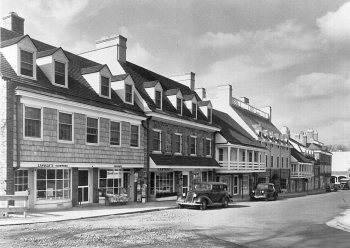
Palmer Square is celebrating its 75th, and here is the best of the articles that I’ve seen about it — not in the established weeklies, not in the paper I used to work for, but in the free paper delivered by mail, the Echo. (Photo of the square in 1937, just after it was built.)
Why do I say it’s the best? Because the reporter, Joe Emanski, put David Newton’s feet to the fire and brought up the tough issue about how Princeton’s African-American neighborhood was torn down to make room for what is now a beautiful town center. Emanski gave Newton a chance to express regret and yet affirm the result. As below.  
“Newton says in a way, it was brave to build something like Palmer Square in the middle of the Depression, because it might have been a failure. He doesn’t discount the resentment the displaced residents felt then, or that their descendents feel now, but said that Palmer and his colleagues were in a position where they had to make difficult decisions.
“With the benefit of full hindsight it’s easy to be critical, but we’re 75 years on, and I think the benefits to downtown are very positive. The end product was good; the cost it took on families and forced relocation, and plain old racism, was immense,” Newton said…..
“Princeton, along with bigger cities like Kansas City, prefigured the town center-style urban renewal we see today. Princeton also showed, to anyone who wanted to see, that urban renewal was going to require difficult choices, and that not everyone will benefit equally from the decisions that are made.”
Reporters need to ask the painful questions, so that the source has a chance to respond. I liked Newton’s response. 
Read the full article for great details, like the underground tunnel system where the Christmas tree lights get laid out. Also, find proof positive that you are right when you tell someone, no, this is not the original Nassau Inn. I’ve had knock-down-drag-out arguments about that with visitors who were certain sure that this building hosted the Continental Congress. But what is authentic, as Mimi O of Princeton Tour Company would be sure to say, is the Norman Rockwell in Princeton’s version of a rathskeller, the Tap Room
Full disclosure: I used to work for U.S. 1 which is now part of Community News Service, to which U.S. 1 now belongs.  As a representative of Not in Our Town Princeton, an organization that works against racial bias, I chafe at unmitigated adulation of the Palmer Square development. It’s OK to admire Palmer Square for the great place that it is, but at least let’s remember that this area had been the heart of the African-American neighborhood, and that removing those homes caused a lot of pain.  (The gentrification of this neighborhood is another painful topic, but for another time.) 

The Painful Economics of Traffic Court

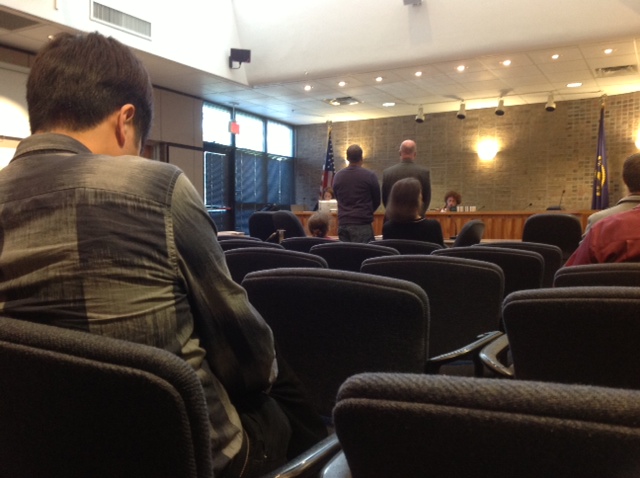
Such a small thing as a traffic ticket, even a couple of parking tickets, can wreak terrible financial hardship for some families in today’s economy. That was the lesson I learned from sitting for 2 1/2 hours in traffic court today, watching the mini-dramas unfold.

Say you get fined $500 and can’t pay the fine, it mounts up. Pretty soon there is a warrant for your arrest, you lose your license, and now you owe more than $1,000. If you have lost your job, where do you get the money? The court can’t, or doesn’t care. Pay or lose your license.

What could you do that would amount to nearly $500? Merely fail to yield to a pedestrian in the crosswalk. A Manhattan resident who was delivering her daughter to Princeton University did that, in a moment of confusion. The fine was $250 and a point on her license. To avoid the point, she could pay a “surcharge” of $156 plus $33 in court costs for a total of $439. Fortunately this woman could afford it.

Others were not so fortunate. One speeding ticket, including the surcharge, cost $469. About half the people claimed they couldn’t pay their fine, and bleeding heart liberal that I am, I believed them. The response from the court: “Make some phone calls today. Owe someone other than this court.”

I don’t blame the judge or the court officials. They are doing their job. Nor the police officers. But such high fines result in just another case of The Rich Get Richer, the Poor Get Poorer. Delay in paying your fine because you can’t pay your rent, because you don’t have a job, and it doubles, then triples.

I realize the general lesson is, drive very. very, very carefully. Don’t get a ticket. But the specific lesson for me is, avoid Nassau Street like the plague. If I should fail to see a pedestrian in the crosswalk, perhaps because another pedestrian is darting out in front of me who is NOT in the crosswalk — well, I wouldn’t be happy paying $250 to $439. I’ll stay on Wiggins and Hamilton where pedestrians don’t lurk behind parked cars.

Animals Do It: Stretch after Sleeping

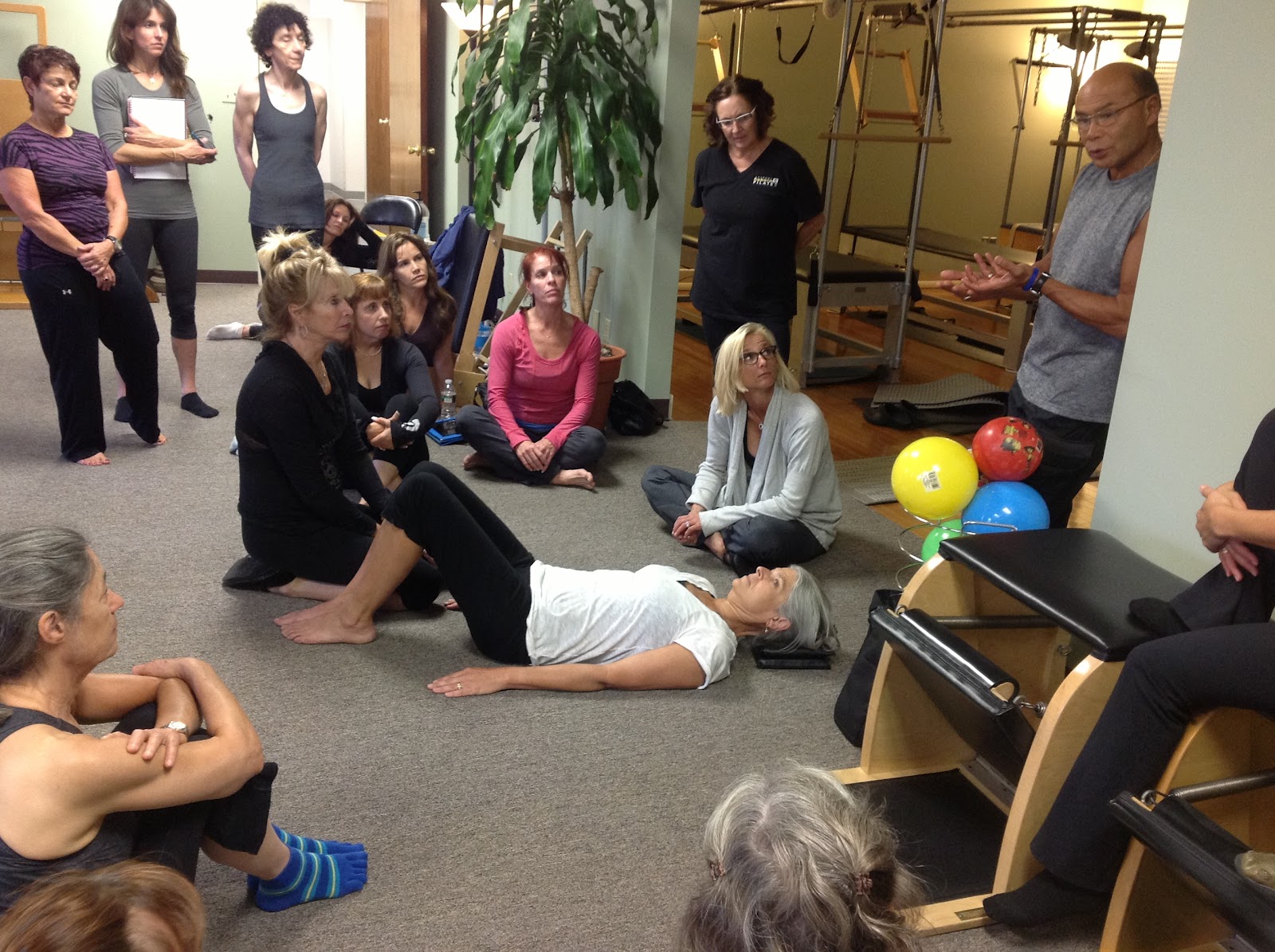
Trish Garland, who premiered the role of Judy, the “tall, gawky, and quirky dancer,” in Chorus Line, taught a workshop for Pilates instructors on how to work with aging clients at Anthony Rabara’s Pilates studio last weekend. Garland has a studio in California, and Rabara’s studio is in Research Park, but both are committed to teaching the authentic Pilates method as they learned it at the original New York studio from Romana Kryzanowski


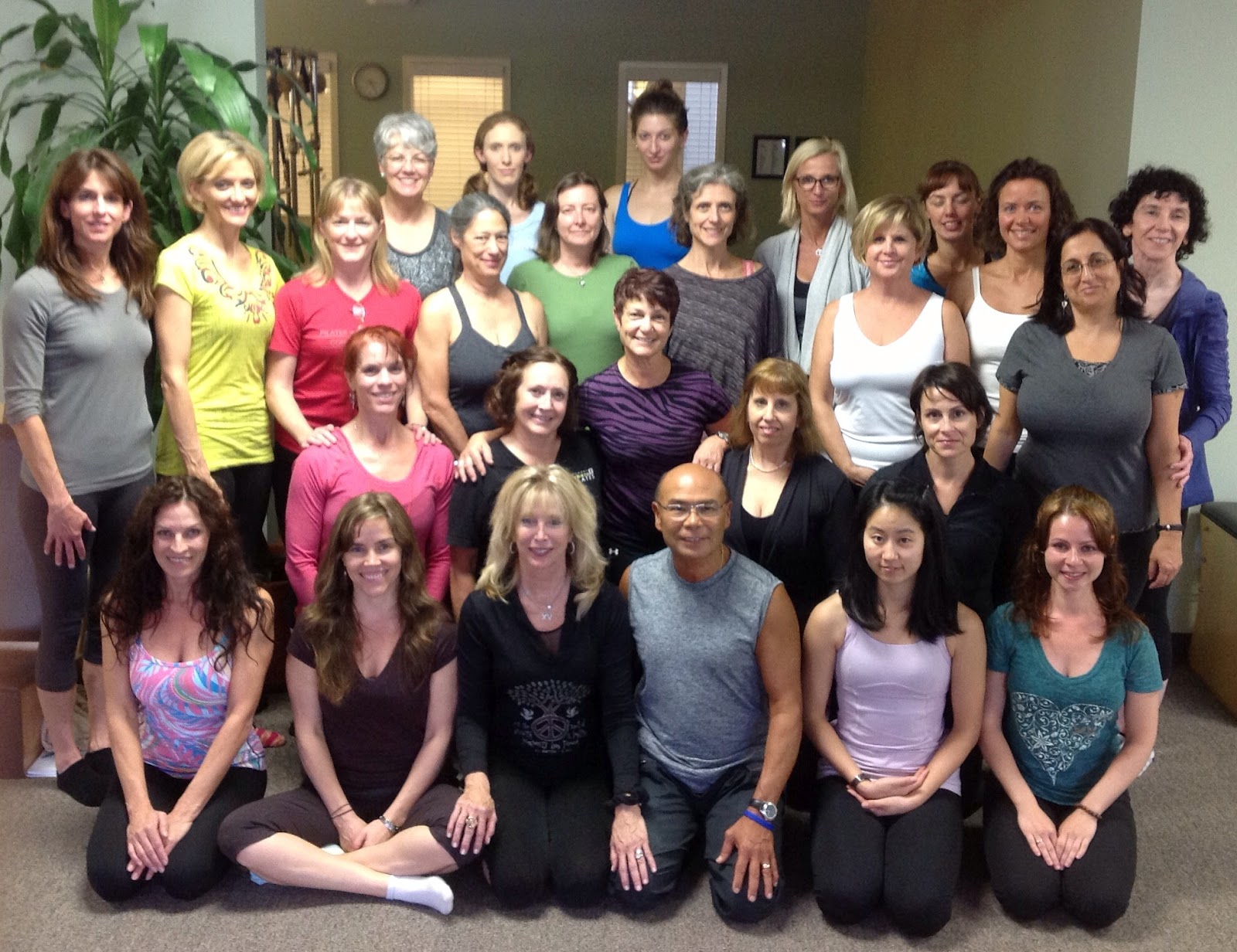
Though Garland’s body looks like it hasn’t changed a bit — she’s still tall and skinny — she claims that, in her early ’60s, she is feeling the effects of aging, and so she is focusing on what to do about it. (In the group photo, she and Rabara are in front row center; she’s the blonde.) 

I was one of the “aging clients” in respectful attendance at the workshop and was reprimanded — yet again — for my habit of standing with hands behind my back, stomach out, not standing tall. (I know better. Anyone hereby has my permission to remind me about it. What’s that expression…it takes a village to change an aging person’s habits?)


The take-away from the Pilates workshop that we all can use is that, to protect your back and the rest of your aging bones, stretch like a cat before you get out of bed. We’re talking a serious stretch and here are some of the ways she suggested.

Knees up, roll back and forth to massage your back. Cross your ankles and hold your toes. Pull your feet to your  bottom. Shrug your shoulders to your ears. Turn your head from side to side (unless you have vertigo). Bend your forearms, hands up, open and close your hands and circle them. With knees up, flex and point your feet. Roll over to sit on the edge of your bed and pound your toes, rat a tat tat, against the floor. All this before you get out of bed. 

I won’t go into medical history about why I need this, but, trust me, this kind of wake-up stretching is good for all of us. As Joseph Pilates used to say — animals do it. So it must be good for us. 


Does it Take a Village to use an iPad?


I’m not quite ready to for the challenges of being a woman in 1627 (as in this photo taken at Plimouth Plantation, the recreated Pilgrim village). But sometimes I resent having to cope with the techno challenges of 2012.

Take my iPad. Yes, I’m lucky to have it. I had no idea how wonderfully useful it would be. I bought it at Creative Computing (across from the Princeton Airport on 206). But I did not trek to Bridgewater (the closest real Apple store) to get the freely given advice and tutoring. I thought I’d be OK by just bumbling through, watching some how-to videos, and calling Apple Care (the subscription help desk) if I got stuck.

 When a casual acquaintance clued me in that I had never learned to turn my new iPad3 completely OFF,  which was why my battery was always running down, I realized it was time to go to a class and tried to register for the $10 2-hour class at Princeton Senior Resource Center.

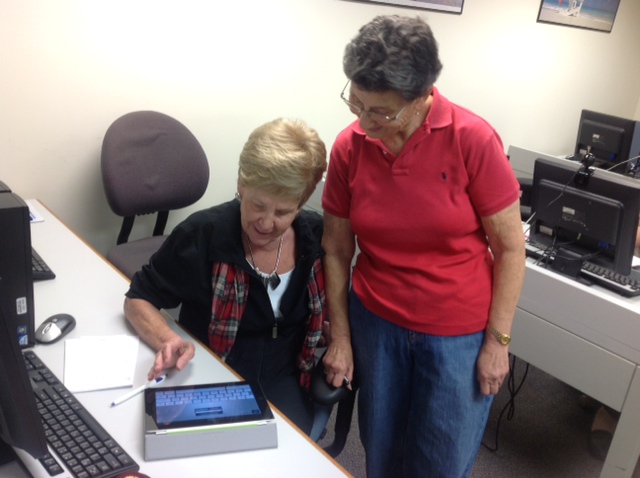
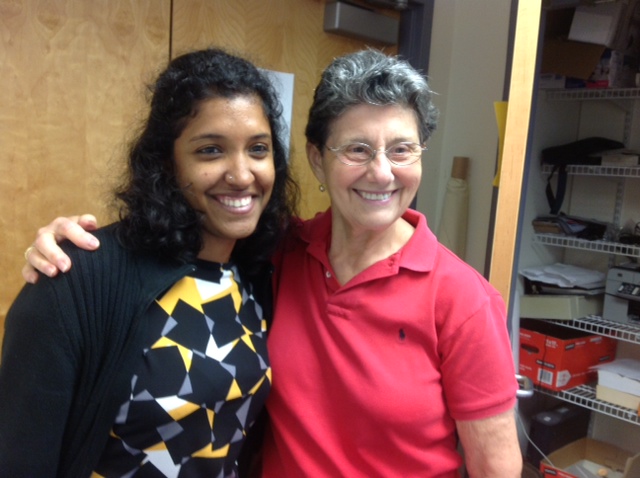
It was closed. Sold out. A month later, today there was an opening — and an eye opener. Thanks to Barbara Essig (in the red shirt) and Archana Swaminathan I learned lots of great stuff, like how to tell when my apps need upgrading and that it was time to switch to IOS6. (Have you switched yet?) Well, the new software sabotaged my email, fixable only after lengthy conversations with Apple Care. And my real software problem (my iPad won’t talk to my Windows XP) will never be solved.

Surely there are hundreds if not thousands of other iPad buyers — those who aren’t getting training in the workplace and aren’t paying for $40 classes in stores — who are bumbling along, asking friends for tips and never really conquering the knowledge gap. I tell myself — you’re not cooking over a wood fire, you are not subject to the whims of the weather — only  to the whims of incompatible software. Be thankful. Enjoy the photo (shown here) that your iPad can take. Take Essig’s next class. And keep on comparing notes and asking your friends for tips. Apparently “it takes a village” to survive the techno challenges of 2012.

(High marks for the re-enactors at Plimouth village. They impersonate real people, so they answer your questions as “Priscilla Alden” or “Mistress Brewster.” One leaves thankful to be living in our time.)

White-Collar Crime: Not in our town, not this time

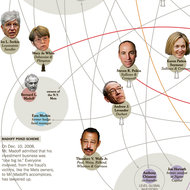
Check out the NYT special section today, DealB%k, about the future of white-shoe law firms, especially the terrific full-page graphic White-Collar World on page 4 by Guilbert Gates (under the direction of the reporter, Peter Lattman). The excerpt at left shows about 20 percent of the fascinating diagram of “big trouble lawyers” and the scoundrels (or the accused but acquitted) financiers they defended. (Aside: only two women are in the former group, only one — Martha Stewart — in the latter.)

Since I devour Style’s wedding pages for any mention of brides or grooms from Princeton,  I pounced upon this with similar intent and found, yes, one person that I knew from the late 1980s. Well, I didn’t actually know him, because he never would talk to me, but I delivered papers to Jay Regan at Princeton/Newport’s third-floor office on Spring Street, corner of Witherspoon.

It was during the 1980s insider trading scandal, when then attorney general Rudy Giuliani was going after “everyone and his brother,” including Richard Milliken and Martin Segal. (For an in-depth account of one of those trials, see this Money-CNN piece. Michael Powell detailed Giuliani’s excesses in a 2007 New York Times article) . Regan and Princeton/Newport got caught up in the prosecution. Powell wrote:

In 1987, about 50 armed marshals raided and locked down the investment firm Princeton/Newport Partners. A federal appellate court overturned that racketeering conviction, but the firm remained shuttered. “We were in the wrong place at the wrong time,” said financier Jay Regan, a principal at Princeton/Newport. “It’s strange to be sacrificed on someone’s altar.”

It was a very tense time around that office on Spring Street. When you deliver papers for U.S. 1 — and every staff member was a deliverer in the early years — you taste the vibes in an office as soon as you open the door. For that route I went first to the three-story building on Palmer Square, then in and out of the retail shops along Nassau and Witherspoon, chit chatting with the real estate people and the hoagie people — but when I opened the Princeton/Newport door — immediate shut down, icy cold. Initially I didn’t know what was wrong. Shy folks, I thought. Then I read the papers and realized what was going on.

I never got to do the Diane Henriques thing (Henriques is the NYT financial reporter who wrote the book on Bernie Madoff). I never did get to interview Jay Regan, the little fish caught in the Millken pool; it was a NYT and WSJ story. Thanks in part to big trouble” lawyer Theodore V. Wells Jr. of Paul, Weiss, Rifkind, Wharton, Garrison (headshot in the excerpt above), all but a few of the charges were dropped. It cost Regan six years of litigation; he is now general managing partner at Harbourton Enterprises on Hulfish Street.

Postscript I:  Diane B. Henriques is keynoting the Mercer Institute’s Executive Leadership Summit on Tuesday, October 9.

Postscript II: I can’t help but compare this account of the White-Collar World with The New Jim Crow, as exposed by Michelle Alexander. Untold millions are spent on defending against charges of white collar crime. Very little, reports Alexander, is spent on defending African Americans snared in the legal quagmire of required minimum sentences. For instance, statistics show showed that black teenagers disproportionately represented in the juvenile justice system in New Jersey.

Since the survey was done in 2004, some efforts have been made to correct the problem of how black juveniles are treated differently from white juveniles, but overall, I believe, this is a scandalous state and national problem. So do others in Princeton who are working, not just to raise everyone’s consciousness, but to actually change the system. I’ll be posting blogs about their work at Not in Our Town Princeton, and you’ll be hearing more about it from various sources in the coming months. It will be the topic for Continuing Conversations on Race on Monday, October 1, 7:30 p.m., at the Princeton Public Library. In the meantime, mention this post and get a discount on the Michelle Alexander book at Labyrinth Books.

Not everyone indicted for white collar crime is a criminal in our town. The same is true for those accused of other crimes, but not everyone has the money for the good lawyer. This results in a new caste system that can be far more damaging to African Americans than the indignity of separate drinking fountains

.
Kickstart Tech: Kickstart Dance

I first met Savraj Singh at an Einstein Alley Entrepreneur’s Group meeting– or was it first at NJEN? and then in September, 2010, at the World Day of Prayer (photo at right), where he was representing his Sikh congregation. Full of energy for his company, WATTVISION, he was struggling for funds. 

Earlier this year he emailed me about his Kickstart program. Kickstart is the social media version of asking friends and family to chip in on your new venture. An article by Lynn Robbins in U.S. 1 Newspaper re
ported that his company had raised $37,000 as of September 4


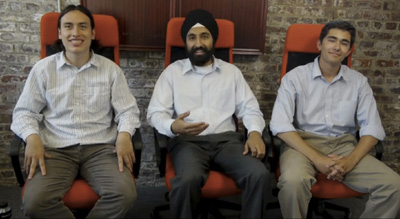
Good news! Singh and his partners (shown left) passed their $50,000 goal yesterday, raising $67,293 from 497 contributions, ranging from $1 (which gets you listed on the website) to more (which gets you discounts on the product, a gateway and energy sensor.) Some of the higher end contribution categories are still open. 


Today another would-be Kickstarter emailed me — dancer and choreographerny, Jamuna Dasi, the producer of a very successful annual concert at Grounds for Sculpture on Sunday, October 7. She seeks a modest amount — $5,000 
Says Dasi: I have been producing The Outlet Dance Project for 8 years. Until today, the dancers and myself have never been paid and I have barely been able to cover the costs of producing this popular, well-attended, and highly valued community event. This year I would like to be able to give a $200 stipend to each choreographer and not have to worry about covering our modest production costs. ‘=

It’s not the first arts cause to do a Kickstart (Robbins’ article reported on 4 local efforts) and maybe this is a viable alternative to waning corporate funds. The minimum pledge of $1 will receive a dance-related haiku, but sponsors of $500 will have a dance especially choreographed for them at any location they choose.  If Singh’s venture gives you the opportunity to be the next Rockefeller, the arts ventures let you be the next in the line of the Medici family. The deadline is October 4, the performance is October 7. 

Tying a Tourniquet on the Economic Crisis

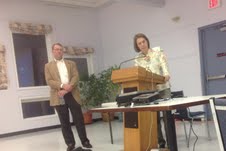
Elizabeth Bogan, senior lecturer at Princeton University (shown here with Jim Solloway) addressed the West Windsor Republicans on September 12 with a non-partisan discussion on the economy. She considers herself a market oriented economist, taking the middle ground between the Krugmans and the tea partiers. Her charts were, of course, predictably discouraging, but she had some unpredictable insights on why that’s true.

DISABILITY: For 42.7 million to be on disability is way too many, in her view (and, in today’s news, Congress’s view). People who could be working, aren’t. 

HEALTHCARE. In Medicare — elders are getting $3 of care for every $1 they paid in, and that is unsustainable, she says. We must attack the myth that everyone has the best of care.” We don’t all drive the same cars, we don’t all have the same food budget, maybe we don’t all get equal care, after all. 

Ryan’s plan is not soon enough or not radical enough, she says, but it does set limits on what you are going to spend. “There is no tooth fairy.” She doesn’t think that a Romney/Ryan administration would actually eliminate Obamacare. “But they do understand efficiency.”

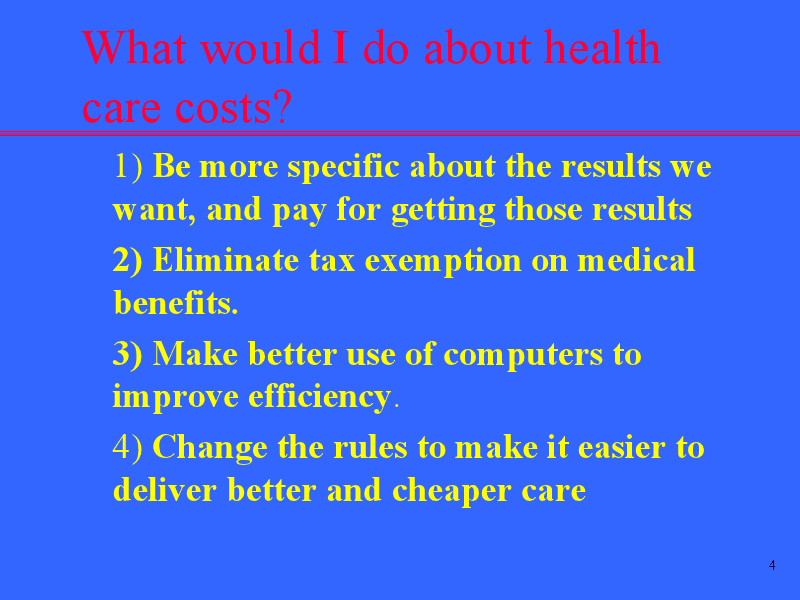
Of her strategies below,  # 3 (better use of computers) is my fave, since I’m all for efficient digital health records and personal health records. (Whatever happened to that company, birthed in Princeton, that would put your health record, your insurance, and your bank account all on the same card? Now that would be efficient.)  I also like #4, change the rules, because it would let my doctor get paid for emailing me. 

BEYOND HEALTHCARE: Because we had two wars without raising taxes (nonsense! says Bogan), we are addicted to public and private debt that is being picked up by the Chinese. When China turned to a capitalistic-style economy (eating our lunch with manufacturing jobs), the world’s labor force increased exponentially. In this country, the lawyers, accountants and consultants are doing well, but jobs disappeared for the lesser educated, who must now focus on personal service jobs.

One strategy, says Bogan, is to quit giving the day traders a free ride. Tax each and every financial transaction at a rate of 1/10th of 1 percent. Every stock sale. Every mutual fund buy. It would have a minimal effect on most of us, but it would hit the nano-second traders right where it should. 

Raise the retirement age to align with today’s life expectancies. Raise it to 67 (for the early stage) and 70 (for the final stage). 

Tax the returns to hedge fund managers as ordinary income instead of as a capital gain (and this, from the spouse of a hedge fund manager.) 

Tighten leverage rules to require 10 percent down on anything — houses, appliances, anything. 

And what about taxes? Surveys show, she says, that folks from all income levels think that 25 percent is about right. Clinton got it right. He reduced the number of brackets. “We don’t have room to make huge tax cuts now,” she says. “The Obama rhetoric confuses business. If we grow the economy, fewer people would choose food stamps and welfare. I am comfortable with debt if I believe it will solve long-term problems.” 


`

Woodbridge Runs for Mayor

A Republican running for town office in Princeton? Sounds like an oxymoron.
But Dick Woodbridge has filed to run, not for the first time. He has served many terms on council, for both the Borough and the Township, and he has been the township’s mayor.

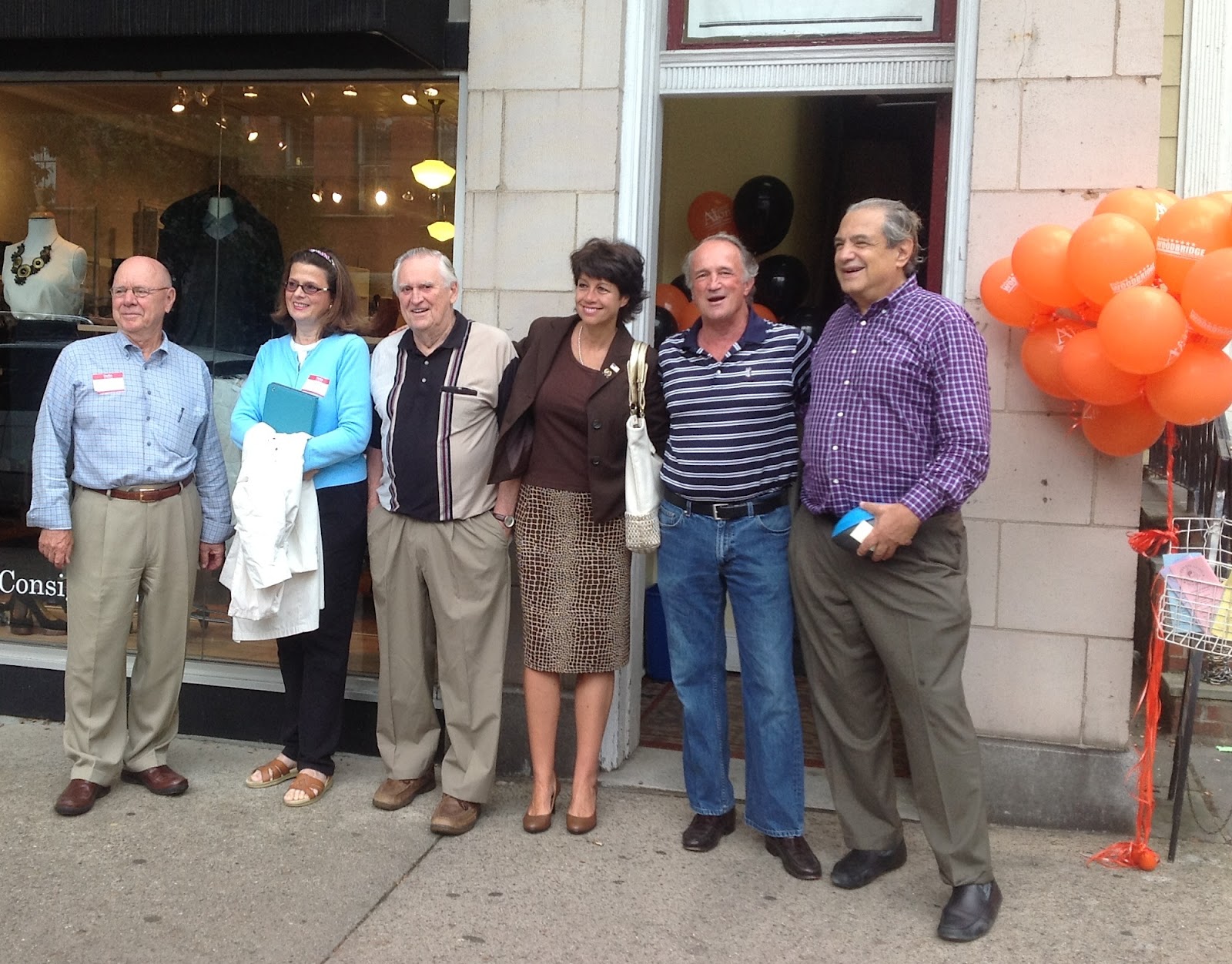
He opens his campaign office today at 162 Nassau Street. That’s in the block opposite New York Camera and Thomas Sweet; last campaign season it was the Obama headquarters.

Small glitch — some media outlets say 62 Nassau. No, 162 Nassau, and the grand opening was today, Labor Day.

May the best candidate win — and in this race (unusually) I have an opinion.

Basketball: Fake Shots, Not Feelings


If there are two kinds of college basketball coaches, those who recruit well and those who are fired, Courtney Banghart must be recruiting well. In an article in U.S. 1 Newspaper by colleague Kathleen McGinn Spring, Banghart shares the leadership lessons she used to transform Princeton University’s women’s basketball team into champions. 


Point: Genuinely care about the people you lead. There is “just no way to fake this,” she says.  


Point: Choose the harder right over the easier wrong.


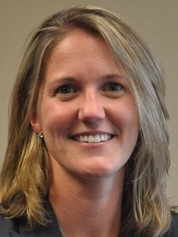
In probably her only “free” month, in between recruiting and coaching, Courtney Banghart speaks to the Princeton Regional Chamber on Thursday, September 6. We will all be intrigued to hear the from the court” stories that sh
e’ll tell