Category Archives: Healthcare

Share your medical news – and learn

A friend wrote to me, jubilant, because her husband – diagnosed with a prostate problem — had researched and found a state of the art therapy “green light laser prostate therapy.” it worked wonderfully, she says. Apparently it is not available here in Princeton.

I urged her to try to share this news with others through a social media strategy, participatory medicine. Read about it here on medium. If you can’t get into the medium site, try this one. 

For the experts — what participatory medicine platform would be best for prostate therapy recommendations?

Princeton’s Got Innovation

innovation-forum

Thirty thousand grand will be on the line on Wednesday, February 15, at the Innovation Forum organized by Princeton University’s Keller Center. Participants present their research in a three-minute “elevator pitch” to the audience and a panel of judges. Simon Cowell’s got nothing on this show!

Register to come and watch the excitement.  You get to see inside the Andlinger Center and there’s networking and refreshments afterward.


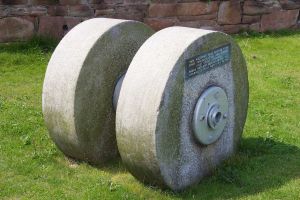
Grinding ideas to powder?


catalyst_-_mill_stones

“There are few sectors as resistant to change as government and health care,” says Susannah Fox, CTO of the Department of Health and Human Services. Her interview with Laura Landro is in the Wall Street Journal today. “We count on their stability. But I have seen those two millstones grind a great idea down to powder. I’ve also seen initiatives flourish and grow, nurtured on the strong platform that this agency provides.” 

Here is the interview.

My take: In this election season, the image of government-as-inexorably-slow-millstone actually offers a modicum of comfort.

Disclosure: She is my daughter.

Above: Millstones from Evans Pharmaceutical Laboratories, Fleet Street, Liverpool. Used for grinding drugs from c.1846-1948. Catalyst Science Discovery Centre.

Photo by Mike Peel (www.mikepeel.net)., CC BY-SA 4.0, https://commons.wikimedia.org/w/index.php?curid=42180642

.


Startups in the Nation’s Service

demo day

A quick way to cure a hangover, a new medical imaging technique, an innovation in American Sign Language, a hackathon tool kit, a robot sous chef, and a fashion discovery engine  — some of the best and brightest Princeton undergraduates are launching exciting startups. List here.

They’ve been working all summer in the Keller Lab, and their Demo Day in Princeton is Tuesday, August 9, 2:30 p.m. at the Friend Center. You need to register!

I can’t attend. If anyone who reads this can go, and wants to write it up for this blog, I’d welcome that. If you don’t have my email, put in the comments that you’d be willing to be a guest blogger.


Join the Maker Movement

Today is Maker’s Day in Trenton. A couple of weeks ago my daughter hosted Maker’s Day at Health and Human Services in Washington. “Innovation is a force for good” and “Creative thinking is a muscle we must exercise” are some of my favorite quotes.

The future of our society may be in creating change at scale across government and industry.

In Trenton, the future starts at Roebline Wire Works, noon to four.

‘Dust does not discriminate’

A shout out to Telequest who produced this great video for Isles on how to fight dust with effective house cleaning methods. Watch it if you need motivation to use a vacuum cleaner more often. I just found the video and like the tip about getting an extra damp mop bucket instead of using the kitchen sink.

Transforming mental health: Janssen’s Kramer

Craig Kramer works for healthcare firm Janssen, but he and his wife had their own personal health challenge: Their daughter suffered from an eating disorder. Kramer speaks at the Princeton Regional Chamber luncheon on Thursday, June 2, 11:30 a.m. at the Forrestal Marriott. His topic: The business case for transforming mental health.

At minute 4: end-of-life decisions

Barile at hospitalWHYY’s Newsworks Tonight aired a segment tonight (April 14, 2016) that featured Dr. David Barile’s NJ Goals of Care,.the nonprofit that aims to match patient goals with available therapies by using the NJ POLST (Practitioner Orders for Life Sustaining Treatments) form. Health reporter Elana Gordon also interviewed me re how a caregiver deals with end-of-life decisions. Ten years ago, without good medical guidance, I made end-of-life decisions for a loved one that still keep me awake at night. Two years ago, as a caregiver for a relative in Princeton, I had the benefit of an excellent palliative consult and the POLST process, and I could be completely comfortable with the decisions.

I’m not used to being on the “other end” of an interview, but Gordon expertly elicited an appropriate soundbite.  elana gordon

Here is the podcast link where Barile’s segment is minutes 4 to 6. And here is my first-person story “Evangelist for Palliative Care: Listen First, Then Prescribe,” based on my caregiving experience in 2014,  for U.S. 1 Newspaper.

This Saturday, April 16, is National Healthcare Decisions Day. Much is made of the need for Advanced Directives, and the Princeton Senior Resource  Center offers some excellent tools for making those decisions. But we make Advanced Directives decisions years away from when we are actually sick. If the patient can’t make the decisions, then the Advanced Directives offer useful guidelines.

In contrast, the POLST form deals with particulars — the patient’s current symptoms, current goals, up to date prognosis and available treatments. It offers a framework for extended discussion with a medical professional who can clearly lay out the alternatives.

Please try to take a look at the video series on NJ Goals of Care. Here’s hoping you won’t need them soon. But for later — you will know how to help a loved one get access to good information and make thoughtful decisions, decisions that bring the blessing of peace of mind.


Call Christie: Tuesday deadline to save lives

epipen

One of my grandsons has potentially fatal allergies. If  he accidentally eats one of the forbidden foods (soy, garlic, tree nuts, fish, many others) he must have a shot of epinephrine immediately — or …. .

If Governor Christie doesn’t sign the Epinephrine Access and Emergency Treatment Act, passed by the New Jersey legislature late last year, the bill will be considered vetoed. Noon on Tuesday, January 12 is the deadline. Please call Gov. Christie’s office at 609-292-6000 to urge him to sign this important legislation. It only takes a minute.

This act (bill numbers A 4094 and S 2884) would permit entities, such as youth camps, restaurants, daycare centers, sports leagues and scout troops, to stock undesignated epinephrine auto-injectors for use by trained individuals in the event of anaphylaxis.

New Jersey has already recognized the importance of making epinephrine and trained users available in K-12 schools and in colleges and universities. Other public settings where someone may come into contact with their allergens and experience anaphylaxis, maybe for the first time, should also be permitted to stock this life-saving medication for use by trained individuals. Autoinjectable epinephrine is a safe and easy to use medication that is the first line treatment for anaphylaxis.

You can read the text of this legislation here.

My grandson, age 11, is careful about what he eats and never goes anywhere (ANYwhere) without his epi-pen. But I worry about other children with less information or undiagnosed allergies. Why jeopardize lives that could be saved?

The information in this post came from FARE: Food Allergy Research and Education. 

 

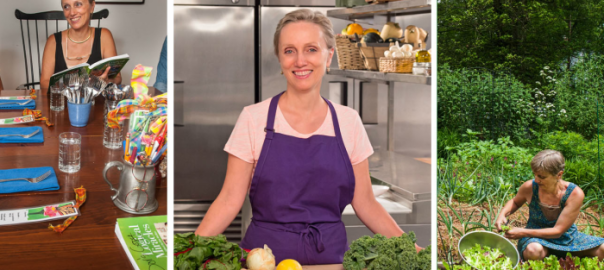
Dorothy Mullen: Nutrition Non-Profit Pioneer

Changing your diet can turn your life around, says Dorothy Mullen, founder of the Suppers Program. She will speak at a January 10 breakfast at Princeton United Methodist Church on Sunday, January 10. “How You Feel is Data! An experiential workshop on brain health and food.” Enjoy a hot and tasty breakfast at 8 a.m., and the program starts at 8:30. A $5 donation is requested.

Mullen explains her vision here.  She founded the Suppers network of nearly free-to-users programs — where people cook, eat, and develop a palate for the kind of food that can often turn around chronic health problems. Suppers hosts 30 to 40 events per month and serves people with diabetes, autoimmune diseases and addictions as well as those who simply want to learn to prepare delicious fresh food from scratch. The program has no bias of its own about which whole food eating style is healthiest, and members are taught to do their own experiments to discern which way of eating benefits them the most.

Mullen has a master’s degree in addictions counseling from the College of New Jersey and uses addiction models to help people turn around entrenched eating behaviors that have placed them at risk for chronic disease. She is also a garden educator, having created garden based-education programs for the Princeton Public Schools for 13 years.

The Suppers program began at Mullen’s house and is spreading, she hopes, nationwide. “Live according to your intentions, not according to your impulses,” she says. She aims for Suppers to be, for those with food problems, like Alcoholics Anonymous is for drinkers.