Tag Archives: Princeton Regional Chamber

David Sedaris & Patrick Murray

When David Sedaris launched his annual speaking tour tonight, standing room only at McCarter (Wednesday), the line for book signing snaked around corners. Asked about the election, his off-the-cuff answer about Trump, paraphrased:

“It’s as if he looked at who wasn’t being pandered to — the stupidest people in America weren’t being pandered to.” Sedaris said, pointing out that at least Trump gives plain answers rather than politician-runaround. “I think he dominated the news so long that people were tired of him.”

Patrick Murray will opine on the same subject on Thursday, April 7 at the Princeton Regional Chamber. To find out what folks are really thinking about politicians like Trump, says Murray, eavesdrop in a diner. Murray is quoted  in  Michele Alperin’s U.S. 1 cover story here. Murray heads the Monmouth University Polling Institute, which is still in the game of political prognosticating, an arena in which — surprisingly — Gallup has left. Here is why.

For this occasion, Sedaris wore culottes. What would Trump say?


Safe doesn’t always work

Safe doesn’t always work, says Eleanor Kubacki, President & CEO of the EFK Group.

She speaks on Wednesday, October, at a Princeton Regional Chamber breakfast that starts at 7:30 a.m. Her talk, which will be at 8:30 a.m., is on How to Fine Tune your Marketing Campaigns on a Shoestring Budget. Chamber members pay 
$25 at the door. 

Quoted in a U.S. 1 Newspaper story by Michele Alperin, Kubacki says, “People are afraid that if you do things outside of the norm and you fail, they will get criticized and fired. That is why marketing tends to be safe, and safe doesn’t always work.”

Women – telling their stories on Friday

njcw2015_finerman_large She runs a hedge fund, has two sets of twins and four nannies — read about the keynote speaker, Karen Finerman, for this Friday’s women’s conference in a revealing article in the Guardian. In 2007, when the article was written, the CNBC Fast Company commentator had $100 million dollars and rarely had time off. Has she taken a vacation since then — and how is her hedge fund doing now?

njcw2015_armstrong_largeI’m also eager to hear from video storyteller Nancy Armstrong, webproducer of MAKERS — womens’ stories that change the world, the largest collection of women’s stories ever.

The New Jersey Conference for Women is Friday, October 16, at the Westin, 7:30 a.m .to 2 p.m. Registration is $125 including breakfast and lunch and Finerman’s best selling book Finerman’s Rules: Secrets I’d Only Tell My Daughters about Business and Life

Curmudgeonly note: If only the use of the word “only” weren’t such a big secret To be grammatically correct the title should read  Secrets I’d Tell Only My Daughters …(i.e. not tell anybody else). As is she says she might reveal secrets in other ways, maybe — acting them out? singing a song about them? Sigh.

Still — I’m eager to hear these keynote speakers — helping people tell their stories is among my top priorities. Everybody has a story.

Jacque Howard: Building community in Trenton

Jacque+HowardJacque Howard grew up in Ewing in a large family — 12 uncles and aunts and six siblings. He learned what “community” was. Now he aims to help Trenton by helping create community with his nonprofit Trenton 365, as profiled here in U.S. 1 Newspaper.He was quoted like this: Trenton was a major industrial port once. Once. Ago. So let it go. Stop trying to turn the city back into something it used to be. Start focusing on what it could and should be.”  

I listened to Howard’s story at the Princeton Regional Chamber breakfast today, and I’m buying into it. He recorded his talk and posted it at his website, here.

My comment to Howard at the chamber meeting, at about minute 38 on the tape, “With your personality and your media access, you can do what really needs to be done, which is to put people together. Racism and prejudice are part of the Trenton problem. and when you get people together so that  they are friends, and they have a friend in that city that they can trust — that’s going to help.”

His response: “If I can get three or four of you guys to agree –it’s going to change this community. I can connect you with somebody, Whatever you want to do — do a quick project, get lots of media attention, at very low cost —  that’s what Trenton 365 is about.”

The Trenton 365 website has lots of fascinating programs, including this interview with Bart Jackson of Bart’s Books done at Panera Bread. The sound is a little rough at the beginning, but it evens out and Jackson is always worth listening to.

Trenton 365 is broadcast on WIMG AM 1300 and streamed live at wimg1300.com Tuesdays from 8 to 9 p.m., and on WWFM 89.1 HD2 and streamed live at jazzon2.org Wednesdays and Thursdays from 6 to 7 p.m. But you can always get it on the website.

Up with Community Building, Down with Stereotypes

Whistling_Vivaldi_Princeton_Cover-Art-Samples[2]-2 (1)Sleeping bags covered the floor of the Youth Room when Princeton United Methodist Church welcomed freshmen from Princeton University for a “service sleepover” this week, part of the Community Action program  that launches freshman year. As described in the Packet,  they did a service project during the day and met for dinner, and went back to the dorms to shower. On the last night the students and team leaders– and some church staff — met to discuss this year’s ‘pre read book,’ Claude Steele’s Whistling Vivaldi: how stereotypes affect us and what we can do.

That book fits right into the PUMC sermon series on “Gospel of the Nobodies,” especially “The Ethnic Other.” Steele will speak to the freshmen on September 12. Other opportunities to examine stereotypes and their effect:

Monday, September 14, an event in the department of African American Studies

Wednesday, September 16, Princeton Regional Chamber hosts Jacque Howard of Trenton 365 Show a community building program that advocates for and endorses private citizens, nonprofit groups and businesses in the greater Trenton area.

Sunday, September 20, a panel at the Suzanne Patterson Center, “Getting Beyond Racism.”

Rita Gunther McGrath: Jet lag results from travel privilege

rita

Reporters often quote Rita Gunther McGrath on business topics, but her picture is in the New York Times today, in a front business page article, on the topic of jet lag.

Joan Raymond reports: “Jet lag has always been an issue for me,” says Ms. McGrath, who has been a business traveler for more than two decades and has dealt with itineraries that take her from New York to New Zealand to Helsinki to Hong Kong all within a matter of days. Raymond describes some of the supposed remedies.

The Princeton Regional Chamber hosted McGrath twice, most recently in 2010 on the topic of safe company growth, headlined in U.S. 1 Newspaper as “Avoiding Fabulous Flops and Epic Embarrassments.”

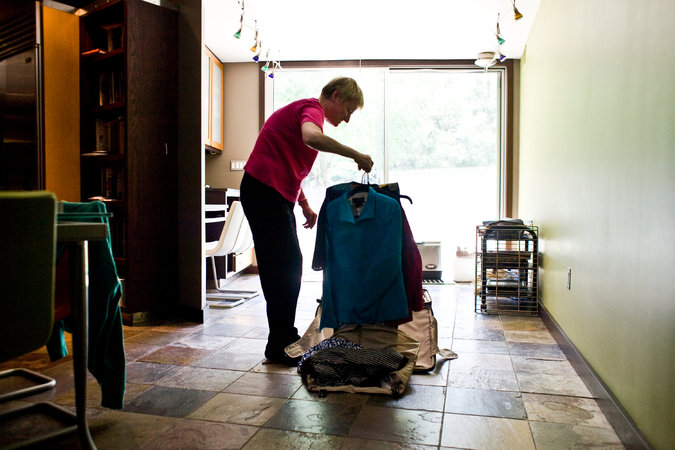
Shown above in Bryan Anselm’s photo, unpacking from a trip in her Princeton Junction home, McGrath has the last word in the NYT story:

“What we all need to remember is that we are incredibly privileged to be able to cross time zones so rapidly,” she said. “Plus, when I get home from a business trip and say something stupid, I just blame the jet lag. That’s good for about three days.”

Midsummer in Palmer Square

chamber plaza

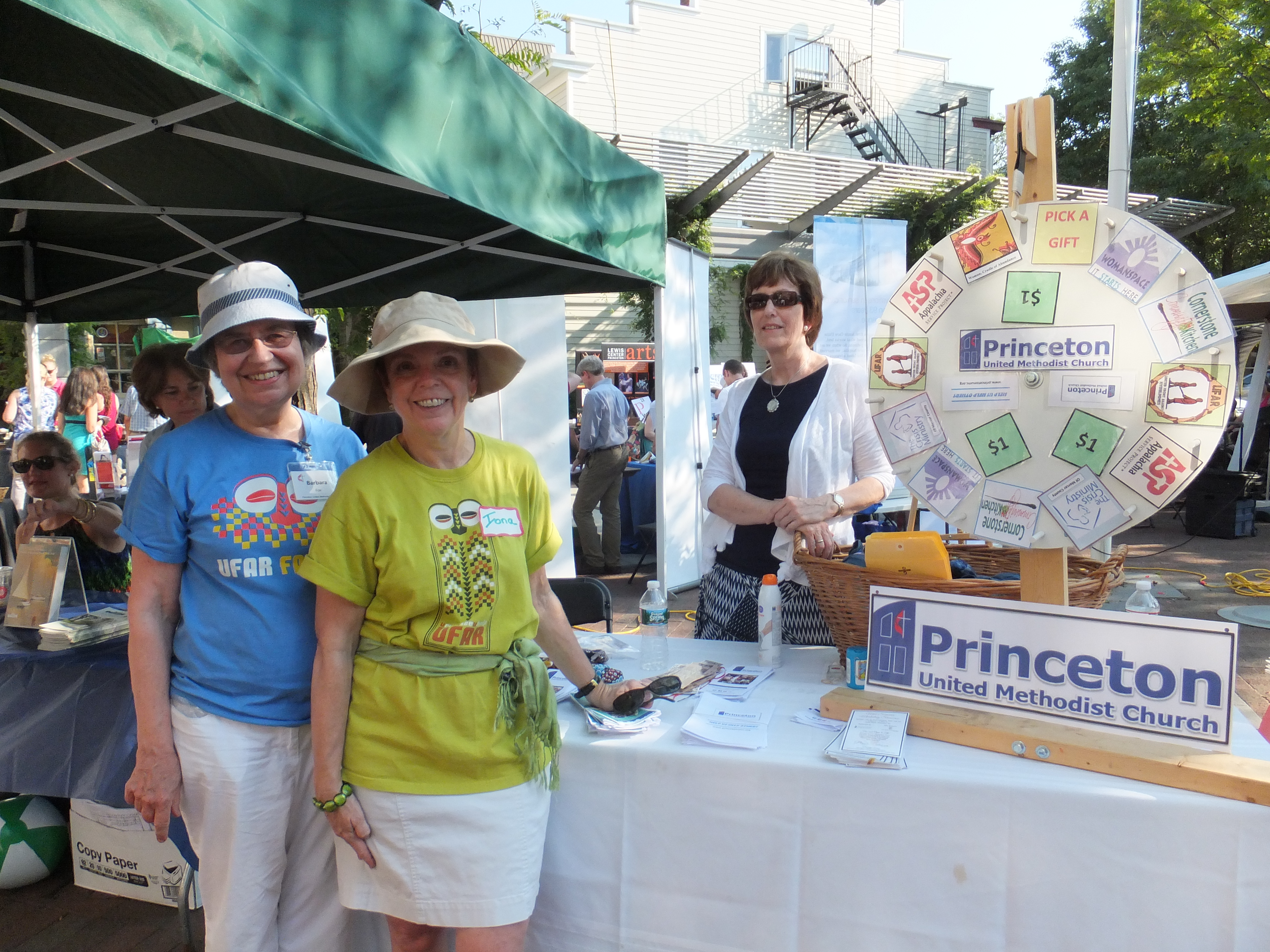
Palmer Square turns into a street fair several times a year, none more exciting than the Princeton Regional Chamber’s Midsummer Marketing Showcase.

Sometimes my church — a member of the chamber — participates, as above. But on Tuesday, July 21 I’ll be an onlooker, enjoying the tastes and freebies and greeting old and new friends.  It’s set for 4 to 7 p.m. — and it’s free!

Dress for the heat!

Seward Johnson: Thursday, 5/7 @11:30 am

I want my “people” to be unheroic, and in so being, become universal.  But I want their act that I am celebrating, the existential gesture, to be heroic in the lowest key. So says celebrated but controversial sculptor Seward Johnson, He speaks at the Princeton Chamber lunch on Thursday, May 7, at 11:30 a.m. He helped create one of New Jersey’s biggest tourist attractions, Grounds for Sculpture.

John Springrose: “Prototype your imagination”

Sometimes a better chamberspeaker says what they said to a U.S. 1 reporter as published in the previous issue. Not so this time. Diccon Hyatt’s interview with John Springrose was way different from his talk at the Princeton Regional Chamber breakfast this morning. Springrose’s company (formerly inDimension3, now Philadelphia-based Koine) pioneers in 3D printers, more aptly named “rapid prototyping machines.

An IBM-er turned investment banker, Springrose  began with a “then and now” show of how innovation increases productivity, even though jobs are lost along the way. For instance, IBM’s first middle market computer, System 32, cost $40,000 and had only 5k of memory but in 1975 it could replace accounting functions. Checkers were replaced by self checkout and scans, tellers by ATMs, German auto workers by robots, and so on. “Innovation does lead to productivity,” he tells students, “and it forces us to think.” Be an innovator or run the risk of losing your job.

Examples of how a rapid prototyping machine can work: High school student gets an idea for jazzing up the wine drinking experience. Prints a prototype of a new wine holder, gets it manufactured in China, sells several hundred units on ebay for $40 each, total cost of each unit $1.89, accomplished this in less than a month. Product: a wine bottle holder that is lit from underneath, sending colors through a bottle of white wine. Cool. True story.

A plant “goes down” for lack of a part? A 3-D printer could make that part in a snap. A corporation could have a rapid prototype machine in the lobby and greet clients is greeted with a logo or miniature product from their company. Now that’s hospitality.

Three-D printers like toys can cost as little as $700 but, to be reliable, one should cost at least $5,000 for business use. Customers are mostly overseas. Springrose worries that the U.S. is getting left behind.

In addition to plastic, products can be in wood, metal — “anything that will melt.’ His industry today is where IBM’s System 32 computer was in 1975. “You give me the industry, I give you the use,” he offered.  “Prototype your imagination,” he challenges. “If you think about it, you can do it.”

As for the difference between the interview and the talk — the reporter dug into the not-so-successful early stage of Springrose’s company, when it was making cheap printers that were not reliable and got scathing online reviews. That’s why Springrose moved to the high end. More than 700 startups make 3 D printers but just three– including Koine — are working on business-quality tools.

Springrose has a very personal interest in the medical applications for his devices. He looks forward to the day when a rapid prototyping machine can print out a liver or a kidney. That’s because he has lived through a liver transplant. But printable organs won’t happen any time soon. Springrose came without a demo machine because — the day before, he demoed to doctors at Jefferson — and they broke the machine.

Photo: L to R, Grant Somerville (chamber program committee), John Springrose, Peter Crowley (chamber CEO).  

Danielle Allen: canceled — but — wait!

The Princeton chamber lunch on Thursday with Danielle Allen has been cancelled, due to weather — but you have another chance to hear her.  She will speak at Labyrinth bookstore on Tuesday, March 10,  at 6 p.m. With Melissa Lane she will discuss Lane’s new book the “The Birth of Politics: Eight Greek and Roman Political Ideas and Why They Matter.”

Here is Diccon Hyatt’s interview with Allen in the current issue of U.S. 1  This interview focused on her reading of the Declaration of Independence, whereas I was more interested in her direct declaration of how she advocates for bridging cultural divides, as reported by Not in Our Town Princeton here.

The chamber lunch will not be rescheduled, but Allen will stay in Princeton till June. Perhaps she be persuaded to talk about intercultural dialogue here, before she goes to Harvard.